


Welcome to Tequila, teetering between history, business and uncertainties
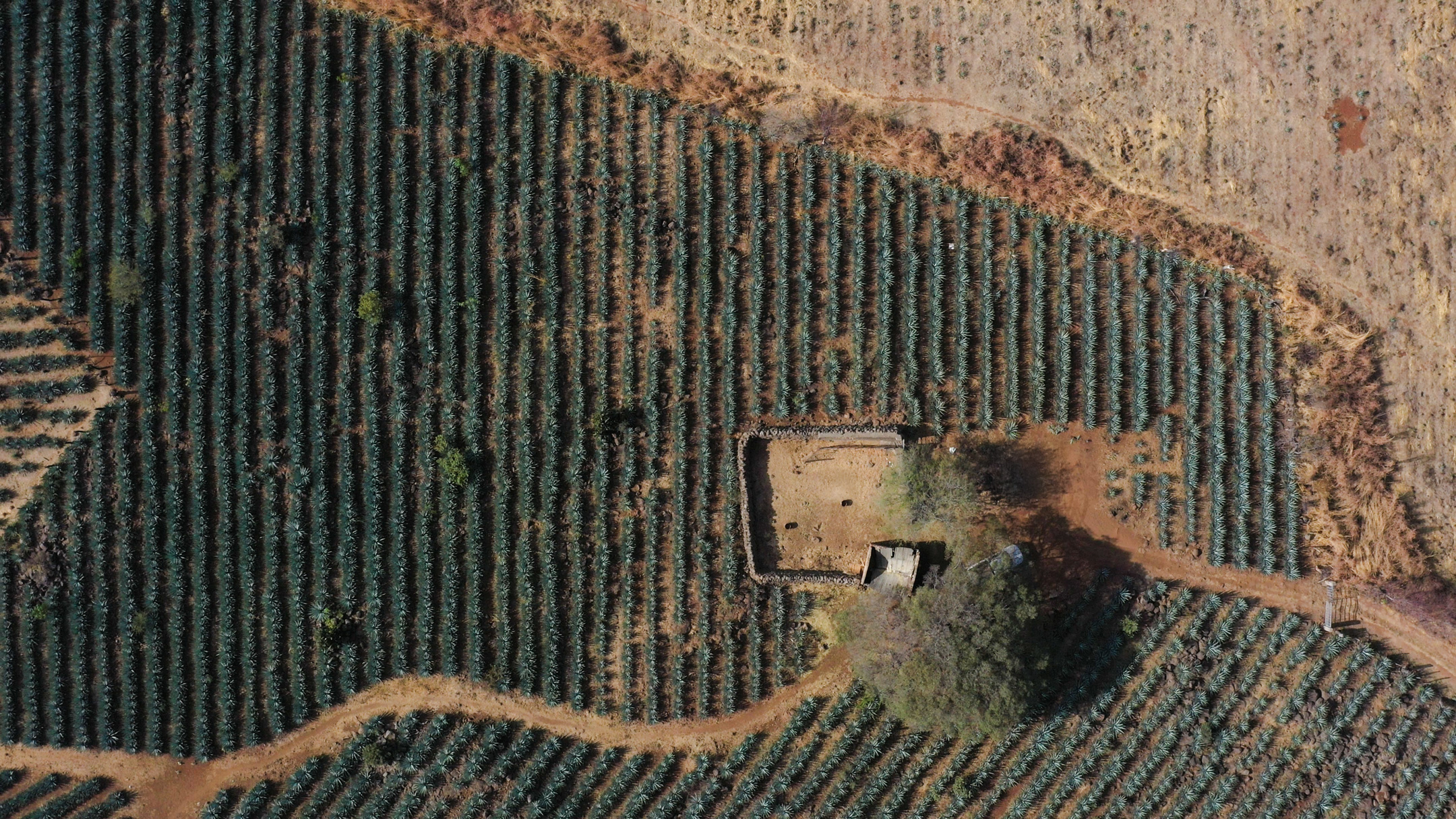
The "pueblo mágico" UNESCO heritage site has become synonymous with the best-selling and most exported agave distillate. The influence of multinationals and American tourism is evident everywhere, but beneath the glitter of marketing still beats a heart of tradition: a heritage to rediscover, now that the agave fever seems to have subsided.
There are no franchises or budget airlines that can compete with it; the truth is, we always travel burdened with preconceptions when we visit places that, for some reason, have become legendary.
It’s natural. Books, articles, social media videos, stories: everything ends up in an ideal suitcase of expectations we carry with us - and it’s only natural. What matters the most is that from the very first minute we actually experience those places, ready to reconsider and demolish our prejudices, building a more realistic idea.
Those who arrive in Tequila bring two different kinds of baggage. Some people expect the UNESCO-recognized pueblo mágico, a corner of Messico e Nuvole blending indigenous folklore and the mysticism of agave distillate, the emotional theater of Malcolm Lowry’s literary masterpiece Under the Volcano; other people arrive with a raised eyebrow, resigned to visiting a temple of global capitalism, irreparably corrupted by American multinationals: a place reduced, to stick with literary references, to what Juan Rulfo described as “a sad country that smells of spilled honey.”
It's amazing when we discover that the true soul of this town of 42,000 people - seen in the collective imagination as a sort of alcoholic utopia - stands exactly at the crossroads of these two visions.
The Plain Like a Blanket
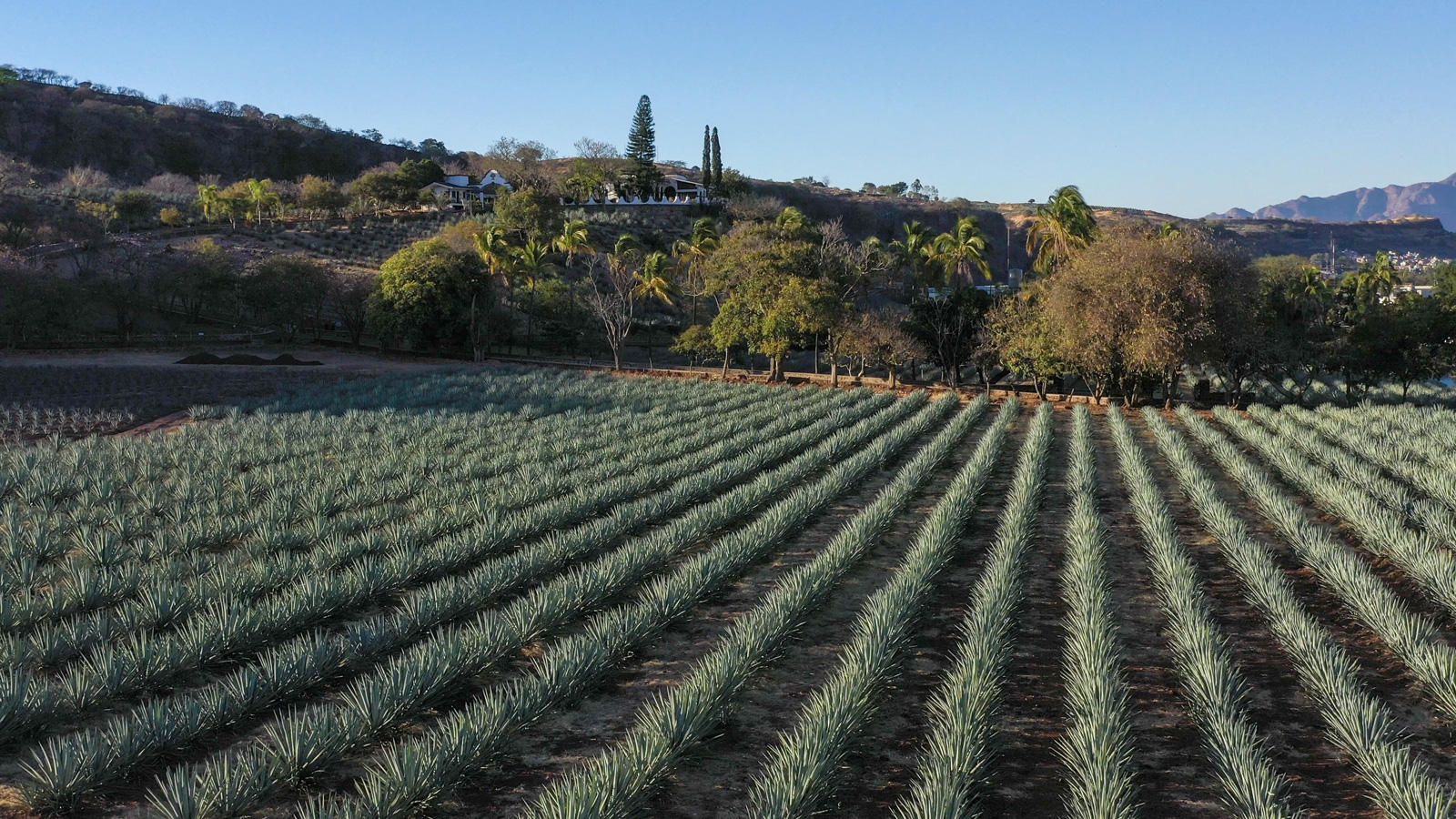
The highway going from Guadalajara through the plains of Jalisco is almost deserted and not particularly scenic. The “Agave Landscape and Ancient Industrial Facilities of Tequila,” protected by UNESCO since 2006, lacks those sublime vistas that capture your eyes among the Sierras of Oaxaca. Here, the mountains are gentle, with no cacti standing guard over the flight of vultures; just a disorganized line of ranchos, small towns, as well as warehouses. On closer inspection, it aligns with the toponymy: tecuilan or tekilan in Nahuatl meant “place of work,” perhaps because from the volcano that gives the town its name came the obsidian that the Chichimeca and Otomí indigenous peoples worked with.
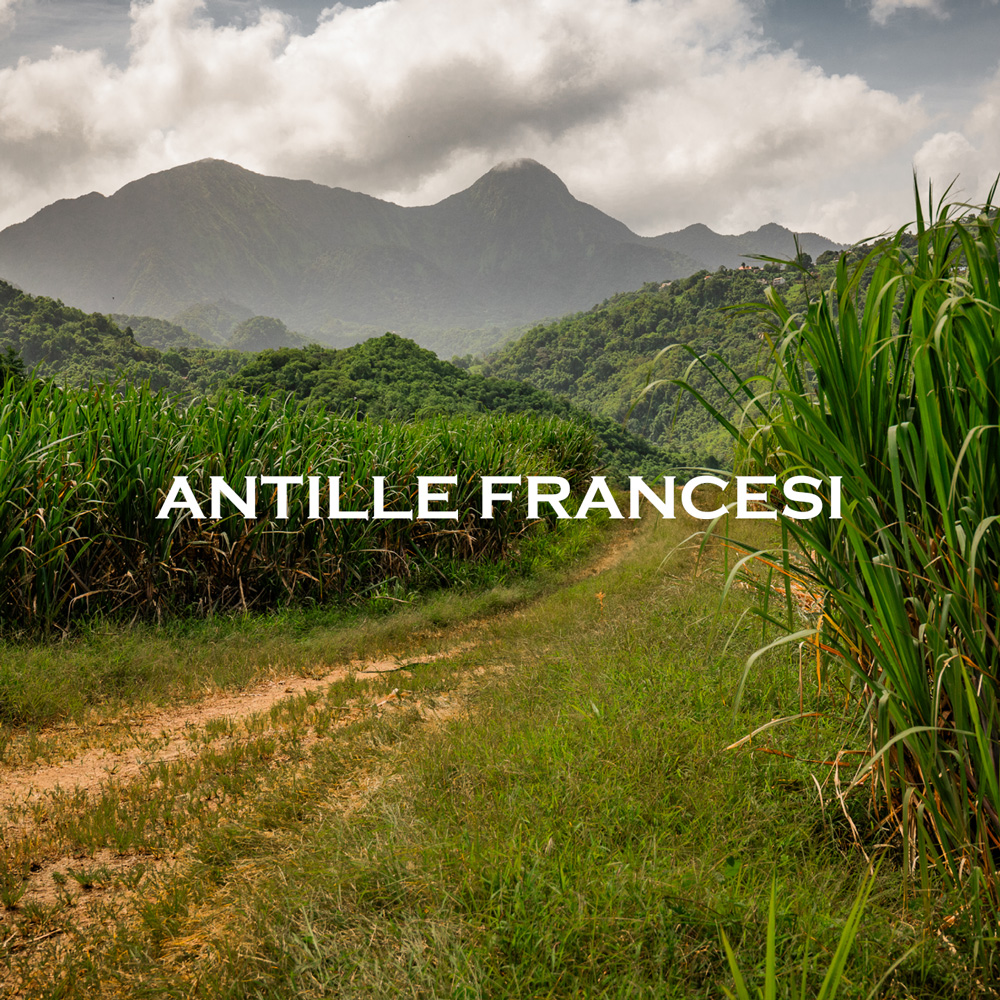
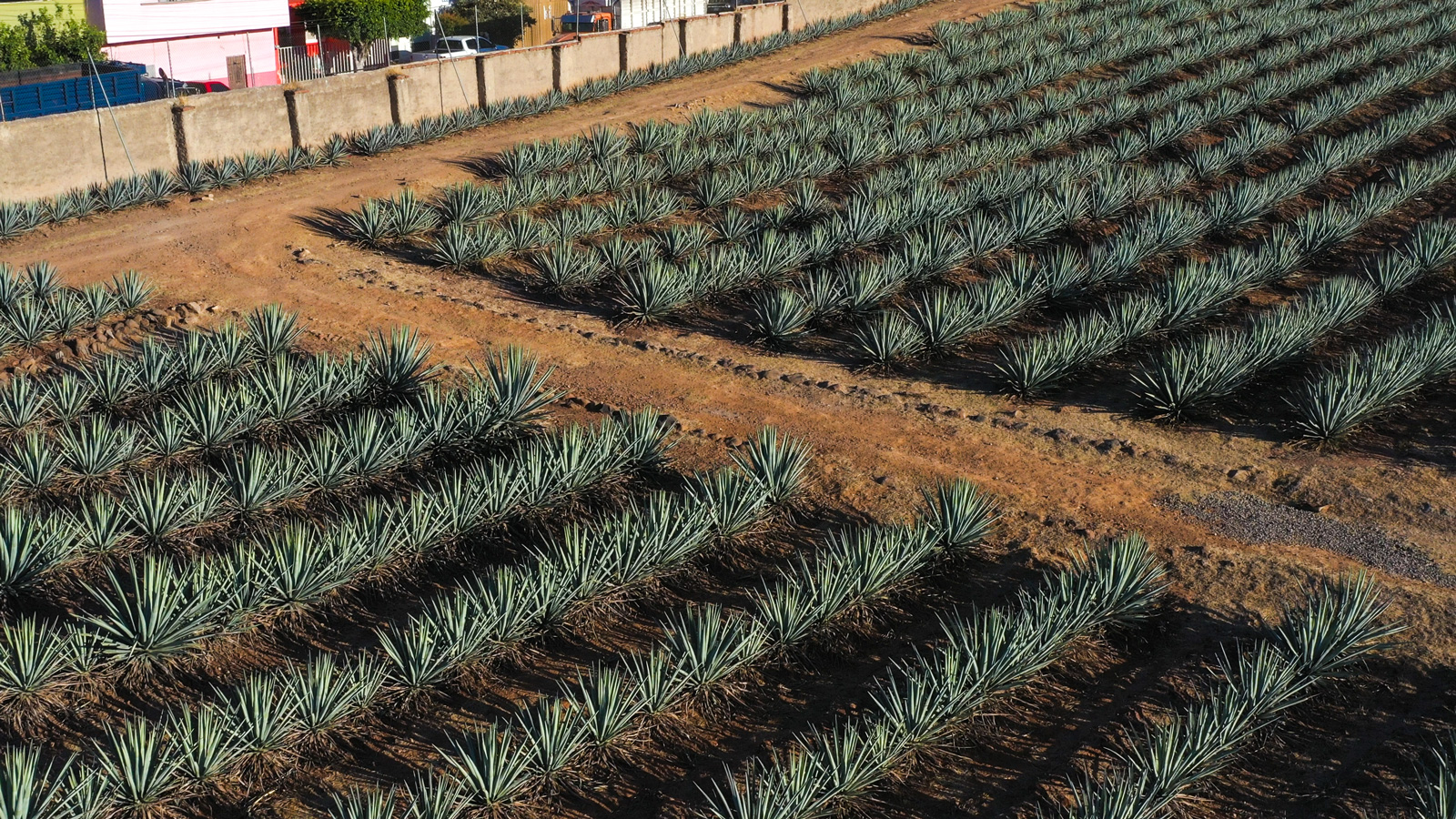
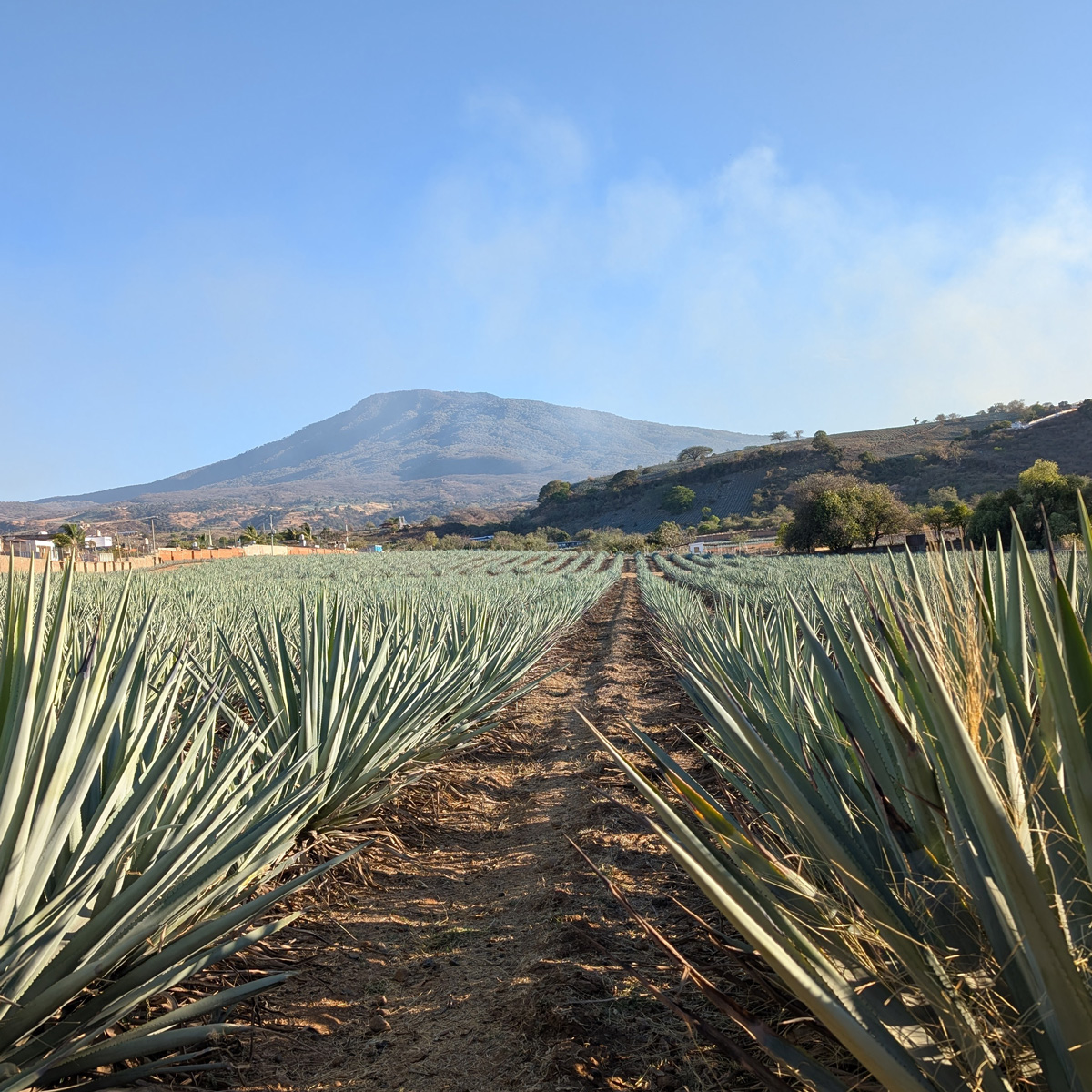
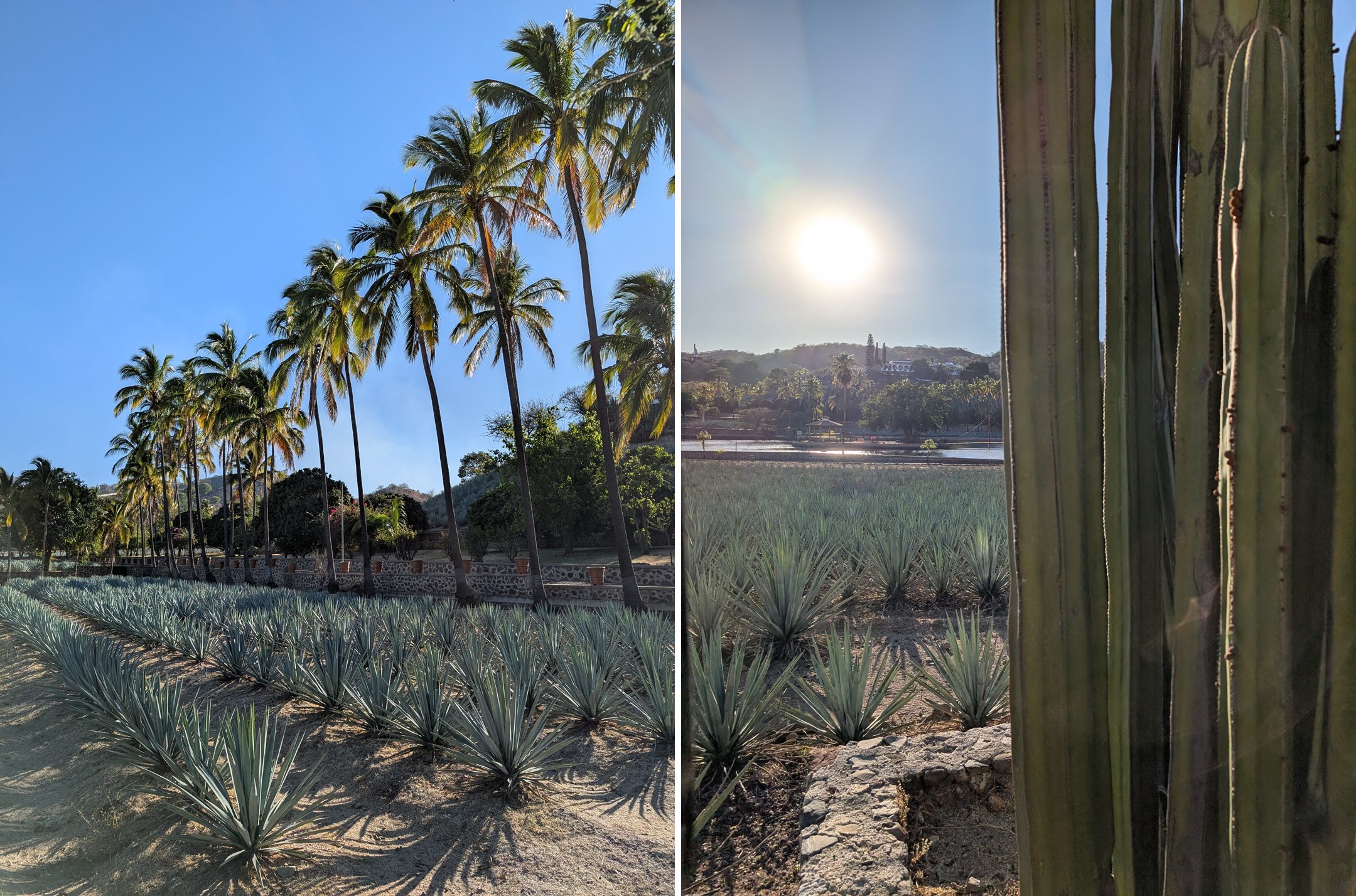
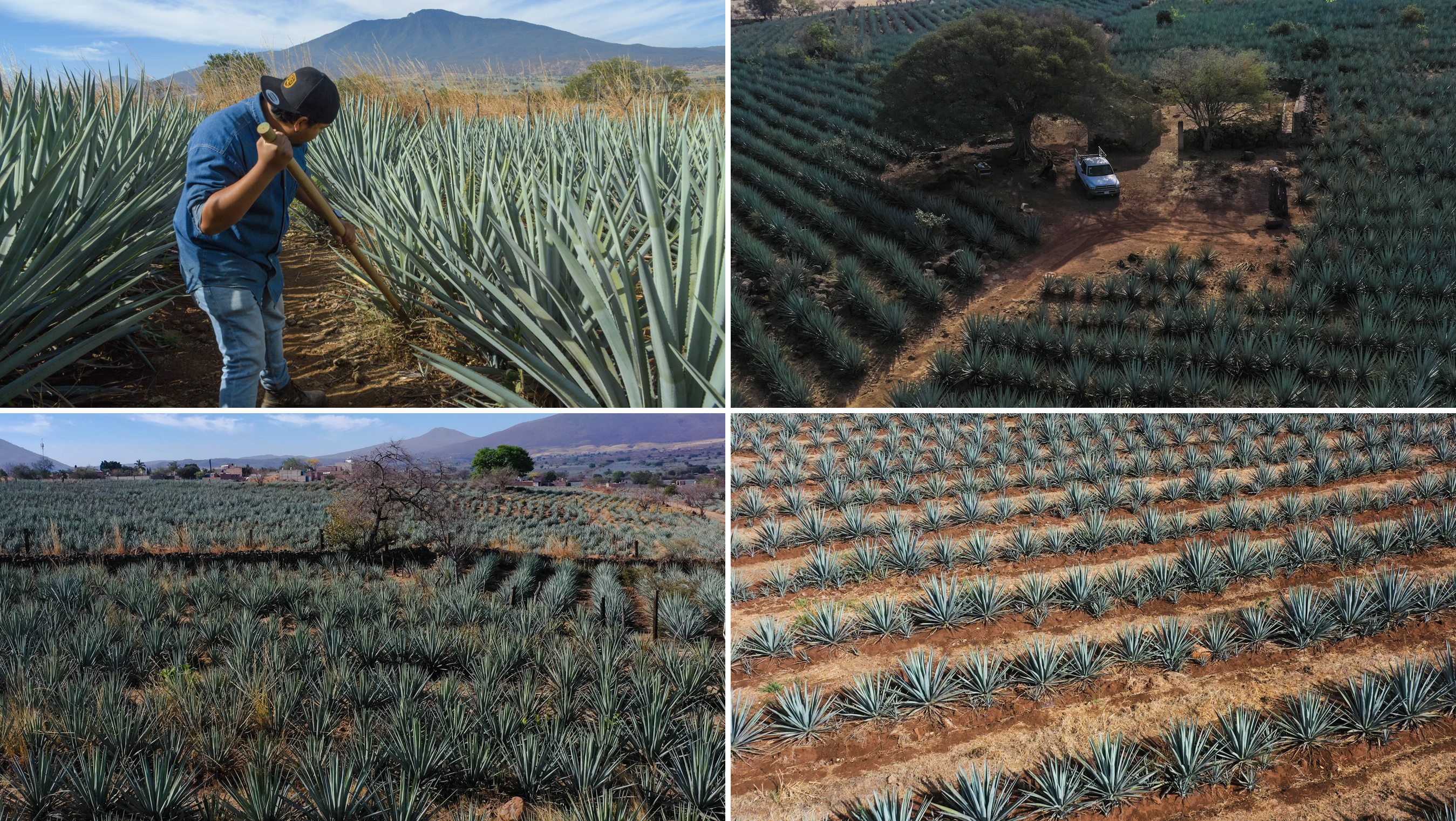
Etymology apart, on both sides of the 15D highway there are endless stretches of green-gray fields, even though the dominant variety of agave here, the Tequilana Weber, is called azul (blue). The color contrast is curious: on the dry, ochre-coloured blanket of the earth, the patches of agave fields - generally smaller plants than the espadín of Oaxaca - alternate with black patches, fields burned either to be “cleaned” or, according to whispers, because the price of agave has collapsed (from 30 pesos per kilo down to 70 centavos in 2024), and many are considering returning to corn cultivation… But that’s another story.
The Gringo Funfair
As you go down into the plain, everything seems to confirm that those expecting the worst weren’t entirely wrong. A giant bottle silhouette loudly announces that we're getting close.
Roadside, there’s a parade of stalls with signs of “Vino y licores” and little shrines to the Virgin Mary - perhaps seeking refuge from the rampant alcoholism in their tiny votive niches. Entering the town, circling around the statue of a puzzled Emiliano Zapata and passing dozens of rough wooden tables set up under oleander trees for group drinking, the first “monsters” appear.
They’re barrel-shaped trucks that serve as minibuses. They’re everywhere, clogging the town’s narrow streets like cholesterol in arteries, shuttling around on distillery tours groups of American tourists with visible blood sugar issues, with Latin music at 90 decibels playing in the background.
Considering the countless signs reading “Yo love Tequila” as well as the central venues serving the diabolical cantaritos - pot jugs filled with tequila mixed with citrus juice and a grapefruit soda high in calories called Squirt –the suspicion that Tequila has turned into a sort of tacky gringo theme park becomes very real.
But luckily, there’s time and space to go deeper. A spirit with at least four centuries of history doesn’t deserve to be judged only by first impressions and a few drunk Texans.
Volcanoes, Ghosts, Conquistadors, and Family Feuds: A History
Tequila is the most produced and exported Mexican agave distillate. With 527 million liters distilled in 2021, it accounts for over 85% of the category. And yet, in reality, tequila began as a local variety of mezcal, so much so that it was initially sold as “vino de mezcal de Tequila”.
Its origins, however, stretch much further back in time.
Legends abound, as multifaceted as the feathered serpent Quetzalcoatl, the Aztec god of arts and crafts. Even if the deity most closely linked to tequila, as one can easily understand from the fascinating murals scattered around the town, is Mayahuel, who was transformed into an agave plant for love. One of the supernatural versions recounts how a bolt of lightning struck an agave plant atop the Volcán de Tequila, at 2,900 meters above sea level. Some Nahua warriors passing by tasted the juice and voilà, tequila was born.
That’s the myth, which stands alongside the tale of the first Spanish martyr, Friar Juan Calero, founder of Tequila, whose body, mutilated by the indigenous people, smelled of flowers after ten days under the sun, together with the tale of the ghost that appeared one night in 1875 shouting “Ejecution!” allegedly bringing a plague called Paloma azul. Mexico is steeped in such beliefs, but history tells a different story.
The indigenous populations had always drunk pulque, a fermented agave juice, and according to some scholars, they already knew the art of distillation using ancestral clay pot stills, some of which are displayed at the Museum of Anthropology in Mexico City. The Spanish conquest, beginning in 1519, combined with the introduction of Filipino wooden stills, gave a push to mezcal production, i.e. a cooked agave distillate.
The Spanish tried to ban and tax the natives’ spirits in order to sell their own brandy, but they soon had to surrender to reality. Between the 1600s and 1700s, Marquis Don Pedro Sánchez de Tagle was the first one to open a distillery in Tequila, at his Hacienda Cuisillos.
The construction of the road leading to San Blas on the Pacific Coast provided a trade outlet, and in 1795 King Charles IV gave José Maria Cuervo the first license to distill and sell his “vino mezcal de Tequila.” Slowly, the particular mezcal produced in the region gained appreciation and recognition until, at the end of the 19th century, Don Cenobio Sauza, founder of the namesake distillery, became the first to export tequila to the United States, on muleback, starting a century-and-a-half-long feud with the Cuervo family. This rivalry would come to define the history and society of Tequila, so much so that it’s now the subject of a recently released book: Tequila Wars: José Cuervo and the Bloody Struggle for the Spirit of Mexico, by Ted Genoways.
The New Golden Age
The bond between the U.S. and tequila, solid since the 19th century, became visceral during Prohibition, and then unbreakable in the ‘60s and ’70s, when the Margarita cocktail boom and the Rolling Stones' tour in 1972 caused a boom in consumption and sales. Tequila flooded the U.S. market but then slowly lost its charm, becoming the go-to party drink for college students willing to get wrecked during spring break. One tequila shot led to another, quality dropped, and the drink's reputation declined - until the recent new “agave fever,” driven by the rise of premium mixology.
Tequila became ultra-premium: Patrón Lalique sells a bottle for $7,500, Clase Azul Oro for $30,000. Consumption soared, and multinationals poured fortunes into acquiring brands: Diageo bought Casamigos (George Clooney’s tequila), Bacardi took Patrón, LVMH invested in Volcan de mi Tierra, and Campari took over Espolón.
Agave became “the next big thing.” Everyone ramped up production, and technology rapidly outpaced the standards set in 1994 by the regulations of the Consejo Regulador de Tequila. Tradition was swept away by volume, the demand for raw materials reshaped the landscape; fueled by pandemic-era consumption spikes, many saw a gold rush and went all-in on agave. In under ten years, the number of growers has raised from 3,180 to 41,000 units.
Then came a sudden slowdown: U.S. spirit consumption dropped for the first time in thirty years, unsold stock accumulated, agave prices plummeted, and hopes for glorious future fortunes began to crumble. In this uncertain scenario, made even more unpredictable by potential Trump-era tariffs, visiting Tequila, the navel of a changing world, makes more sense than ever.
“Contract Brands” and “Diffusers”:the Ugly, the Dirty and the Nasty
"Marketing has taken over tequila,” people whisper around town. An undeniable truth if you take a look at the industry and how it’s structured. The website tequilamatchmaker.com lists 3,553 brands, while active distilleries are just 179. A massively skewed ratio.
On the road from downtown Tequila to the agave fields and the Atanasio distillery, not far from the statue of the jimador - a monument to the workers who cut agave – the huge La Rienda distillery stands out: it produces over 200 brands on its own, and is a textbook case of the “contract brand” trend; that is, the multitude of tequilas made by industrial distilleries on behalf of others.
“They come from the U.S. with a name and a logo,” local purists explain. “The most enlightened among them might have a vague idea of the flavor profile they wish to obtain. They look for someone to produce their tequila, but truth is, there's nothing behind them, just facilities churning out dozens of almost indistinguishable spirits.”
No names are mentioned, of course, but the reputation of third-party-produced tequilas isn’t great. Sure, in the vast sea of bottles tied to rappers and so-called celebrities, a few stand out. Casa Noble and Casamigos, for example, are contract brands that made it. Rarely for the quality of the spirit itself, certainly not for ‘heritage’, but more prosaically due to relentless advertising and because someone in Hollywood or New York decided drinking those brands was cool.
This approach is questionable not only for tequila purists, but for all spirits lovers in general. Even more controversial is a mass production method now gaining ground: the use of the “diffuser”.
The diffuser is an expensive piece of equipment about the size of a basketball court, that essentially reverses the traditional process of extracting sugars from agave. In the traditional method you cook the piñas, crush them, ferment the juice, and distill that. With the diffuser - originally developed by insulin manufacturers, agave is blasted with high-pressure water jets, that extract the starches. When you use the diffuser, therefore, you don’t cook the agave, but rather a kind of juice. And that’s when you're lucky…
The thing is, sometimes a solution of sulfuric acid and enzymes is used to alter the chemical chains and convert the fructan starches into sugars, which can then be fermented, at times with synthetic yeasts.
Is this questionable? Disturbing? Diabolical? Maybe. But it’s still legal, even if consumers have no way of knowing it: the Consejo, where big players wield heavy influence, strictly forbids stating on the label that a product is additive-free - or even running marketing campaigns about it. The diffuser process is faster and cheaper, since it allows the use of unripe agave. That explains why, from the beginning, the agave plants in the fields looked oddly small to us…
But beyond this inauthentic reality, though prosaically useful for the industry's economic growth, there is another galaxy: the world of traditional producers, among whom a dozen of “single-brand” distilleries (i.e. not making spirits on behalf of others) truly stand out.
Fortaleza, the Pride of the “Abuelos”
If entering Tequila confirms some of your worst fears, entering Fortaleza is the first sledgehammer to the industrial image of tequila. Behind the colossal perimeter wall enclosing the hacienda’s 28 hectares, there’s absolutely nothing industrial.
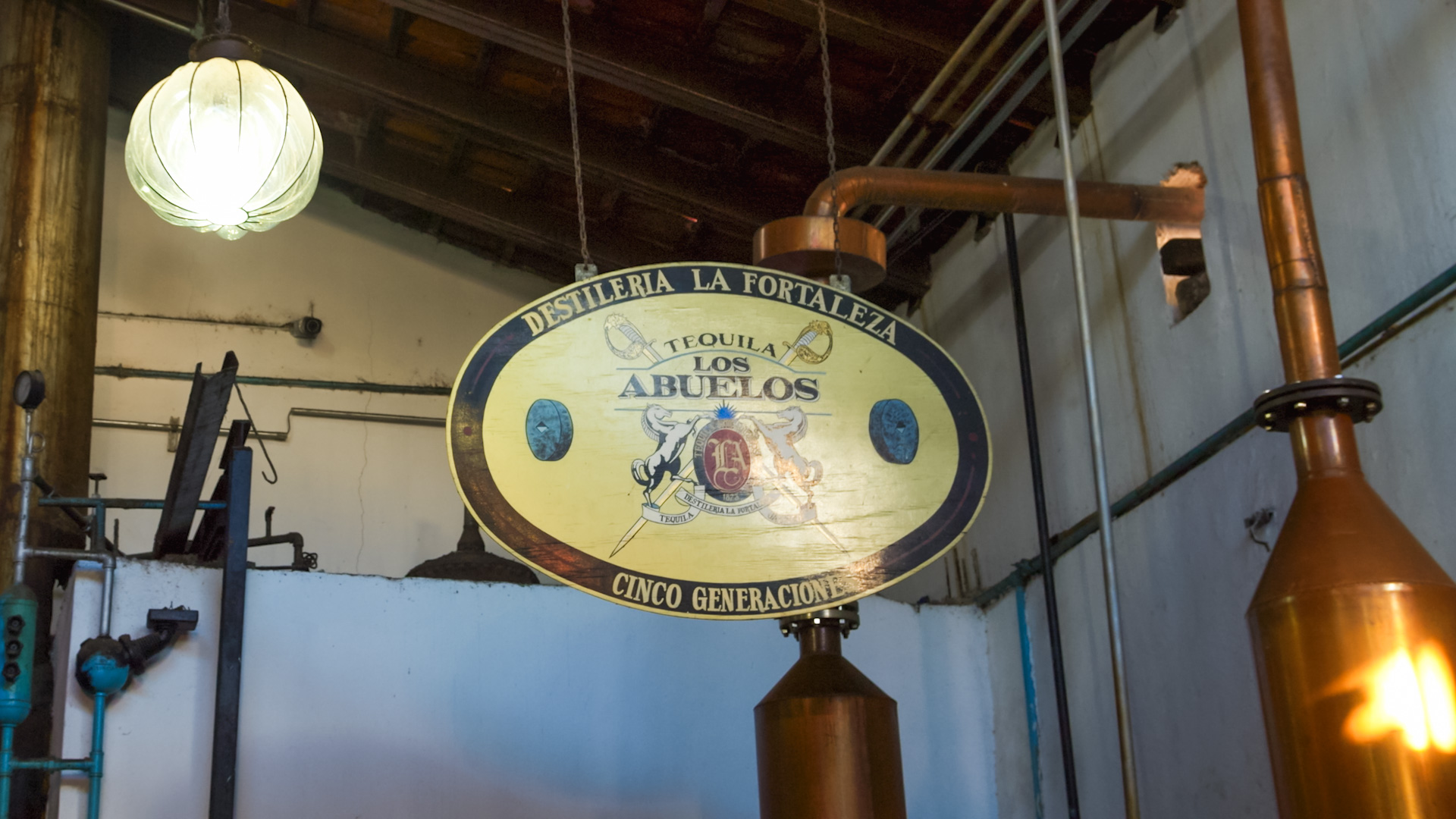
This is the kingdom - immaculately kept, family-oriented, timeless - of Guillermo Sauza, who greets us while sitting under a tree, on the shore of a small lake crossed by a replica of San Francisco’s Golden Gate Bridge. That might sound surreal anywhere else, but not in Mexico. Guillermo has sky-colored eyes, magnificent white handlebar mustache, massive rings, a cowboy hat and, exceptionally today, he’s not wearing his usual biker-style leather vest. He is the grandson of Javier, once disinherited for marrying a Cuervo lady, and the last Sauza to own the namesake distillery, that was opened in 1873 by the legendary Don Cenobio, formerly called Antigua Cruz, and was then sold in the 1970s, and eventually acquired by the Japanese group Suntory.
Guillermo è cresciuto negli Stati Uniti, ma l’idea di essere il primo Sauza senza una distilleria non l’ha mai digerita. Così, dopo aver raccolto i fondi necessari, nel 1999 è tornato a Tequila e ha riaperto la vecchia distilleria a tahona, ovvero con la macina di pietra, chiusa nel 1968 e nel frattempo diventata un museo: La Fortaleza, che formava un trittico insieme a La Perseverancia e La Constancia.
“La nostra missione è sempre stata una”, spiega davanti a un taco di pesce e a un Tommy’s margarita: “continuare a fare tequila come mio nonno”.
Guillermo grew up in the United States, but he never accepted being the first Sauza without a distillery. So, after raising the necessary funds, in 1999 he returned to Tequila and reopened the old tahona distillery – that is, where stone wheels crush the agave - that had been shut down in 1968 and had turned into a museum: La Fortaleza, which formed a trio with La Perseverancia and La Constancia.
“We’ve always had just one mission,” he explains over fish tacos and Tommy’s margaritas: “to keep making tequila the way my grandfather did.” That’s why the distillery is actually called Los Abuelos – that is, “The Grandparents” - although a legal dispute with Panamanian rum Abuelo forced Guillermo to rename the tequila itself for international markets as Fortaleza.
This sense of family, of domestic history, is palpable everywhere, more frequent than the smoke rising from nearby hills, where a few acres of agave are burning. Photos of ancestors are everywhere, lined up on the walls like rows of agave plants. “Here we take care of the land, we even plant trees. My dream is to grow at least one specimen of every agave variety, like a botanical garden,” explains Guillermo as we tour the fields at sunset in golf carts, the air veiled with smoke from the fires.
This man with a Yankee accent, who justifies Trump’s tariffs and calls Cristalino tequila a “girly men spirit” not caring about political correctness, is filled with nostalgia and a deep sense of belonging. He’s a lovable rebel who seems to cradle the memory of his grandparents by caring for the land, the family home, and, of course, his tequila: “We don’t do shows here. We make quality.”
And indeed, craftsmanship appears to be the only guiding star here, starting with the hand-blown glass bottles. In the room where resin piña-shaped caps are carved by hand and bottles are filled using grandfather Javier’s old manual machine, as well as in the warehouse, where about 300 barrels of Reposado and Añejo rest: everything operates on a human scale.
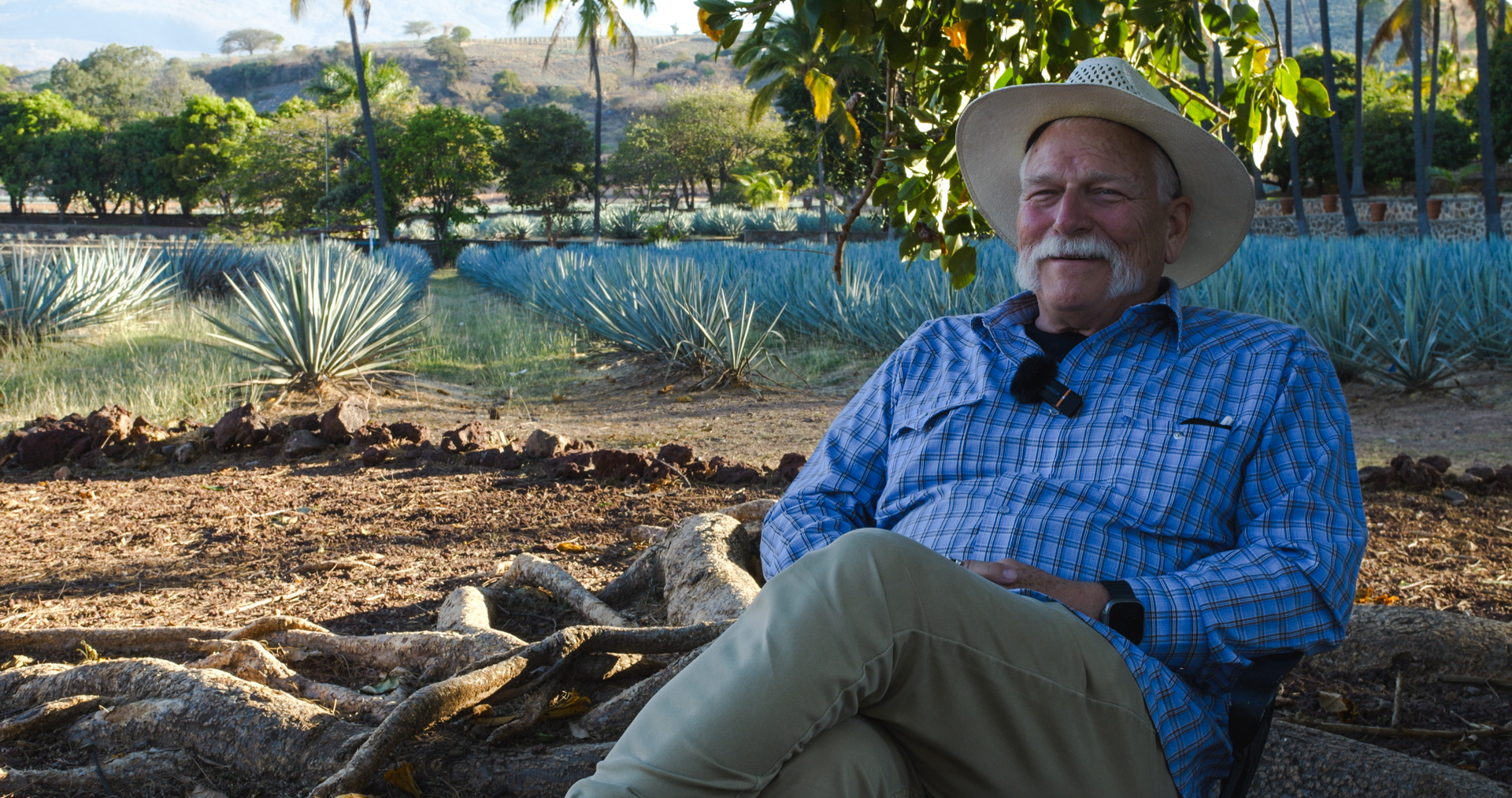
Guillermo employs 110 people, whose 8 in the distillery. Every year, Fortaleza produces 400,000 liters: that’s how much tequila José Cuervo produces in a single day. “Small, but good juice,” he smiles proudly in the rock-carved cellar where tastings are held for bartenders and aficionados who come all the way here. Thanks to its uniquely conservative and traditional approach, Fortaleza has become a symbol of resistance against multinationals and has built up significant hype: 50,000 followers, adoring mixologists and industry-wide admiration.
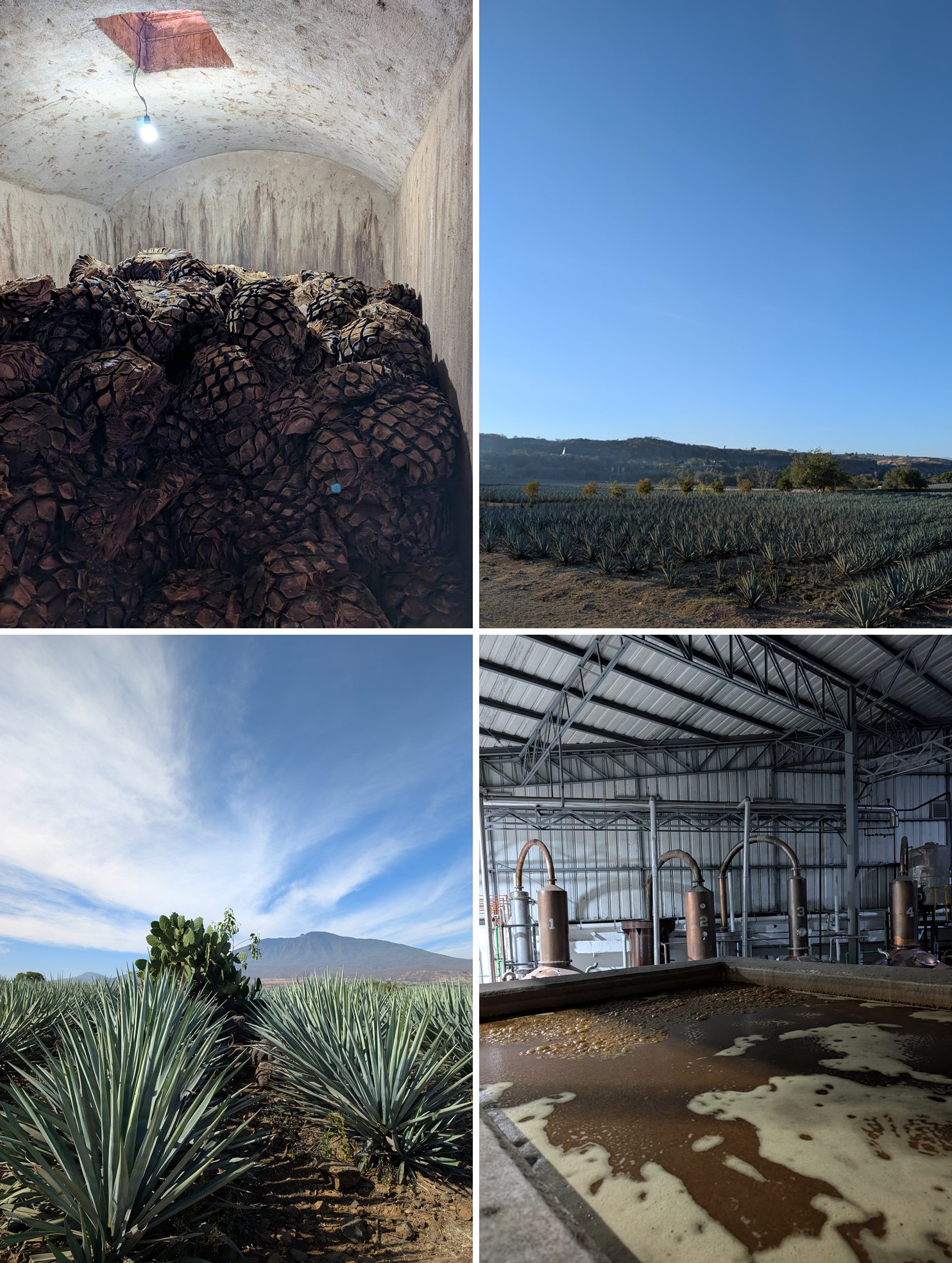
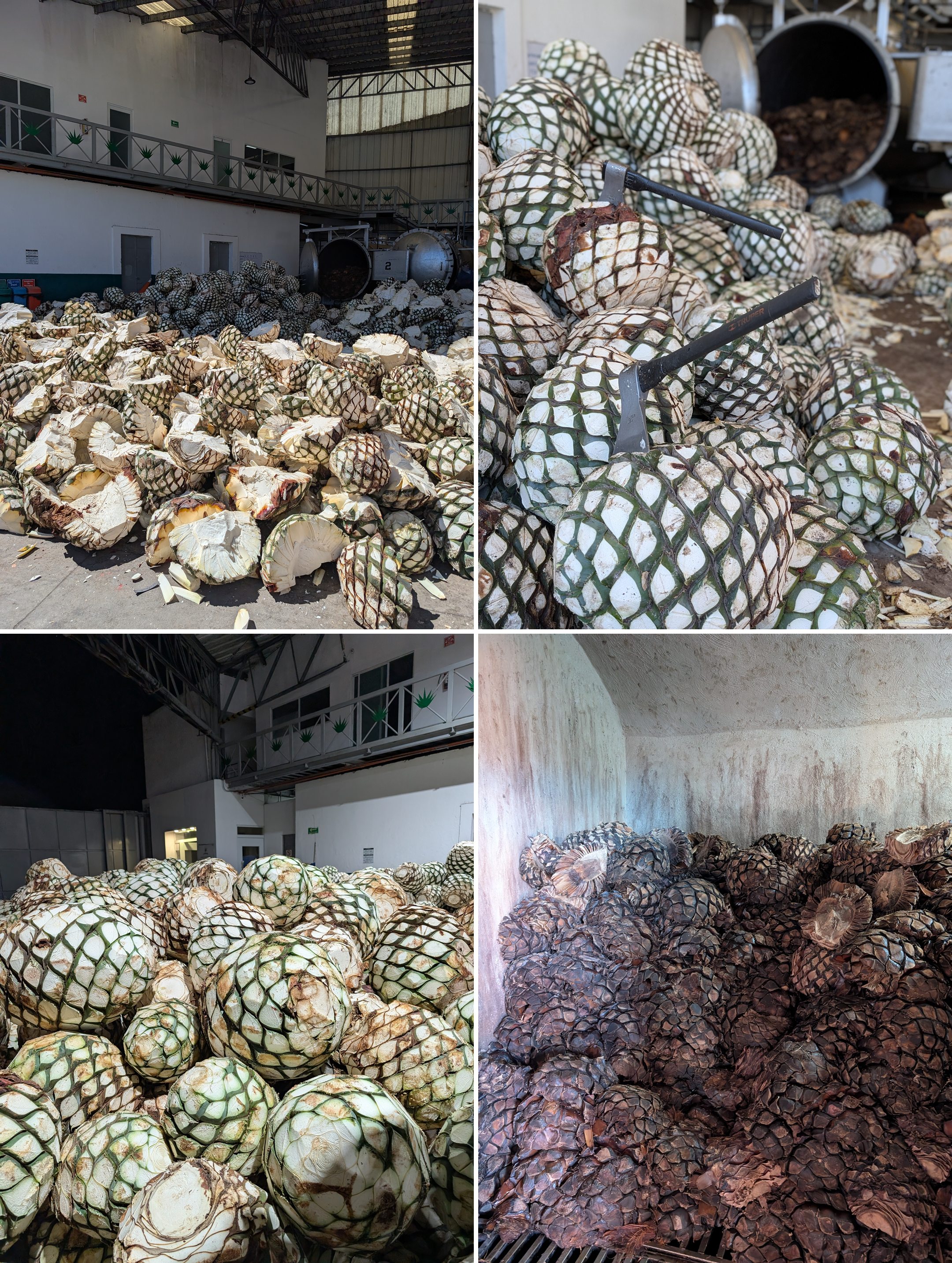
An admiration that’s even more justified if you take a close look at their production. Agave is harvested within nine months of the quijote (the flowering stalk) being cut - i.e., when it reaches full maturity (about seven years). The piñas are split by the only machine on-site, then cooked in two concrete ovens of 15 and 28 tons, and steam heated from a diesel boiler. The milling is done with the Chilean tahona, typical of mezcal: it is a 2.5 ton volcanic stone wheel that’s not pulled by donkeys - Guillermo’s grandfather had 500 - but by an electric tractor, which takes two hours to crush three tons of agave.
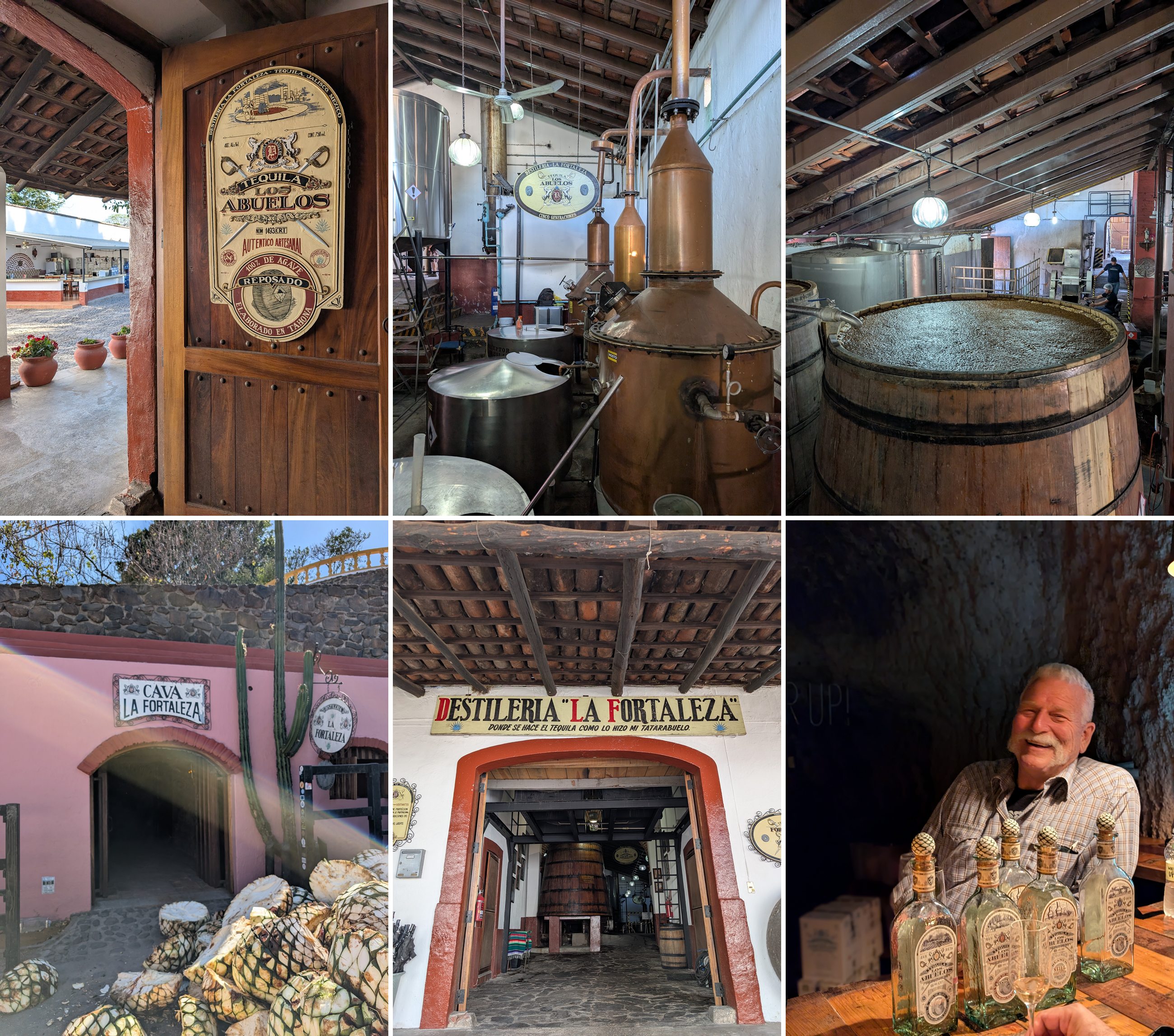
Currently, Fortaleza is the only distillery in Tequila using 100% tahona-milled agave. It’s also surely one of the few to include an extra step: after milling, water is poured over the tahona for two hours, washing the crushed fibers to obtain a Brix level of 10.5 to 11.5: a step that allows for better juice control.
Fermentation takes place in ten 6,000 liter wooden vats, lasting between 50 and 72 hours depending on the season, using a selected live yeast. Distillation is double, using copper pot stills: the first distillation, in a 700 liter still, yields a spirit at 17% - the ordinario - while the second one, in 400 liter stills, produces tequila at 46%. Heads are 6–8 liters, hearts 180–190, and tails 6–7 liters.
Is that normal? Not really. “Maybe three distilleries in the whole tequila industry work this way,” says Guillermo as the sun sets and the sweet, smoky smell of burning agave fields fills the air. He pours everyone a glass of Winter Blend, a special edition aged in selected barrels, and serves himself an Añejo, his favorite. He raises a toast: “Quality before quantity, tradition above everything else.”
George Clooney and the dystopian diffuser have never been so far away…
El Tequileño, the Pride of Belonging
Being “Mexico’s best-kept secret” is rather a matter of pride than prejudice, as Jane Austen kinda said. This is not an advertising slogan: it’s reality. Until a few years ago, El Tequileño bottles had never crossed the borders of Mexico and, to be honest, they were even rarely seen outside the State of Jalisco. “In the 1970s, out of every ten spirits bottles sold in the state of Jalisco, regardless of the category, six were Tequileño,” says Don Juan Antonio Salles Cuervo, son of the founder Don Jorge and one of the four men to be ever awarded the title of Gran Tequilero.
As a matter of fact, this was a tequila that was born, produced, sold and consumed in Tequila. In other words: “Orgullo local.”
On the terrace of Hotel Boutique Casa Salles, a splendid facility opened in 2019 to welcome guests and visitors to the adjacent distillery, we meet the generations who have grown the El Tequileño brand. Alongside the elegant, mustachioed Juan Antonio are his sons: Tony, the master distiller, and Leopoldo, known as “Polo,” the commercial director. As we speak with them, we go over the company’s history and philosophy. With Steffin Oghene, a Scotsman in love with tequila and Vice President of Export, we explore the production style. In both cases, it feels like stepping into a family, and also into its well-guarded secrets.
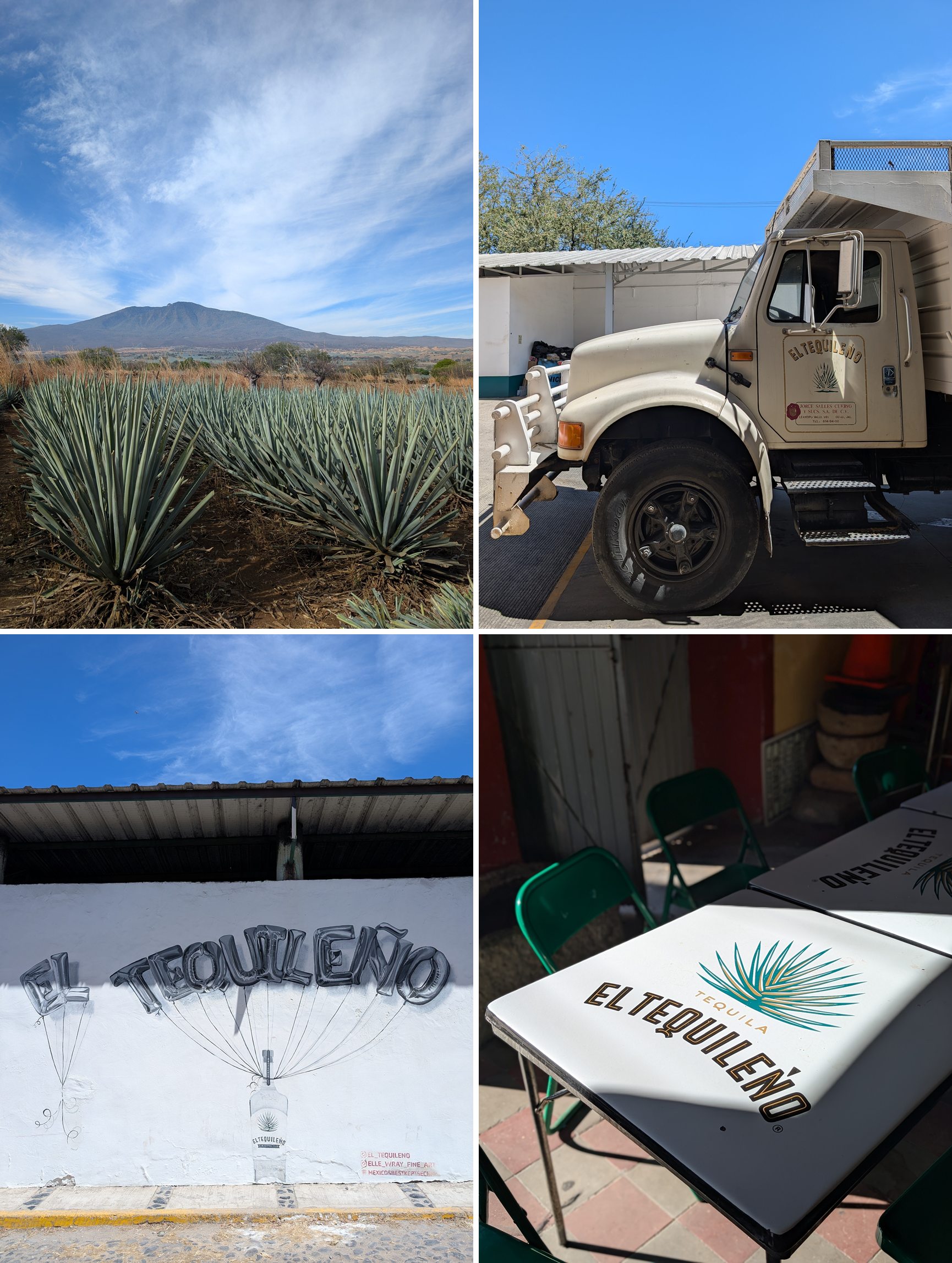
If Fortaleza was born from a Sauza, El Tequileño was born from a Cuervo: that is, Don Jorge, who from 1941 distilled tequila for the giant José Cuervo at the La Guarena plant. Then in 1958, when the company expanded its facilities, the “parent company” stopped buying from him, and the following year he struck out on his own and founded his brand, “dedicated to the citizens of Tequila.”
Don Jorge was unstoppable, traveling all over Jalisco to get people to try his nectar. Charismatic and generous, he personally delivered bottles to every tavern and bar. Producer, salesman and brand ambassador all at once, he was an agave one-man band and a kind of hometown hero. He made El Tequileño an institution, linking his brand forever with the city’s most authentic cocktail, served in its most authentic bar: La Batanga at La Capilla.
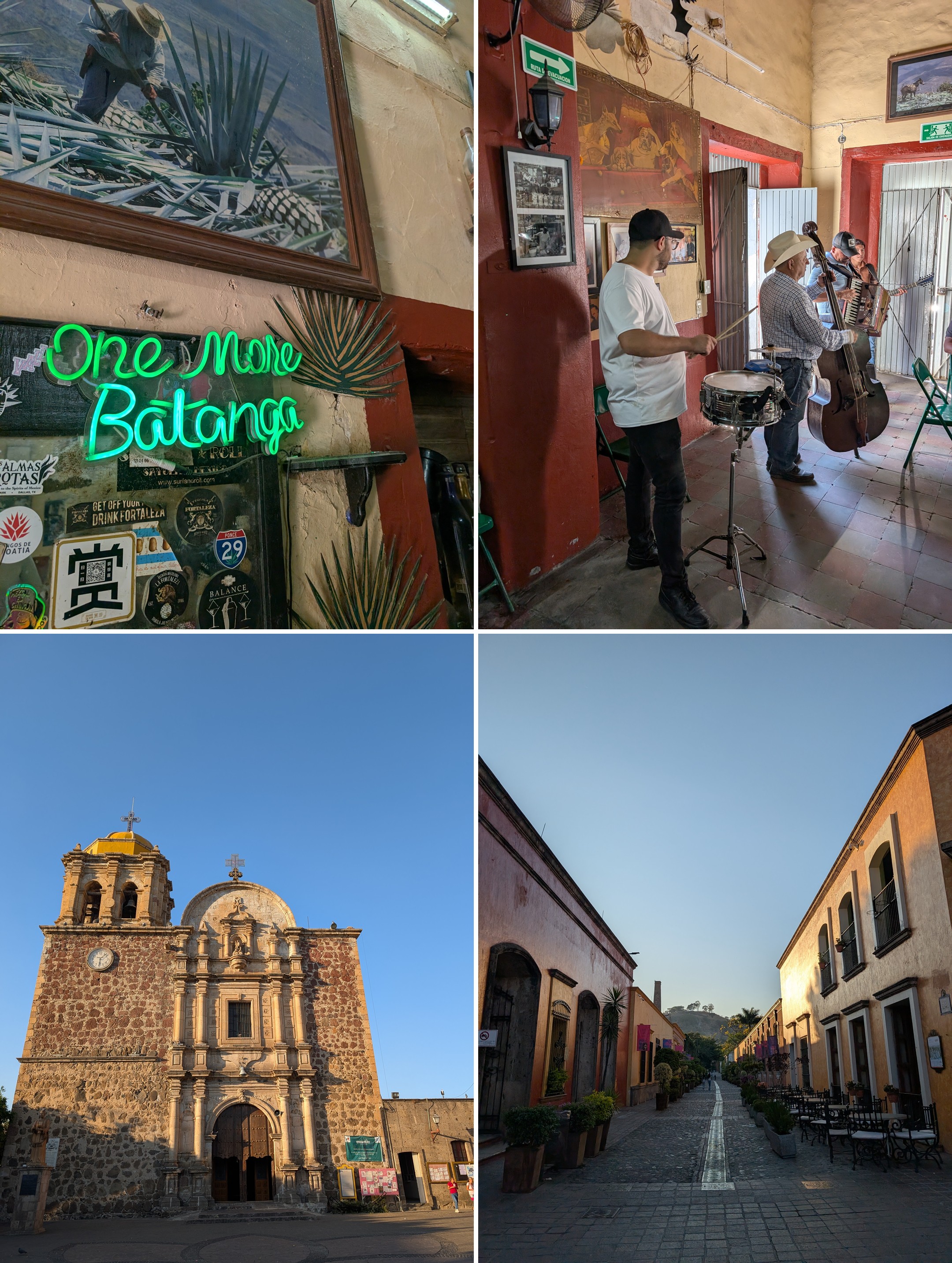
La Capilla looks like a philosophical antidote to those trendy bars fighting for a spot on the “50 Best Bars” list. It’s raw and real, with vintage raunchy posters of scantily clad Mexican women downing shots all over the walls: like the kinds of bars you’d find in the countryside, where old men play cards and frequently invoke the divine, not always reverently. No one really knows when it opened, but it’s the oldest bar in the city. It sits on a corner between two central streets, across from a knick-knack shop. On the building there is a mural of founder Don Javier Delgado Corona, who died at 95 after inventing in 1961 a drink that is the very essence of tequila.
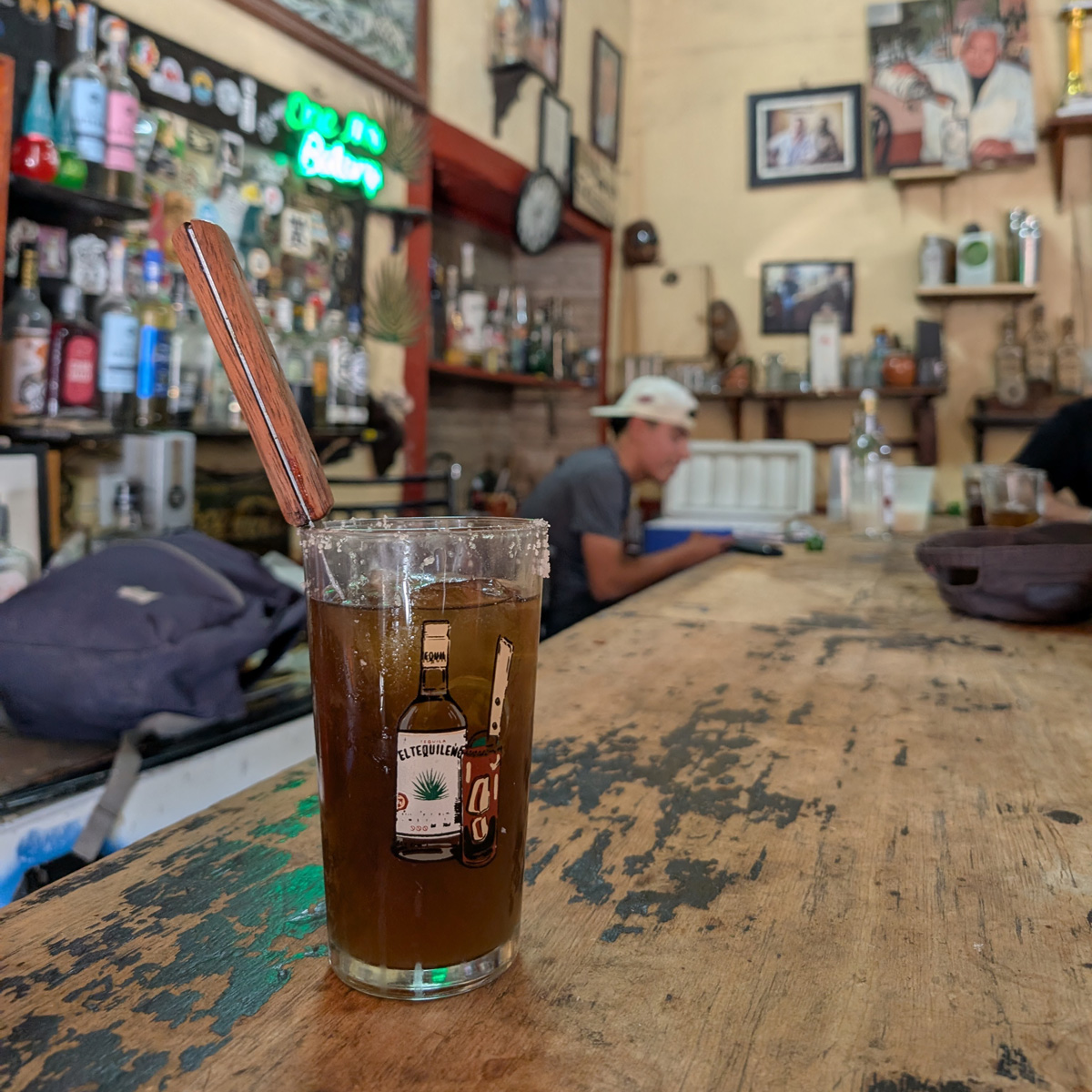
The Batanga can be roughly categorized as a twist on the Cuba Libre: a hefty pinch of salt at the bottom of the glass, lime juice, half-hectolitre of El Tequileño blanco, Mexican Coca-Cola (sweetened with raw cane sugar instead of the high-fructose corn syrup used in the U.S.), and a salt rim. The scene of the two young bartenders pouring the tequila sends a chill down your spine, not because they traditionally stir the drink with the same knife used to slice limes, avocado and cilantro for guacamole - though that might add a hint of extra flavor. No, your blood freezes because you think that such a large quantity of tequila might knock you out on the spot. And instead…
Instead, the balance between the salt, citrus, and Coca-Cola sweetness results in a delicious, unpretentious drink: the perfect mirror of the city’s true soul, which gradually emerges and becomes appreciable to anyone patient enough to look past the tourism and marketing.
And actually, El Tequileño’s soul is not different. You can see it in the production style of a distillery that feels like the most natural link between artisanal producers and major industrial players. The facility is just a few dozen meters from Fortaleza, on the city’s western outskirts. After expansion, it has a capacity of 300,000 cases per year (almost 1.2 million litres), but it currently operates at less than 50%: globally, 130,000 cases are sold in 28 countries.
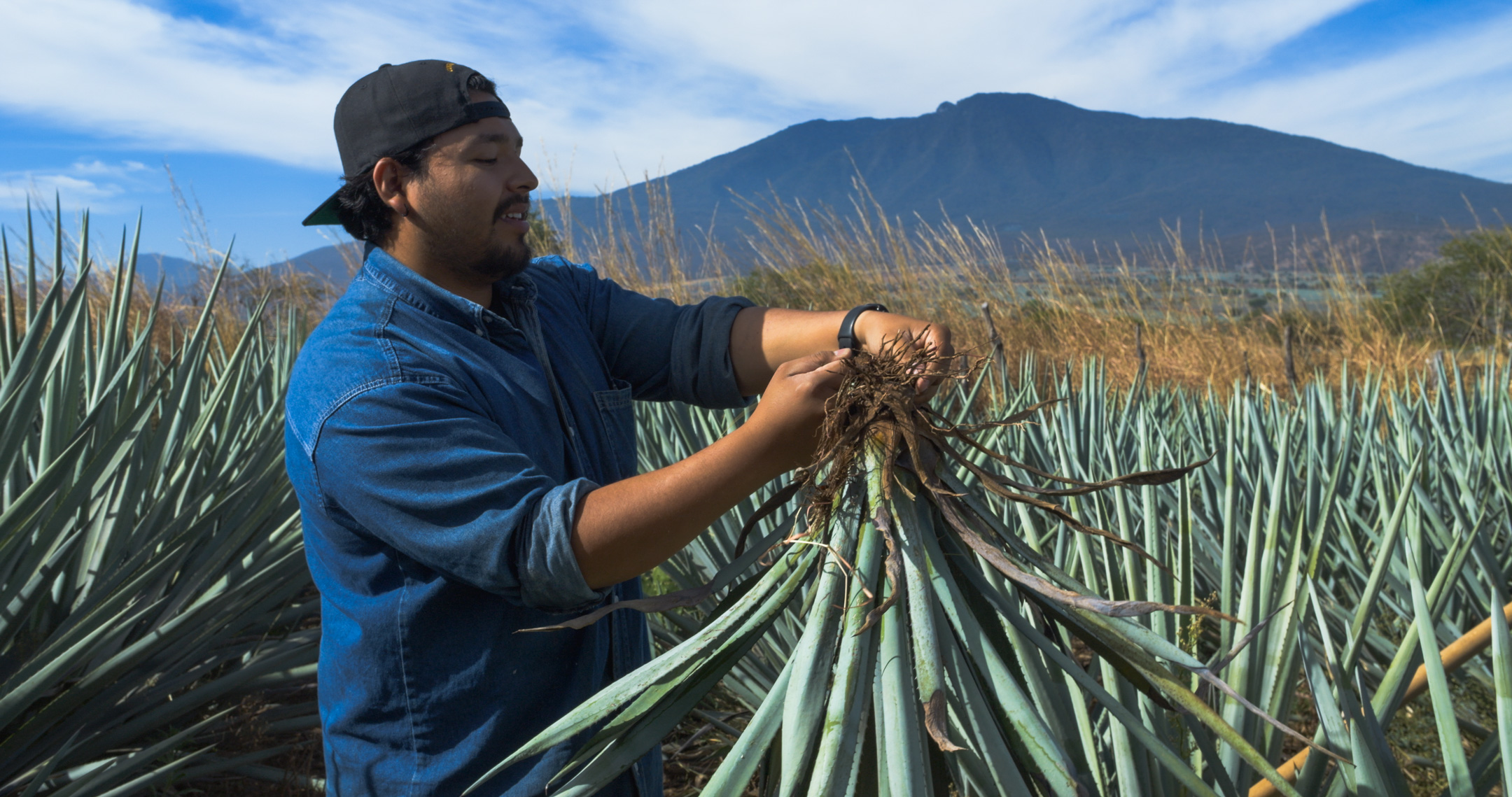
This isn’t a small workshop: it’s a real, modern distillery. “The only difference here,” says Steffin with a smile, “is that we work in the traditional way, starting with the agave.”
Well, it all starts with the plants, which El Tequileño cultivates in the Los Altos region, near Tototlán, “where the iron-rich soil gives the agave a more floral and fruitier aroma, while Tequila’s volcanic terroir yields more earthy and vegetal notes.” In Los Altos, 14 employees take care of the agave plants and decide when they’re ready. If the modern industry, using diffusers and additives, can use many unripe plants, the workers here never use agave younger than six years, even if they don’t wait for the quijote to develop. In order to know if it’s ripe, they look at the color of the core: if it’s yellow-green, it’s ready.
“We use mature agave for three reasons,” Steffin continues, “for aroma, sugar content and methanol levels. With younger plants - say four years old, which is the industry average - you get a less sweet juice, that yields more vegetal and black pepper notes during distillation. With mature plants, white pepper is typical.” Subtle differences? Not at all: “In fact, the taste of a modern tequila made with young plants and additives compared to a traditional tequila looks like the taste of a green banana versus a very ripe one.” A whole different story.
In the courtyard in front of the distillery, the piñas arrive. Some have brown spots: a sign of maturity known as “pinto.” The cooking is done in autoclaves, which Don Jorge was the first to introduce. His father had been an engineer and had built the railway from Texas to Guatemala. When some of the tank cars were decommissioned, he sent them to his son, who repurposed them. The autoclaves in use today are still those same train cars. Steam only enters at the front, and cooking lasts 16 hours - 8 under pressure, 8 at normal conditions. Then, 24 hours of cooling follow.
The milling is mechanical and takes place in four different mills, where water from the Tequila Volcano’s aquifer is added - a privilege only four distilleries can boast. When milling is over, the aguamiel (agave juice) is collected in a “formulation tank” to be adjusted: if the Brix level is below 11%, the first syrup created during cooking is added back in. This syrup is kept aside because of its slightly bitter aftertaste.
Once the aguamiel is ready, two production paths can be followed. The regulations require at least 51% agave content to be labeled tequila; the rest can come from cane sugar or other sweeteners. On the other hand, some producers use 100% agave, as Steffin explains: “It all depends on the costs. In the past, mixto was the norm because sugar was considered more expensive and finer than agave juice: its use was seen as an upgrade. In the 1980s, with the introduction of the sugar tax, it became uneconomical, and 100% agave took off. Before the tax increase took effect, Don Jorge had bought four warehouses full of sugar: we finished the last one in 2022.”
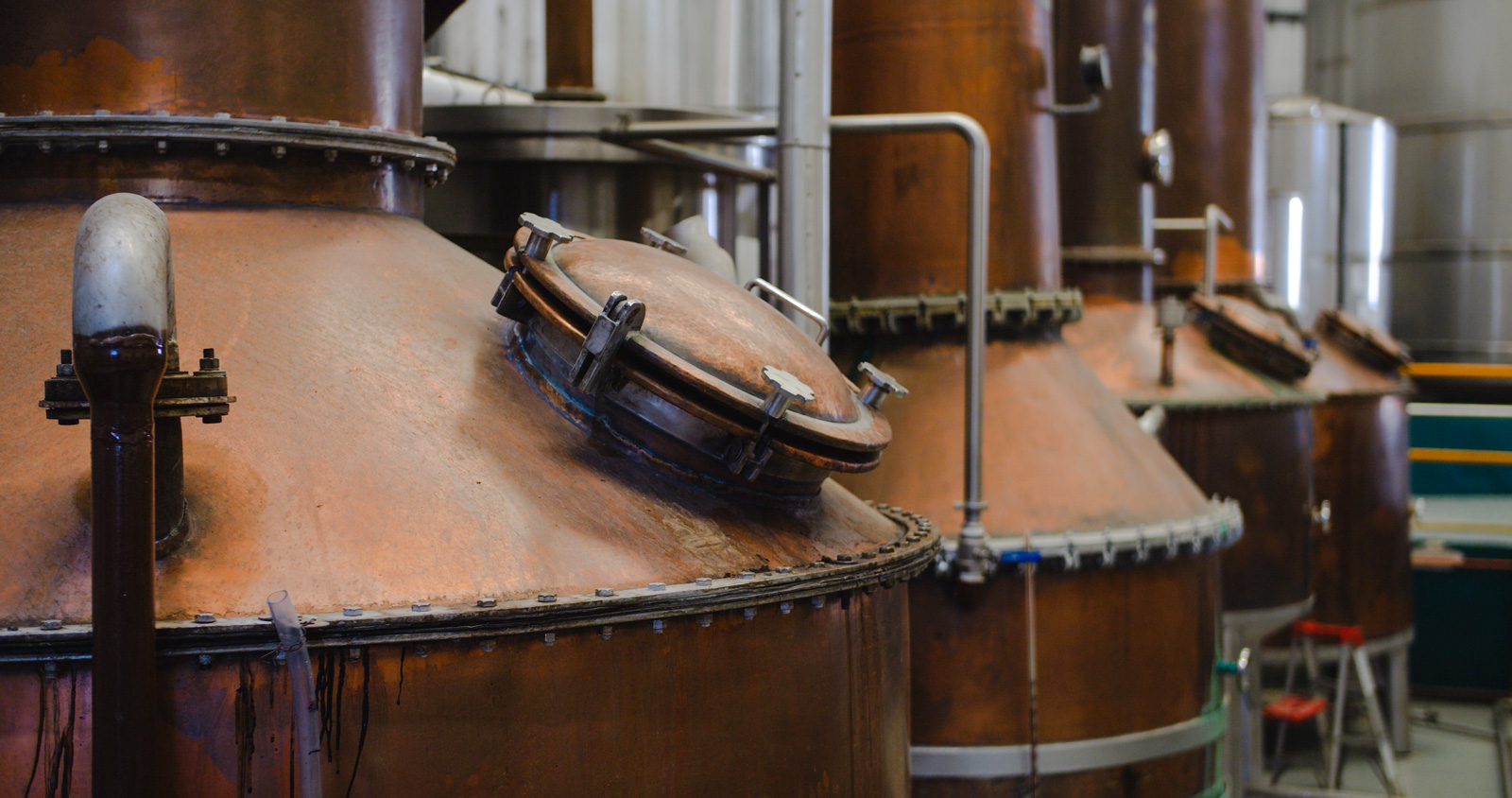
Today, El Tequileño produces both styles: for the Blanco, piloncillo is added to the aguamiel - these are cone-shaped chunks of cane molasses - while for the 100% agave, only pure juice is used.
The next step is fermentation, which happens in eleven concrete tanks of various capacities. The proprietary yeast (the same used for 66 years) is added, and the process takes between two and four days, depending on temperature. The fermented liquid is then poured into copper pot stills, which is noteworthy: only 13 producers prefer them over the more economical stainless steel. The first distillation happens in 5,000 liter stills, and the ordinario comes out at 27%. The second distillation takes place in stills of 3,000 and 2,500 liters, and tequila comes out between 50% and 52% ABV.
“But it’s bottled at 42% because… it’s always been done that way,” all the family members confirm.
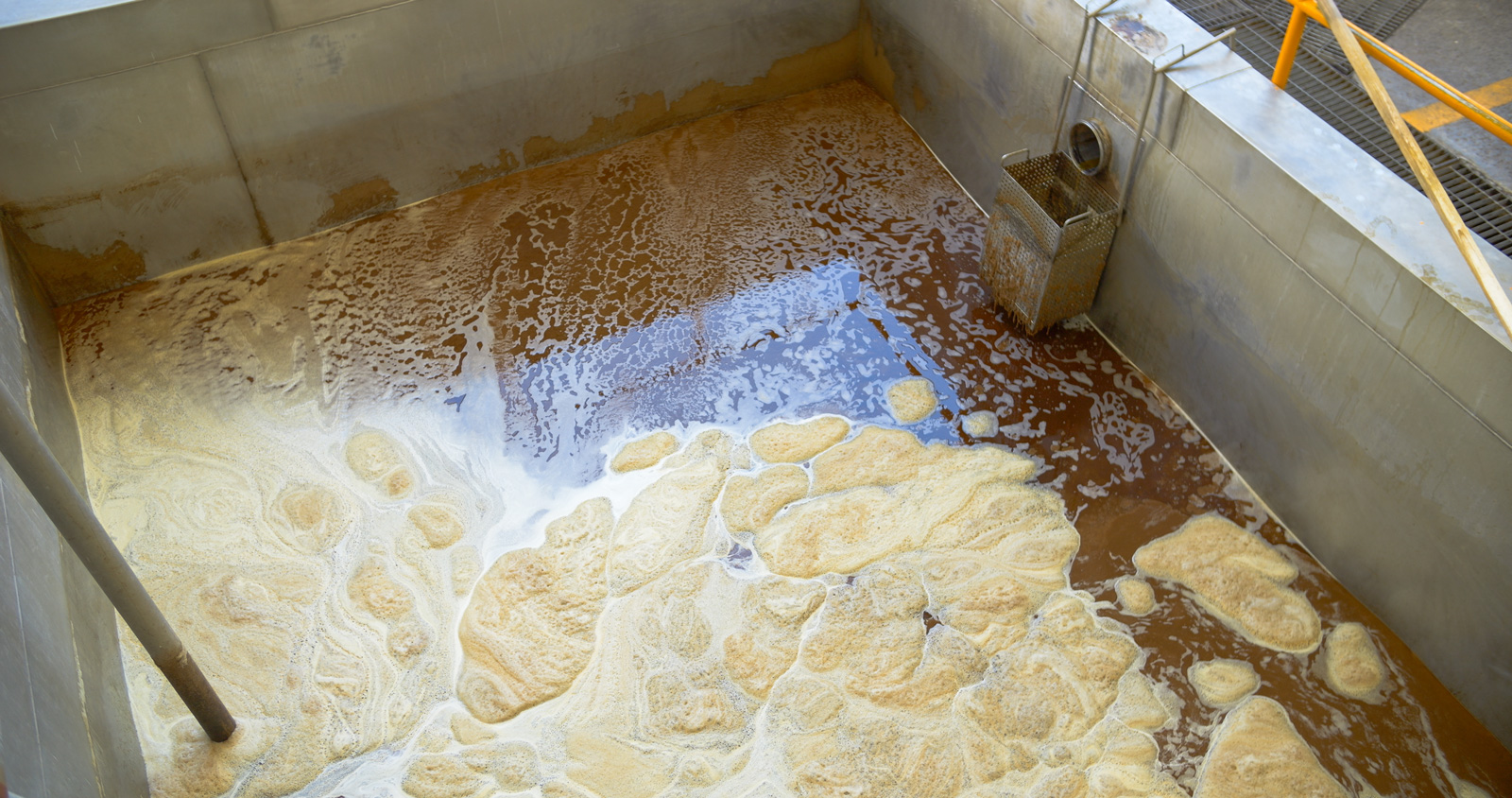
The final stages - aging, bottling, and storage - take place at facilities near Guadalajara.
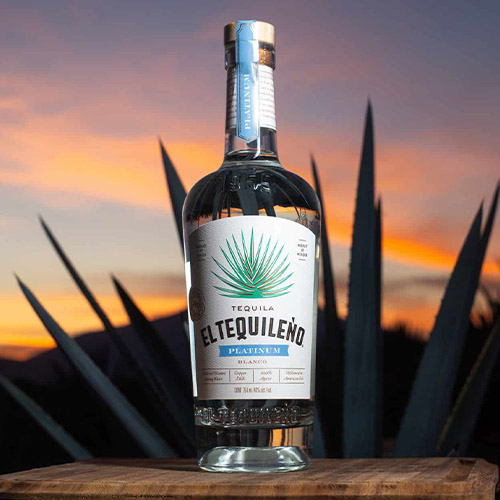
At the end of the tour, even more immersive and fascinating during night, guided by master distiller Tony, it’s time to taste the range. In addition to the Blanco mixto there’s a bold Still Strength, a Platinum 100% agave, a Cristalino (Tony initially refused to make it, but the younger and female market demands it - four out of the five best-selling tequilas in Mexico are Cristalinos, i.e., Reposados filtered with activated charcoal, explains Steffin), a Reposado, and an Añejo. They are straightforward tequilas, with great chewiness and persistence, that showcase the best qualities and character of this spirit - and, by reflection, of this place.
After all, perhaps the truth, as is often the case, lies somewhere in the middle.
If mezcal has an ancestral, micro-artisanal approach, with its infinite variety of agave species, wild yeasts and archaic techniques like underground ovens and terracotta stills, on the other hand tequila offers greater control over every production phase, along with a more open attitude toward technological innovation and pure business. This can lead to industrial excesses and unsustainable land exploitation, but can also allow for serious, healthy and tradition-respecting economic development.
It all depends on how much heart and conscience Tequileros can bring to their job as well as how much people want to truly understand it.