






Raicilla Amidst Tequila
In the heart of Tequila territory lies a different, more bucolic world, with structures more similar to those of Mezcal: a world where the effort is evident not only to produce volume but to pursue quality, albeit on a different production scale. We’re talking about Raicilla.
The Hidden Soul of Mexican Agave
Less known internationally compared to its more famous “relatives” such as Tequila and Mezcal, Raicilla is quickly gaining the attention of enthusiasts thanks to its aromatic richness and deep connection to the land. With over three centuries of history and a Protected Designation of Origin, it represents not only a rooted tradition, but also a unique expression of Mexican cultural heritage.
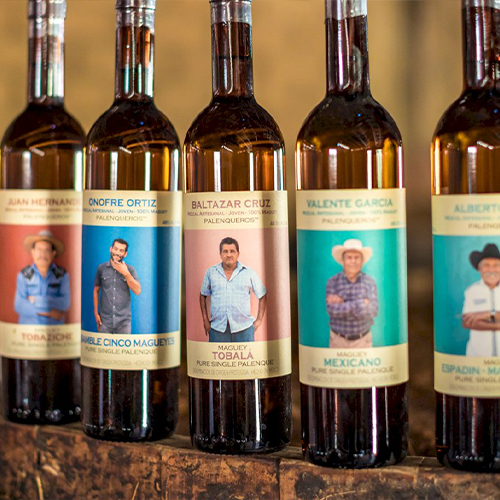
Produced from various species of agave and shaped by environmental and human factors, Raicilla is the result of knowledge passed down through generations by maestros raicilleros.
There is no clear historical point of origin for most agave spirits in Mexico, whether Raicilla, Mezcal, Tequila, Sotol, or Bacanora. In the past century, all of these products were simply called “Vino de Mezcal.” In many northern regions of Mexico, agave itself is still referred to as “mezcal.”
The common belief is that distillation arrived in the Americas with the Spanish, who landed in Mexico with the conquest of 1521 and established a colony. However, this assumption is changing. The historical discoveries of Patricia Columbo and Daniel Zizumbo are proving that distillation was already present in Mexico 3,500 years ago, with techniques very similar to those used in the Philippines for coconut. Evidence includes the discovery of the terracotta pot called Cachapa, ovens and underground fermentation pits found in the Armería-Ayuquila river basin in Colima and southern Jalisco. The first historical records tied to the Spanish date back to the late 1500s.
In fact, agave is a plant historically embedded in Mexican culture in many forms: used to make clothing, rope from its fibers, animal fodder and food. Pulque - a beverage made by fermenting agave sap - played a major role in the diet of the poor during Spanish colonial rule.
We Mexicans have a deep ancestral relationship with agave; there are few plant species with such a vast social history as agave and corn.
A Recent Denomination of Origin
Raicilla’s Denomination of Origin is quite recent. Mezcal received its designation in 1994 and Tequila in 1977, but Raicilla had to wait until 2019. We now have a Promotional Council, but its official regulation, NOM 257, is still in draft form.
As a result, there are no formal statistics yet for Raicilla, although about 500,000 liters were reportedly produced in 2024.
By comparison, according to the CRT (Tequila Regulatory Council), 195.13 million liters of Tequila (mixed and 100%, 40% alc. vol.) were produced in 2023, and 12.24 million liters of Mezcal (artisanal, blanco at 45% alc. vol.), according to COMERCAM (Mezcal Regulatory Council). Oaxaca produces around 90% of all Mezcal, mainly from agave Angustifolia Haw (Espadín); the remaining 10% is produced by eight other Mexican states.
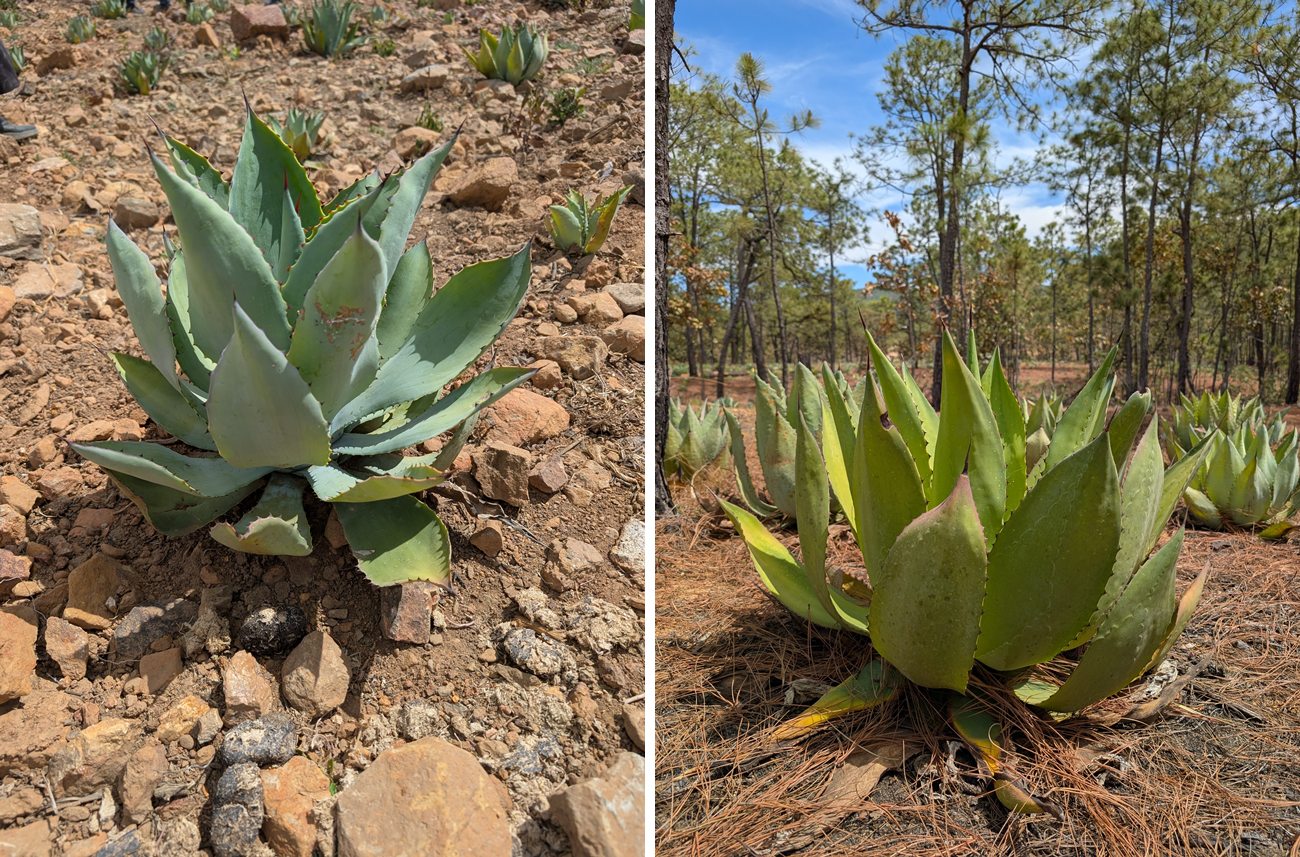
Raicilla’s Denomination of Origin includes 16 municipalities in the state of Jalisco, featuring an interesting geographic diversification: the hot and humid Costa Region with agave Angustifolia and Rhodacantha, and the temperate and dry Sierra Region, with agave Inaequidens, Valenciana, and Maximiliana. Currently, about 70% of Raicilla is produced with agave Rhodacantha.
The Denomination of Origin for Tequila, NOM-006, covers the entire state of Jalisco (125 municipalities), 30 in Michoacán, 11 in Tamaulipas, 8 in Nayarit, and 7 in Guanajuato. It requires the exclusive use of agave Tequilana Weber, commonly known as Maguey Azul.
The Denomination of Origin for Mezcal includes the states of Oaxaca, San Luis Potosí, Guerrero, Tamaulipas, and Durango, 29 municipalities in Michoacán, 116 in Puebla and 2 in Guanajuato. It allows the use of any agave species present in these territories.
The Production Process of Raicilla
In terms of production, nearly all agave distillates - Mezcal, Bacanora, Sotol, Comiteco and Tequila - are made in a similar way. It begins with cutting the agave plant, which can belong to different species. Then comes cooking, which varies depending on the type of oven used.
For milling, tools range from the most manual and simple, such as a wooden mallet in a canoe-shaped trough, to the desgarradora or the diffuser used in Tequila.
Fermentation mainly differs in volume. It can occur in a plastic tub or vasca lienzo, or in a 10,000 liter steel tank. Fermentation methods range from natural and spontaneous to larger volumes that require specially formulated yeast cocktails prepared in laboratories.
Distillation is always done twice, although the type of still varies: from the simplest, like the terracotta pot used in Santa Catarina Mina or Sola de Vega, Oaxaca, to copper stills of different styles and volumes. In some cases, a distillation column is used - a common practice in Tequila production.
A Concrete Example: The Topete Family’s Taberna
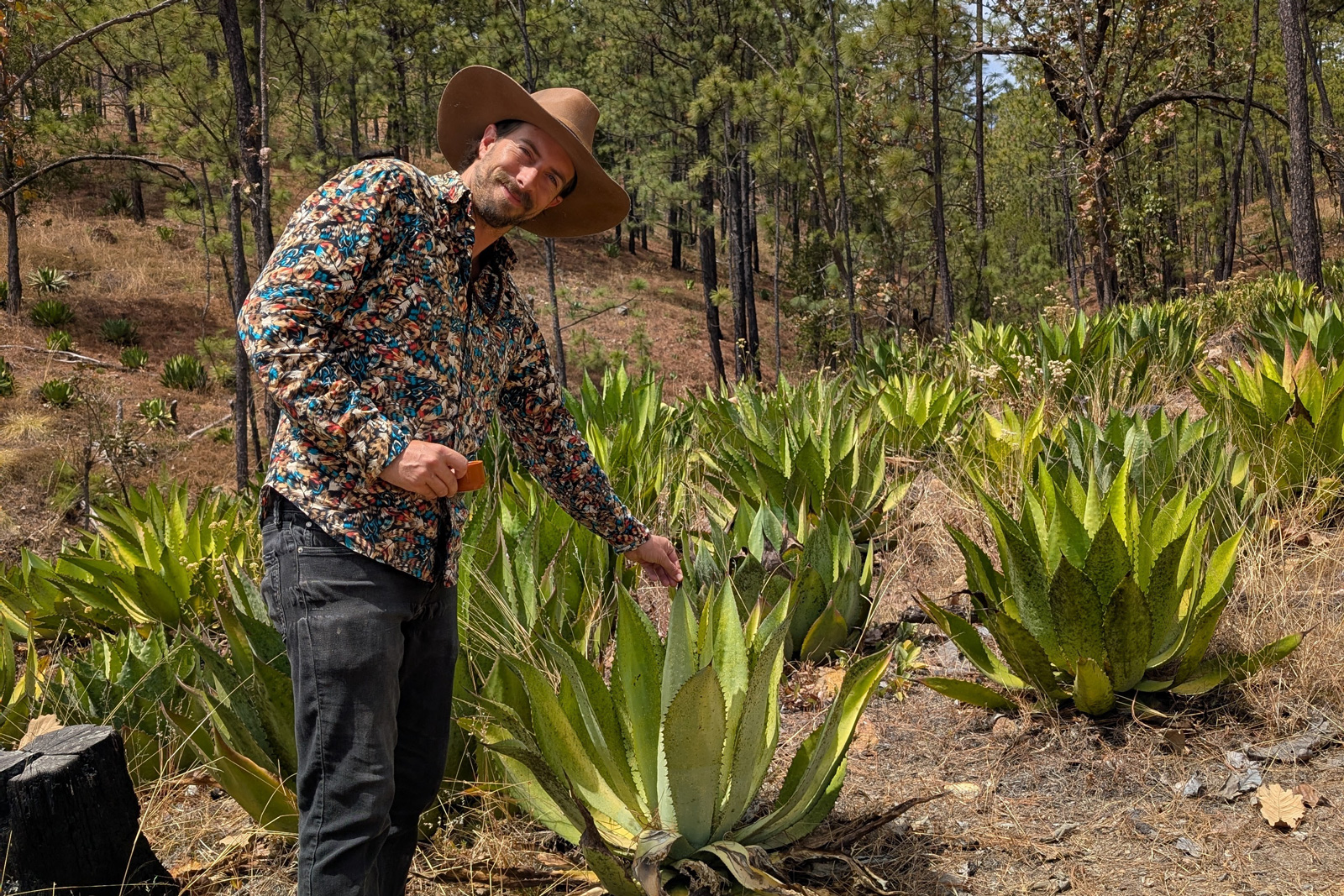
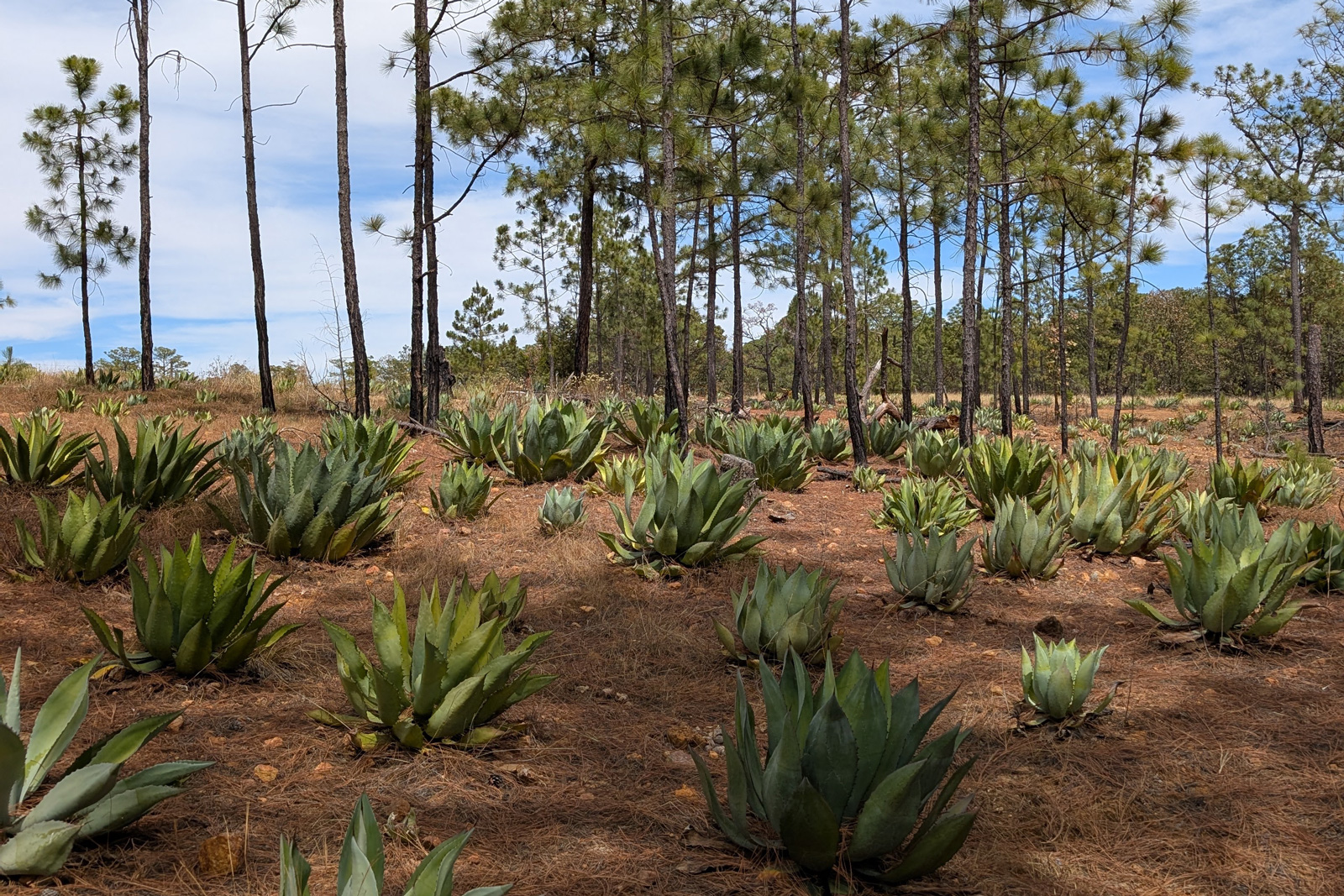
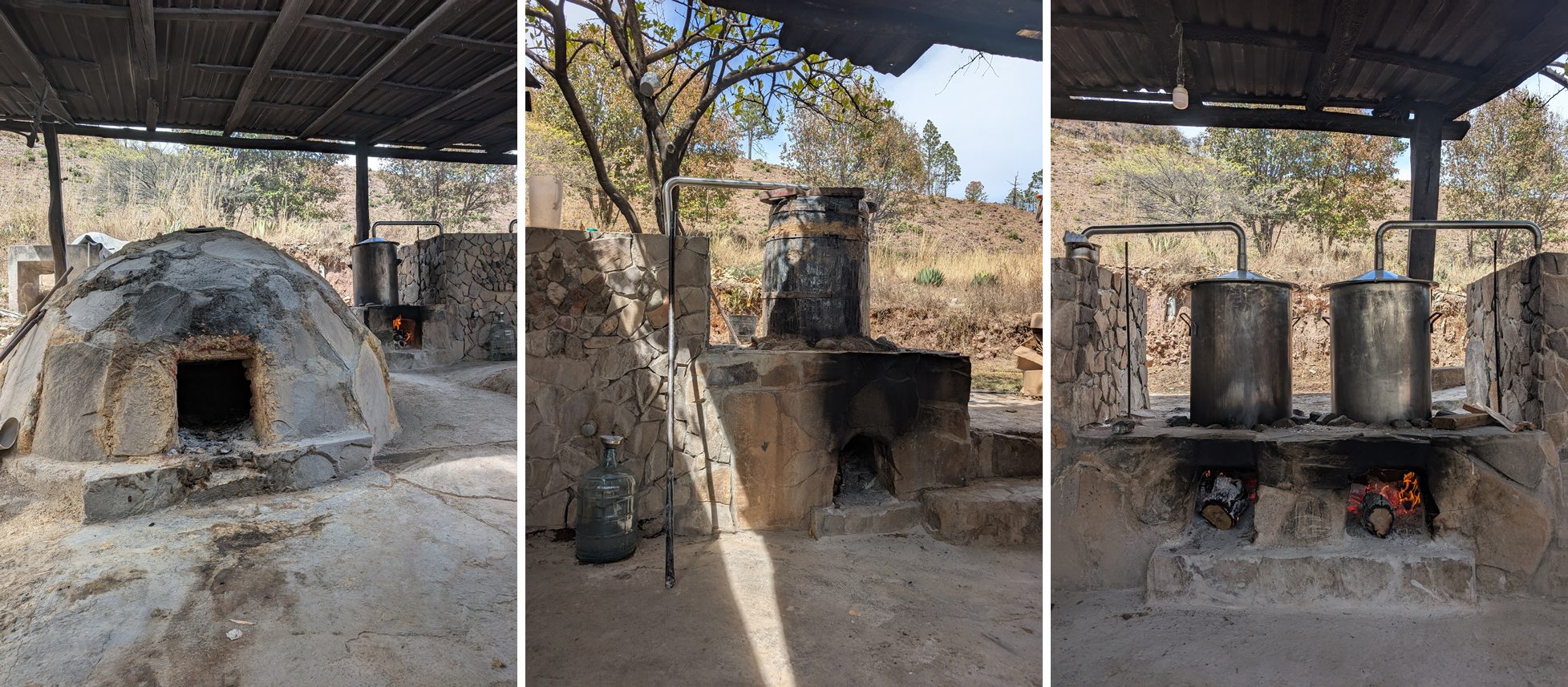
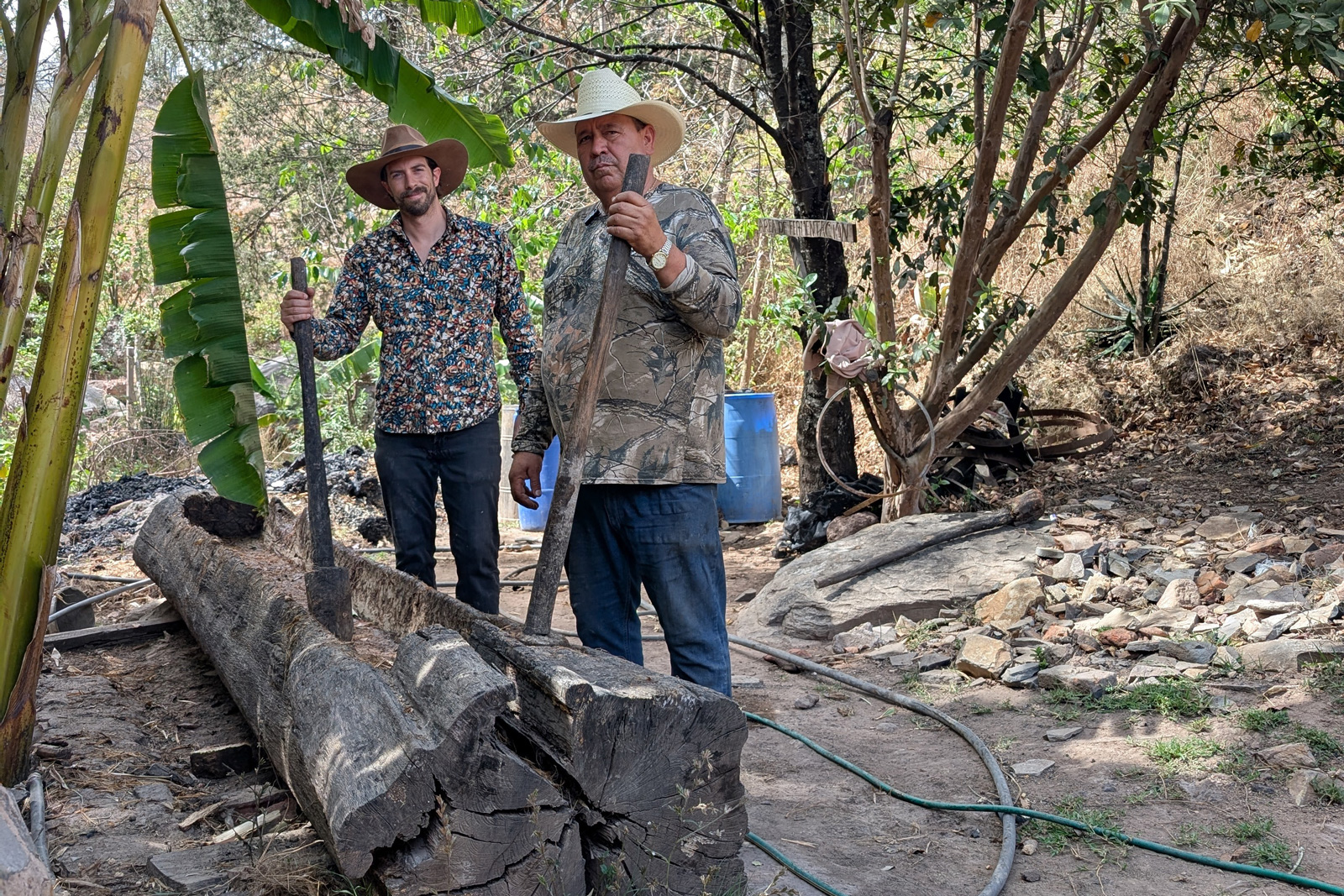
The Taberna (as distilleries are called in Jalisco, and tabernero the producer; in Oaxaca, the terms are palenque and maestro palenquero) of the Topete family is located on a ranch in the mountains near Atenguillo, at around 1,800 meters above sea level. The area features a temperate forest of conifers and deciduous trees, mainly pine and oak, which provide organic material in the soil, including humus that helps retain moisture and makes the soil fertile. In this terroir grows the agave Maximiliana, cared for by Don Julio and Cesar. It is not planted using industrial row-farming logic; instead, it grows naturally and takes 10 years to mature.
Unlike Mezcal, which generally uses a conical underground oven with a capacity between 3 and 15 tons, the Taberna uses a Panadero - type oven, similar to those used for baking bread or pizza, with a 1,500 kilo capacity. The oven is fired with wood before inserting agave, usually cut into quarters. Once inside, the oven is sealed, and the agave cooks for at least three days.
Milling is done by hand, with wooden mallets over a wooden canoe: a very labour-intensive but ancestral method, resulting in a richer raw material for fermentation.
Fermentation is natural, with no added selected yeasts, and takes place in plastic vats.
Distillation is carried out using a Filipino still with a 240 liter capacity and two simple stills of 150 liters each. There are always two discontinuous distillations, with the heads and tails cut in the second run.
As mentioned, this is a production process much more similar to Mezcal than Tequila, both in tools and volume: two very different realities in the same territory.
Raicilla: Environmental Responsibility and the Future
In my opinion, in our relationship with Pachamama and nature, every production project should involve a deep sense of environmental responsibility. The Topete family excels in this and serves as a good example: they practice respectful agriculture for agave Maximiliana, harvesting only mature plants (capón) and meticulously overseeing each production phase, from artisanal cooking to natural fermentation, to slow and precise distillation.
Raicilla, though a niche product compared to giants like Tequila and Mezcal, boasts exceptional quality. While it can sometimes present “funky” notes or imperfections, it fully reveals the personality of the plant. It is a product that embodies the identity of a people and a natural environment worth protecting. Its development must be handled wisely, starting with the number of available plants, learning from the mistakes made with Tequila and Mezcal. Growth should encompass both agricultural practices and agave transformation.
In this way, Raicilla can represent a new chapter for sustainable Mexican distillation, looking toward the future. It certainly stands in contrast to Tequila when it comes to respect for various agave species, native flora, and lands now forced into monoculture. A beautiful challenge!


