





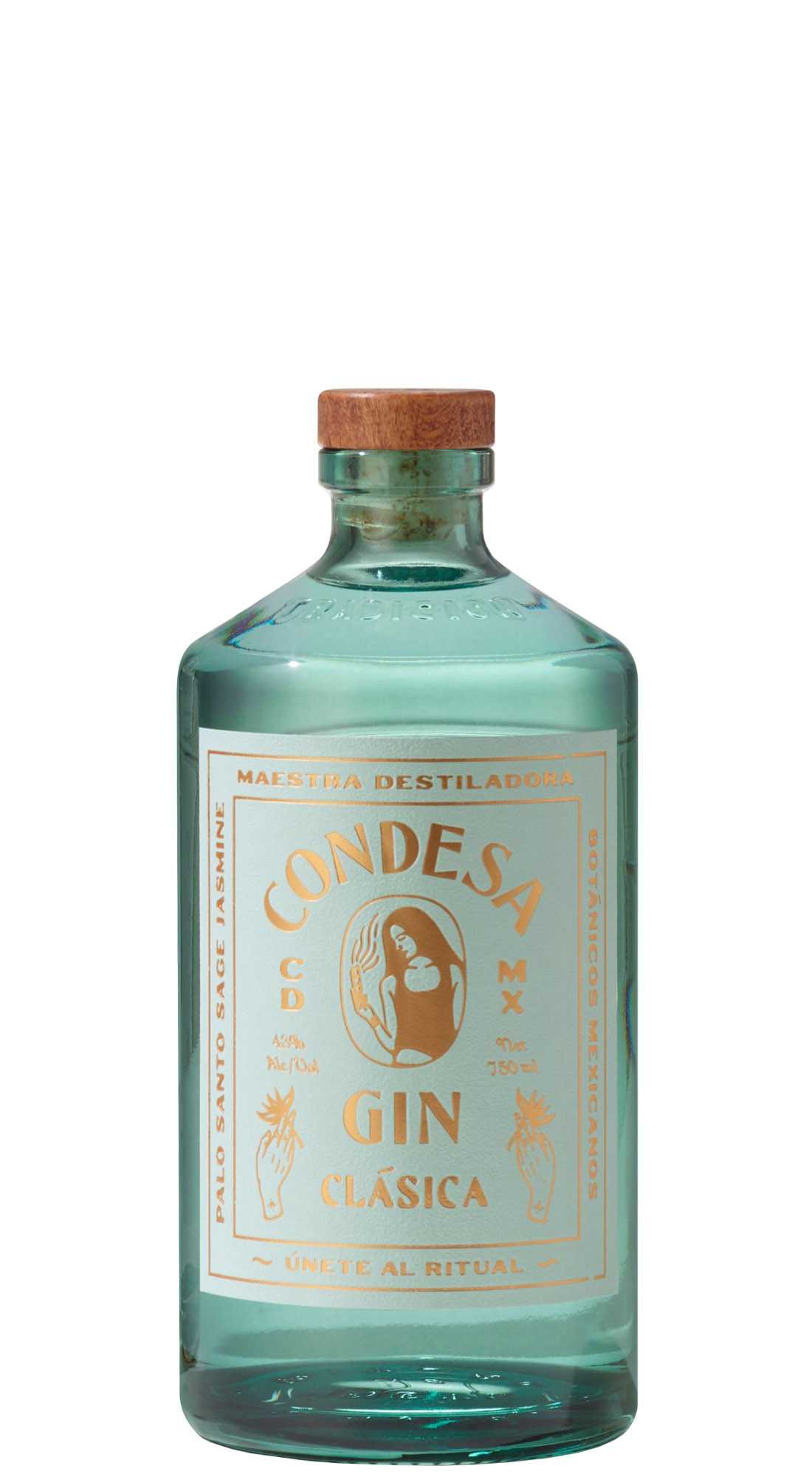
Condesa Gin Clasica
70 cl / 43°

SPIRITS
Rum
Whisk(e)y
Gin
Agave
Calvados
Armagnac
Others
VELIER LIFE
Extraperimetral
VNP
Aguilas Camp
TRAVEL
São Tomé e Principe
Mexico
Distillery Tour
Food Guide
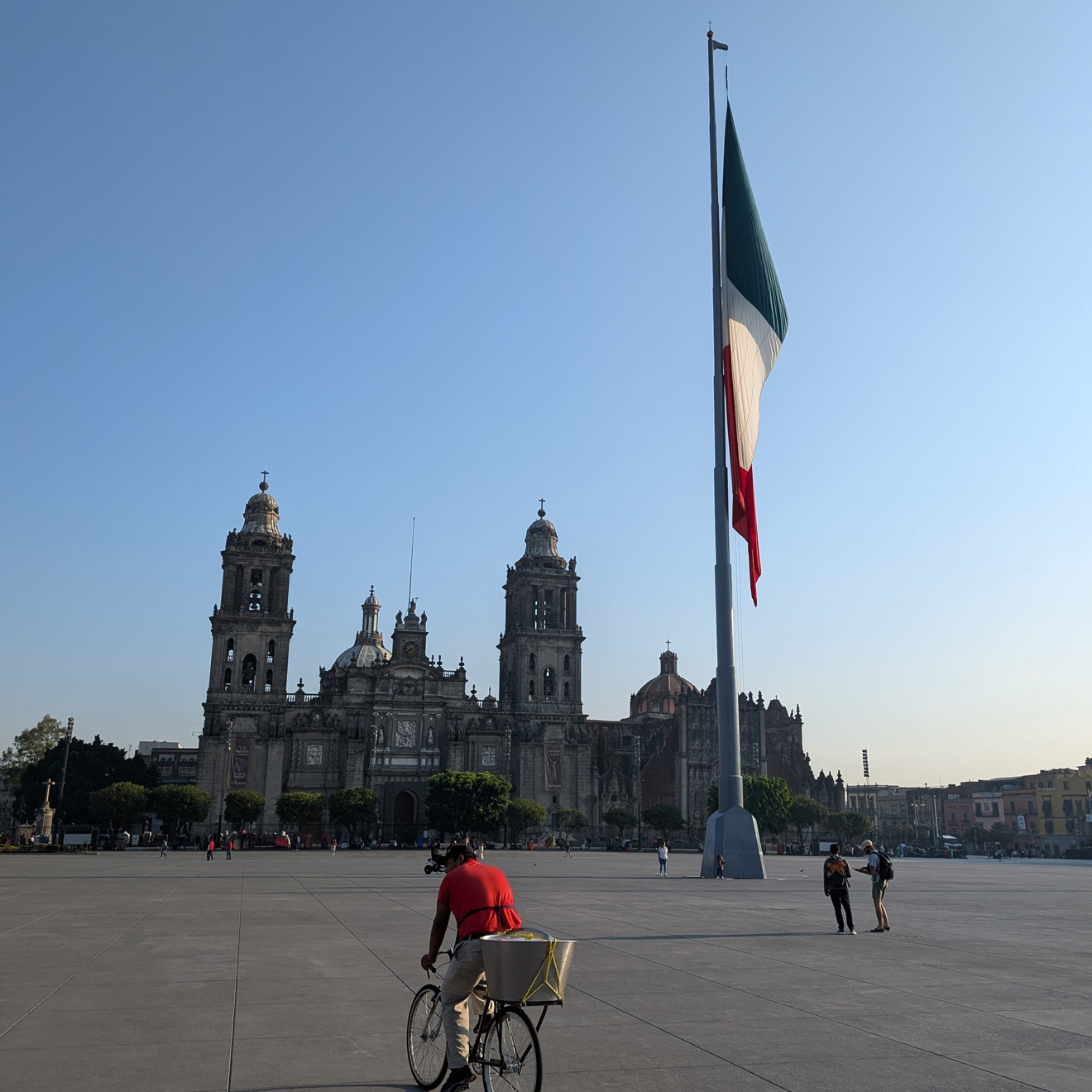
Great historical cities are made in layers. Like a wafer. Mexico City is no exception. In the bottom layer there is still the lake, or at least its memory, around which the Olmecs, one of the first great civilisations to populate this area, built their villages; then there is Tenochtitlán, the capital of the Aztec empire, poking out of the pavement, letting you imagine how it must have looked to the eyes of Hernán Cortés in 1519; and finally there is the city today, made from a mixture of Spanish vestiges and modernity. All of this in a sort of primordial soup of varied humanity, ranging from the entertainers in Aztec dress who make tourists stop in the enormous Constitution Square, which can hold up to a hundred thousand people, to the managers of the city, passing through the shoe shiners and the thousands of stalls selling a little bit of everything, from souvenirs to the multicoloured tortillas according to the type of corn used. Having landed at dawn, the first impact is with the main square that appears almost deserted due to the early hour, and seems even bigger than it really is. In the middle stands a flagpole with a huge national flag, symbolising not just the country but also the patriotic pride of Mexicans.
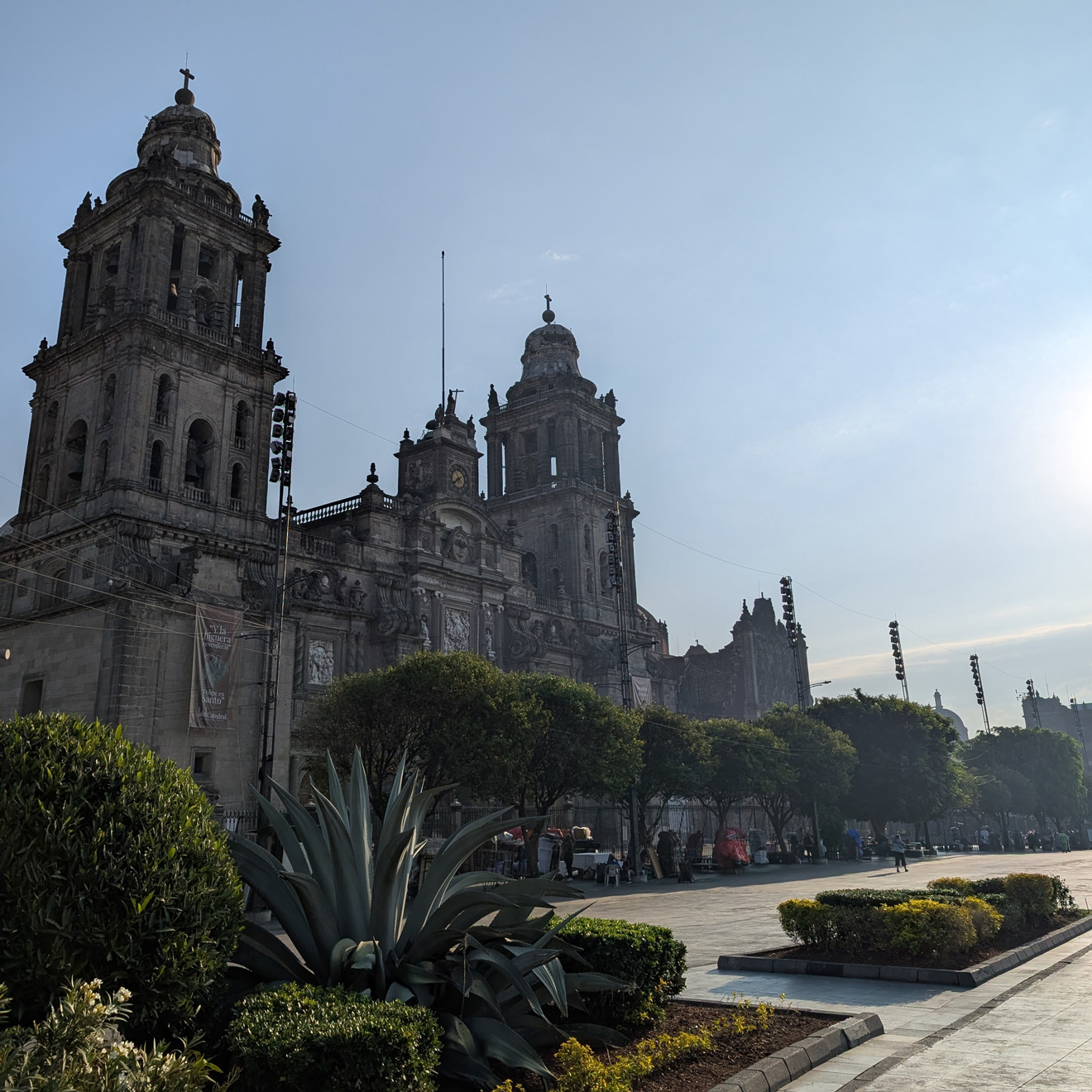
The square, that is often simply called the Zócalo, is the true navel of the city, built right on top of the nerve centre of ancient Tenochtitlán, in an operation to erase the capital of the ancient empire, apparently wanted by Cortés himself. It is dominated by the cathedral, built in the Baroque style in several stages between 1530 and 1813, while to the east the view is interrupted by the long facade, over 200 metres, of the National Palace built in 1563 to house the deputy king of Mexico.
In the north-eastern corner, archaeological excavations have unearthed what remains of the Templo Mayor, dedicated to Huitzilopochtli, the supreme deity of the crowded Aztec pantheon. To the west, along Francisco Madero Street, one can easily spot the 204-metre-high Torre Latinoamericana, built in 1956, and the first clear indication of the many souls inhabiting the city. Given the time of the day as well as hotel rooms are not already available but, above all, given our nature as serial tasters of whatever food is local, we stop at El Cardenal, for a breakfast that wanted to be fast but soon turned into a gastronomic orgy of tortillas de huevo con escamoles - in which huevo is the chicken’s egg and escamoles the ant's eggs – and flautas de Cordero - made with lamb, avocado sauce, tomato and cheese, served with refried beans. And then huarache con Costilla, birria de res - a kind of meat broth - and an indefinite number of enchiladas.
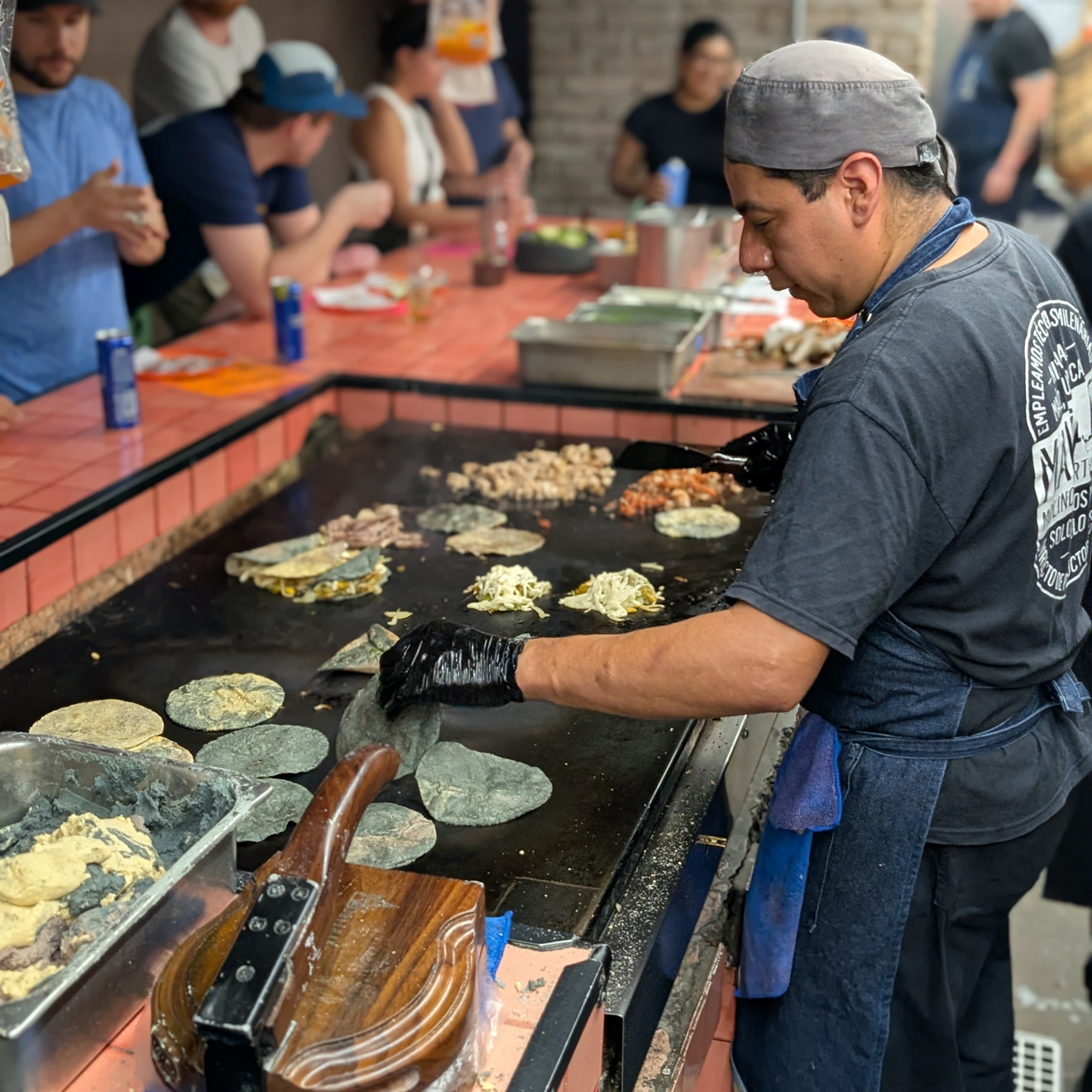
It was almost shameful, if it were not for the neighbouring table, where an entire Mexican family (children included) was ordering dishes without interruption and with the same enthusiasm as us.
Mexican cuisine is, however, seriously exciting. The use of the dozens of available varieties of chilli peppers is devastating in some dishes or sauces, but if you wish you can avoid it or at least choose versions that more suitable with your desire to survive.
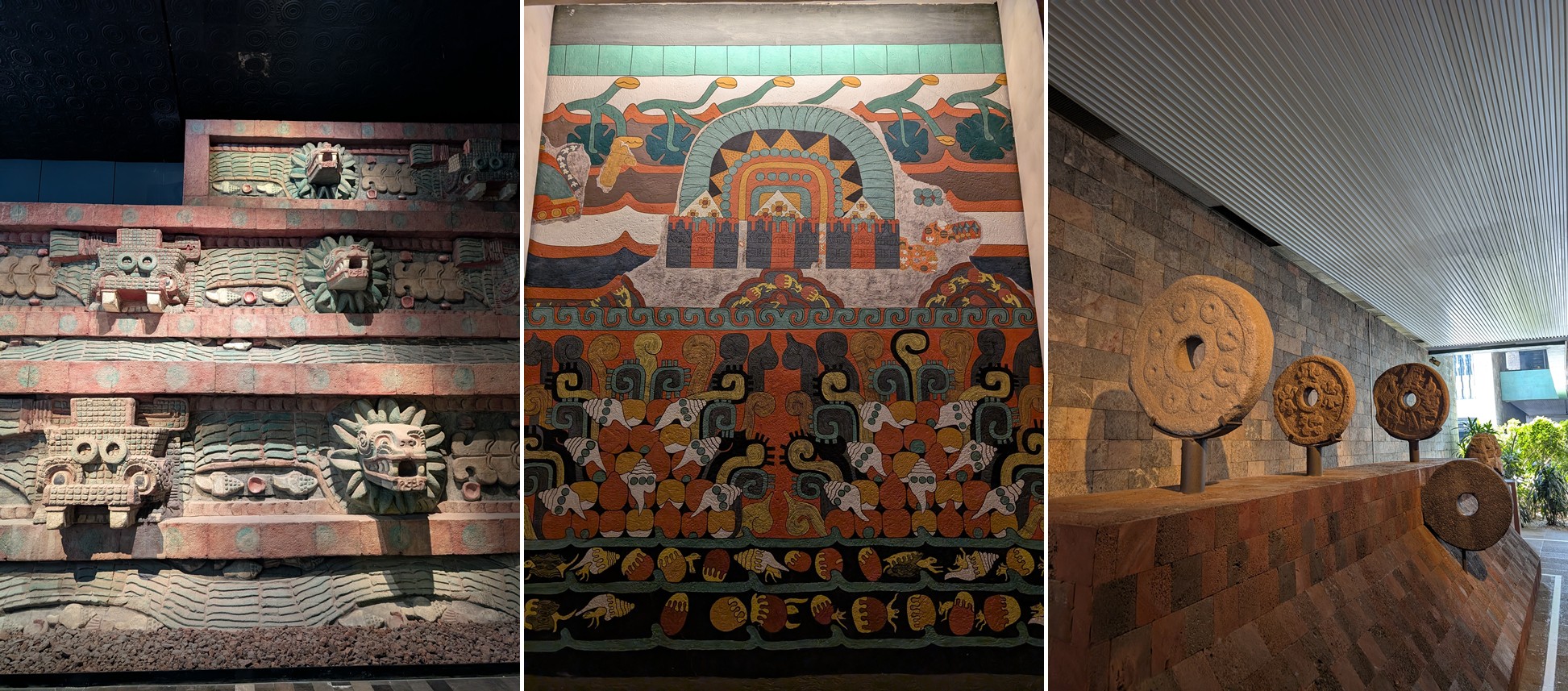
The next stop was the National Museum of Anthropology, an unmissable monument to the ancient history of pre-Columbian Mexico and the different civilisations that inhabited it.
The definition of an anthropological and not merely archaeological museum is symptomatic because, walking through the rooms and standing open-mouthed in front of the countless works of art present, you can understand the cultures and social organisations of those whom our European view has long dismissed as savages.
The architectural and sculptural ability of the peoples who have been succeeded one another in these lands is astounding. Their religious vision gives rise to an almost infinite series of deities, each of whom was engaged in protecting or threatening mankind, tracing in this the Egyptian and Greek polytheism.
The museum rooms are filled with stone images of Quetzalcoatl, the feathered snake-god symbolising knowledge and vital regeneration; Mextli, god of war and storms, symbolising the origin of the name Mexico; Patecatl, lord of the agave and pulque; Centeotl, god of the harvest and maize and Mayahuel, the goddess of alcohol. Names often hard to pronunce, but in Aztec culture everything had a reference god, even hallucinogenic plants, fertility, prostitutes, travellers, sexuality as well as homosexuality. Even deforestation.
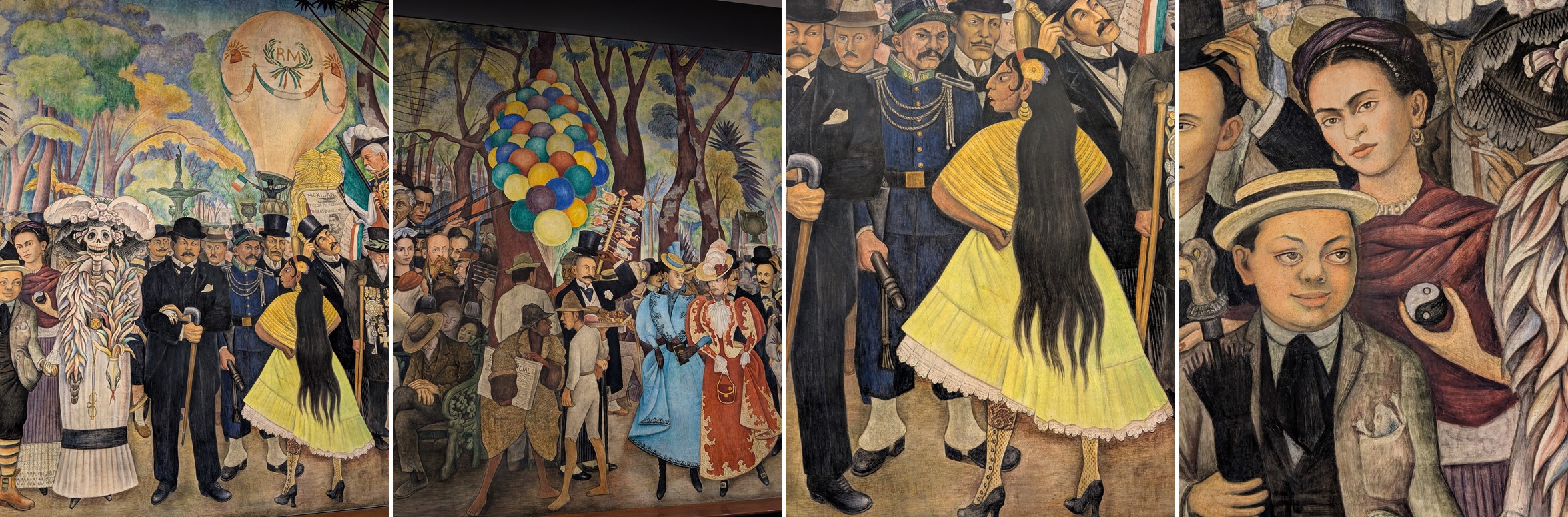
The anthropological museum is the must-see for anyone visiting Mexico City, but even modern art deserves a praise. In this sense, the Palacio de Bellas Artes - where we arrive after a short gastronomic stop at the sumptuous La Opera Bar, a vintage club specialised in snails - offers the chance to admire the great murals by artists such as Diego Rivera and José Clemente Orozco, leading exponents of the social-realist movement.
Rivera's murals have a strong impact. They are dense with colour and people, and they all contain a political message of criticism against capitalist system, supporting Marxist theories. Rivera was a member of the Mexican Communist Party for years, but was later expelled when he worked to ensure political asylum for Lev Trockij in 1937.
By dinner we went to El Parnita in Roma district that, among other things, gave its name to Alfonso Cuarón's film, Oscar winner in 2019 for Best Foreign Language Film.
Tacos are like cherries, one pulls the other, and after few beers we soon lose the count.
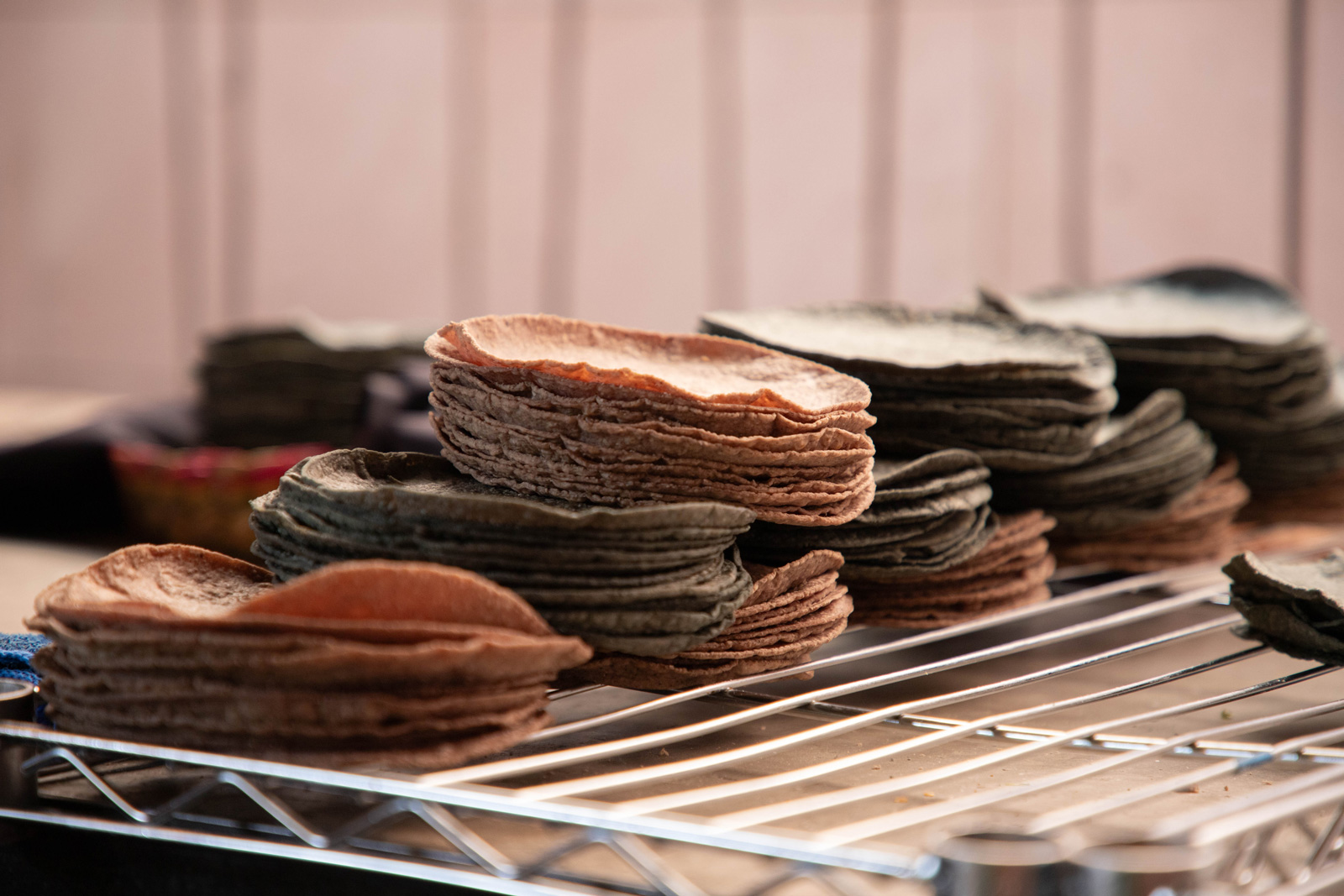
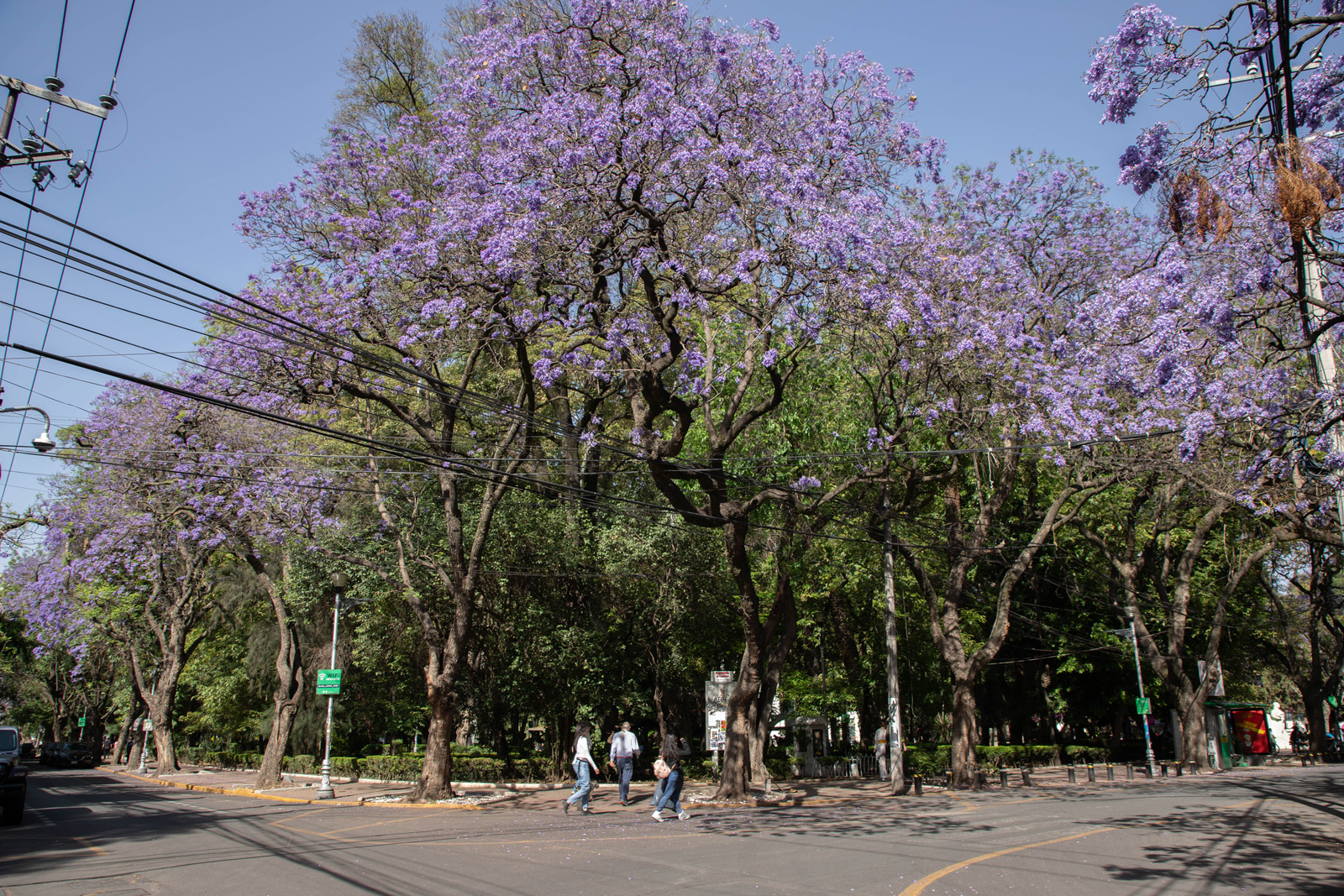
We are in Mexico City, but we are also Velier Explorer, therefore museums are OK, observing local customs and traditions is OK, and it is also OK to get lost admiring the explosion of lilac flowers of the jacaranda trees that colour magnificently the boulevards. We share a bag of chicharrón seasoned with lime and a sprinkling of chilli.
These chicharrónes are simply fried pork rinds, basically what is needed for an instant occlusion of the aorta, but we finish them off as we drive from one part of the city to another, passing different roundabouts clogged with traffic like a Japanese underground during the rush hour. But then again, we are Velier Explorer, and our focus in Mexico City is obviously a spirit. No, not tequila, mezcal, raicilla or sotol as one might expect.
We are in Mexico City for gin.
There are three or four distilleries in town, but the one we visit is the Flor de Luna Distillery which, since 2018, also produces Condesa Gin. It is an all-female distillery, led by 29-year-old Hillhamn Salome - where Salome is the surname.
Hillhamn was supposed to become a marine biologist, but while studying she also worked in bars in Mexico City, and it was behind the counter of one of these that her life took a turn.
Practically self-taught, she first studied infusions, then actual distillation, finding inspiration in Mexican cuisine and some of its characteristic ingredients. The hibiscus flowers, which are used in all homes to flavour water, but also cinnamon, cloves and chillies used for mole, or tejate, a pre-Columbian drink made from maize and cocoa.
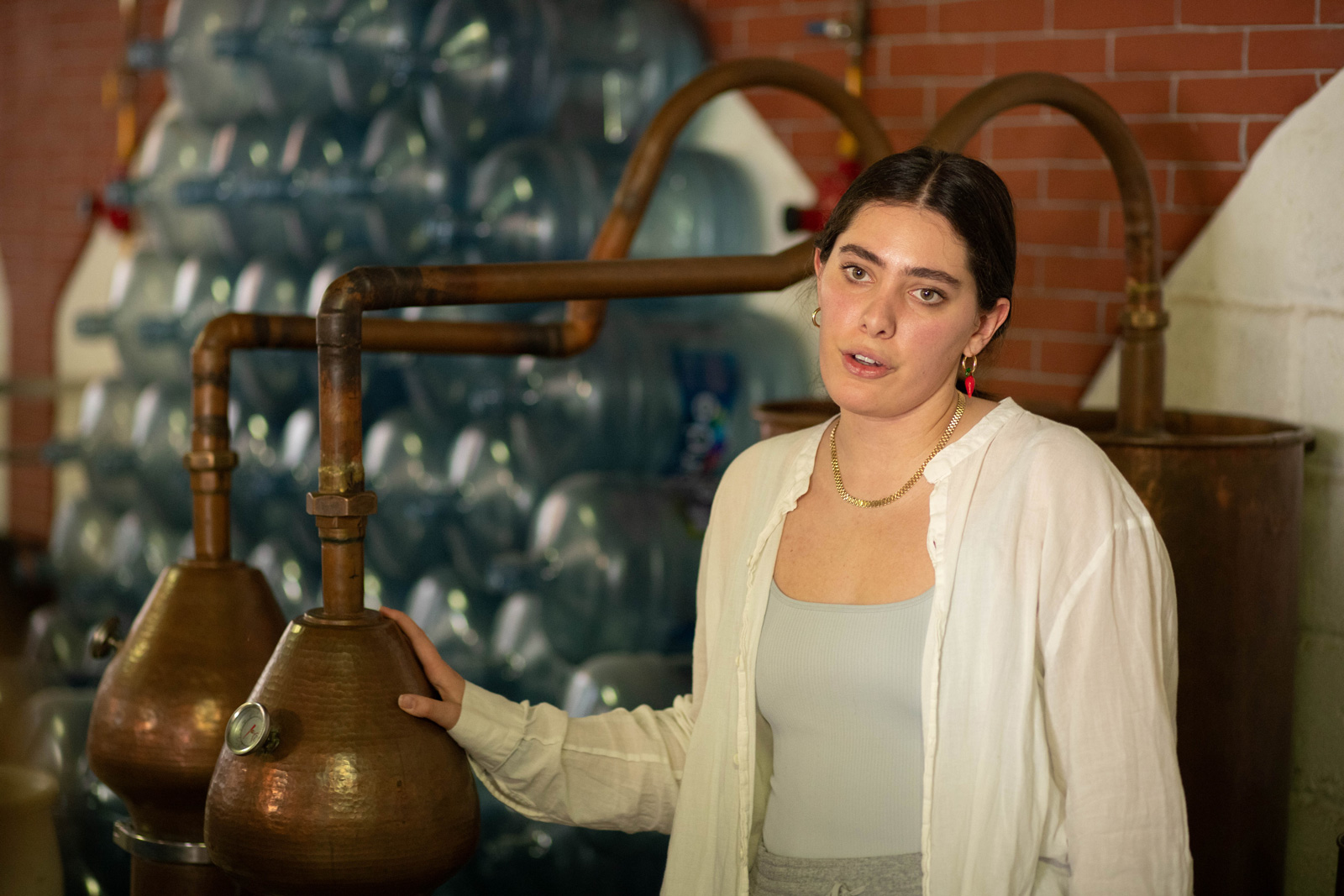
Founded in 2016, the Flor de Luna distillery has quickly raised in Mexico City, but also in a large number of famous North American cocktail bars.
Its gins are made in rather small pot stills, the largest being four hundred litres; water is bought in jerry cans and the botanicals are left to macerate in water and grain alcohol, for a couple of days before a single distillation.
The botanicals are the most interesting part and they are all from Mexico, except for the juniper. From the palo santo, a wood with an intense and enchanting perfume, to the aromatic calamus, a semi-aquatic plant also used in Ayurvedic medicine, from the chaya, a typical Yucatan plant also used in cooking, to the chile de árbol, one of the many varieties of chilli pepper cultivated in these parts.
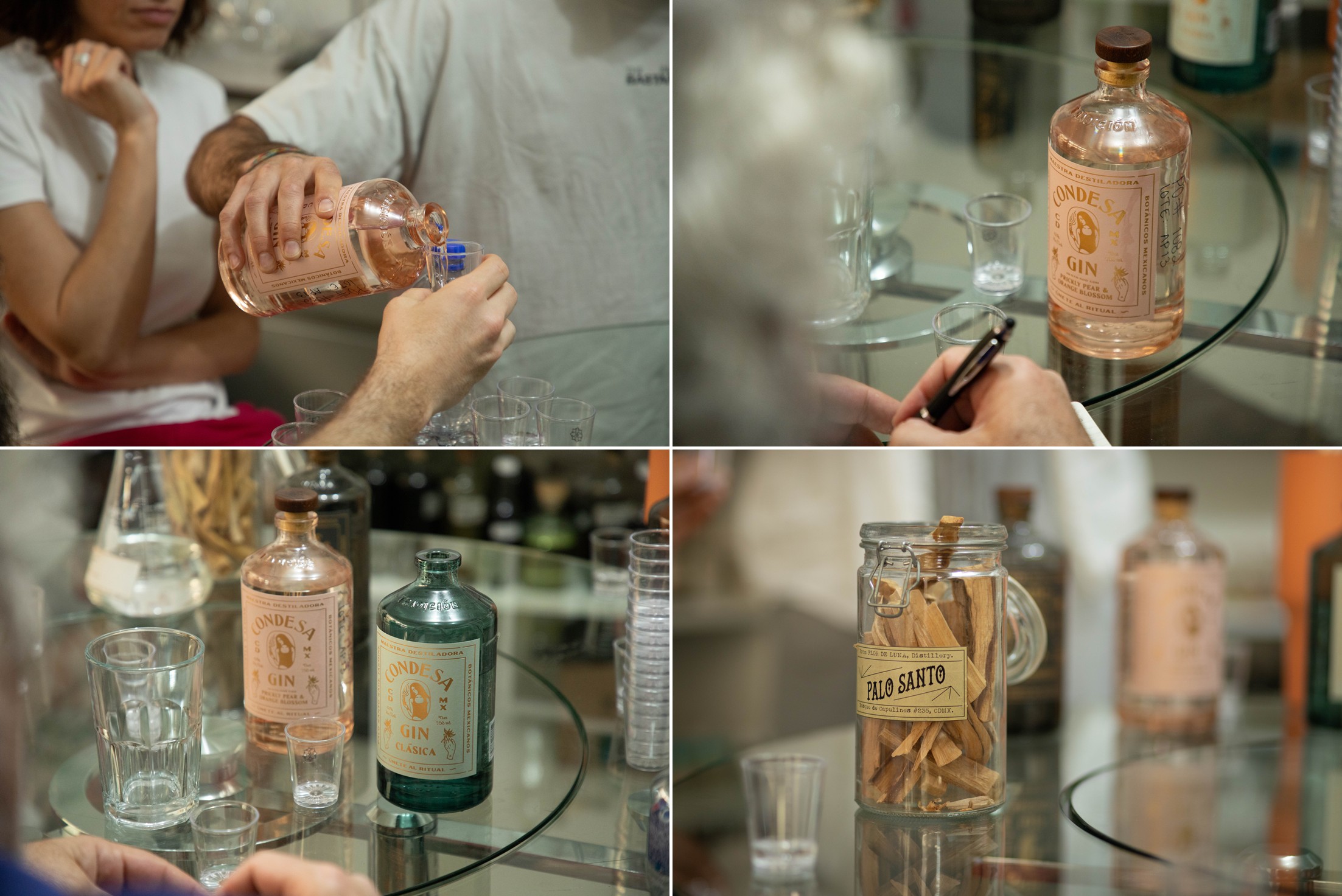
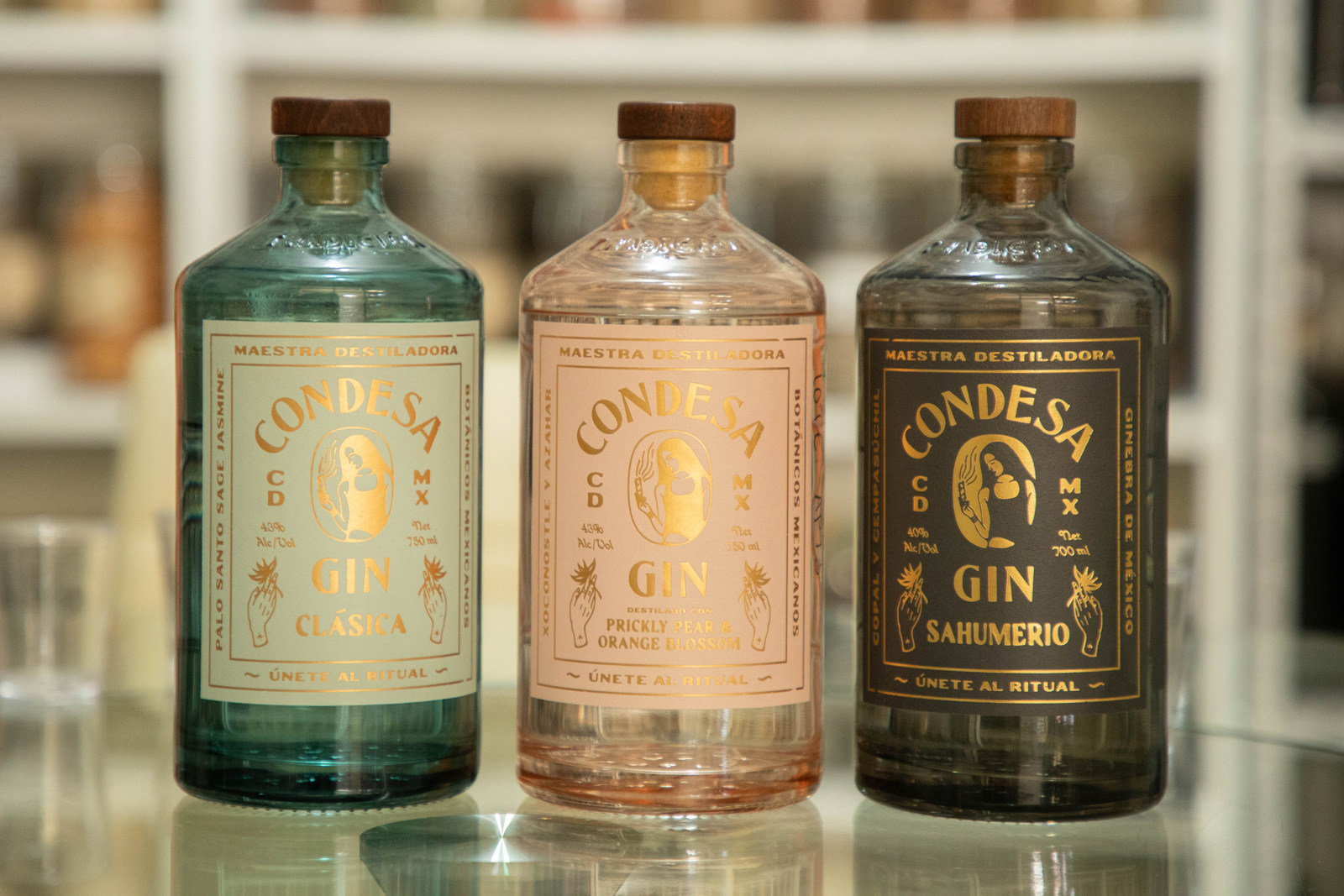
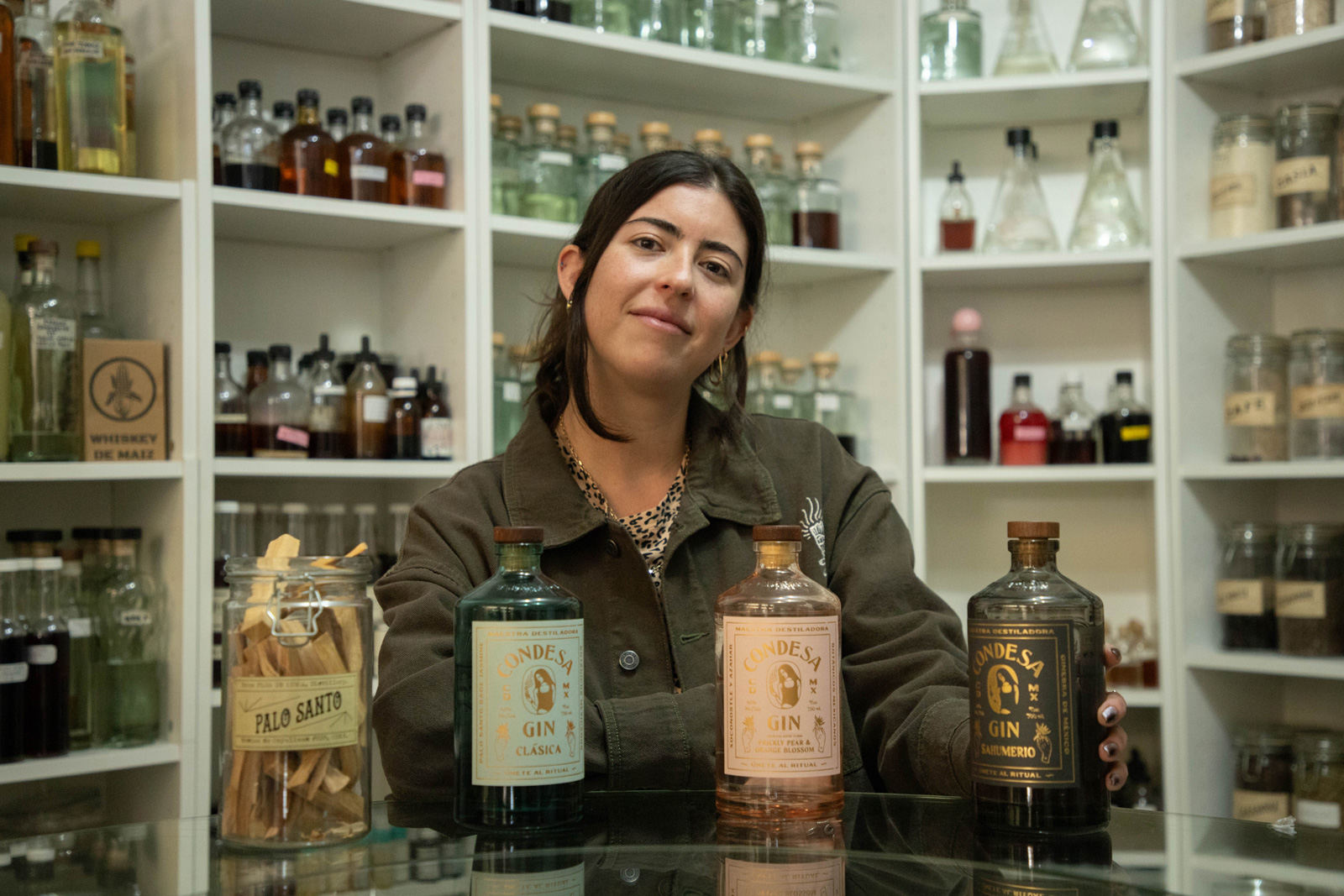
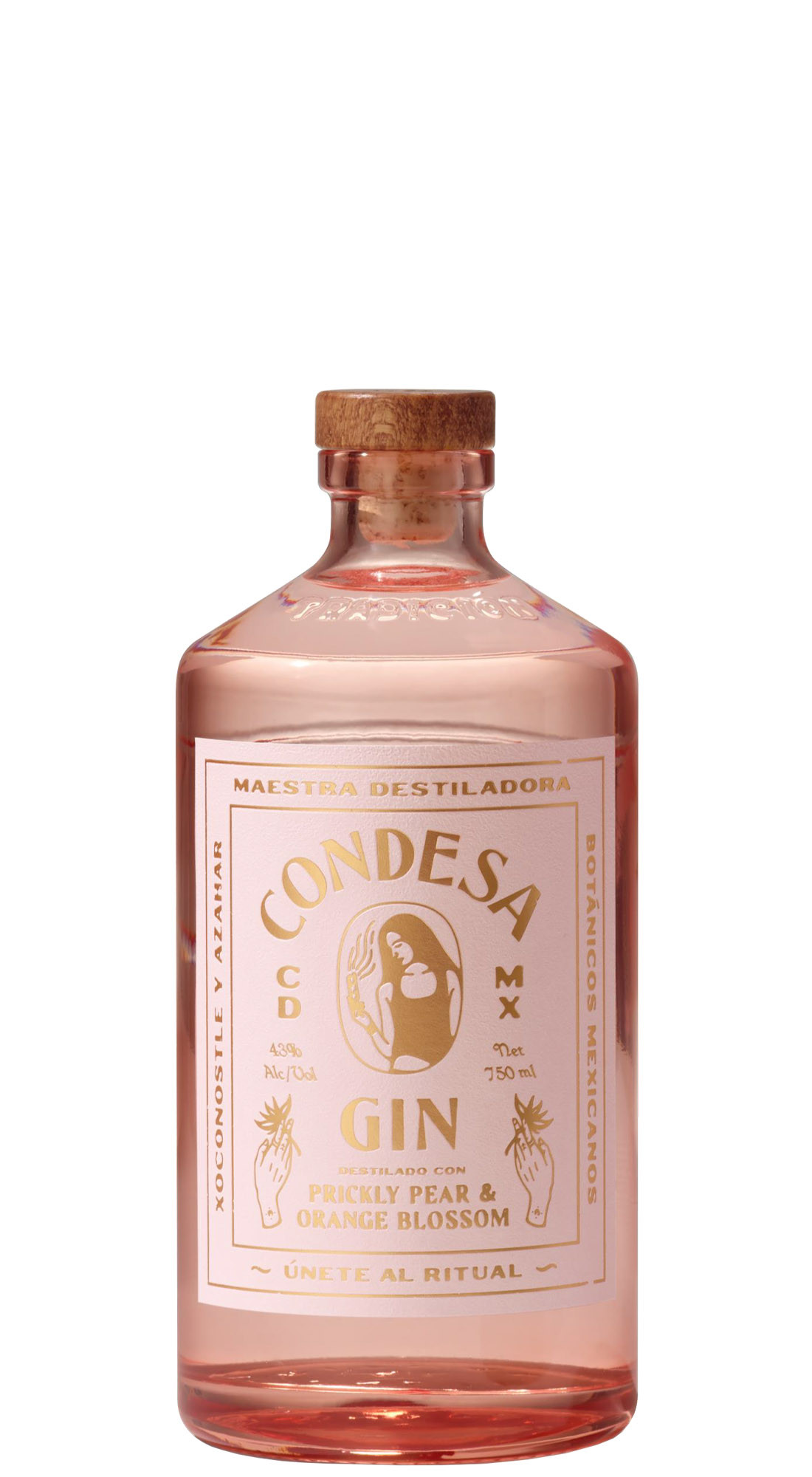
There are currently three bottles: the first two, Condesa Clasica and Condesa Prickly Pear and Orange Blossom, are already in the Velier catalogue, and then there is Condesa Sahumerio, which debuted recently and is characterised by the use, among the botanicals, of marigold flowers, sandalwood and copal, a kind of aromatic vegetable resin.
The Clasica is very clean, very London Dry, but with an original character given by the palo santo, sage and jasmine, whilst the Prickly Pear is gentler and sweeter, though with no added sugar, and characterised by orange blossom, raspberries and prickly pear. The Sahumerio, by its side, is very intriguing and also reveals slightly smoky notes.
If the two days in Mexico City had their up in the visit to the Flor de Luna distillery and the discovery of Condesa gin, it certainly had their down in some of the most famous cocktail bars in the city. The Mexican capital has risen to the forefront of world mixology in recent years: last year the Handshake Speakeasy came first in the World's 50 Best Bars list and this year, at the time of writing, it has been reconfirmed as the best North American bar in the same list; in the same year, the Licorería Limantour was 32nd, but we must also count Tlecan, Rayo, Baltra Bar, Hanky Panky...
Visiting them all is impossible and so the choice goes, on the first evening, to the world number one for what is widely recognised as the most authoritative ranking in the industry and, on the second and final evening, to the historical presence in the rankings. So, first the Handshake and then the Limantour.
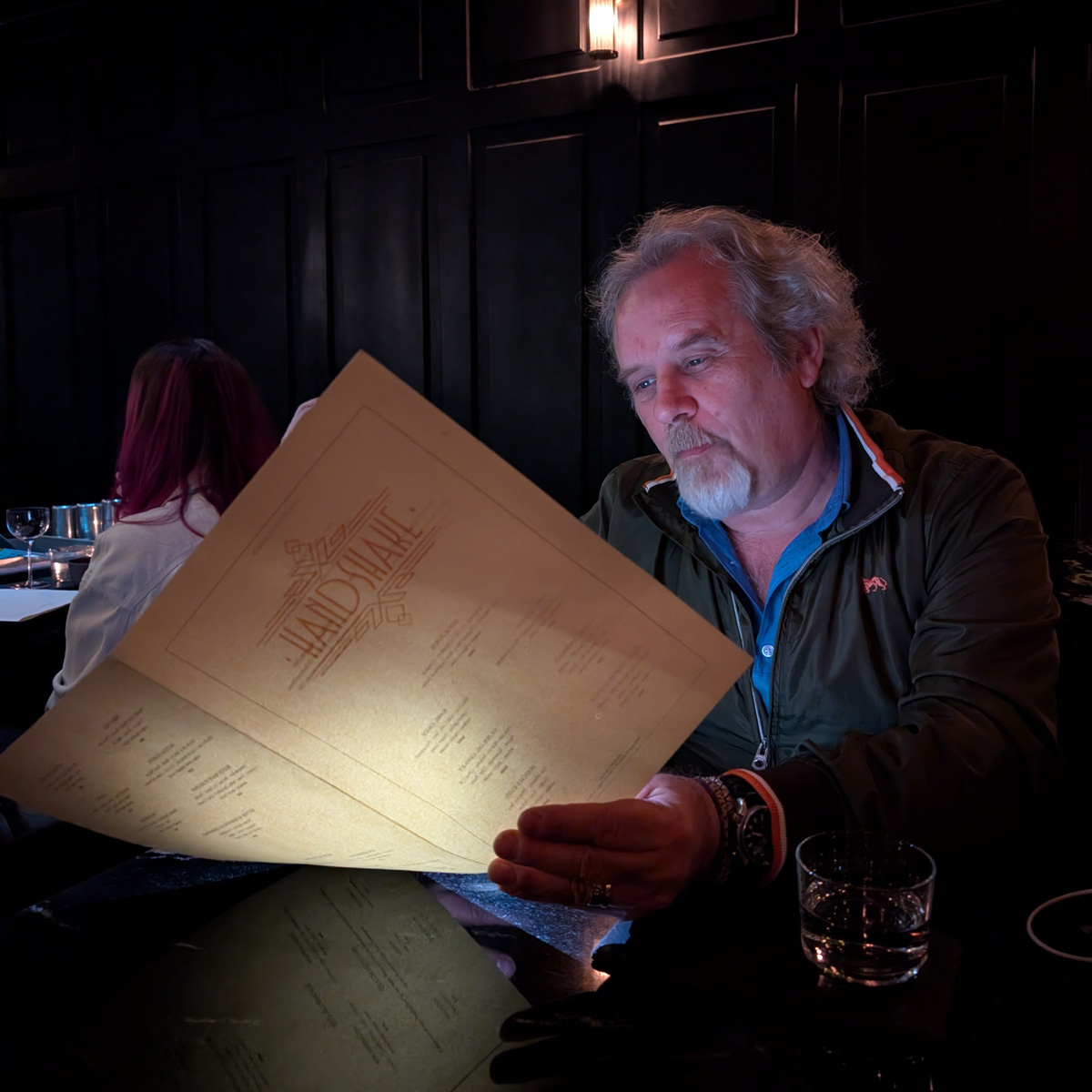
Sorry to say that, but Handshake is a bitter disappointment. Upon arriving at the entrance, you are greeted by a kind young lady who draws the curtains that protect the bar, which is not huge and with the light that seems to only catch the counter. As soon as we enter she lets out an enthusiastic “bienvenido” that is immediately echoed by the staff.
The double bienvenido sounds nice but, considering that the scene is repeated every time a customer crosses the entrance, it soon becomes a robotic exercise, hilarious but also a little embarrassing, to which, as if that were not enough, is added on the way out an equally resounding double “hasta luego”. This gives the place a childhood garden atmosphere. Were it only this, we would have inscribed our perplexity to our low level of “gaiety”, but as soon as we are seated we are offered a glass of water, and this is where perplexity turns to bewilderment.
Such a high percentage of chlorine had only been experienced in the pool in which we learnt to swim decades ago. Undrinkable, and unbelievable that normal bottled water is not used.
There is not much to complain about in terms of drinks, and what there is can always be ascribed to personal taste: nothing to say about the Negroni Mezcal, some hesitation about their Signature Fig Martini, where the fig leaf in the last sips leaves the vegetal note to prevail over the initial, amiable sweetness. But the glass of water, considering that we are in the best cocktail bar in the world, is really an unexpected and huge fall. Like a thud in a swimming pool. Full of chlorine.
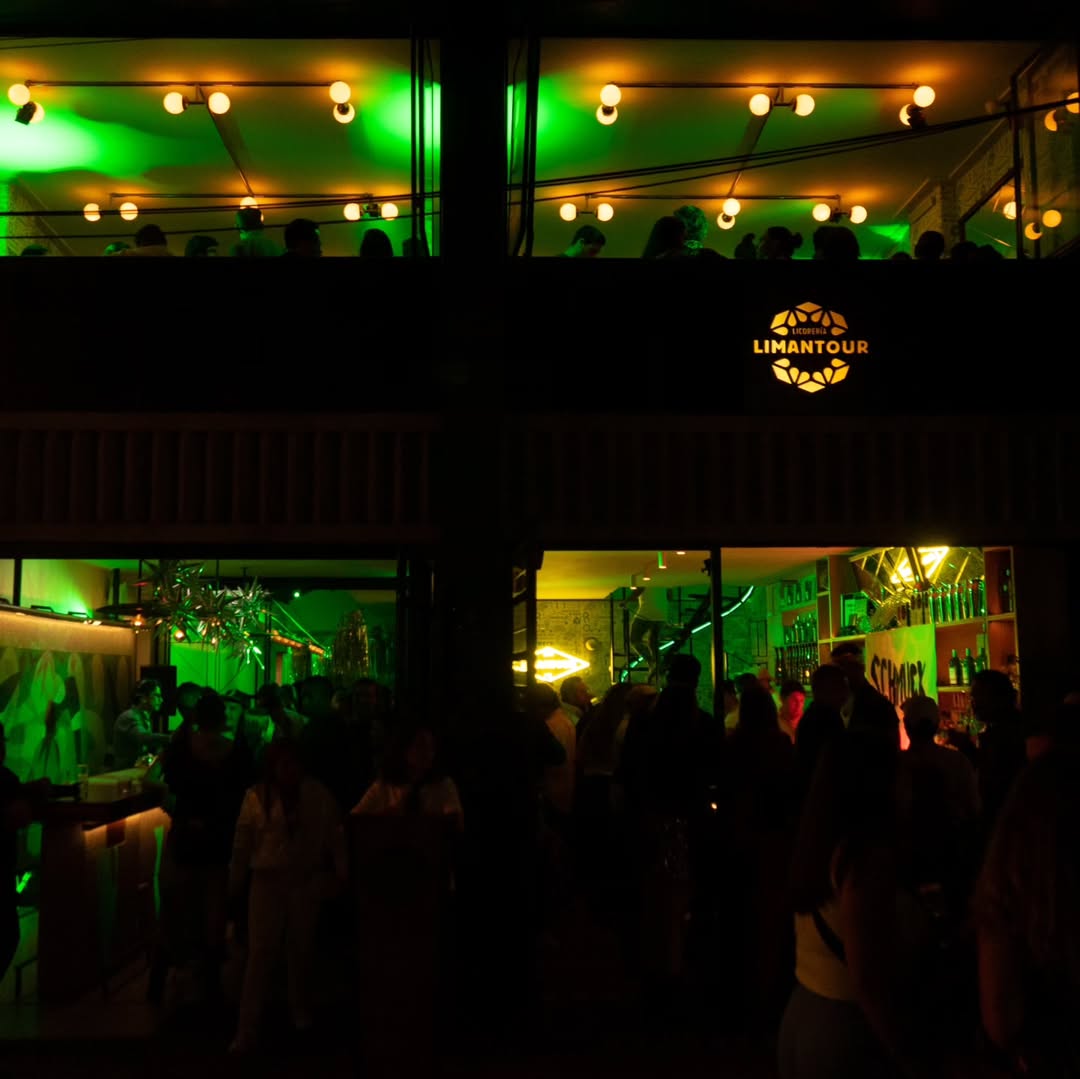
It's much better in the Licorería Limantour, cleverly divided into an open space where cocktails travel fast thanks to the crowds, and a smaller, more intimate but also better lit room, where the great classics of world bartending triumph. Those great classics that vintage drinkers like myself would like to be remembered and offered with endless frequency. Hemingway Daiquiri, Paper Plane, Vieux Carré, Aviation. And what about water? They serve it in branded single-serve bottles.
Our stay in Mexico City ended in about forty-eight hours. The 27th March at six o'clock in the morning we entered the Zócalo, the 29th March at eight o'clock we were near the airport, where a flight would take us to Guadalajara. They were anyway forty-eight hours of great intensity and strong sensations.
Mexico City seems to vibrate constantly, offering ever-changing stimuli. It is difficult to condense it into a word or in few lines. The splendour of pre-Columbian art, the contrasts between the skyscrapers and the old ladies cooking tortillas on the street corners, the streets where the all the shops seem to sell the same things and the Pulqueria Duelistas, where you can drink the traditional pulque, the drink made from agave fermentation, which is slightly acidic but can also be sweetened with fruit syrups, the vendors of mango or tortas, our sandwiches.
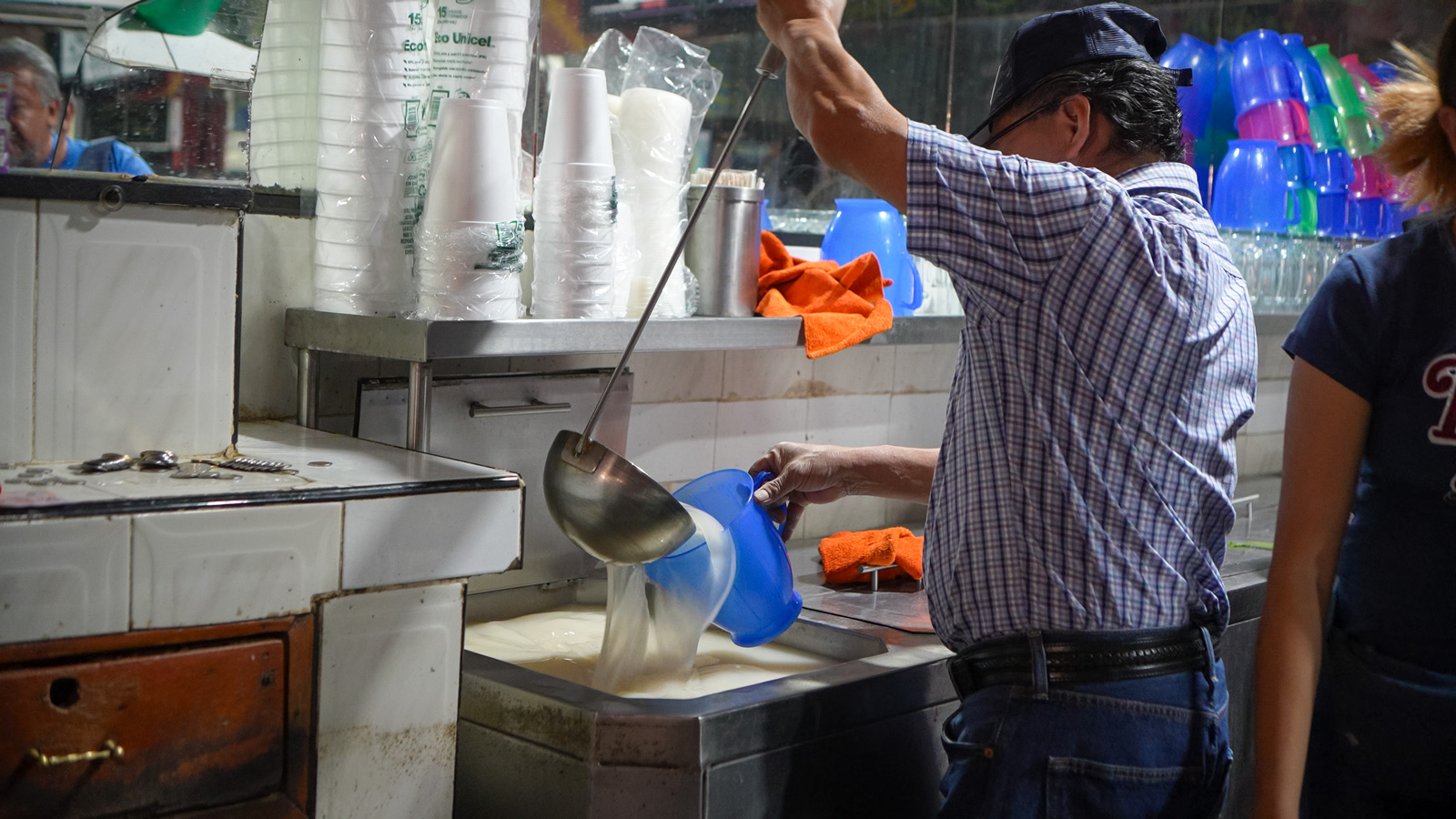
In fact, the food is practically everywhere, and we took full advantage of it: like at Maizajo, where the young owner leads a battle to safeguard the many varieties of Mexican maize of different colours, cooked live in front of customers, or at Ticuchi, a splendid restaurant where the cuisine reaches excellent levels of creativity and originality without betraying local ingredients and traditions, and also at the Mercado de San Juan, where we discover that a process of revaluing ancient foods is underway - difficult to say how much it is really wanted or how much it is done to surprise foreign clients. Here, therefore, we see tarantulas, scorpions and cucarachas (cockroaches) alive in their display cases and ready to be fried.
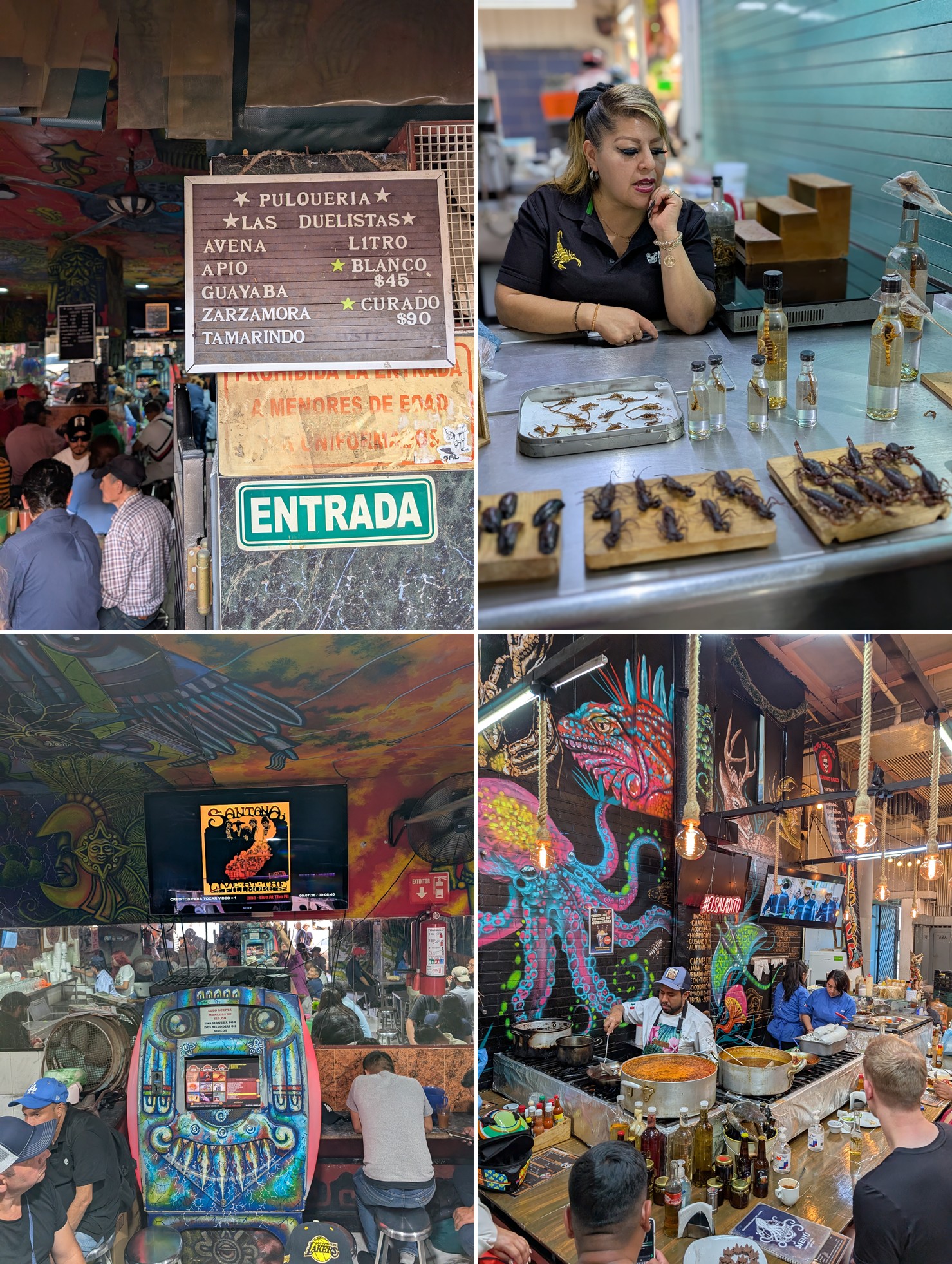
In our ignorant naivety, we thought that cucarachas were just the protagonists of that nice song with the same title. It looks like you can drink them accompanied by a glass of mezcal with salt and lemon.
For the record, we just ate one fried scorpion, because the tarantula, after much discussion, caused us too many memories, and we preferred to remember the cucaracha as a song.
All kidding aside, gastronomy is maybe the Mexico City's most seductive weapon.
It doesn’t shine as the art, neither it engages as the humanity that populates it, but it is what excites you the most, and what remains with you the longest.
Otro taco, por favor!
SPIRITS
Rum
Whisk(e)y
Gin
Agave
Calvados
Armagnac
Others
VELIER LIFE
Extraperimetral
VNP
Aguilas Camp
TRAVEL
São Tomé e Principe
Mexico
Distillery Tour
Food Guide


