


Neisson, genius loci
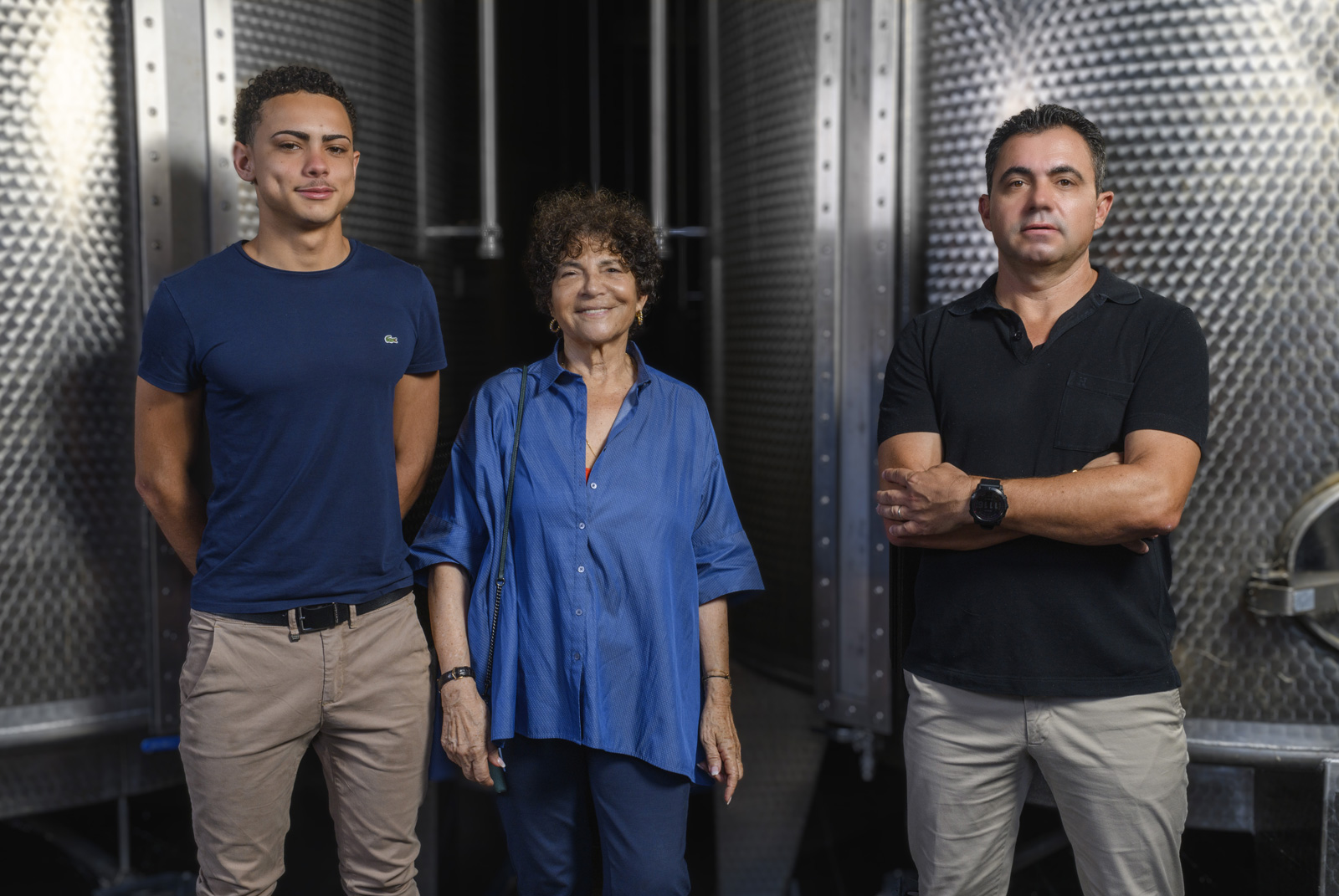
Neisson's story begins in 1931, when he purchased his first twenty hectares of land planted with sugar cane on the northwest coast of Martinique. His story is a case in point of how a respectful approach to raw ingredients and terroir can elevate the resulting product to new heights of excellence. For this reason, in the wake of the last Velier Live in Milan, we just couldn't let Grégory Vernant Neisson leave without at least asking him a few questions.
What is a genius loci? To the ancient Romans it was a supernatural entity, a spirit rather than a deity guarding the essence of a place. Today the expression is inaccurately translated as "spirit of the place", its modern meaning having left the religious realm to find new applications in architecture and urban planning as well as literature, art, philosophy and sociology. It encapsulates a close connection, almost an attachment between the environment and man where man, through his work, successfully brings out the best expression of the uniqueness - whether visible or not - of a specific environment. In this interpretation, the genius loci is part nature in a geographical, climatic, and botanical sense, and part human ability to make use of what the surrounding natural environment provides.

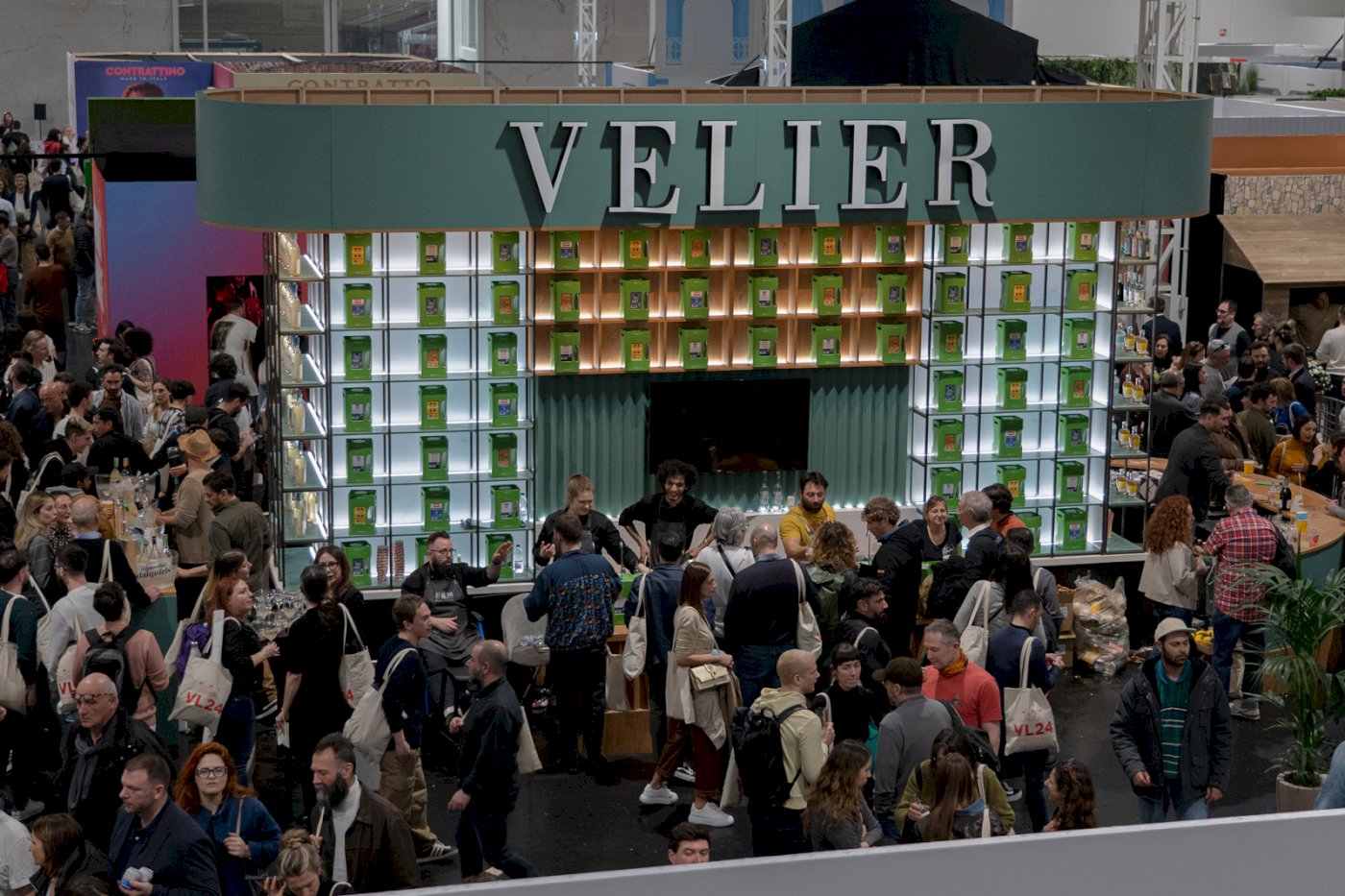
For this reason, when looking for a phrase to sum up the essence of the Martinican distillery Neisson in two words, we felt the ancient Latin definition was a perfect fit. We didn't just rely on Luca Gargano's enthusiasm when, on several occasions, he told us about Neisson’s story and production philosophy - we wanted to go right to the source and sit down with Grégory Vernant, a descendant of the legendary Jean Neisson and the distillery’s current owner and Master Distiller, during the recent Velier Live in Milan. That was no easy feat as, for anyone who hasn't experienced it firsthand, Velier Live was an incredible alcoholic and cultural "sabbath" with countless meetings, tastings and discussions happening all the time, which left very little time to complete our interview and inevitably left several questions unanswered. What this implies is that we'll need to retrace the history of Martinique and the distillery, as from the specificities of each we can understand why Neisson can justifiably be called a genius loci.
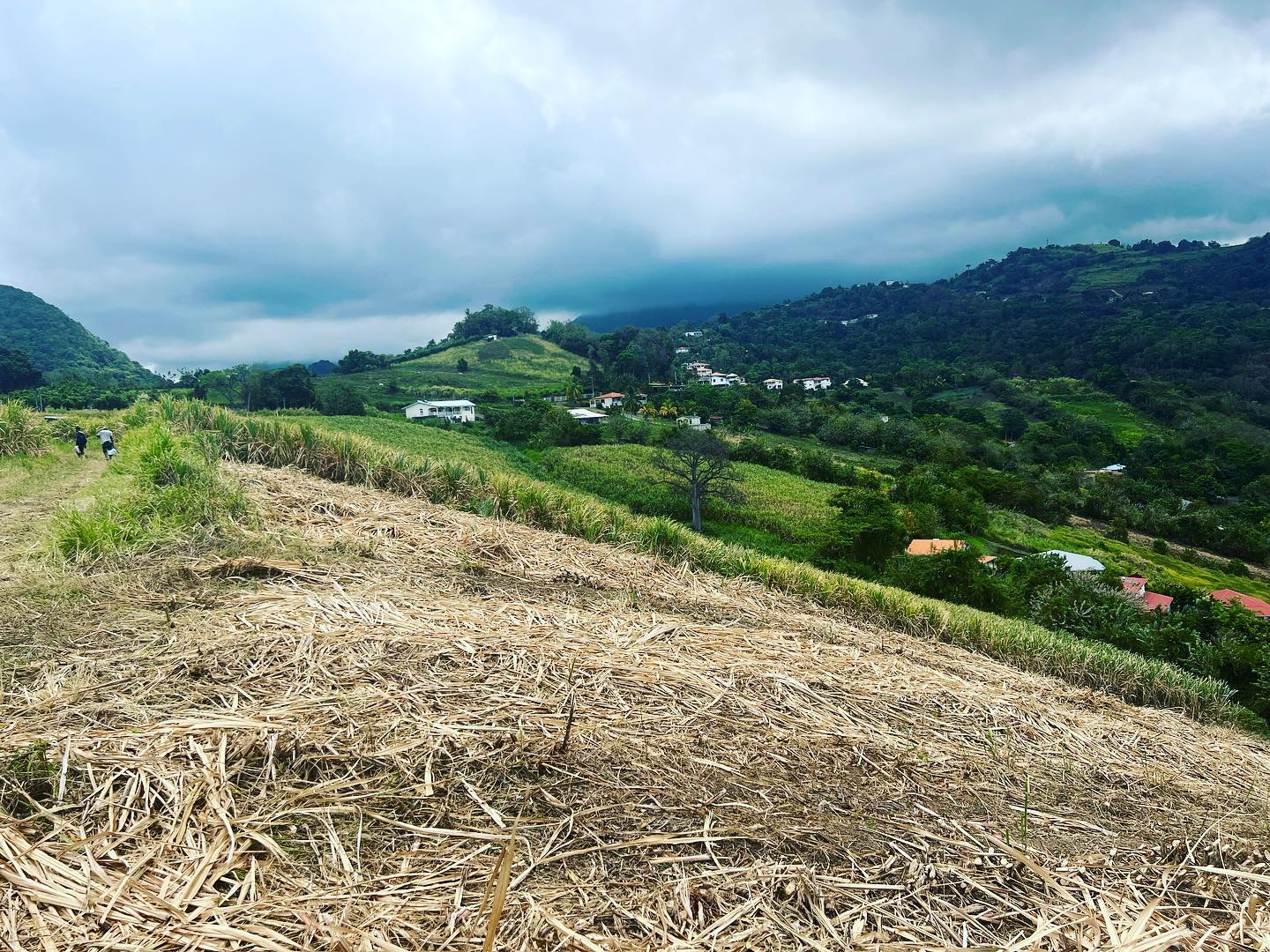
Martinique is an island in the small Antilles, a French overseas department, inhabited since 2000 BC and brought to Europe's attention by Christopher Columbus in 1502 during his fourth trip to the Indies or, more likely, by the Spanish explorer Alonso de Ojeda a few years earlier. The northern part of the island is dominated by the Carbet peak and, more importantly, by Mount Pelée. The latter is a volcano that has marked the life of the local population on at least two occasions: the first, around 295 AD, caused the inhabitants to abandon the island for over a century; the second, in 1902, was among the most dramatic in history with over thirty thousand dead and had vast global resonance. Giovanni Pascoli even dedicated a poem to the story of one of the very few survivors, a prisoner who managed to escape because he was imprisoned in an underground cell. The eruption also razed the island's many sugar factories - the oldest dating back to the mid-1600s - and distilleries and burned to ashes the town of Saint Pierre on the west coast, until then known as "the Paris of the Caribbean". This is to say that, until then, Martinique had a flourishing economy largely based on the export of cane sugar and its best product - rum. The French soldiers fighting in the Crimean War probably drank rum from Martinique, and citizens of all social classes consumed both sugar and rum. That is, at least until it was discovered that sugar could also be obtained from beets at a fraction of the cost, whiskey became increasingly popular under the Eiffel Tower and Martinique's crazy and suicidal bureaucratization opened the door to local rum production being concentrated in the hands of industrial companies. Today in Martinique there are fewer than ten distilleries still in operation, whereas in 1960 there were almost forty and in 1939 about one hundred and fifty.
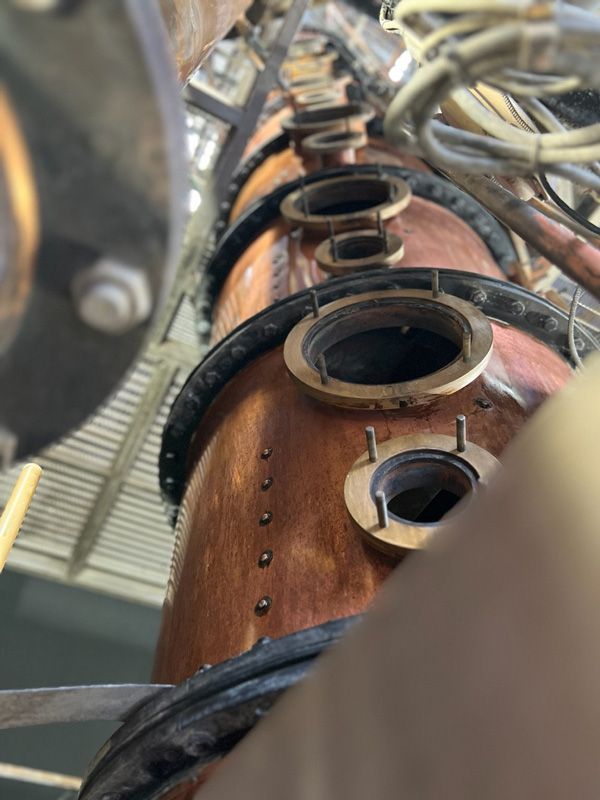
Neisson is one of this handful of resilients, and you only need to open one of their bottles to be grateful that they are. This achievement is even more impressive as the distillery's story is still linked to the same family that in 1931 bought the first twenty hectares of land planted with sugar cane around Saint Pierre, under the shadow of Mount Pelée, from a local merchant family. The contract was signed by brothers Adrien and Hildebert Pamphile, known as Jean Neisson. By intuition or fate, they immediately divided up the work between them, with Adrien getting the small distillery off the ground while Hildebert moved to Paris to finish his chemistry studies at the École supérieure, after which he decided to open an import-export company to sell his rum in France. Adrien's death in 1971 forced Hildebert-Jean Neisson to permanently return to his homeland, focus his efforts on rum production and start training our interviewee - Grégory Vernant Neisson. Before him, however, at the helm of the distillery were two very capable women - first Gabrielle, Jean's sister and Grégory's aunt, then Claudine, Grégory's mother who left the day hospital she founded, the first in nearby Fort-de-France, to devote herself entirely to the distillery. So much for a broad outline of the story. The only question is, why should Neisson be considered, as they say at Velier, a farmer-artisan-artist? Let's break it down: Grégory Vernant Neisson is a farmer, because he grows his own sugar cane on the forty hectares of land he owns today, favoring non-hybridized varieties like Malavoi, Rubanée and Cristalline and having converted much of the land to organic farming. He's also an artisan, because he still uses the Savalle column still Jean Neisson ordered back in 1952, only uses yeast strains identified and selected on the property for fermentation and has a sort of symbiotic relationship with his distillery, which makes it hard for him to leave it - to the point that, before finally meeting in person in Milan, our several attempts at a video call - as people do today - ended with Grégory inviting us to Martinique to settle the issue.
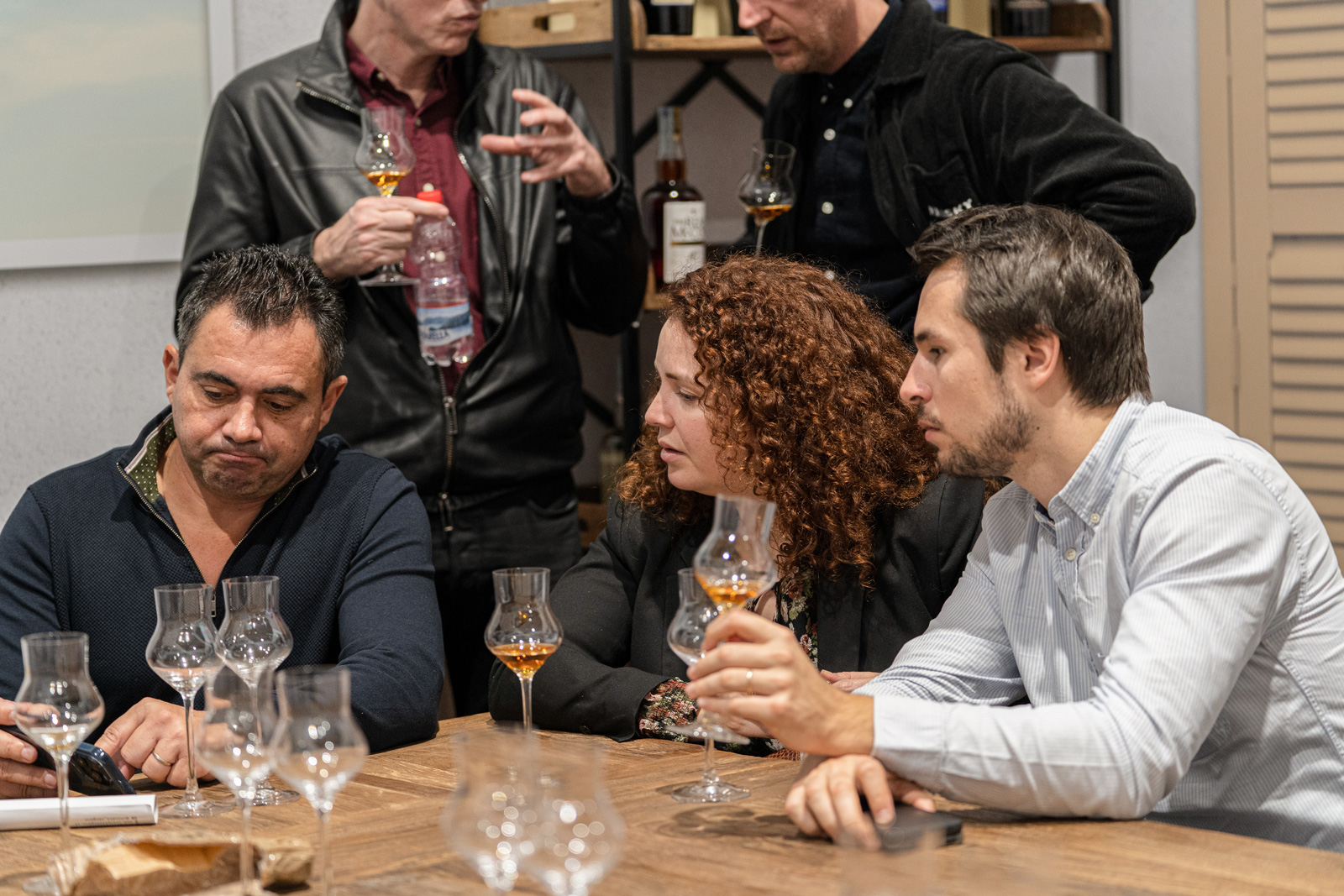
To be sitting in front of him here in Milan was an opportunity we couldn't miss. Of course, there was that time during a Roma Bar Show night the year before, but sharing a table at a Roman restaurant specializing in traditional cuisine is not what you'd call the perfect place and time to conduct a proper interview. However, it did allow us a glimpse into his personality beyond what we had been told about him. Our impression of Vernant at that time was of a person who exuded concentration, determination and a vision of life where facts speak for themselves, and words are just an embellishment.
"True. I don't like to go on and on about my rum, I'd much rather let it speak for me. You may like it or not, but that's my way of making it.”
There is no trace in him of that favor-currying I've always found in many wine or beer producers. He follows his own course and doesn’t seem willing to change it based on the latest trends or tastes. A straight back and no mincing of words or catchphrases.
My first question for you is probably quite silly, but after months of hearing about you as Grégory Neisson I get an email from you as Grégory Vernant, and when I read the chapter about Neisson in Luca's Rum Atlas I found out the founding brothers were actually called Adrien and Hildebert Pamphile...
"That's a little misunderstanding (he smiles, ed.). My grandfather had three names - Jean, Hildebert and Pamphile, but Neisson is my family name. Vernant was my father's name and he married Claudine Neisson. Neisson comes from my ancestors, it's a name they were given at the time of slavery which probably just means "newborn". My great-great-grandfather was a slave, and my grandfather the first black man to study chemistry in Paris."
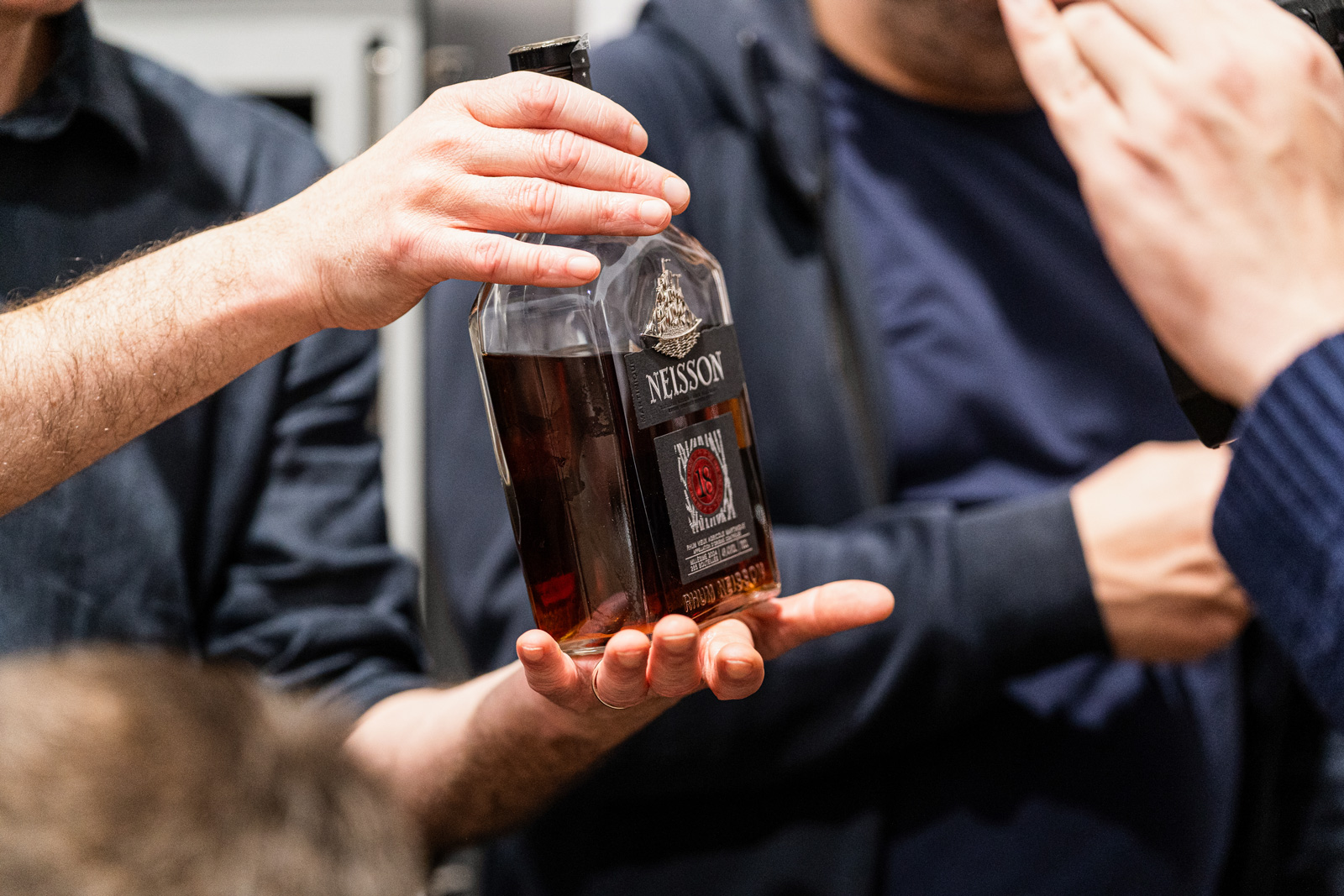
Speaking of your grandfather, I’m curious about the iconic Neisson rum bottle commissioned by Jean Neisson in 1952 and its name, Zépol karé...
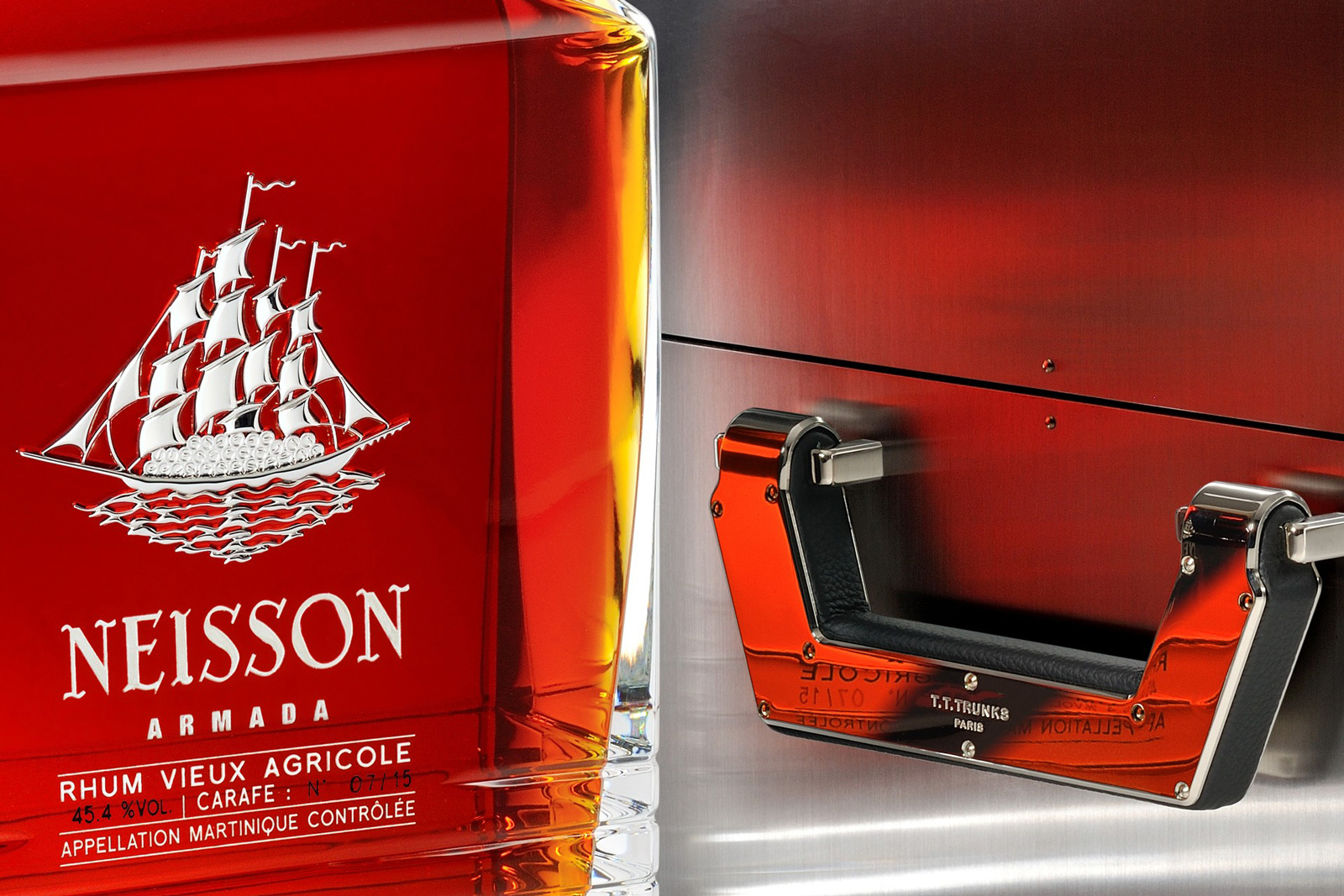
“Yes, it was adopted in the 1950s. As I mentioned, my grandfather Jean Neisson was a black man. In Paris he married a Russian Jewish woman. As you can see, my family is quite mixed. My grandmother's sister studied Fine Arts in Paris and she designed the bottle as you see it today. Jean Neisson wanted a bottle that would set him apart from everyone else. The ship you see on the label is a memento from the time my family had an exclusive import license for fabrics from India, as Martinique was historically home to a large Indian community. In fact, I believe we also have some ‘Indian’ blood in the family. Zépol karé is Creole for 'square shoulders'..."
What does Neisson mean in Martinique? As a historic distillery still owned by the same family that founded it...
“It does mean a lot. Remember that my grandfather was a black man descended from a slave, and was the first black man to found and own his own distillery. He was a very interesting, knowledgeable person. When he returned from Paris and his studies he introduced a very scientific approach in the distillery, but most importantly – and I never forget this - he was a farmer... You see, rum is basically growing sugar cane, it all starts in the field, we should never forget that."
How many sugar cane varieties are you currently growing?
“As a rule, we have three organic varieties - sometimes it's four, sometimes two. It depends on the climate and the likelihood of disease, because we cannot risk losing our entire production. So we claim "organic" status only when we are absolutely sure we can do it. It's not easy, especially these days when it seems everything needs to go as fast as possible. But we are first and foremost farmers, and the pace of nature is not as fast as the pace of men, or at least the pace of their desires."
Very wise...
“Most people I meet ask me what kind of sugarcane I grow, what varieties grow on my property, but very few ask me about terroir. We should talk much more about the terroir where sugarcane grows, because it's the cane that adapts to the terroir and not vice versa. Martinique is not a very big island, yet it has a large number of very different terroirs. So the question is not whether or not I grow Bleue varieties, but where they grow - in the mountains, by the sea... Let me give you an example. There are several mango trees growing on my property, excellent mangoes, but I've always wanted to grow orange trees as well. I tried several times but never got anything good out of it, yet just a few kilometers away I know someone who produces amazing oranges."
Let's talk a little bit about cane juice fermentation. I read that your fermentations are quite long...
"Normally fermentation is complete after about forty hours, although obviously that's not always accurate. But I confess I like to prolong it a little, until malolactic fermentation starts and a sort of 'flora' develops on the surface of the liquid. In that case it can last up to 120 hours before we move on to the next step."
Do you think that adds flavor to your rum?
"I'll tell you this: any producer will tell you that their way is the best way. I say my rum is exactly how I want to make it. Fermentation is a key stage in the production of rum, in my opinion it's responsible for 80% of the quality of the rum you get in the bottle, because during distillation you can't control everything."
Are you saying that nature matters more than man?
“Yes, of course. The problem is some people think you can control everything all the time, but it's the soil and the climate that makes the rum. The tools we use in the distillery definitely help and I appreciate their importance, but they're just for support. If you have poor quality raw ingredients, distillation can help you mask some of the flaws, but you'll never get a great product."

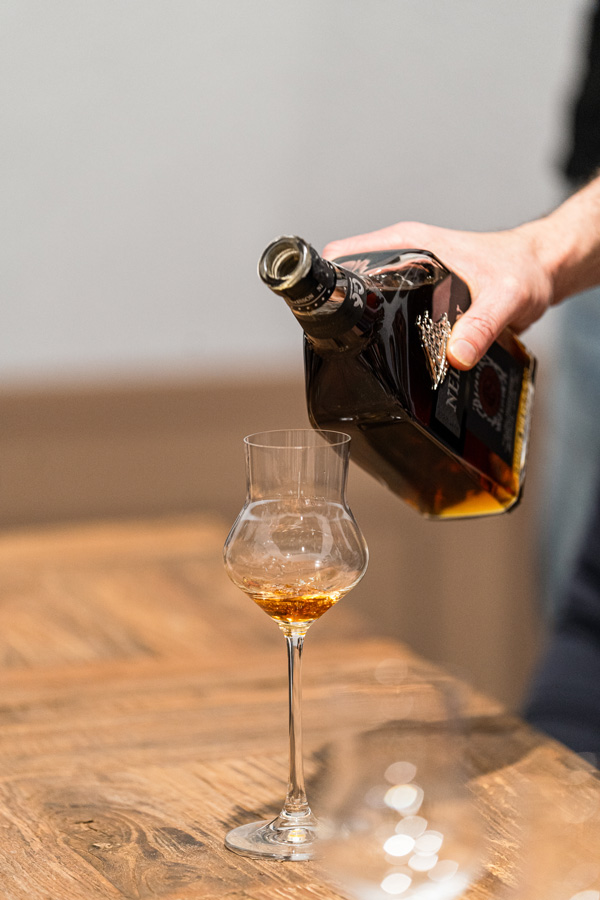
The interview is over, or rather it was interrupted. Hogging half an hour of Grégory Vernant Neisson's time at Velier Live was a titanic feat, with scores of enthusiasts throwing questioning, curious, sometimes vaguely threatening looks at this uncompromising distiller who radiates a rational yet visceral passion for what he does. His only mistake was to open a bottle of The Armada, his longest-aging rum and his personal stylistic advice to his children, who are already following in his footsteps. How can you pick up the thread again once you’ve had a sip of that...