





The whole truth about absinthe - Part Two: Recipes and rituals

A two-stage journey between myth and reality discovering the legendary "green fairy"
After telling the story of absinthe in the first part, we can now delve deeper into the technical aspects that define it.
How to define absinthe
To begin with, we should say that the term absinthe refers to a spirit made by macerating and then distilling artemisia absinthium, fennel seeds and green anise seeds, possibly colored by steeping additional herbs to release aromas and chlorophyll.
The maceration process may also include various other herbs, seeds, and roots like hyssop, lemon balm, coriander, angelica, sweet flag, veronica, glacier wormwood, chamomile, mint, artemisia pontica and many others.
Artemisia pontica, lemon balm and hyssop are usually used in coloring. Alcohol should be made from wine or grain.
In sum, real absinthe should:
- Be obtained by macerating and distilling at least three ingredients - artemisia absinthium, fennel seeds and green anise seeds. Green anise should never be replaced with star anise. Modern producers tend to make absinthe that tastes like "highly alcoholic pastis" and use huge amounts of star anise, resulting in a one-dimensional flavor of anise or licorice.
- Become cloudy when mixed with water. Many anise spirits typically cloud up when the essential oils, which are soluble in alcohol, thicken in a predominantly aqueous solution. The absence of clouding (louche) means that the producer hasn't distilled properly or not at all, and has simply mixed alcohol with chemical flavors and colorings.
- Contain no added coloring. Any coloring must be obtained naturally from the infusion of herbs and flowers.
- Contain no sugar.
- Despite being predominantly aniseed emphasized by fennel seeds, the overall flavor should be multidimensional reflecting the bouquet of herbs and aromas used in the production process.
Today, many of the products sold as "absinthe" are obtained by adding essential oils and colorings rather than by maceration and distillation.
This process is indeed authentic as it was already used in 1880 for the production of low-cost absinthe. Experts still debate whether it should be considered a proper method to obtain real absinthe or a way to produce cheap imitations as it was in the past.
However, what's undisputable is that absinthe produced using essential oils and colorings cannot be the same quality as absinthe made by maceration and distillation. Nowadays, absinthe obtained by adding essential oils and colorings often costs about as much as distilled absinthe.
ingredients
- Artemisia absinthium
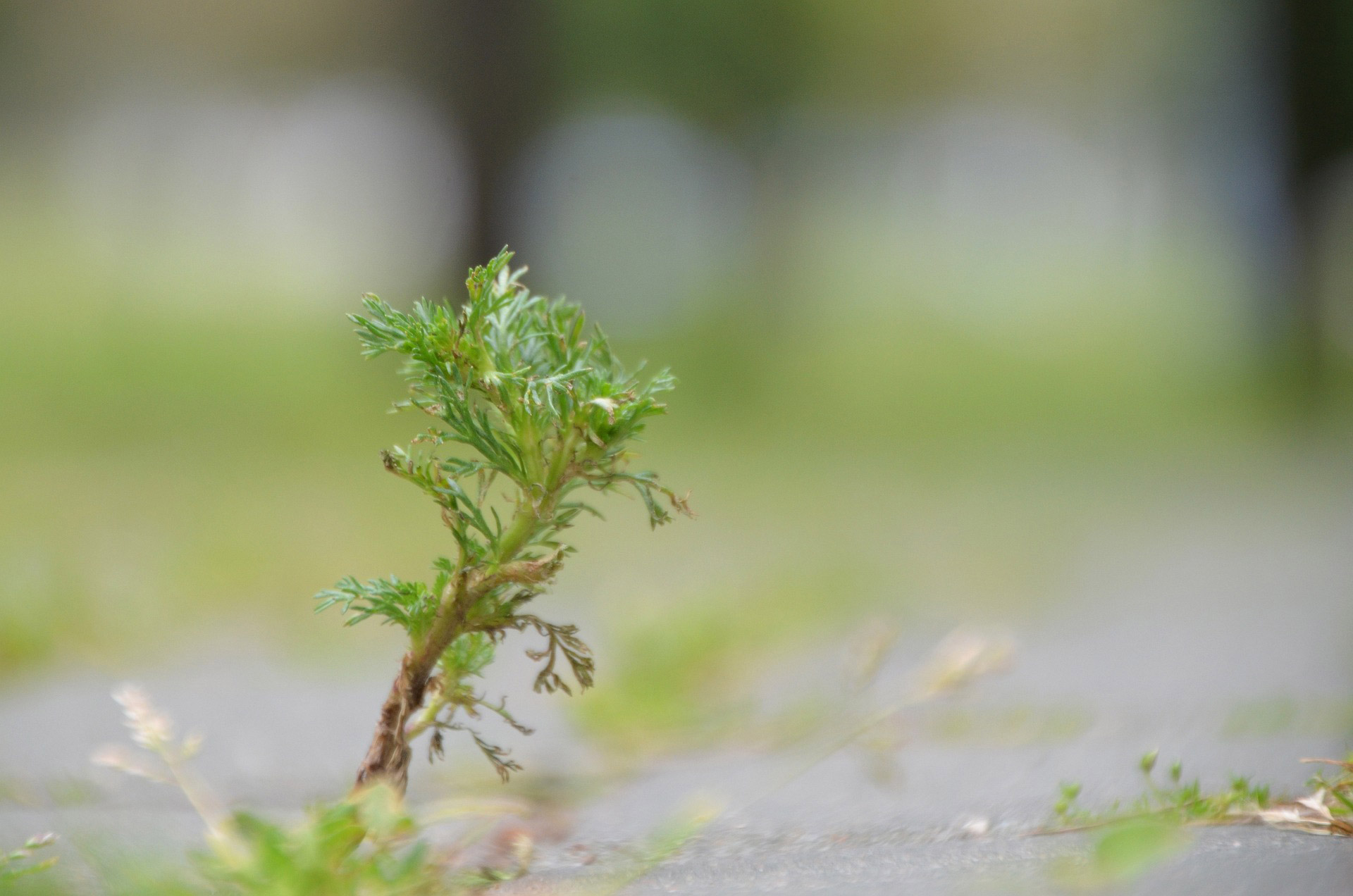
A very important plant in liqueur making and essential in the production of absinthe. It's extremely bitter when macerated due to the presence of substances such as saponins and tannins. When distilled however, the unpleasant bitterness gives way to an intense balsamic aroma and a pleasantly bitter aftertaste.
- Artemisia pontica
This plant is essential in coloring. Its aroma is similar to some extent to artemisia absinthium but it's definitely less bitter, grassier and more balsamic. It helps further refine the aroma and enhance the flavor of artemisia absinthium.
- Green anise seeds
The most important ingredient in the preparation of absinthe in terms of quantity. Its aniseed aroma is spicy, pungent and definitely drier than the perhaps more commonly known star anise, which is smooth, persistent and if used improperly leaves an unpleasant metallic taste in the mouth.

- Fennel seeds
They bring mellowness and body to absinthe and emphasize the green anise flavor with their round, licorice-like aroma.
- Coriander
It gives absinthe citrusy and pungent notes. However, it must be used in moderation as it's easily overpowering.
- Lemon Balm
Largely responsible for absinthe's beautiful green color, it adds freshness with a delicate lemon-like flavor.
- Hyssop
High-quality hyssop is essential to add fragrance to the finest absinthe. This plant offers an intense floral scent similar to lavender, although it’s definitely less aggressive.
- Angelica
The elegant aroma of absinthe is partly due to the refined flavor of one of the most important plants in liquor making. Absinthe production usually involves angelica roots, although some recipes call for the seeds. Slightly balsamic, its penetrating aroma usually remains in the background but helps enrich the overall flavor with unique nuances.
- Star anise
Rarely used in absinthe production, it's the main ingredient in pastis and absinthe imitations. In the production of authentic absinthe it's used in moderate amounts to emphasize the fennel and green anise flavor.
Historical classification of absinthe
In the nineteenth century there was no real classification for different kinds of absinthe. However, a number of adjectives could be used to define them. The main distinction was between absinthe verte and absinthe blanche, meaning colored absinthe and absinthe that was bottled without the coloring process and was therefore colorless. Another distinction was based on alcohol content, as at that time the cost of a bottle of absinthe depended largely on the cost of alcohol.
Categories included:
- Ordinary absinthe ranging from 40° to 50°
- Semi-fine absinthe between 50° and 55°
- Fine absinthe between 55° and 60°
- Superior quality absinthe between 65° and 72°
There was also a general distinction based on the city or area of production, which involved minor differences in production technique or the use of distinguishing secondary ingredients. This is why we find phrases such as "Swiss quality", "Pontarlier absinthe", "Fougerolles absinthe", "Montpellier absinthe", "Lyon absinthe" etc., most featuring specific secondary ingredients.
modern issues
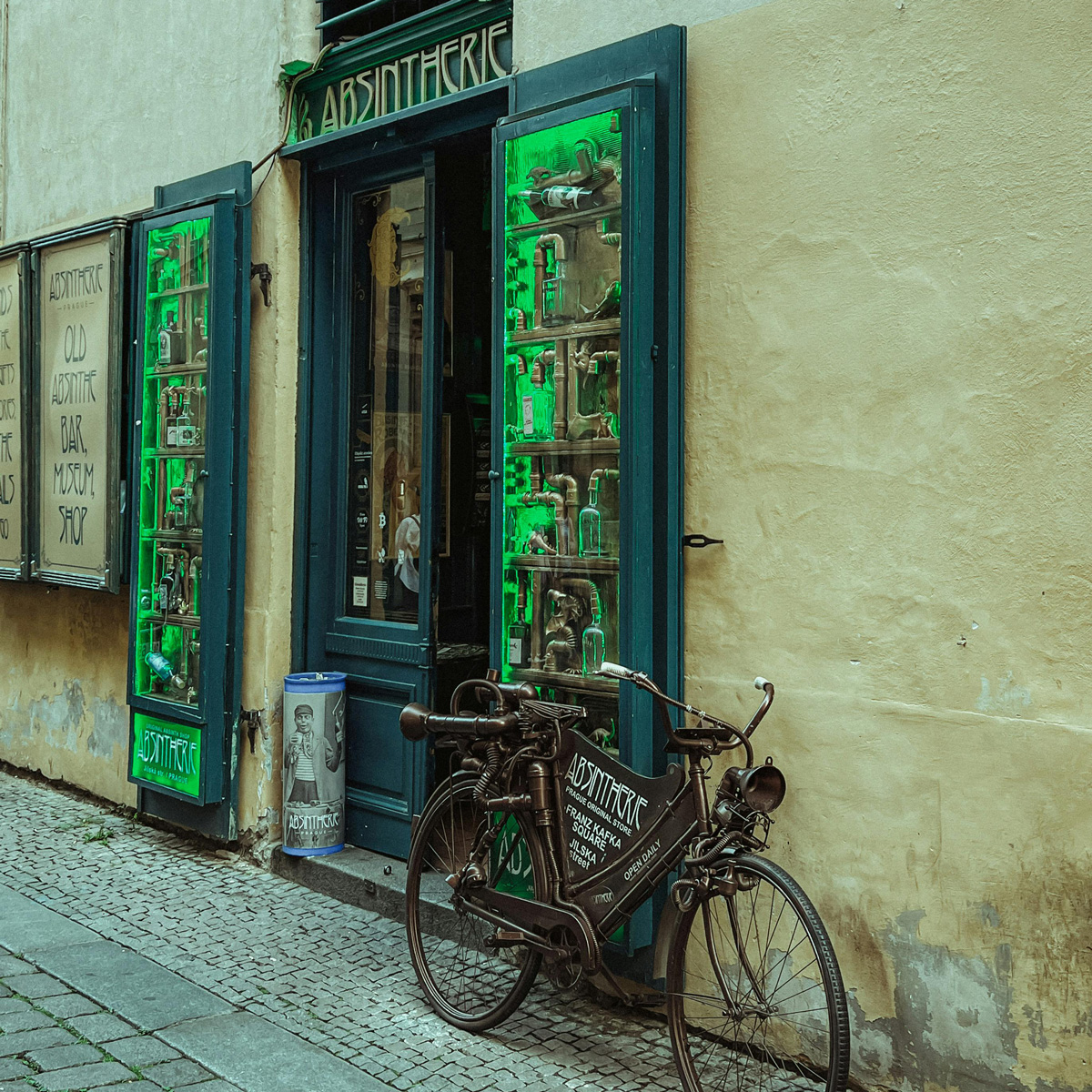
The revival of absinthe happened in a muted, chaotic manner. The confusion created by the popularity of "non-absinthe" from Prague as well as a continued desire to spread legends depicting it as strong and hallucinogenic, not unlike a powerful drug on one hand, and by attempts to discount it as little more than pastis on the other, caused authentic absinthe to be hard to find and largely unknown to this day.
Generally, today absinthe is not protected by any international production specifications or regulations establishing precisely what products can be labelled as such. Consequently, anyone can legally sell anything labeled as "absinthe."
Here are a few tips to navigate the market, although even these few rules cannot ensure the authenticity of the product you're buying:
- Carefully avoid any product containing artificial colorings
- Carefully avoid any product containing sugar
- If you can, make sure it's distilled
- It should cloud when adding water
- The taste should not be bitter or anise/licorice only
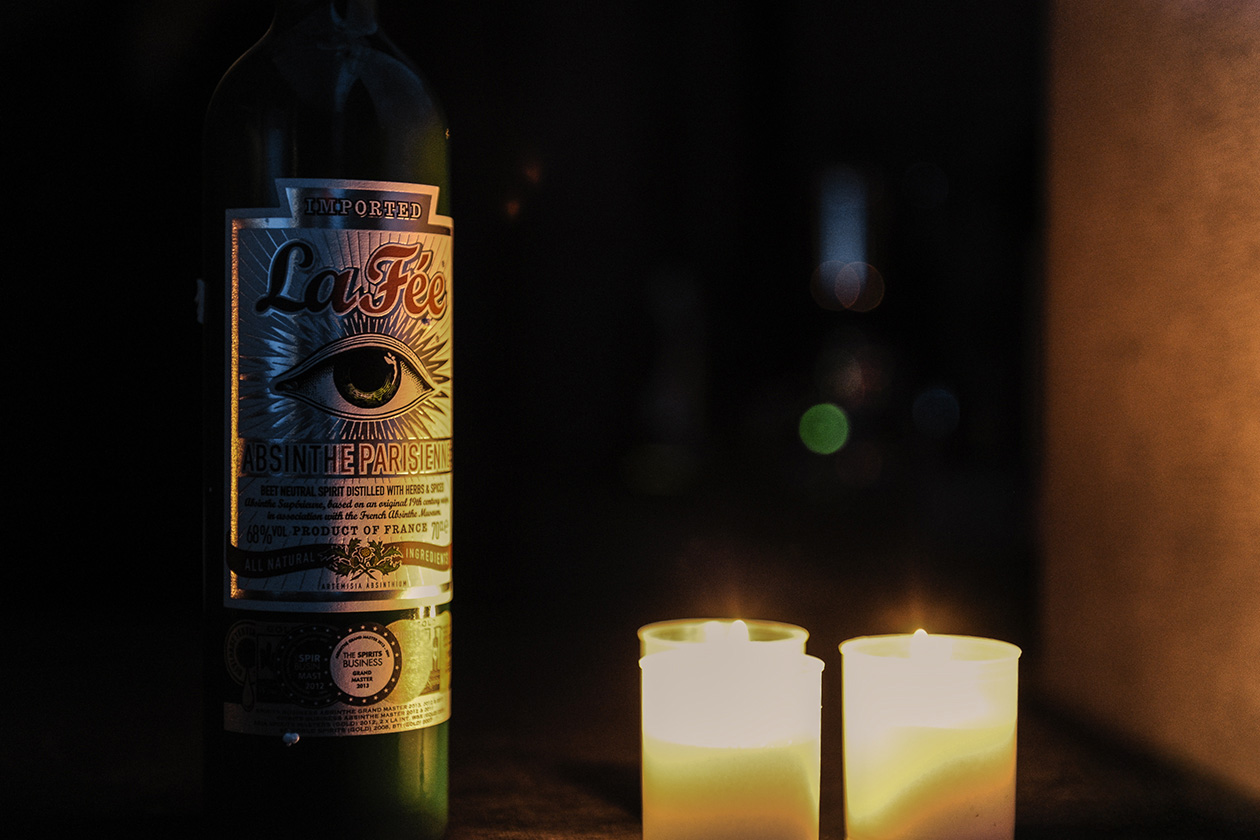
Generally, today all absinthe produced in Pontarlier or Fougerolles or Saumur is authentic, with very few exceptions.
Swiss products are guaranteed to be authentic as precise rules were established when absinthe was officially legalized in 2005.
Spanish products are guaranteed authentic until 1965. Between 1965 to 1990 only a few companies continued producing authentic absinthe, and from 1990 onwards no producer of authentic absinthe remained with the exception of Segarra - although even that is not 100% authentic as they only distil artemisia absinthium and green anise.
Current Absinthe Classification
Modern absinthe classification involves two major distinctions and completely disregards alcohol content as today one can find excellent absinthe at a low ABV, while fake absinthe is often high-strength.
The first major distinction is authenticity:

"Non-absinthe/absinthe"
Generally produced in Eastern Europe, it can also be found in France, Italy, Germany, Spain and Portugal. The vast majority of brands are produced by adding chemical flavors and colorings. A few contain small amounts of essential oils and do not cloud. Anise is rarely used, often replaced by licorice flavor. The subtle, artificial taste can be either very sweet or extremely bitter. Most derive from "Prague absinthe" which, as we know, has no ancient traditions and only appeared around 1990 thanks to Hill.
Imitations
They are perhaps the most widespread in Western Europe and Italy. This group includes both high- and low-quality products. The definition of "imitation" involves the use of large amounts of star anise and production by maceration alone or by cold-mixing essential oils.
It should be noted that essential oils are obtained through a specific distillation process and that's what some unscrupulous producers play on claiming that since they distill their essential oils, their absinthe can be defined as a "distillate."
Distilled or authentic absinthe
It’s absinthe produced according to the ancient production protocol, bearing in mind what the final result should actually be like in order to define it as "absinthe." Many are produced following old recipes, but there are now new-generation brands faithfully replicating what absinthe should offer in terms of fragrances, aromas and flavors.
Having made this major distinction, authentic absinthe can be further classified into the following categories:
- Absinthe verte. Absinthe which, after distillation, has undergone a coloring process through the infusion of herbs which, in addition to releasing chlorophyll, also add more aromas enriching the overall flavor of the spirit. Absinthe verte usually tastes grassier than absinthe blanche, is richer in aromatic nuances and improves the most when aged.

- Absinthe blanche. Absinthe that has undergone no coloring process and is therefore colorless. Once less popular than verte, today authentic absinthe blanche is easy to find. Producers of absinthe blanche usually prefer to add all of the ingredients normally used for coloring into the distillation process, to ensure the resulting product lacks none of the aromatic nuances that only come with coloring in absinthe verte.
- Absinthe la bleu. Absinthe blanche created in the twentieth century. A special modern product from Val de Travers. Its origin dates back to immediately after the year absinthe was banned in Switzerland. The term la bleu comes from the bluish reflections of artemisia absinthium fields. The color was immediately eliminated, both because it's a complex process requiring significant knowledge and skill, and because absinthe blanche was much easier to smuggle than absinthe verte. The alcohol content dropped to around 50°-55°, probably to reduce production costs and avoid attracting attention when purchasing alcohol. These clandestine productions used large amounts of fennel seeds and sometimes star anise in quantities slightly higher than the few absinthe brands that used it in the nineteenth century. With the legalization of absinthe in Switzerland, today these recipes handed down from father to son from the 1920s to the present day can be sold legally. About fifteen of these clandestine producers have decided to continue making absinthe legally, while still offering a very traditional, very limited production. However, it's estimated that in Val de Travers alone there are still at least 100-150 illegal La bleu distillers. These absinthe brands are all very similar to each other and offer a balsamic, alpine, genuine and refreshing flavor. Although very pleasant, they fail to deliver the aromatic complexity of superior quality absinthe produced today.
Preparation ritual
In this chapter we will disregard all modern rituals arising from ignorance and a desire to encourage the usual legends revolving around the green fairy.
Originally, absinthe was most likely drunk straight, in small amounts orspoonfuls like medicine, or perhaps by adding a little to a large glass of water. The habit of drinking 3-4 cl of absinthe mixed with cold plain water began during the Algerian war, when French soldiers started adding generous amounts of absinthe to their water to purify it. That's also when it began to be sweetened with orgeat (as the Algerian soldiers did) or gum Arabic syrup.
Sugar came later, first as small chunks broken by the bartender with shears; it was only after 1875 that the now-famous sugar cube (invented right around that time) became the heart of the preparation ritual.
Sugar is used not so much to sweeten absinthe as to better bring out the aromas of some of the herbs, particularly artemisia absinthium, and blend them together to harmonize the flavor.

At the height of the popularity of absinthe, the ritual with cold plain water and
a sugar cube was the most widespread of all, increasingly personalized with a broad variety of slotted spoons (when possible, each drinker chose their favorite spoon, some even having them engraved with their initials), grilles, brouilles, etc. However, some preferred to drink it simply mixed with cold plain water with no further additions, or sweetened with a drop of orgeat or, better still, gum Arabic syrup (you ordered absinthe gommée). Others asked for it sweetened with sweet anisette, still others preferred to mix it with white wine instead of water (called absinthe de minuit). This preparation method is also mentioned by Hemingway, who emphasized how difficult it is - “you may well ruin both the absinthe and the wine!”. There were also a handful of people who asked for it straight with very little water (“un absinthe pure”), but they were often low-class people or end-stage alcoholics. Aleister Crowley (a well-known English demonologist) used to drink it straight, even though he knew it was the worst way to enjoy it.
Henri Toulouse Lautrec invented his own personal method of preparing absinthe, which consisted of pouring half a measure of absinthe and half a measure of cognac into a glass and then simply adding water. This variant came to be called treblement de terre!
Lastly, preparation with Seltz is also documented, although it was one of the least widespread methods of all.
So what's the classic way of preparing a glass of absinthe?
Have a pitcher of cold plain water with ice on hand. Pour a measure of absinthe (usually 3 - 4 cl) into a large glass. Place a slotted spoon or a grille with a sugar cube (or half, depending on your preference) on the rim of the glass. Pour the water over the cube very slowly, in a drizzle or drop by drop. It's important to pour the water slowly as that allows the aromas to develop fully and releases the full range of fragrances. Pouring the water in one go or in a hurry you'd miss the magic of the louche gradually forming at the bottom of the glass and the pleasant crescendo of fragrances released with each drop. Add water until the absinthe is completely cloudy. That's the minimum amount of water you need.

Forget ratios - that's not how absinthe works. Keep your eyes on your glass and pour water until the louche is complete. Try it and if you still find it too intense, add a little more water.
If you use a brouille instead of a spoon, you can place the sugar cube over the hole. Brouilles are usually filled with additional ice before pouring the water.
If you want to prepare absinthe without sugar, just pour cold water slowly until the louche is complete.
Any other type of sweetener should be added to the glass after absinthe but before water.
Carefully avoid putting ice in your absinthe - in addition to ruining the louche, sudden contact with the cold "freezes" the aromas, which will not be released in their fullness.
Once the water has been added it's best to wait a few moments before enjoying it, in order to allow your absinthe to oxygenate slightly and the temperature to stabilize.
Absinthe cocktails
Absinthe was banned right at the time when the bartender culture was developing, and as a result there aren't many classic cocktails where it is used. However, there are a couple created in New Orleans at the end of the century like Sazerac or Suissesse.
Old Absinthe House in New Orleans was famous for its absinthe frappé, which attracted customers looking for a refreshing drink.In addition to these historical cocktails a number of celebrity drinkers had their own personal way of enjoying absinthe, like adding grenadine or green mint cream.
Among authentic absinthe brands, Nouvelle Orleans and Marteu are certainly some of the best choices to give your cocktails a unique, refined flavor. Below are some Belle Époque absinthe recipes as well as a few more recent cocktail recipes.

Suissesse
Ingredients:
- 4 cl absinthe
- 1.5 cl orgeat syrup
- 1 egg white
- 1.5 cl sugar syrup
- crushed ice
mix the Ingredients: and shake. Serve in a vintage glass.
Sazerac
Ingredients:
- 4 cl absinthe
- 6 cl rye whiskey
- 3 tablespoons Peychaud's bitters
- 1/2 tablespoon sugar
Absinthe Vermuth
Ingredients:
- 4 cl red vermouth
- 1 tablespoon absinthe
- 1 tablespoon orange bitters
Absinthe Frappè
Ingredients:
- 6 cl milk
- 20 cl heavy cream
- 3 cl absinthe
- 2 tablespoons sugar
- crushed ice
- 1 egg white

New World
Ingredients:
- 4 cl absinthe
- plenty of crushed ice, water or soda water
- 1 tablespoon sugar syrup (optional).
Vienna Milk
Ingredients:
- 4 cl absinthe
- 2 cl orange liqueur
- lemon wedge
- granulated sugar
- 1 sugar cube
- cold water
75
Ingredients:
- 1 tablespoon absinthe
- 2/3 calvados
- 1/3 gin
Terry Monroe, born Maria Teresa, was born in Basilicata and lives in Milan. After graduating in Herbal Sciences, in 1997 she opened her first bar, Opera Café - later renamed Opera 33 - Milan's go-to place for mixology thanks to her constant experimentation with new flavors and combinations. An offshoot of Opera 33, Speziology is a laboratory dedicated to studying the use of spices in cocktails. In addition to her entrepreneurship, Monroe teaches mixology in several schools and has authored a number of books on cocktails.


