





The whole truth about absinthe - Part one: The story
A two-stage journey between myth and reality discovering the legendary "green fairy".
The green fairy between myth and reality
The origins of absinthe are lost in the mists of time.
Legend has it that for centuries people in Val de Travers, Switzerland, used to prepare an elixir by distilling artemisia absinthium, green anise seeds, lemon balm and several other medicinal plants as a cure-all for every ill. Then, in 1792, Dr. Pierre Ordinaire, a French doctor exiled in Switzerland, discovered this traditional local tonic and changed it slightly, making it officially "curative."

After Ordinaire's death, the recipe passed to the Henriod sisters from Couvet, who unsuccessfully tried to systematically market the elixir. The recipe was then sold to Major Dubied, who soon opened the first small craft distillery of Extrait d'Absinthe with his son-in-law, Henri Louis Pernod.
Within a few months, "Dubied & Pernod" began to sell extrait d'absinthe across Val de Travers and the French canton of Jura. The success obtained in France led Pernod and his wife, Dubied's daughter, to open a larger distillery in Pontarlier, a short distance from the border.
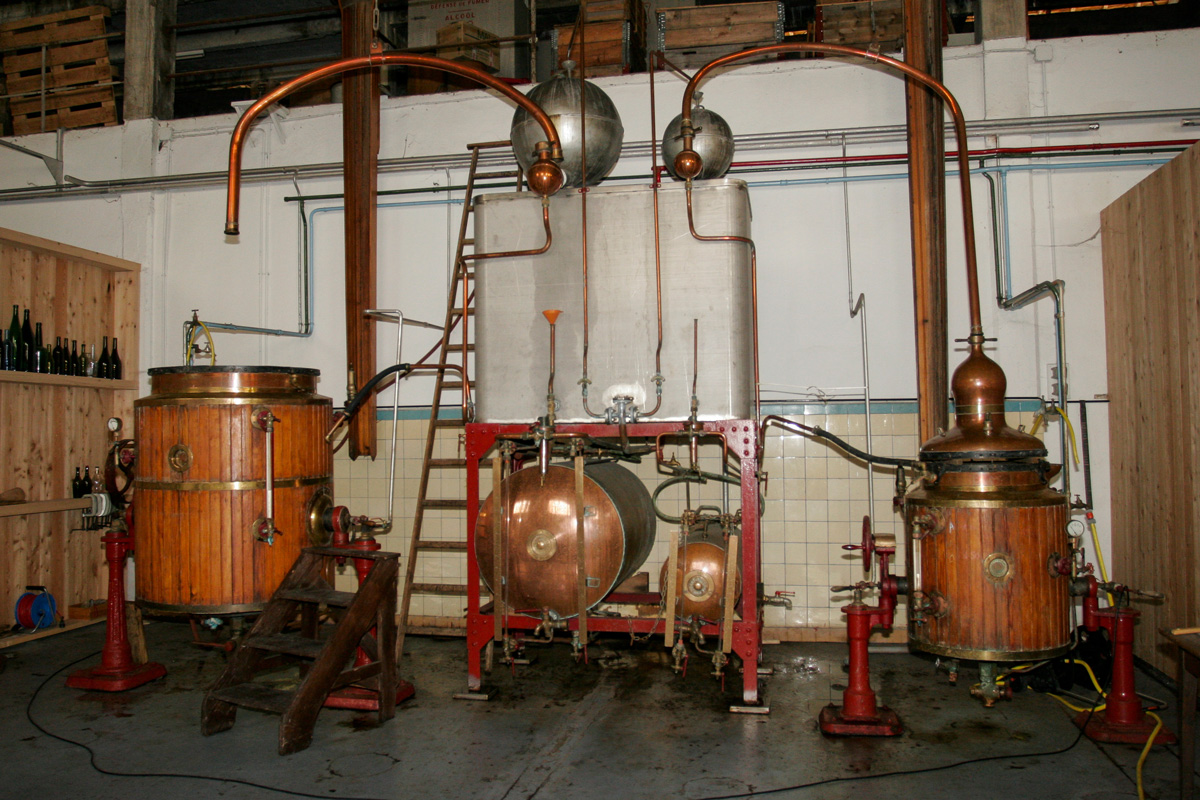
It was the year 1805 and the most important absinthe distillery ever, Pernod Fils, had begun distilling Extrait d'Absinthe, modifying it slightly to make it "more pleasant" to the palate, with the goal of expanding consumption and breaking away from the elixir's medicinal reputation.
After Dubied's death, the distillery passed on to his sons who increased production and changed the name to Dubied Fils.
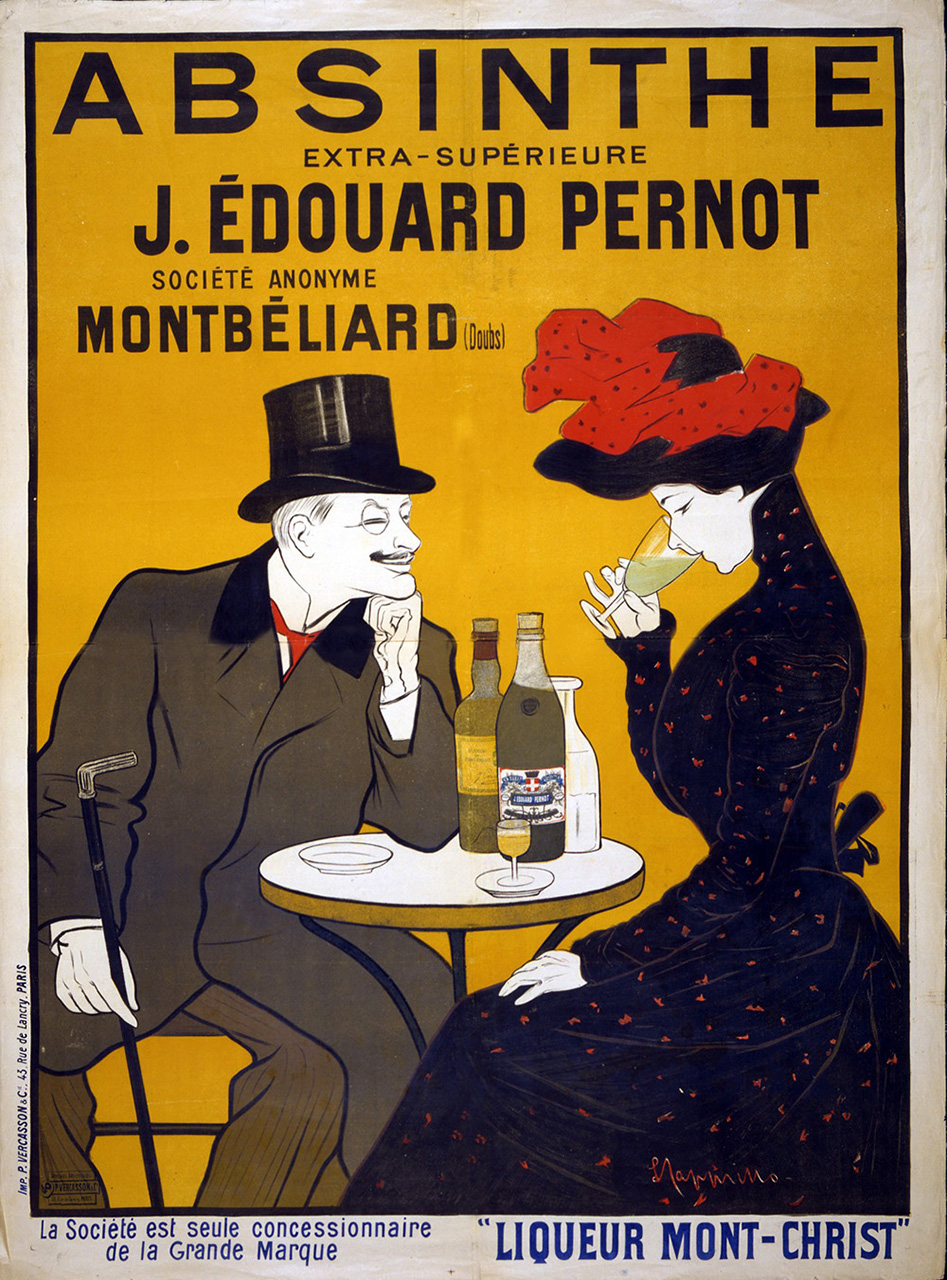
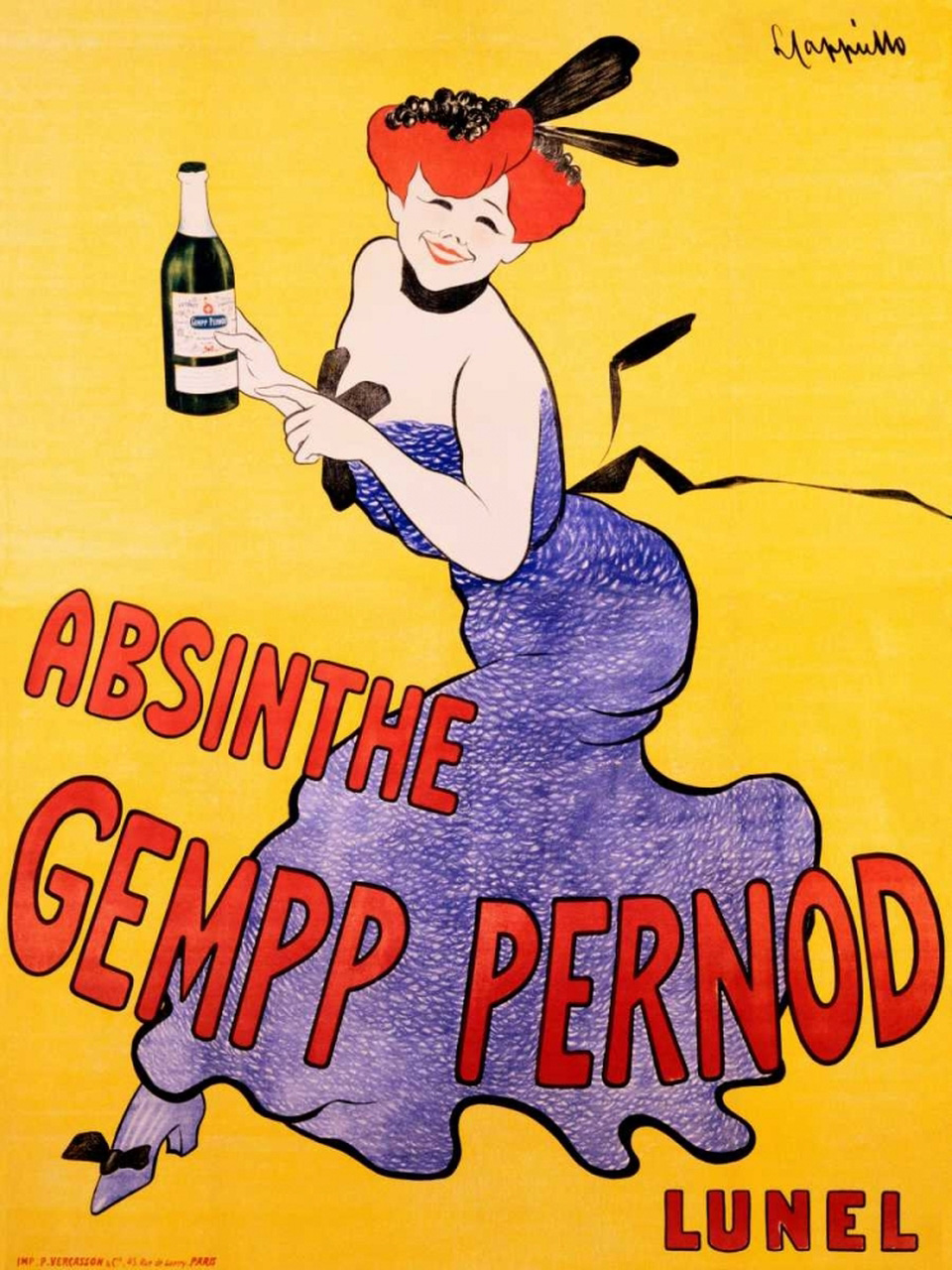
It was only in the mid-nineteenth century that the company was sold to Fritz Duval, who turned it into one of Switzerland's most important absinthe distilleries.
Meanwhile in Pontarlier, France, the success of Pernod's elixir encouraged the opening of several absinthe distilleries. However, the absinthe market was still limited to the Jura, Val de Travers and only part of France, where it was still considered a "medicinal elixir."
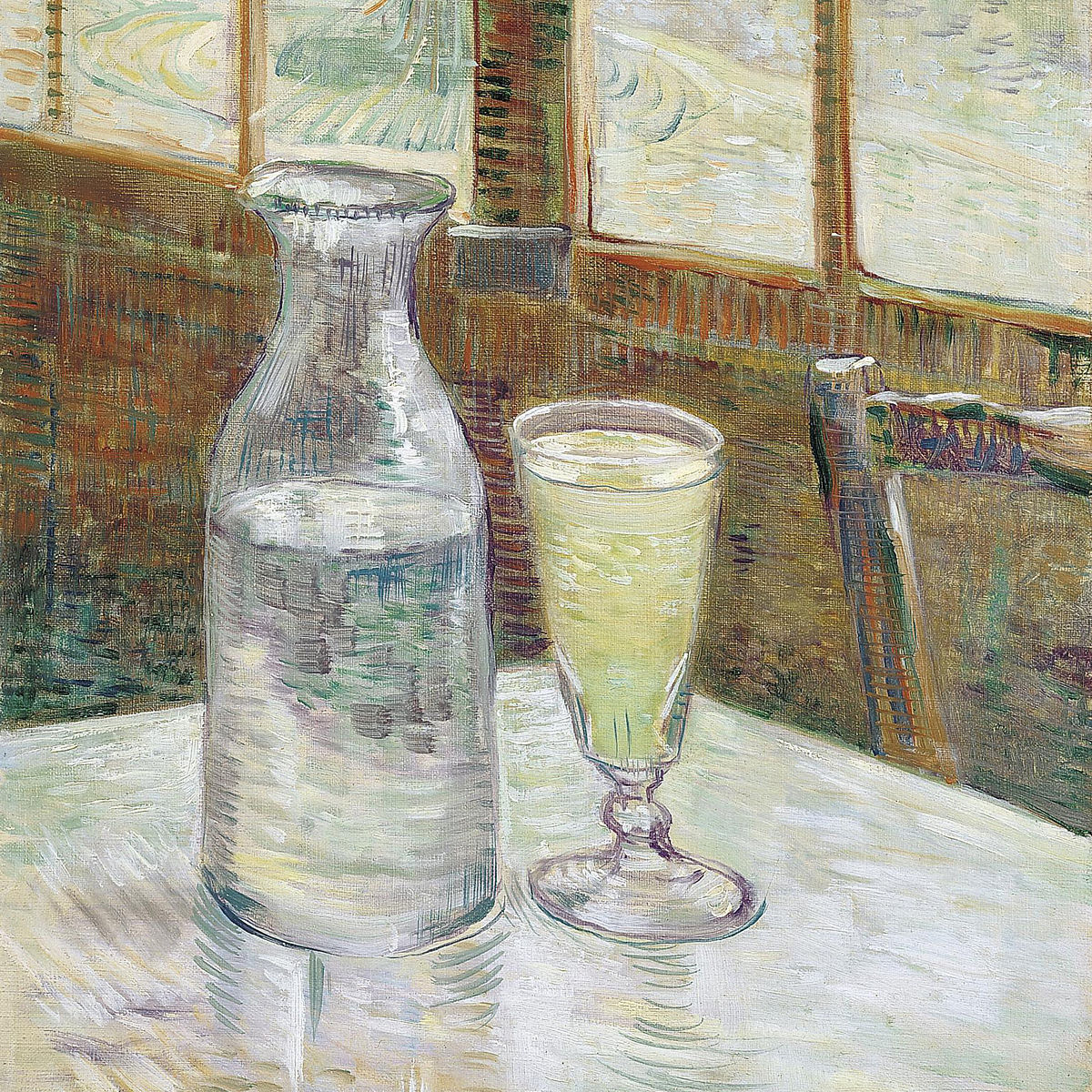
The first turning point came during the Algerian war, when the French government decided to include a bottle of absinthe in each soldier's standard equipment to "purify the unhealthy waters of Africa" and prevent dysentery and malaria. The soldiers soon began to appreciate the pleasant taste of the new drink which, when mixed with fresh water, became opalescent and had a pleasant anise flavor.
Late nineteenth century
The period between 1860 and 1880 marked the second turning point in the story.
Phylloxera Vastatrix, a parasite of the grapevine, decimated the vineyards, making wine extremely rare and sending prices skyrocketing. French citizens responded by drinking more and more absinthe as a replacement for wine, turning it into the national drink par excellence in just a few years. However, the wine crisis also affected absinthe production, as until then all distilleries had been using wine alcohol. It was in those years, when the demand for absinthe grew exponentially and wine alcohol became rare and expensive that many producers - especially new ones - chose to use grain, beetroot or potato alcohol.
The market was soon flooded with hundreds of brands of very low-cost absinthe produced with poor quality alcohol, essential oils and added colorings.
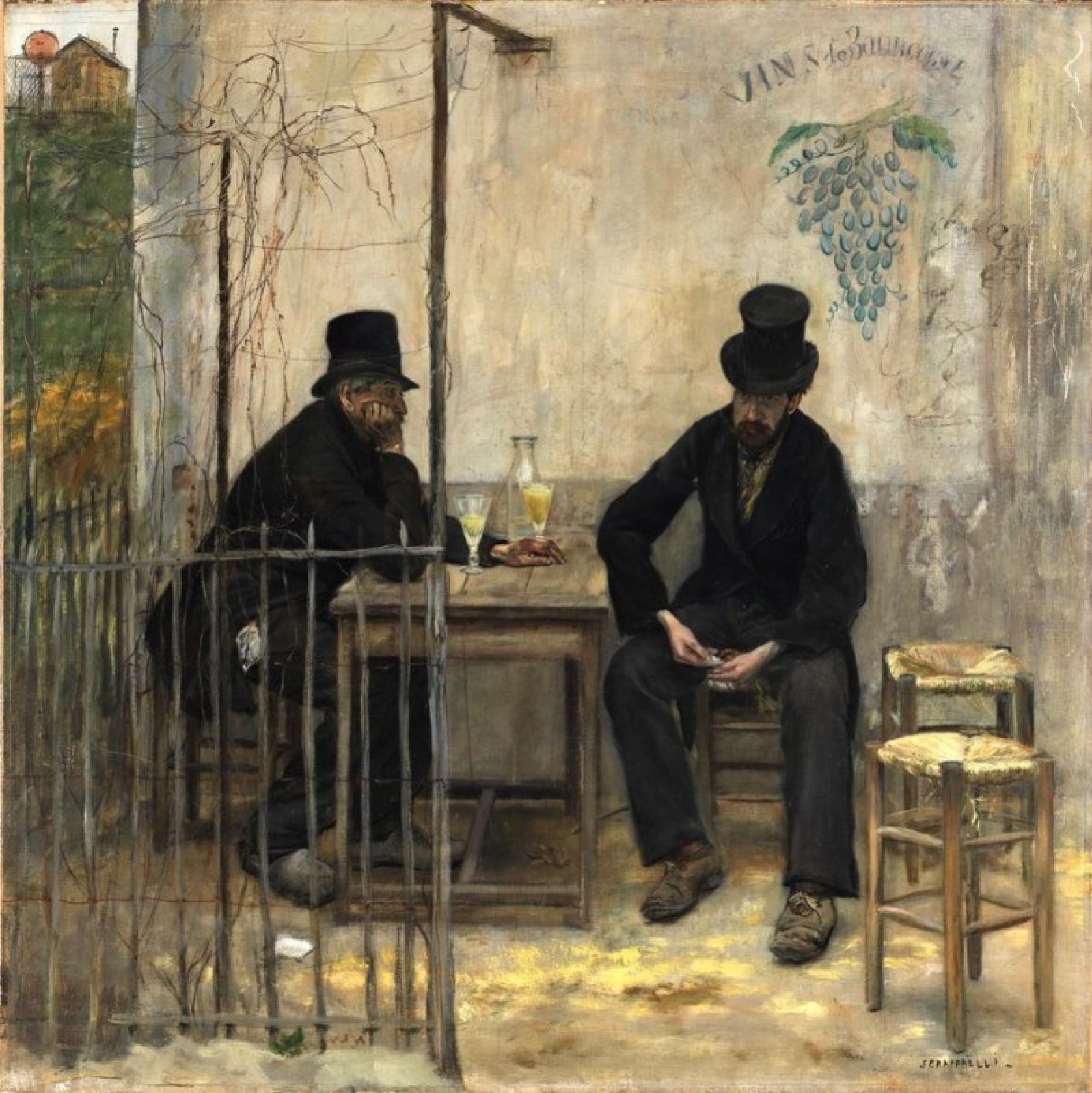
Consumption of the fee verte — as the new aniseed aperitif was commonly called — also increased due to a new current of thought that shaped the entire Belle Epoque - breaking away from useless traditions. Absinthe was viewed as a new, modern drink, and soon became the symbol of the cultural ferment animating Paris in those years.
At the end of the 19th century, wine production gradually returned to normal, but the market had been saturated by absinthe. Wine's only chance was to fight the rival right where it enjoyed its success, that is, in the social and cultural sphere. Leveraging their significant economic and - more importantly - political power, wine and cognac producers began an impressive campaign against alcoholism by pointing to absinthe as solely responsible for a serious social issue which was actually growing dramatically.
The debate between those who believed that absinthe was harmful to health due to a number of substances it contained — particularly thujone, phenetole and anethole — and those who considered it no more harmful than any other alcoholic beverage continued for several years. In the meantime, the first absinthe oxygenee appeared - absinthe purified from harmful substances through an oxygenation process - as well as the first absinthe sans tujon and even absinthe sans absinthe!
The
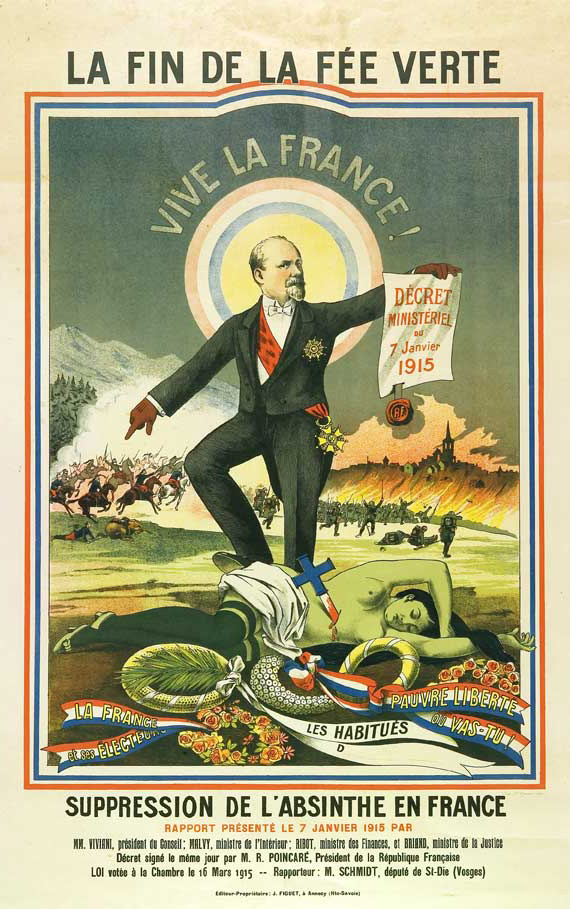
The ban came in 1910 in Switzerland, where a man named Lanfrey killed himself after murdering his family in a drunken rage.
This act of madness was believed to be the result of two glasses of absinthe the man had drunk in the afternoon. It didn't matter that, in addition to absinthe, Lanfrey had also downed 5 brandies for breakfast, a flask of red wine for lunch and two mugs of blonde beer.
In France it was banned a few years later in 1912, and soon most of the world, with the exception of Spain, Great Britain and very few other countries, was banning absinthe. In Italy it was 1929.
In the twentieth century the green fairy was gradually forgotten, although legends continued to grow.

In the late 1980s Radomill Hill, an entrepreneur from Prague, traveled to Spain where he had the opportunity to try absenta, still produced as it was in the 1800s.
He didn't know much about the drink, but he did know that its appeal and the legends around it were certainly the best publicity he could use to put it back on the market.
Once back in Prague, he decided to produce absinthe to revive the family company, which had fallen on hard times. Unfortunately, he knew nothing about the recipe and preparation, so he invented his own recipe from scratch, sure that few would be able to tell if his product was authentic or not.
Just a few years later, all the bars in Prague were offering tourists and young artists the "forbidden drink", the "artists' drug."
Unfortunately, very little was known about absinthe. People were fascinated by the legends surrounding it and the ritual invented by Prague bartenders - pour a measure of absinth into a glass, set a spoonful of sugar on fire to caramelize it, drop it into the glass while it's still burning and pour water over the flame until it goes out.
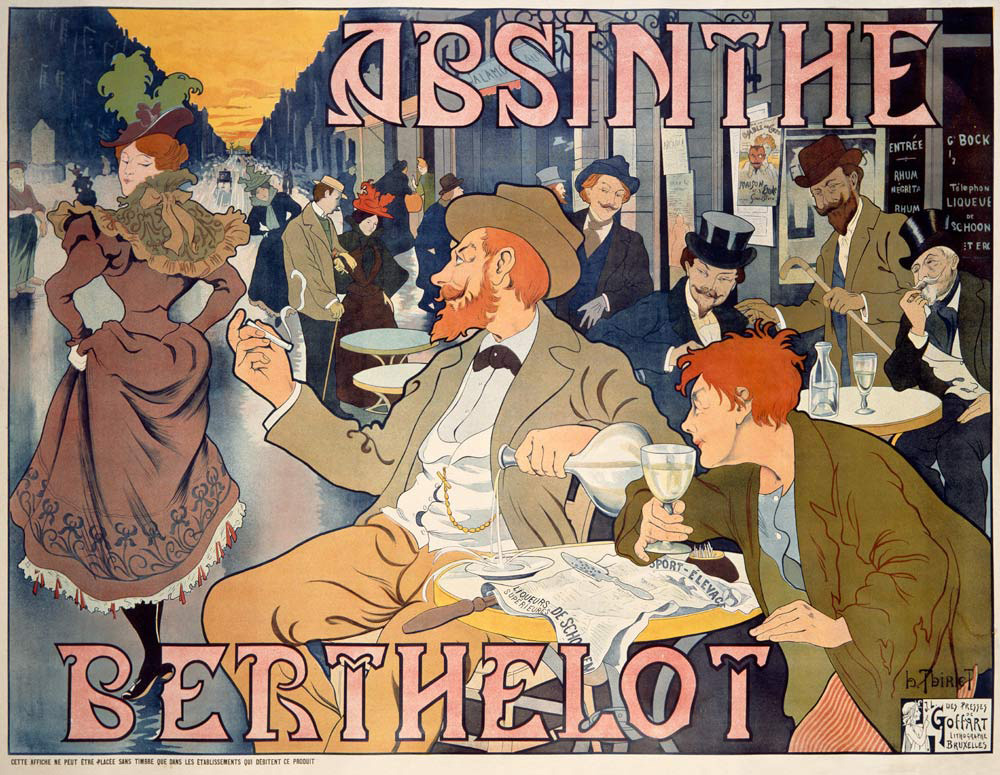
This ritual was inspired from what little people knew about absinthe at that time - you needed sugar, a spoon and water. It didn't matter that the "fire ritual" wasn't authentic. Radomill's product was in fact nothing like the absinthe he had tried in Spain or 19th century absinthe, but the popularity of Hill's led several Czech and Eastern European companies to produce "absinth" similar to Hill's, flooding the market with a huge number of brands.
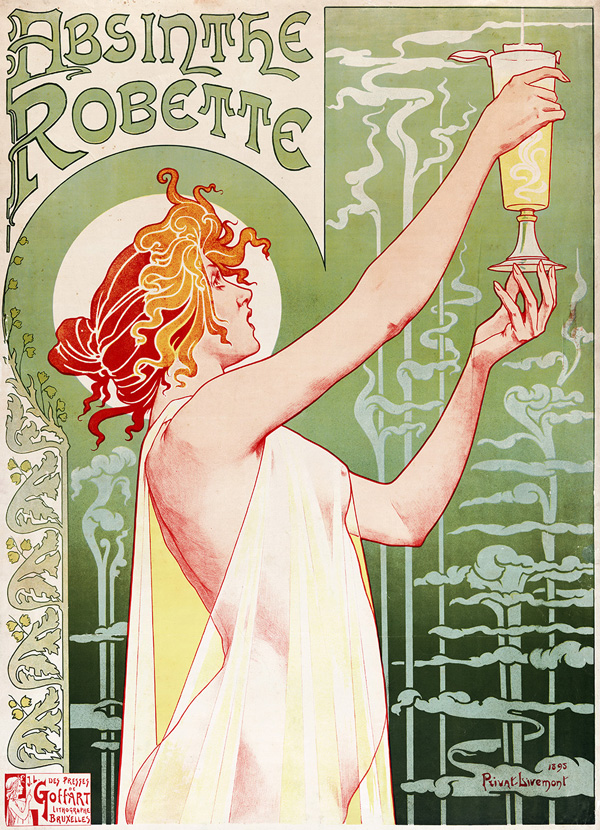
Meanwhile, production in Spain continued regularly until the late 1950s, when a manager from Pernod in Paris, now a major liquor producer, visited the company's Tarragona branch and discovered that they still produced absinthe.
Believing the production illegal, he immediately had Pernod Fils in Tarragona shut down. As a result, many other Spanish absinthe producers stopped production or radically changed it, believing that absinthe was illegal in Spain as well.
It was the managing director of the Montana distillery who proved absinthe was legal in Spain, putting an end to the fuss raised by the French Pernod. However, the damage was done and absinthe largely disappeared from Spain, giving way to new pastis-like drinks.
Non-absinthe absinthe
Following the success of Hill's, in the 90s the new Prague absinth fashion reached Spain. The few distilleries having a long tradition and centuries-old experience in the production of absinthe began to consider the possibility of exporting their products.
The problem was of course convincing the public that their absinthe was different from the one that had been banned 80 years earlier.
As a result, even the last producers of authentic absinthe decided to radically change their production, shelving the old recipes and creating new ones that were much more similar to pastis, with huge amounts of star anise and smaller amounts of artemisia absinthium, sometimes lowering the alcohol content as well. They were hoping to enter the French market with a product with a fascinating name but a taste very similar to the pastis sold regularly every day.
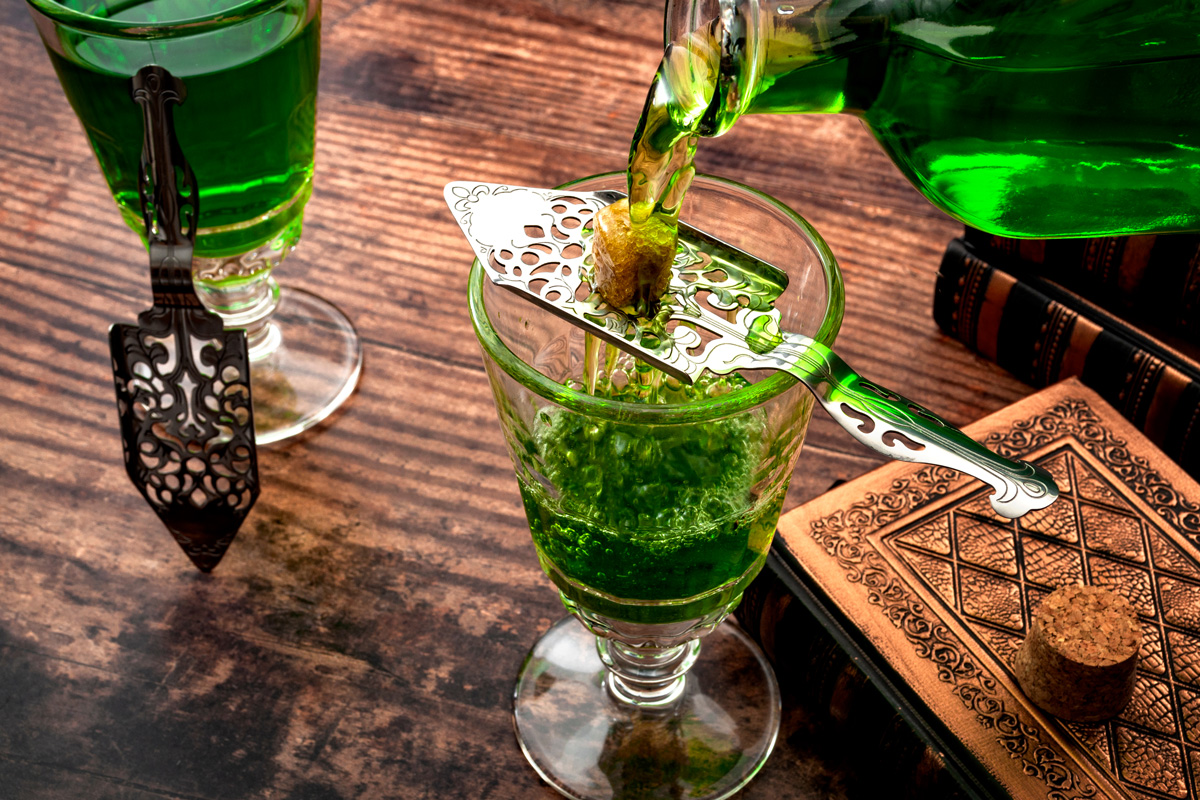
The production process also changed radically, with a preference for a much faster, more industrial one involving essential oils cold-mixed into alcohol and artificial colorings.
However, Spanish producers' expectations were partly disappointed, as the French market rejected their products for several reasons - the law banned products labeled as absinthe, requiring them to be labeled as "alcoholic aniseed-flavored beverages with artemisia absinthium extracts" or similar circumlocutions; and the French continued to prefer their own pastis to the new aniseed drinks from Spain.

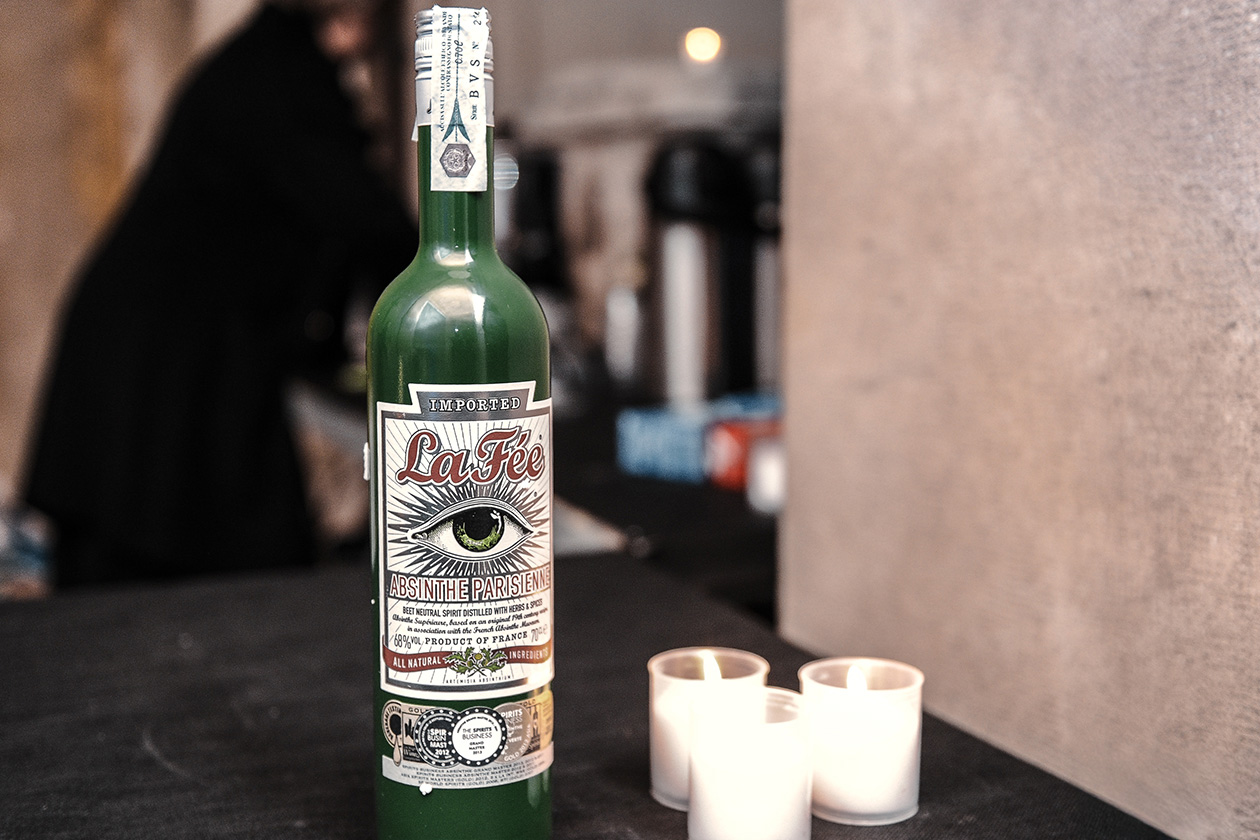
Meanwhile, in the late 1990s an English company decided to produce absinthe that was as close as possible to those from the 1800s. To accomplish this, they asked Absinthe Museum curator Marie Claude Delahaye for advice. A new product was soon placed on the market - La Fée, defined by producers as faithful as possible to the absinthe of the 19th century. La Fée became a huge success in every fashionable bar and club in London.
However, even La Fée was actually far from the original absinthe. The flavor was similar to the new Spanish products, although a 68% version was produced - the typical alcohol content of 19th century absinthe.
The revival of the original spirit
While the race to bring back the green fairy was in full swing, there were still a few small historic distilleries in Pontarlier and Fougerolles working away from prying eyes.
In particular, the Pontarlier Anis distillery dusted off the old recipe and started producing absinthe in compliance with the new European regulations.
The distillery was the first to produce absinthe according to the old recipe. Their François Guy had very few differences from the historical one, mainly due to a lower alcohol content of 45%.
Pontarlier's other historic distillery, Les Fils d'Emile Pernot, immediately followed suit, distilling their own absinthe also at 45% ABV.
François Guy and Un Emile Pernot 45 were immediately a huge success, to the point that Messrs. Pernot decided to produce their absinthe at 68% exactly as it was in the past — except for a few issues with the natural coloring — also encouraged by the requests from Liqueur de France.
When the first 68% batch was analyzed, they were astonished to discover that the amount of thujone was well within regulatory limits. This prompted a few collectors to have their absinthe analyzed, and it turned out that indeed much of the historical absinthe would be legal today according to European regulations.
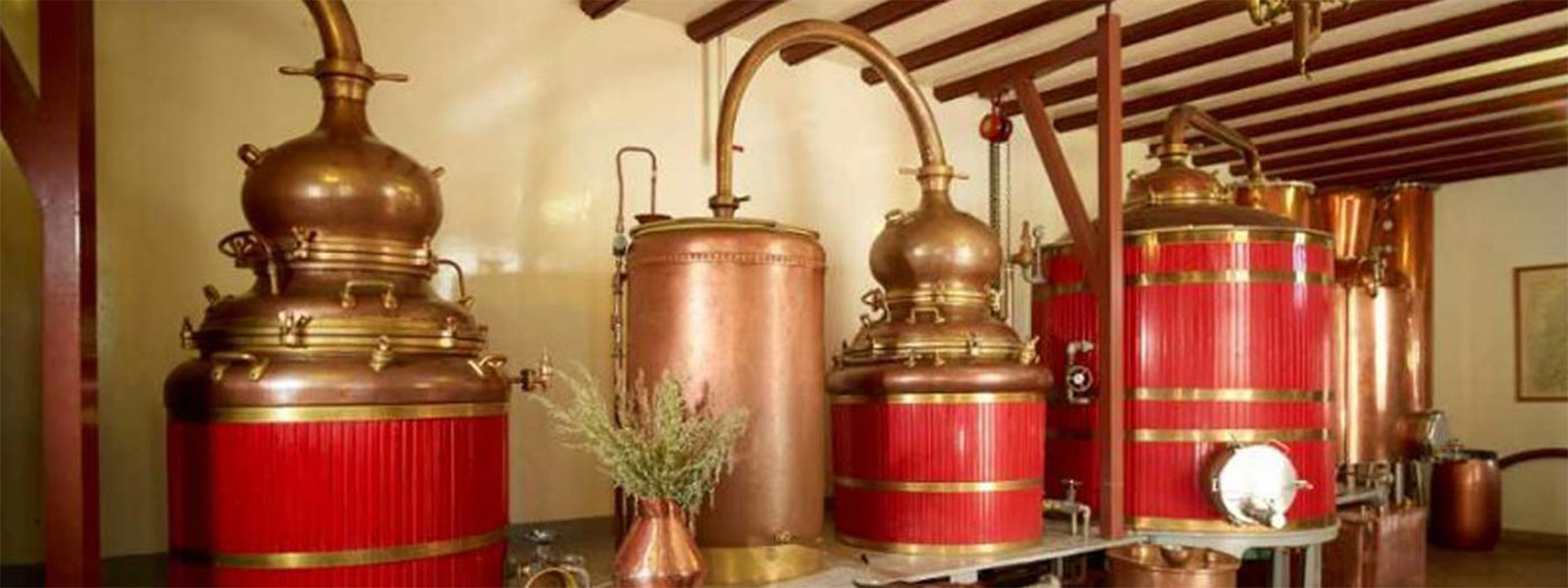
Following the success of Pernot and Guy other small historic distilleries also revived their absinthe production including Lemercier and Devoille in Fougerolles and Blackmint in Motiérs, Switzerland, whose owner Yves Kubler is the grandson of the owner of Kubler in Travers, one of the most celebrated Swiss distilleries of the 19th century.
As a result, today we have the opportunity to enjoy about eighty authentic absinthe products made exactly as in the 1800s.
Some of the great authentic French absinthes traditionally distilled according to the old method still being produced today include Un Emile68, François Guy, Libertine72, La Coquette, La 65, Berthe de Joux, Borgeois, Perroquet, Roquette1797, La Maison Fontaine, Napoleon III, VS1898, PF1901, L'esprit d'Edouard, Nouvelle Orleans, Blanchette, L'Entète, Bel Amie, la Desirée and many others.
Of course we can't forget to mention La Bleue absinthe from Val de Travers, the legendary bootleg absinthe highly sought after throughout the ban, now legally available in stores. Examples include Clandestine Charlotte, La Valote Bovet, La Valote Martin, La Valote Fornoni, La P'tit, Kubler, Distival, Elixier du Pays de Fees, which were recently joined by new verte absinthe brands like Angelique or reproductions of old products like Butterfly, an old Boston absinthe.
Interestingly, recent years have seen a steady improvement in the quality of authentic absinthe thanks to a more careful selection of herbs, increasing production expertise and the possibility of letting the spirit rest for at least a few months before bottling it. This is the case of Un Emile, which has now solved the initial problem with coloring and is once again made exactly as it was in the 19th century.
It's also interesting to note that new absinthe brands are appearing every day - authentic products in every way, but with new recipes. Indeed, it would be unfair to say that absinthe production is only about dusting off old recipes. It's good to see new, authentic absinthes amid the masses of imitations flooding the market.
Recently Val de Travers, the historic production area of absinthe in the nineteenth century and bootleg absinthe during the twentieth century, was granted GI status from the European Union.
The truth about thujone
The legend of absinthe is still mysterious and intriguing today due to one of the many essential oils it's made from - artemisia absinthium, which contains thujone. But what is thujone really?
There are actually very few scientific studies about it and many of these are biased as they were funded at the beginning of the 20th century by the very governments that wanted to ban absinthe.
Studies conducted in the 1970s led to thujone being considered similar to THC found in cannabis, but only because the two molecules had a very similar spatial arrangement.
Thujone is actually a terpene occurring in several plants like mugwort — including artemisia absinthium as well as genepì, or glacier wormwood — and sages, including salvia officinalis commonly used in cooking. It smells very similar to menthol.
Large quantities of thujone actually have devastating effects on the nervous system, but it all depends on what we define as a "large quantity." Recent studies indicate that 7 mg per kilogram of body weight can cause acute intoxication. This means that a person weighing 70 kg should ingest 490 mg of thujone which, when converted into bottles of absinthe supposedly containing 250 mg/l of it (which, again, was never the case) amounts two almost two liters of absinthe.
Needless to say, if one were to drink two liters of absinthe — which should actually be much more if we consider the real amount of thujone it contains — the effects of thujone would be nothing compared to the effects of alcohol, as two liters of absinthe are equal to at least one liter of pure 100% alcohol.
As is obvious from what we've said so far, many commonly consumed alcoholic beverages contain amounts of thujone very similar to the average in absinthe. Some vermouths can contain up to 15 mg/kg of thujone, compared to 8 mg/kg of the legendary Pernod Fils absinthe.
No one has ever dreamed of labeling as hallucinogenic vermouth, genepì and sage liqueurs, which contain thujone, or anise drinks, mistrà or anisette, which contain anethole.
It is true that artemisia absinthium contains large amounts of thujone, but it evaporates almost completely when the plant is dried and yet more is lost in the distillation heads. Therefore, it would be correct to estimate, as Wilfred Arnold did in 1989, that traditional absinthe contained 250 mg/kg of thujone.
Arnold's estimate was based on fresh plants and never considered either drying or distillation.
Ted Breaux, a well-known American chemist and biologist and owner of Jade Liqueurs has spent the last 15 years studying absinthe to understand if it really was as poisonous as legend says. Using a syringe to extract absinthe from old nineteenth century bottles preserved intact to this day, Breaux discovered that most of the absinthe from that time contained amounts of thujone ranging between 5 and 9 mg/kg, with only a few close to 20-30 mg/kg. Considering that EU regulations set the maximum limit for thujone at 35 mg/kg, most traditional absinthe would still be legal today.
Terry Monroe, born Maria Teresa, was born in Basilicata and lives in Milan. After graduating in Herbal Sciences, in 1997 she opened her first bar, Opera Café - later renamed Opera 33 - Milan's go-to place for mixology thanks to her constant experimentation with new flavors and combinations. An offshoot of Opera 33, Speziology is a laboratory dedicated to studying the use of spices in cocktails. In addition to her entrepreneurship, Monroe teaches mixology in several schools and has authored a number of books on cocktails.


