





Hoy como Ayer - a revolutionary Cuban rum is back after 68 years
In 1956, three years before the revolution, in a climate of great instability and turmoil, in Cuba people were still distilling the rum for which the country would later become famous. Today, 68 years later, this exceptional rum can finally be enjoyed.
In 1956, the island of Cuba experienced a profound political and social upheaval. For three years now, the barbudos led by Fidel Castro had been fighting against Fulgencio Batista's military dictatorship. Partly thanks to support from the US, which favored trade, the 1950s were still a time of relative economic prosperity, mainly due to the sugar and rum production industry.
At the time Cuban rum already enjoyed an excellent reputation with flourishing exports especially for brands like Bacardi, Havana Club and Matusalem. In the 1950s, rum production on the island was based on molasses from the sugar mills, which ensured a supply of raw ingredients rich in flavorful components. Distillation took place in pot stills and the traditional double column stills, reflecting the distinctive Cuban style of the time.
Taking advantage of prohibition, Cuban mixology enjoyed considerable development at the time, with blends of aromatic aguardiente and light rums aged in oak barrels for many years by Maestros Roneros. The Club de Cantineros, an association of Cuban bartenders founded in 1924, contributed to perfecting iconic cocktails like the Daiquiri and Cuba Libre, and the Mojito, created in 1942, quickly earned the global popularity it still enjoys today.
At the end of World War II, the island was home to sixty-nine distilleries. In October 1960, after the nationalization of the sugar factories, only nineteen survived.
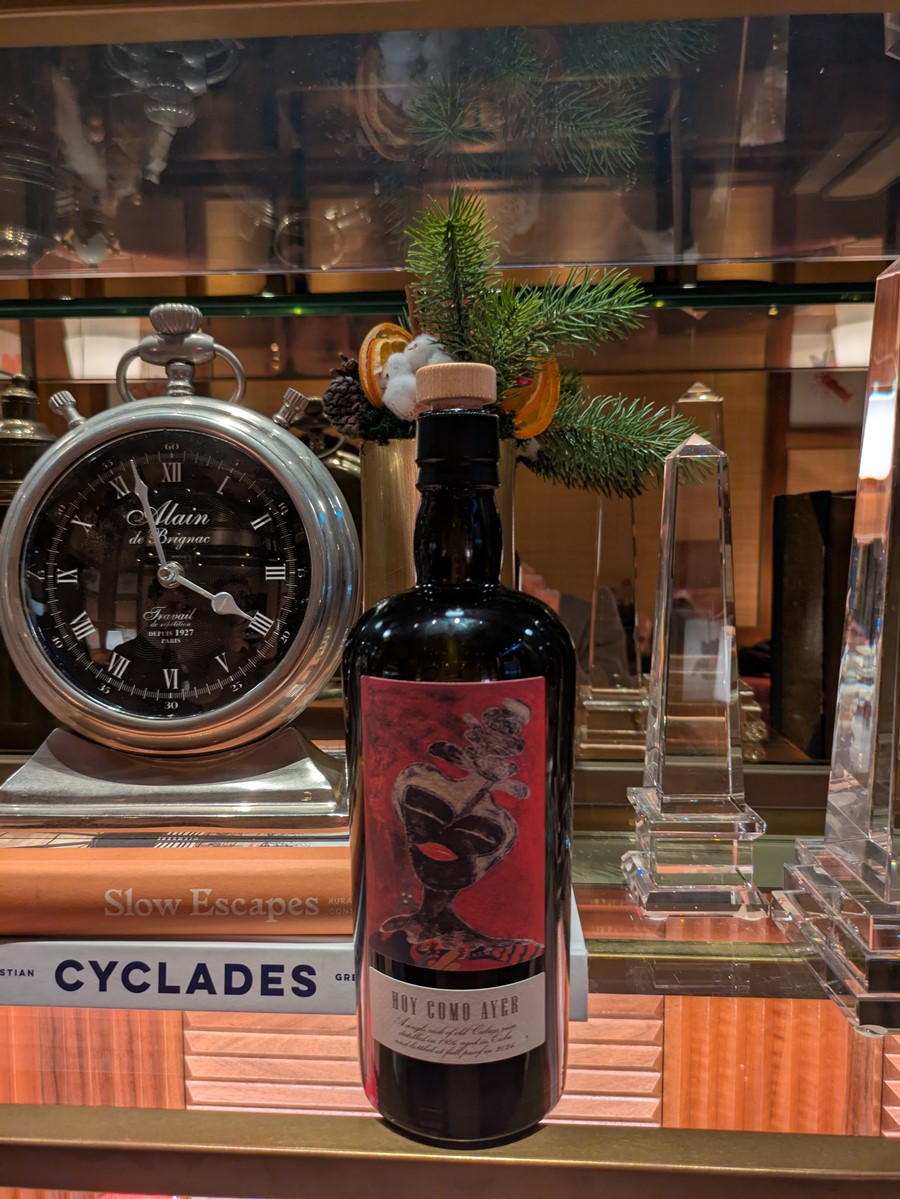
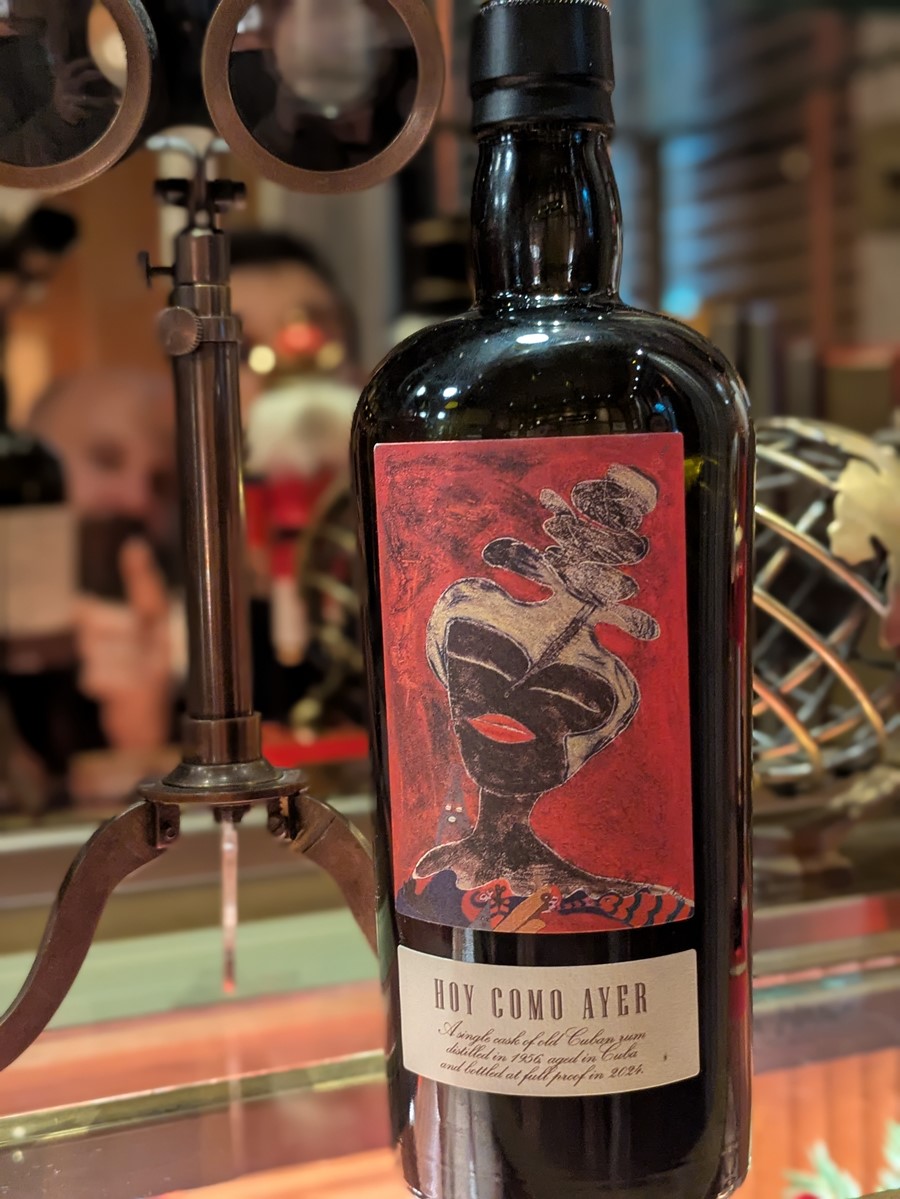
Cuba's treasure
Today La Maison & Velier has uncovered a treasure taking us back to that golden age - a rum distilled in 1956 and aged for 68 years in a tropical climate. This bottling required combining rum from over fifty casks of the same age, since the angel's share in Cuba is around 8% per year.
The result is an exceptionally aromatic rum taking us on a journey through seventy years of history. The slow tropical ageing gives the spirit great maturity as well as a fruity, floral, oaky and spicy aromatic palette.
The nose is rich and deep with notes of crème brûlée, toasted hazelnut, orange marmalade, dried apricot, mango, raisins, wax, leather and Armenian paper. The mouth is energetic with hints of burnt cane sugar, cocoa, ginger, tonka beans and fig jam, and a persistent, delicately tannic finish.
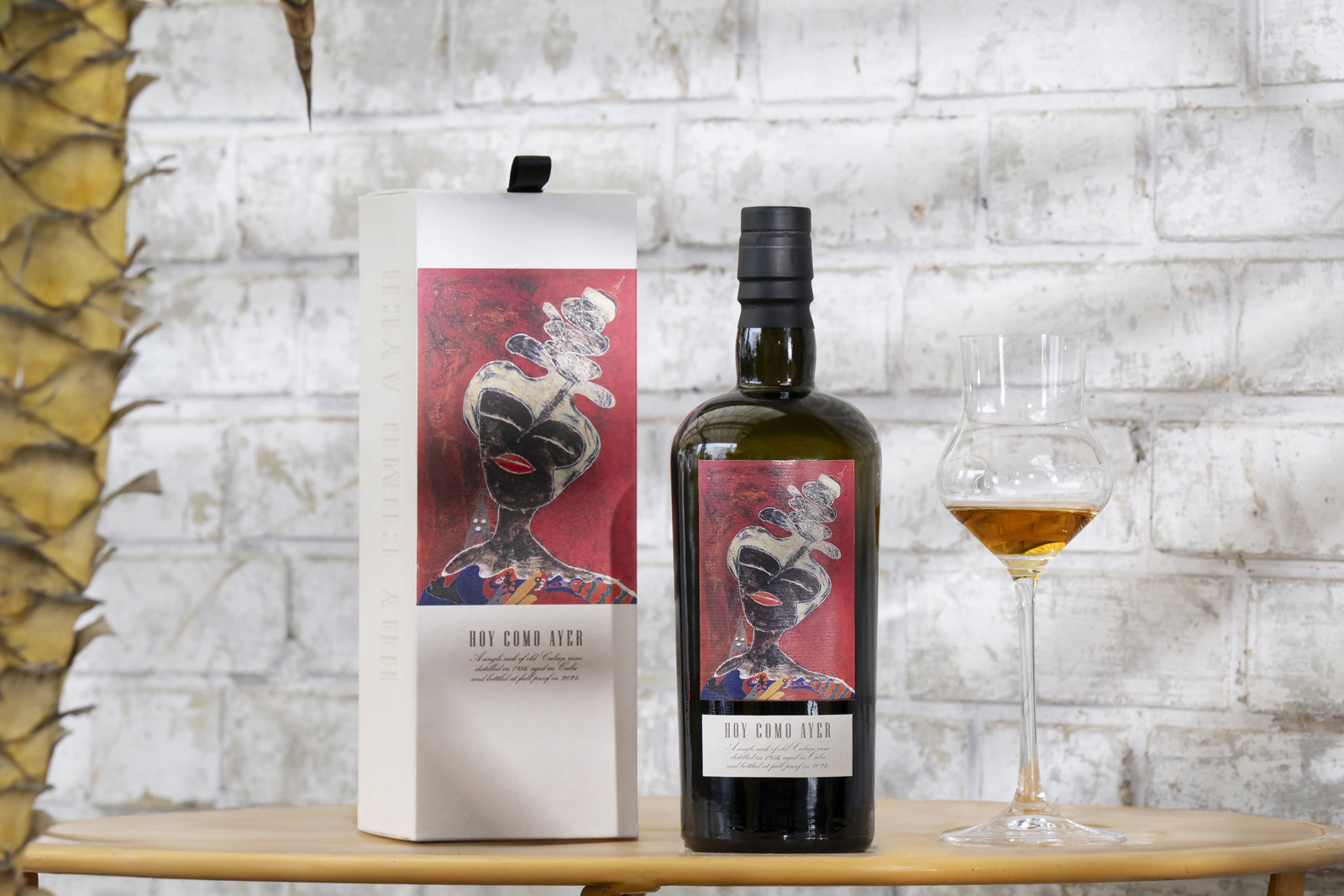
Bottled at cask strength at 53.7% ABV, this rum will be available as a very limited release of 270 pieces.
1956 was not only a momentous year for Cuba - it was also the year French distribution giant La Maison du Whisky began its adventure. This is one of the reasons the vintage of these barrels is highly symbolic and provides a rare opportunity to taste a Cuban rum style thought to be completely lost.
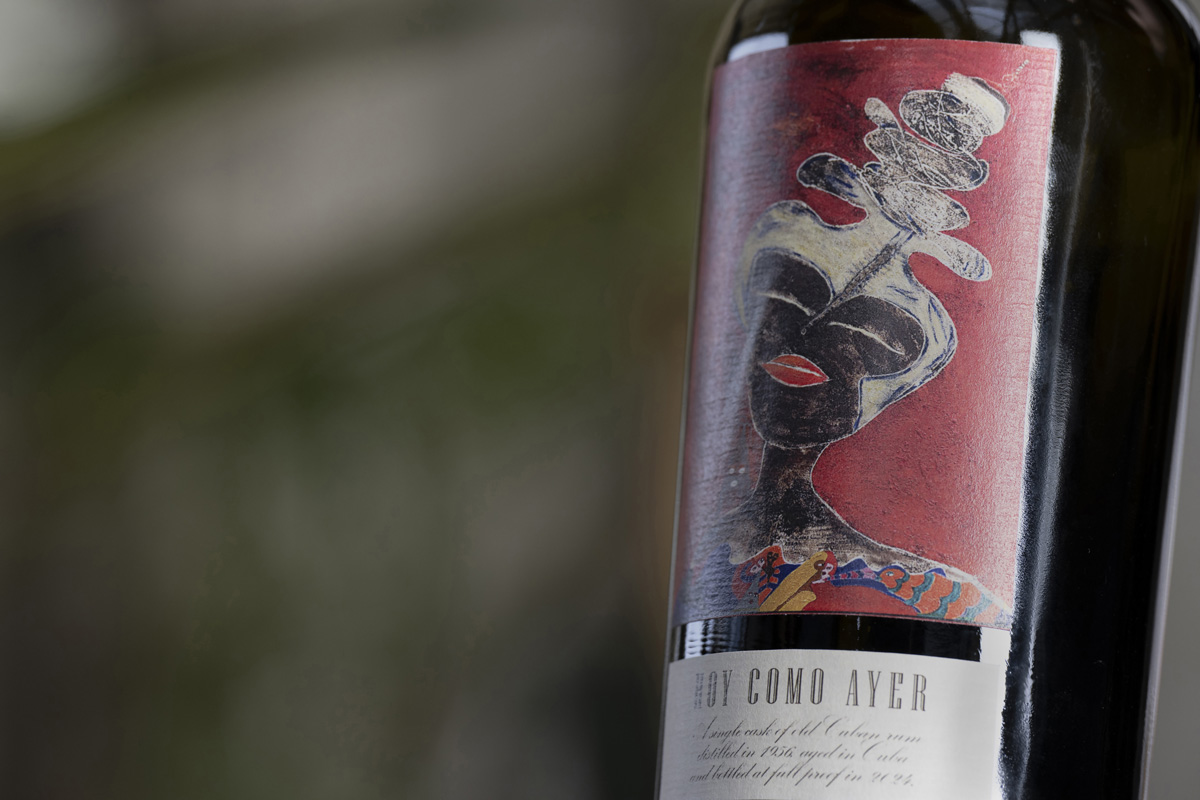
Hoy Como Ayer - the story of a name
The name of this premium rum has a dual origin. Hoy como ayer – meaning 'today as yesterday' – is both the title of a song and a painting.
The song is by Benny Moré, a famous Cuban singer from the fifties with a beautiful tenor voice. She gained huge popularity mainly after appearing in the 1956 film No me olvides nunca – 'never forget me' - by director Juan José Ortega.
The painting is a self-portrait by Aconcha, a self-taught artist born in 1946 in Havana. Raised in a family of designers and craftsmen, Aconcha was raised by her uncle, a Santeria priest, in the Yoruba cult of Orisha deities. This spiritual initiation would have a huge impact on her art.
The work, depicted on the rum's label, invites us to contemplate the passage of time - a theme dear both to the artist and to people who work with spirits.
