





Still tears that make Cape Verde smile
Paradise beaches and deserts, a present of tourism and a past of famine and slavery - Cape Verde is an archipelago of contrasts in the middle of the Atlantic Ocean where even stills tell centuries-old stories, each one unique.
In his famous allegory Plato imagines men chained in a cave, who for their whole lives believe that the shadows dancing on the inner wall are real until one of them breaks free, comes out and learns that those images are nothing but shapes projected by real people moving in front of a fire, attaining the truth beyond appearance.
Cape Verde is like a cave full of shadows. Not in a geographical or physical way, but few places in the world hide a nature so discordant with the image they project on the outside. This archipelago springing up from the Atlantic off the coast of Senegal, made up of "ten caravels in search of infinity" as the poet Amilcar Cabral described them, is not what it seems. And it doesn't seem what it is.
Just try searching on the web – the modern version of the wall in Plato's cave – "what to do in Cape Verde": sailing, surfing, swimming with lemon sharks, quad biking in the desert, you name it. All Western consumerist experiences indicative of the country's booming tourism industry – in 2012 visitors outnumbered locals for the first time. Yet - here's the first contradiction - that's just part of Cape Verde. Because if the Barlavento islands are a riot of tourist hotels, the Sotavento tell a tale less told about nostalgia and volcanoes, fresh fish and sugarcane spirit.
Discovered between 1456 and 1462 by two Italian navigators in the pay of the King of Portugal – Alvise Cadamosto and Antonio da Noli – the islands of Cape Verde have been an outpost of colonialism throughout the modern age.
A key stopover to circumnavigate Africa, they soon became a tragic center for the sorting of slaves raided from inland regions and shipped to plantations in Brazil.
Over the centuries, before its independence from Portugal in 1975, Cape Verde was also other things: the oldest sub-Saharan diocese and a whaling paradise, as well as the scene of terrible famines – between 1941 and 1948 a drought caused 50,000 deaths to Lisbon's complete indifference – and the starting point of a huge migration to America's New England, so much so that to this day the country's largest trade relations are with Massachusetts.
And in the background, like the constant mournful murmur of the waves embracing Cape Verde, the sugar cane imported by the Portuguese has been growing since the 18th century, and Cape Verdeans have been distilling it ever since. In fact, some say the first rum in history was produced right here. The Cape Verdean way, of course.
Santiago's grogue - Barbosa Amado & Vicente
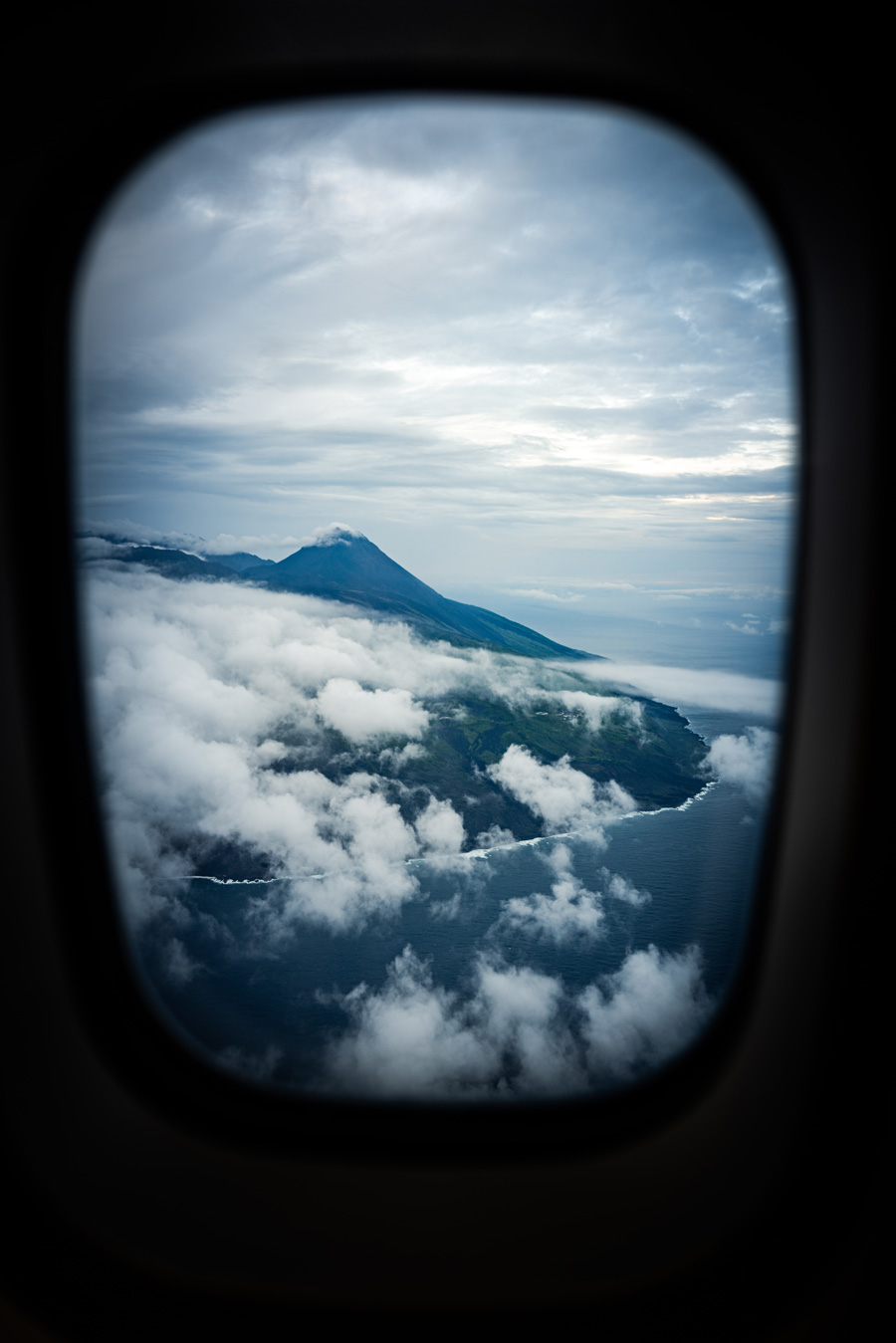
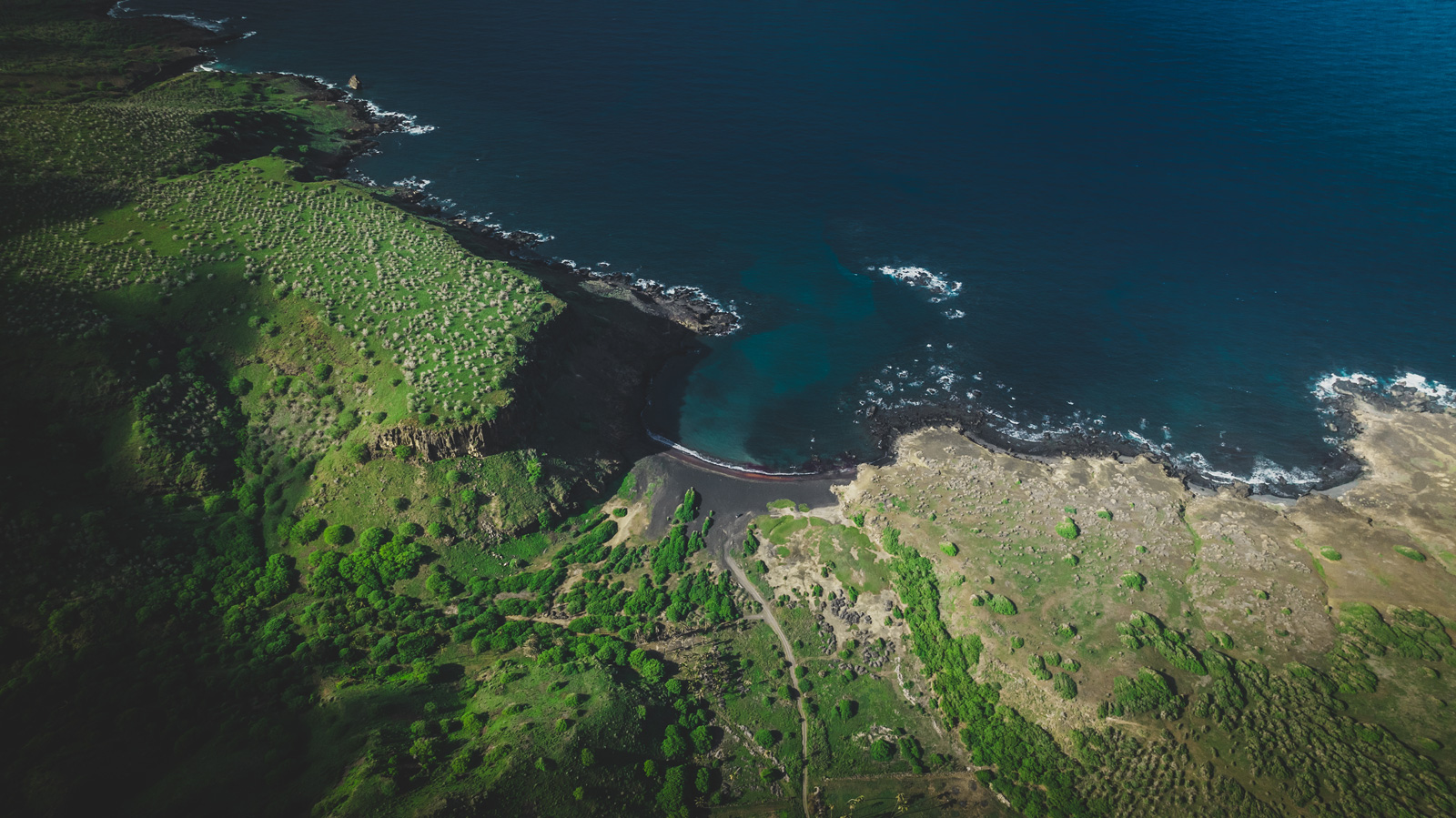
As the plane approaches the runway of the airport in Praia, Cape Verde's capital, the first thing that catches the eye is a sharp color contrast. The sea is dark blue, not turquoise like in the brochures. The coast is arid and rocky. By contrast, the center of the island of Santiago is emerald green and lush. The same color palette can be better appreciated when driving to Ribeira de Mangue through a verdant landscape dotted with banana groves and cane fields. According to tradition, sugar cane was brought to the island of Santo Antão in the early eighteenth century, then quickly spread across the archipelago. As in all European colonies between Africa and Central and South America, rum was the spirit of plantation workers. But if in the Caribbean, for example, over time rum has acquired dignity and value as a trade commodity, in Cape Verde grogue – as the local spirit is called, probably a calque from the English grog, a drink made from rum, water and sugar – has remained a popular drink "wetting" parties and farewells, weddings and funerals alike.
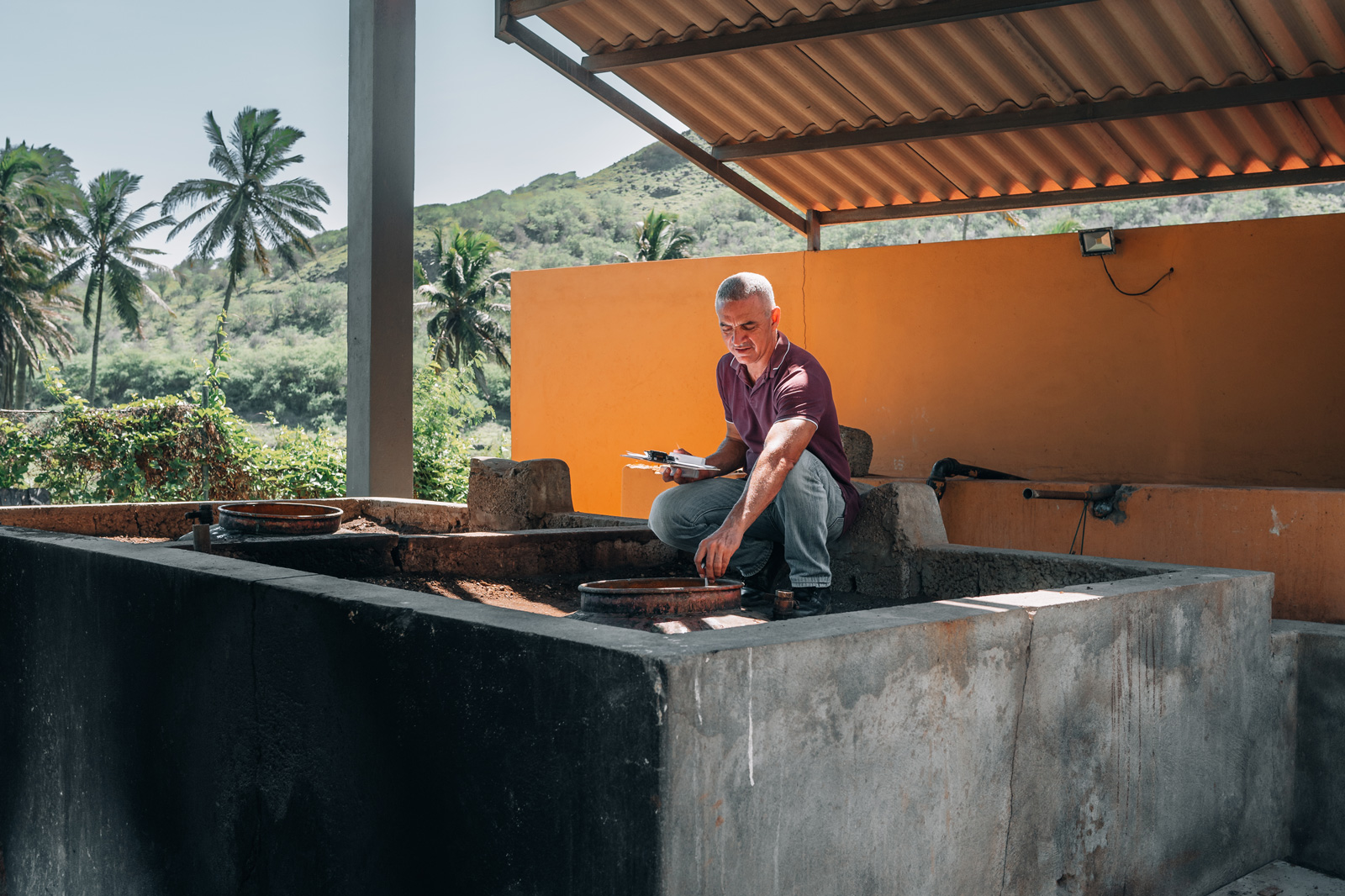
There are over one hundred distilleries, often very small. In 2016 the Confraria do Grogue obtained a sort of production regulation governing artisanal production, but the vast majority of distillers still bungle it, adding sugar and other things. Manuel Barbosa Amado is the only one distilling pure cane juice.
In Ribeira de Mangue, as the jeep makes its way towards the distillery, a stone's throw from a volcanic sand beach where red algae create a stunning effect, Manuel tells us about his family and his island as we wait to taste his grogue. Which, for the record, is simply pronounced grogu.
The land where Manuel grows sugarcane and bananas is called the Montenegro estate, which is also the name of the spirit everywhere except for Italy for obvious trademark reasons. The estate was bought by his father Paulino Barbosa Vicente and his cousin Carlos Barbosa Amado in 1966, but it was not until 1988 that they installed the first still - the one everything started from and Manuel inherited after studying agronomy in Brazil.
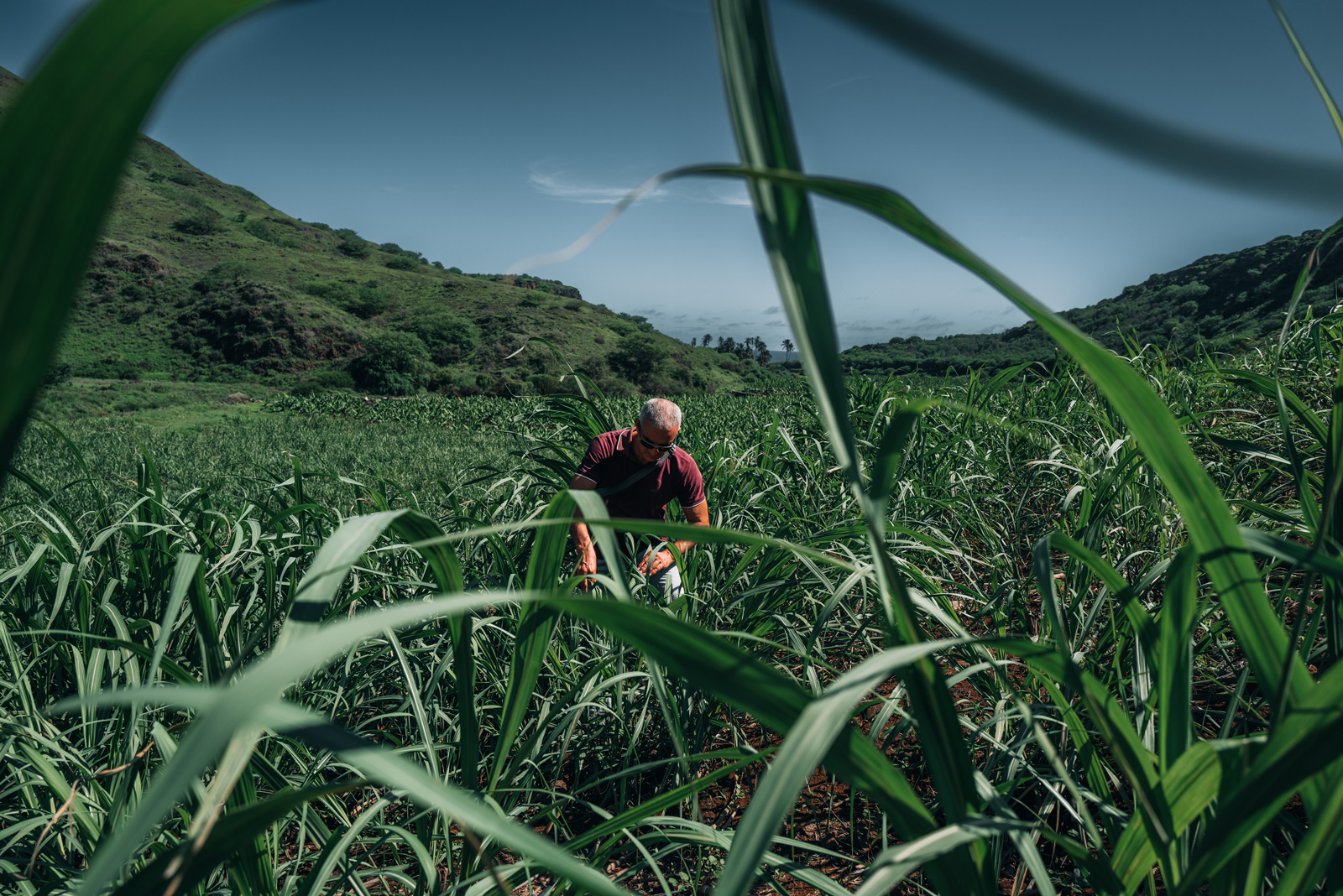
“Sugarcane is part of Cape Verde's landscape,” he explains. "Once the plantations extended all the way to the sea, but now because of less abundant rainfall cane farming is limited to inner valleys like this one."
The road leading to the distillery runs alongside a banana grove between two ranges of low hills. Once there were also mangoes and coconut palms, today they have been replaced by cassava, sweet potatoes and onions. Nature rules in Cape Verde's extreme microclimate. This encourages an "organic" approach to agriculture, i.e. no fertilizers or pesticides, only minimal irrigation cycles of four times a week. Eight hectares are farmed with sugar cane. There are two varieties, Nossa Terra preta, or black, and branca, or white.
"Preta is the highest quality variety," explains Manuel. "It needs about 15 months to reach maturity and has a life cycle of 5 to 7 years, after which the quality and yield drop."
It has a Brix level between 17 and 19 – grams of sugar per 100 grams of juice – and its juice is the main ingredient in grogue. Which makes it precisely agricultural rum, although with none of the several stringent specifications imposed by the Martinique AOC, the most rigid rum regulation scheme.
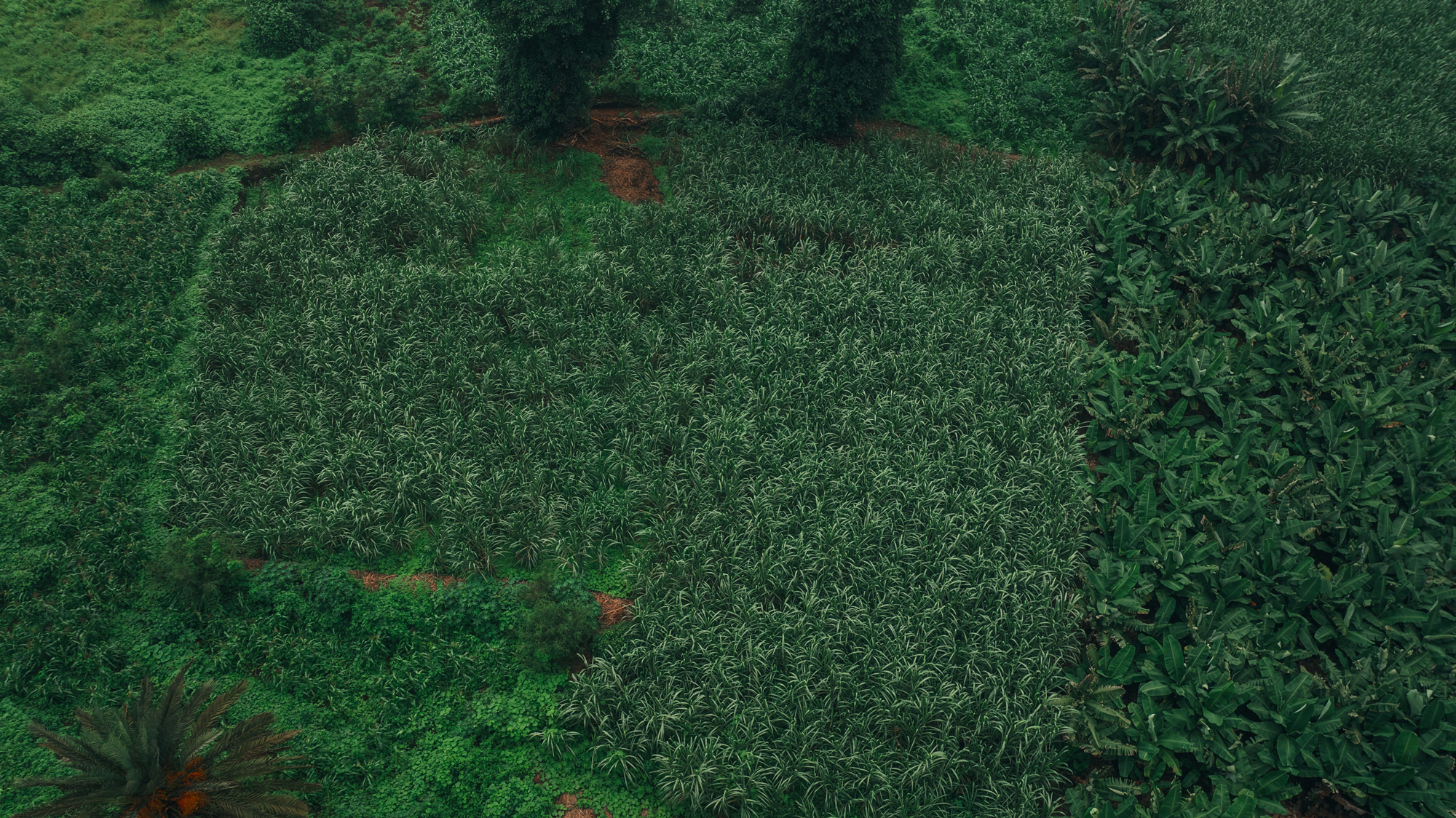
The cane is normally harvested from January-February until June, but, as Manuel smilingly admits, "It's actually harvested manually with a machete whenever we need." Unlike other spirits where the coastal terroir has an influence, according to Manuel proximity to the sea has very little impact.
"What matters is the volcanic soil, which ensures the best nourishment for sugar cane."
Production is limited to between 18,000 and 22,000 liters a year. Until 2006 all of the spirit ended up in 5-liter plastic cans (garrafones) for sale on the domestic market, where 99% is consumed white and straight - caipirinha is a tourist thing. Following the coup de foudre with Luca Gargano who now imports it with Velier, in 2019 Italy became the second-largest market for Manuel's grogue.
The first stage in the production of grogue is the milling of the cane in a motor mill processing between 3000 and 3500 kg of cane a day. The juice is then filtered and left to settle. The second stage, fermentation, takes place in 5000 and 10,000-liter steel tanks and follows a curious process. It starts with a pied de cuve of 100-120 liters as a starter to get the first fermentation going, then another 200 liters are added at a time over a span of three days until the tank is full. Only natural yeast strains are used and the entire process lasts from 4 to 7 days, depending on the temperature.
The juice starts at 22-23° C and reaches 32°, never exceeding 34° C. The higher the Brix level of the juice, the faster the fermentation. Once the first fermentation is finished, the tanks are emptied with about 15% of the fermented liquid left to start the second fermentation. Side note: no water is added and there's no remontage or pumping over.
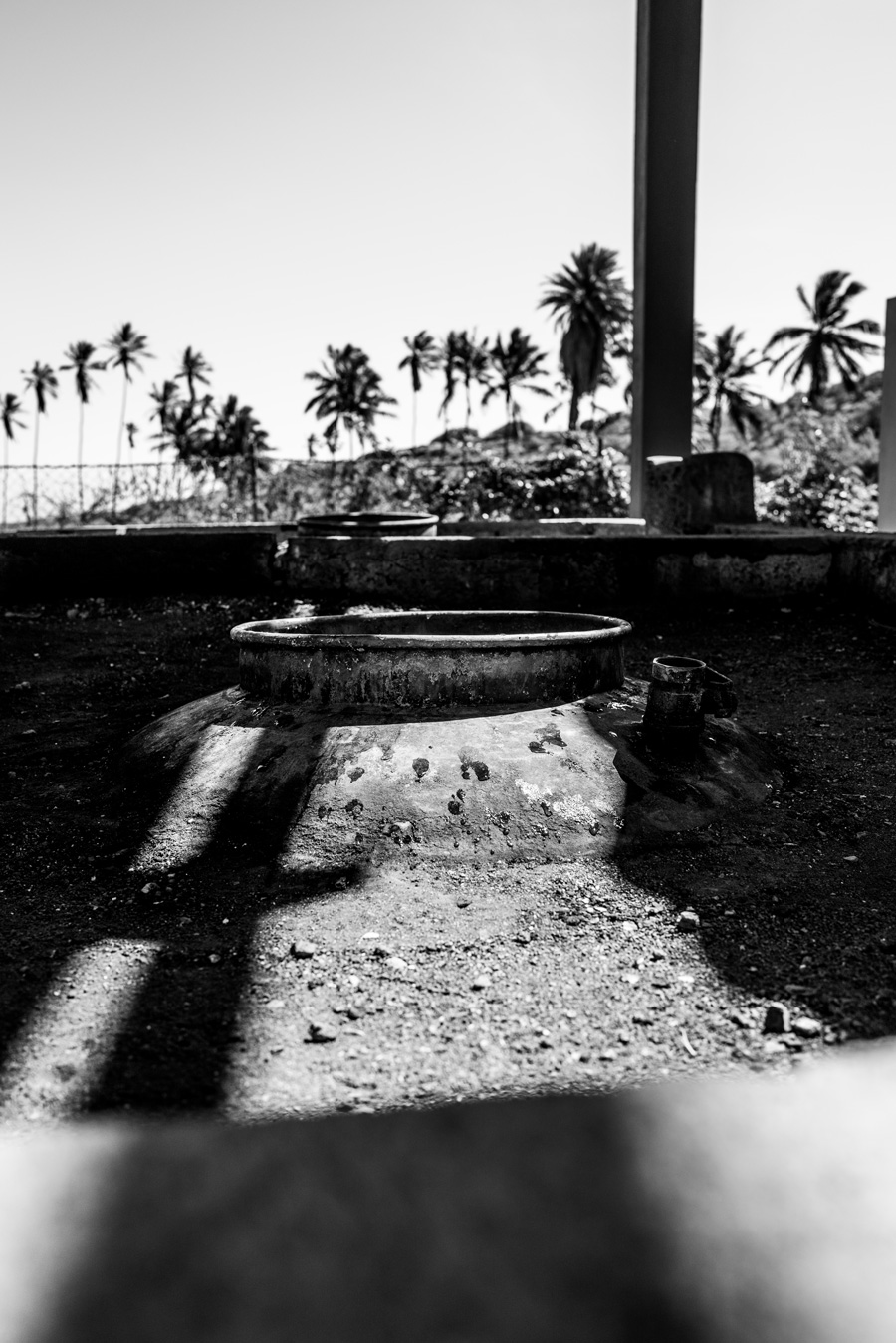
The fermented juice is now ready for distillation using traditional 350-liter copper stills over direct heat - very different from the Creole columns used in French-style rhum agricole. Interestingly, until 2019 a steam system was used, "but to avoid damaging it we needed excellent quality water, which is hard to find here." Better go back to traditional systems, where rainwater is used for cooling. And it’s going to be even better in the future, with the still housings rebuilt with clay bricks.
Each batch lasts about 4 hours and cuts are very accurate - 2-3% of the heads are discarded (12 liters) and the tails are cut at 45%. What's left is about 50 liters of grogue at 45% ABV and the waste matter or vinasse, which here is called recaldo is simply disposed of after distillation.
The last two stages are stabilization and aging.
The freshly distilled grogue rests in metal tanks for one week, then spends three months in inert tanks. Bottling takes place entirely on site unless Manuel decides to age it for 2 to 5 years in oak barrels. "Producing a perfectly aged grogue is very challenging,” he explains.
“Especially because until recently additives and colorings of all kinds could be added to aged grogue."
In a context not exactly inclined to discipline – one of the most beautiful beaches on the island of Santiago, Tarrafal, was a penal colony where Salazar's Portuguese fascist regime confined political prisoners – a conscientious farmer’s orthodox approach is what makes the difference.
Manuel's hand is as pure as his grogue - green, alive, fragrant and expressive. It's the spirit of a land that Césaria Évora, Cape Verde's native barefoot diva, called "cantinho di tormento", a corner of pain where "it's better to drink bitter bile first, then honey."
Or grogue.
In the clouds of Brava: Cava do Touro djabì
We mentioned Césaria Évora, the voice of sodade, the nostalgia pervading these islands, which the philosopher of Négritude Leopold Sédar Senghor called "a garland of happiness mixed with the sweetness of Sunday," but which perhaps are more similar to "ten grains scattered by God in the middle of the sea." It's on the poignant notes of Césaria's songs that we reach the second stage of our journey, the smallest of the inhabited islands in the archipelago, the eternally cloudy island of Brava.
Getting there is not easy. You need to fly to Fogo, a sublime cone of lava with lunar landscapes where people live and grow grapevine in the caldera of Pico do Fogo, an active volcano. From there, a two-hour boat ride through schools of dolphins and flying fish takes you to the small port of Furna. From the sea, this rock with a population of 5,000 seems shrouded in a hat of perennial clouds. Once you arrive in Nova Sintra, the main city in the heart of the island cloaked in a seemingly metaphysical fog, you get the feeling of being in a place out of time and space.
We're told the story of Brava by Daniel Miranda, known as the Bull, whose twitching muscles and toothy smile give him a rockstar look.
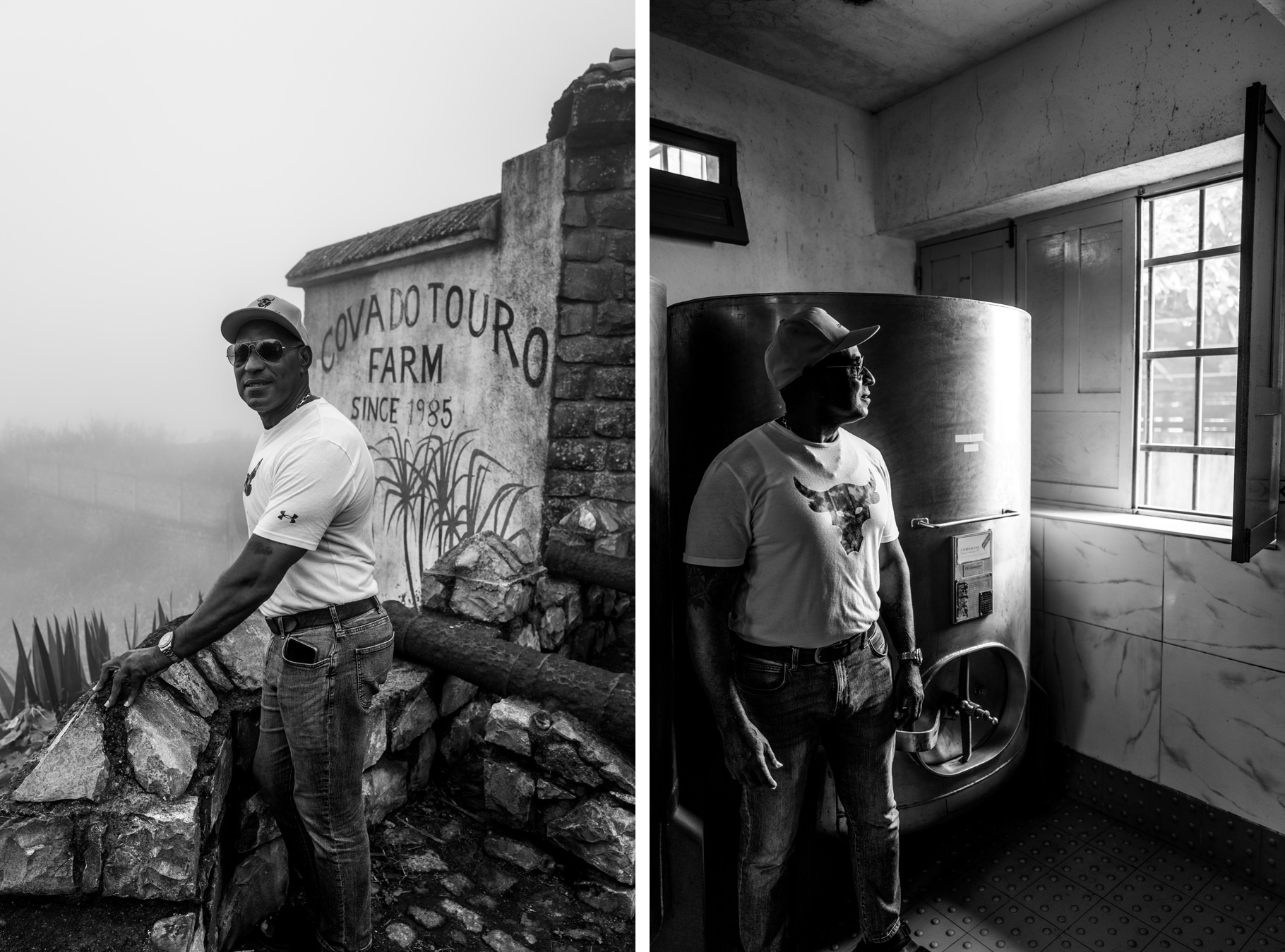
Sitting down to totoco, a typical local dish, we learn that Brava is the greenest, coolest and rainiest island in the archipelago, which is why he chose to grow sugar cane here. But rain is obviously not a source of wealth in itself and Brava was gradually depopulated over the course of the 20th century. Generations of young people migrated to the United States helped by contacts with whaler crews. The whaling industry is also responsible for the name the people of Brava give to cane juice spirit.
"When in the early twentieth century English and especially American ships began to pass through Brava on their routes," Daniel explains, "the sailors stormed the bars and asked for whisky, especially blended whisky from one particular brand - J&B."
From that time, in one of those incredible language twists, J&B began to stand for any spirit. Mispronounced as djabì, it ended up indicating the local agricultural rum.
Fascinating stories, sad stories of farewells and much-dreamed-about returns found in the lyrics of Morna, the music of Brava, sung by Césaria Évora. Listening to it live is the height of melancholy, but it helps to understand the cultural substrate of a place where Portuguese conquerors, fleeing French pirates and New England whalers have crossed paths for centuries, all brought together by one thing:
"Aguardiente was a stimulant for work, a nectar at parties, a remedy for any illness."
Daniel is the largest landowner in Brava, but he also buys sugarcane from others. His distillery is called Cava do Touro – the bull, ça va sans dire, being Daniel himself – and it was built on a hill shrouded by the clouds, farming's best friends.
It all began when Daniel was a student in Praia and came back to visit his family, wandering among djabì producers and learning. A pharmaceutical technician with an interest in chemistry, he fell in love with agriculture and distillation.
"Initially djabì was only produced on the coast, in Baia Tantum, because seawater was used to cool the stills," he recalls.
Those were hard times - with no paved roads, people carried the spirit in 20-liter tanks on their head. Then 25 years ago they began producing in a more organized way - defining it as "industrial" would be ludicrous.
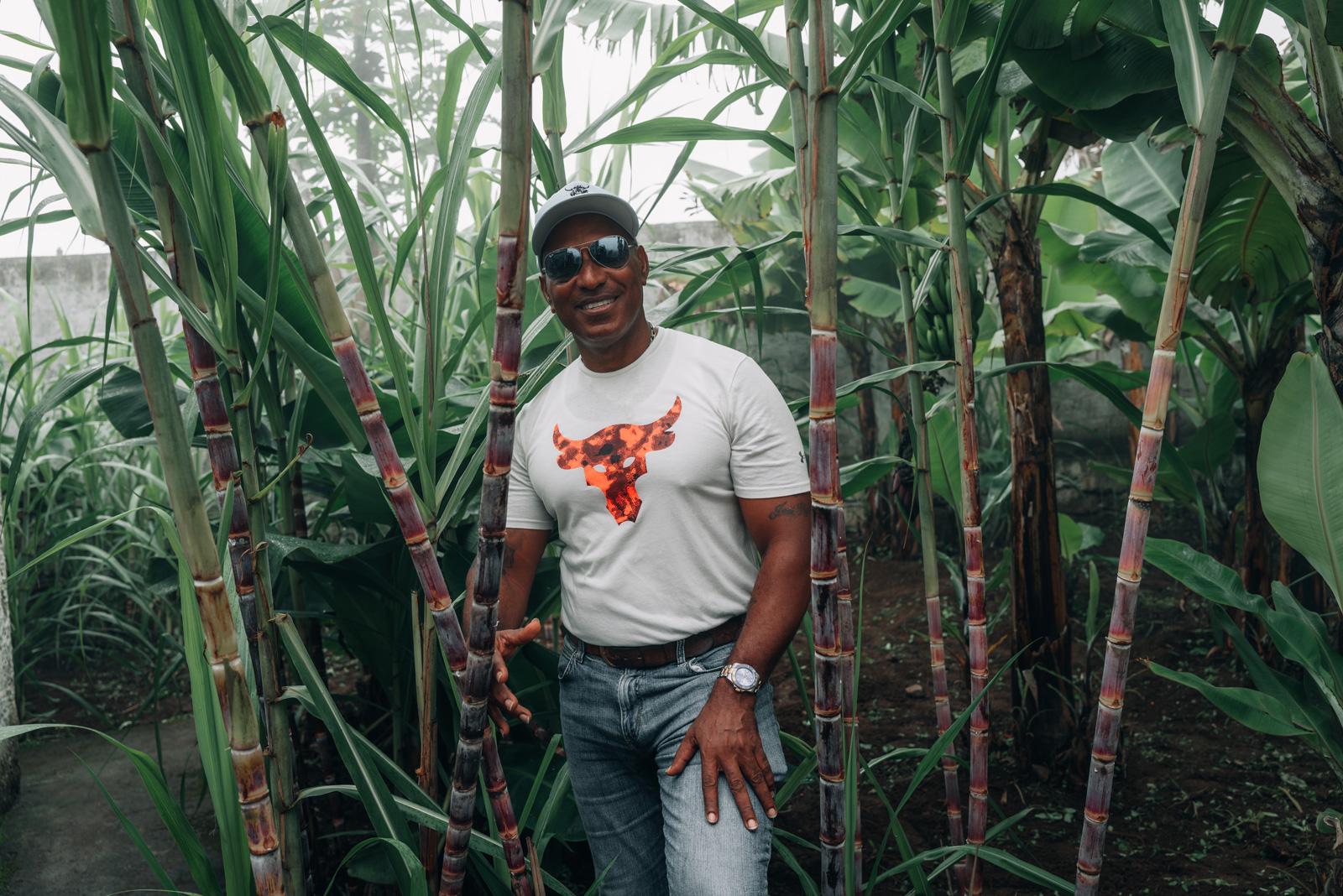
The process starts with sugarcane, again branca and preta. White sugarcane has a Brix level of 16-17 and Daniel only uses it for liquor. Preta sugarcane goes up to 20, is the most expressive and is grown over 40 hectares of land. The two varieties are milled and distilled separately, but both are harvested for five months a year, from January to May.
Milling takes place in a Brazilian-made diesel mill and the juice is transferred to the fermentation tanks through an electricity-powered system. This is where the second stage takes place, again with natural yeasts and fermentation between 6 and 12 days. A temperature of 20° C is sufficient to start the fermentation, but the 4 4,000-liter tanks –3 more are on the way – can also be heated electrically if the weather is too cold.
At Cava do Touro there are two distillation rooms with two 600-liter Portuguese copper stills producing 120 liters of djabì each for a yield of about 20%.
One of the main problems with distillation is the availability of water for cooling. Daniel had a 50-ton tank built which collects rainwater and fills again once it's used to cool the coil. Speaking of which, fun fact - a glass window allows to see the coil sitting in the water.
"I did it for the schoolchildren! When they come to visit, it's nice that they can see with their own eyes how the still works,” Daniel smiles.
If the heads are cut at a traditional 3-4%, the definition of the djabì's ABV out of the still is quite unique. "21 grados cubierto," Daniel throws out there to general astonishment. An additional explanation is needed: "In Brava it's virtually impossible to find a traditional alcohol meter, they all use the Cartier scale."
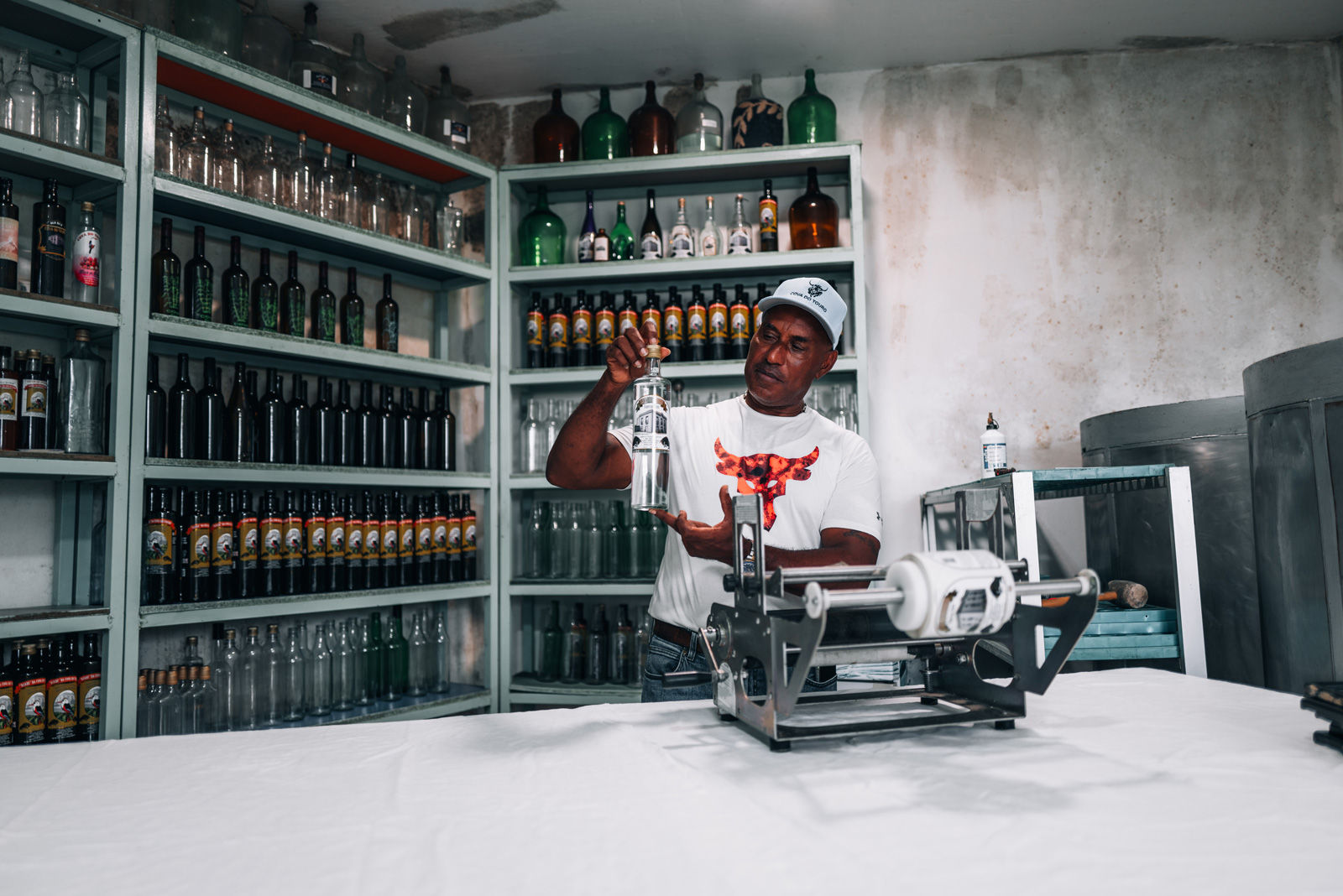
Things are about to get complicated: introduced in 1771, the Cartier scale measures the density of an alcoholic liquid at 10 degrees Reamur – an octogesimal scale where zero is the melting and 80 is the boiling point of water. "21 grados cubierto" means that the djabì must be at least 22 degrees Cartier, or 48% ABV for us lazy Gay-Lussac people.
Each distillation is different, so after resting the spirit undergoes a vatting stage to make it more consistent.
The last stage is aging, which Daniel has only recently reached with interesting results. Behind the distillery amid the vegetation a cellar houses a number of ex-Madeira barrels which he filled with his djabí.
The result is extremely interesting as the wood seems to mellow out the natural punchiness of the spirit, definitely more robust and blunter than grogue. Production stands at 10,000 liters a year, 90% of which is exported to the United States.
Custom bottlings deserve a separate mention. Available to order at the distillery, they are a different product category including punch and liqueurs produced from branca cane and local fruits like oraça and pitanga. Variations, riffs off the theme of djabì, the spirit that flows from the still like the tears of those who left Brava and dream of returning to its clouds.

