


The exiled king of cocoa
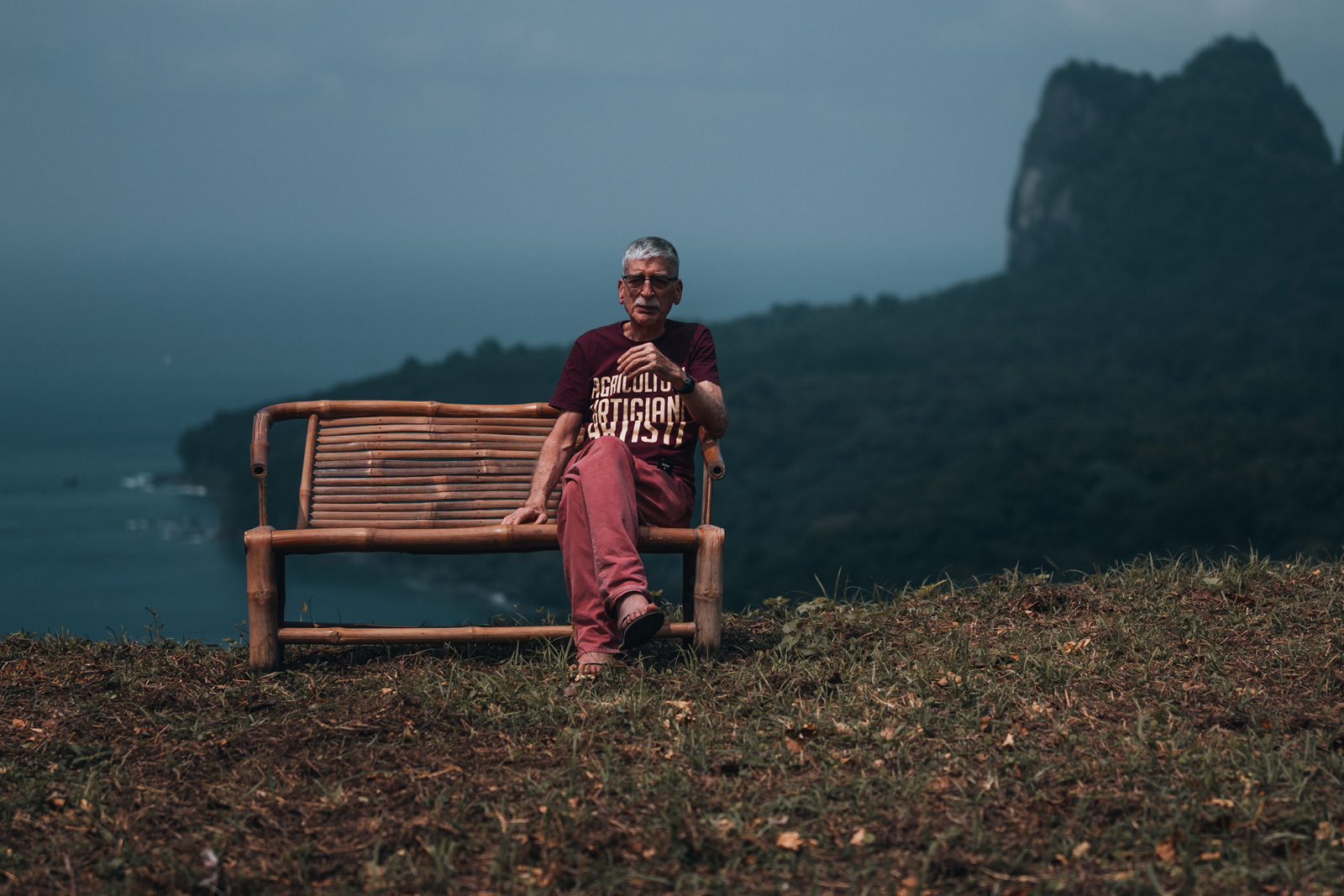
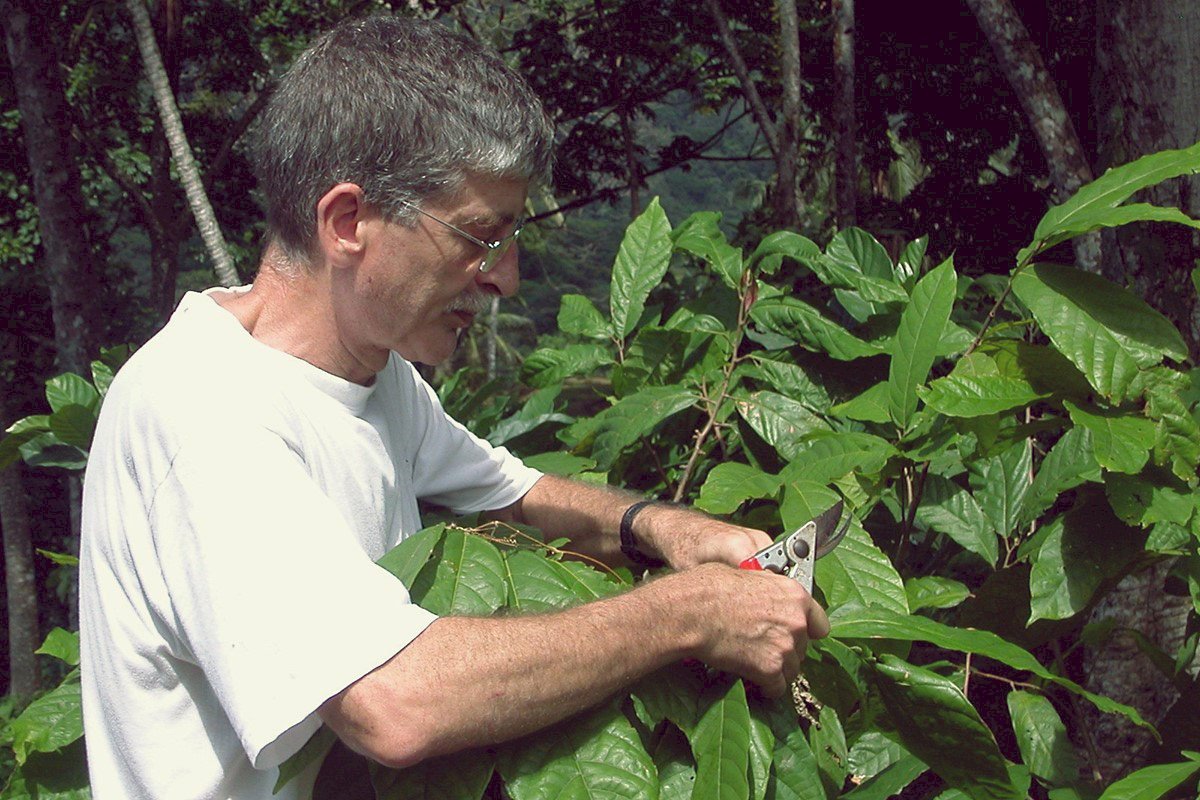
A character straight out of a novel, Claudio Corallo is undoubtedly the world's best interpreter of cocoa. His love for cocoa trees, his deep respect for manual processing, his uncompromising service to cocoa have brought him to international prominence and earned him general admiration. Including ours, of course, when we were lucky enough to meet him and deep-dive into his world and philosophy.
Surprise! Cocoa is never bitter. Claudio Corallo reveals this interesting bit of information as he breaks yet another 100% cocoa chocolate bar on the table of his workshop-house. I had been hearing about him for years and for years I had had the ambition to meet him in person. The few fragments of his life I had the chance to learn about painted him as a kind of adventurer, a Dr. Livingstone lost in the heart of Africa, a character from a Salgari novel. Born in Florence in 1951, Corallo had the African continent already in his sights when he attended the Overseas Agronomic Institute - in itself a name reminiscent of a bygone era, of colonies and explorers.
"I fell in love with it as a teenager," he confesses, "watching movies and documentaries on television. It was a long-distance love that I wanted to turn into reality."
And he did. At the age of twenty-three he is already in Zaire, now the Democratic Republic of the Congo, specializing in coffee farming. He's good, meticulous, impervious to any compromise on product quality. His reputation soon begins to grow and expand globally. His coffee is undisputedly top-quality, but it's grown in a politically unstable region dominated by Mobutu's authoritarian regime, which often causes the population to break out in protest and riots causing deaths and injuries. His business and safety are clearly in danger - today, thinking back to those years, Corallo recalls with ill-concealed nostalgia episodes that would sound straight out of a novel if he hadn't experienced them first-hand. The months he spent alone in a hut near the plantations, the time a lion attacked and killed two agronomists, the dramatic rescue of his boat when it got stuck in the sand at the bend of the Congo River, complete with a dive into the silty, dangerous waters.
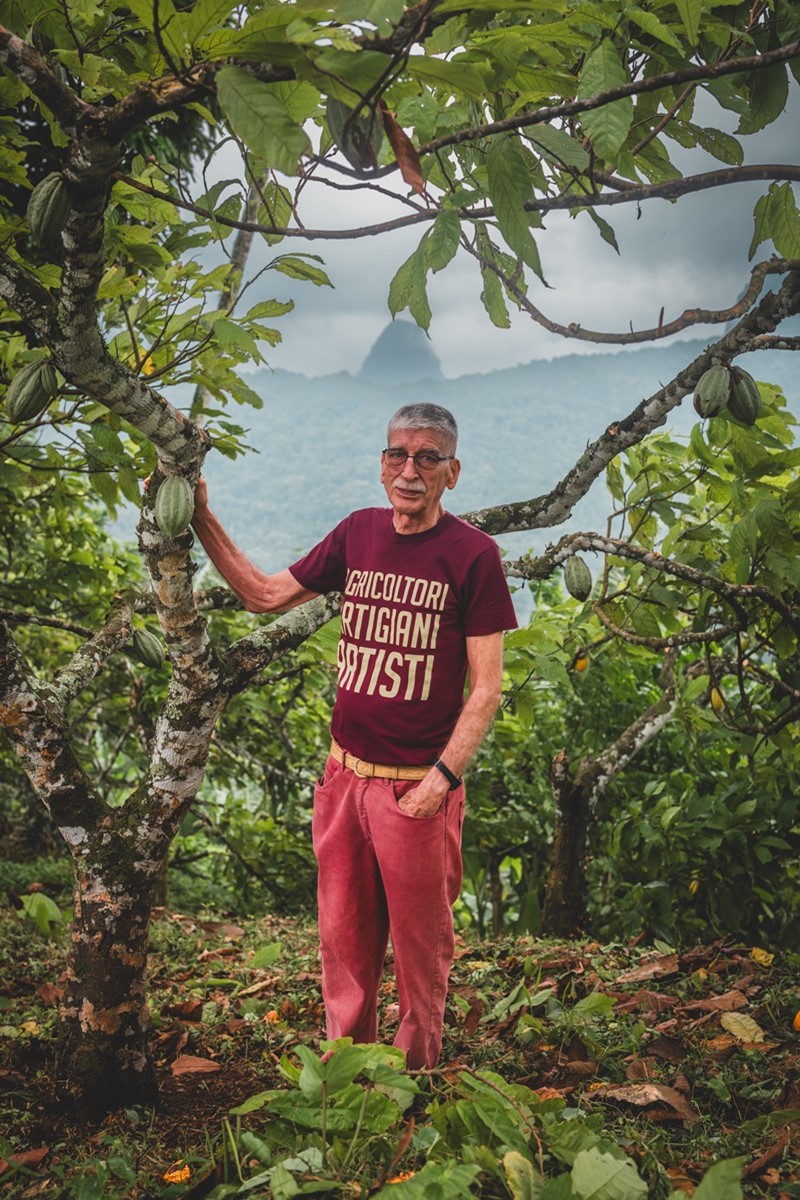

We listen to Claudio Corallo's stories with our mouths hanging open. At 73, he has a wealth of memories hardly anyone his age possesses. Forced to leave Zaire with a rather daring escape, he loses everything - or almost everything - except for a few coffee seeds of the Robusta variety, which he takes with him. His next stop is the republic of Saõ Tomé and Principe, an archipelago of about twenty islands in the Gulf of Guinea, in the middle of the Atlantic Ocean. Africa and coffee are always in his heart. But here, in the former Portuguese colony discovered around 1470 by Portuguese navigators João de Santarém and Pêro Escobar, he encounters his second greatest love - cocoa. Ever since colonial times, the economy of the two main islands has been based on sugar production and the slave trade. After the latter was abolished and the former declined due to competition from sugar cane grown in the Americas and, later, from European sugar beet, starting from the nineteenth century local farmers have been focusing on two crops - coffee and cocoa. The country is therefore an ideal landing place for Corallo, who establishes his residence and headquarters in Saõ Tomé and buys a plantation on the island of Principe.
"Of course, when I arrived my idea was to continue producing coffee," he says. “The climate and soil were favorable but I unexpectedly fell in love with cocoa, and you know how? By hearing the sound of the wind through the leaves of the cocoa trees... Also, coffee, especially Arabica varieties, has been experiencing problems with climate change since 2011. The trees just don't flower.”
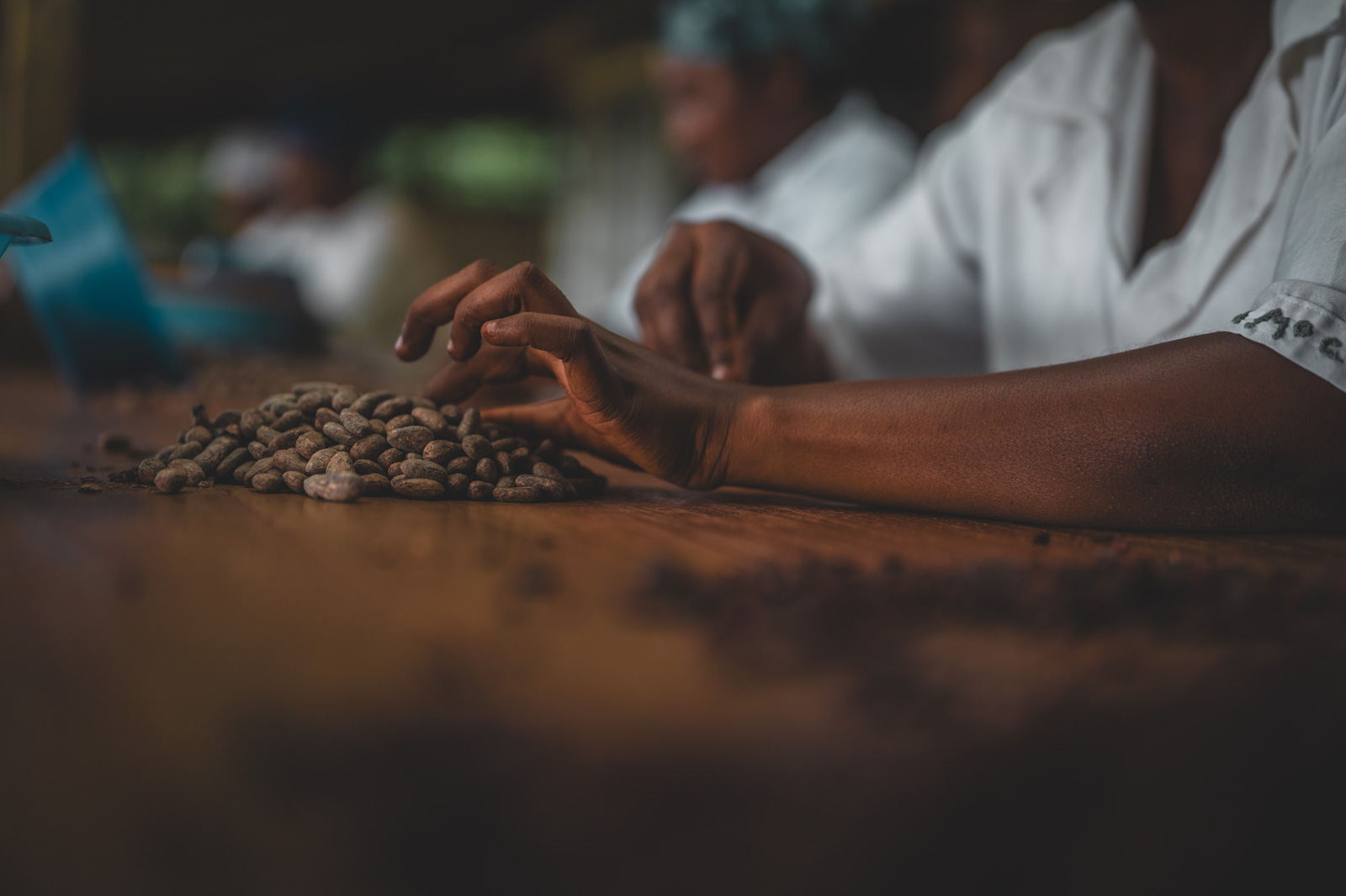
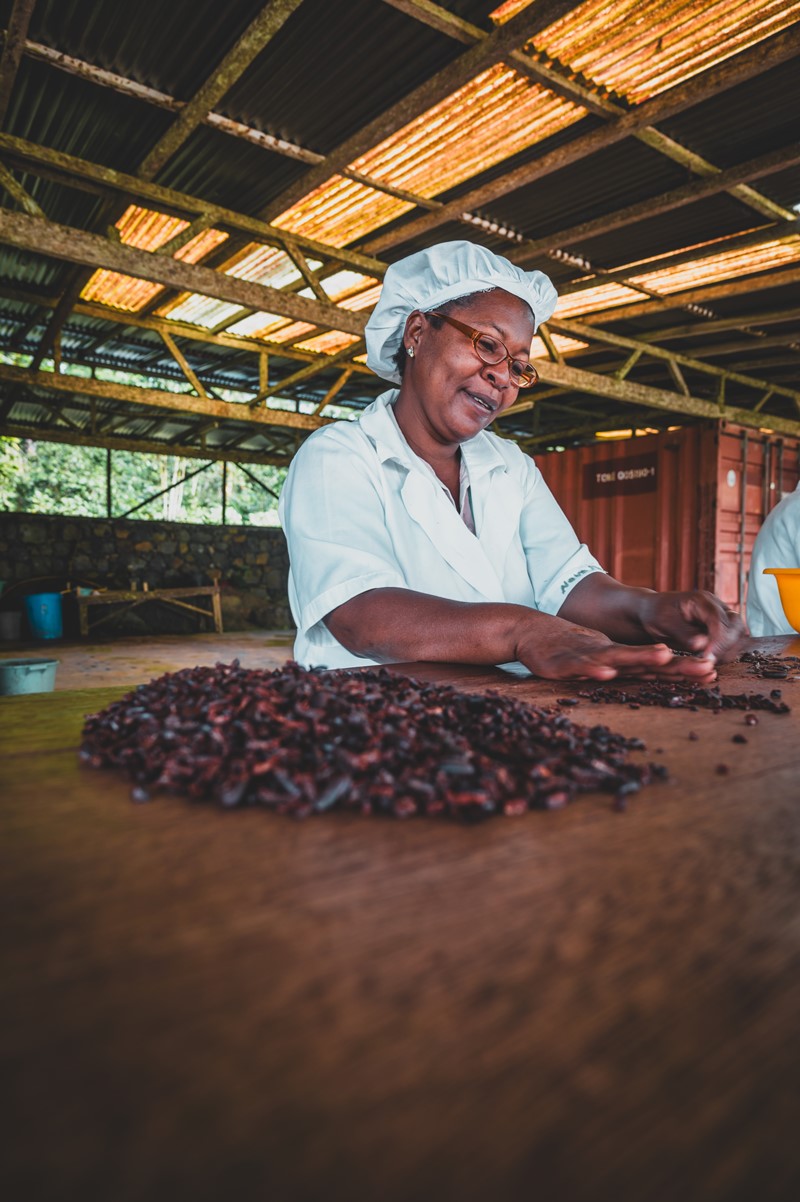
He says this with almost a hint of sadness - and the first thing that jumps out at us is that this lean-built, blue-eyed man loves trees as if they were his children. Cocoa is his new adventure and he throws himself into it with the same competitive spirit with which he had been dealing with coffee for over forty years. The cocoa beans are harvested and dried on the island of Principe where the plantation is located, but the roasting, cleaning and pre-grinding work takes place on the main island - and it's entirely manual. Taking the opposite route to what would perhaps have been normal, we observe a group of women sitting at the work table, peeling each individual cocoa bean with rapid movements. They break the integument with a slight pressure of their fingers, then sift the pulp to spot and remove the radicle - a fragment the size of a couple of millimeters that needs to be eliminated because during roasting "it takes on a hard, glassy consistency," Corallo explains.
A Swiss watchmaker's job done without a magnifying glass, for which you need training and a good eye. The radicle, as we've seen with our own eyes, is the same color as the rest of the bean. It's almost indistinguishable. Each woman works six hours a day and "produces" a daily average of five kilos of cocoa.
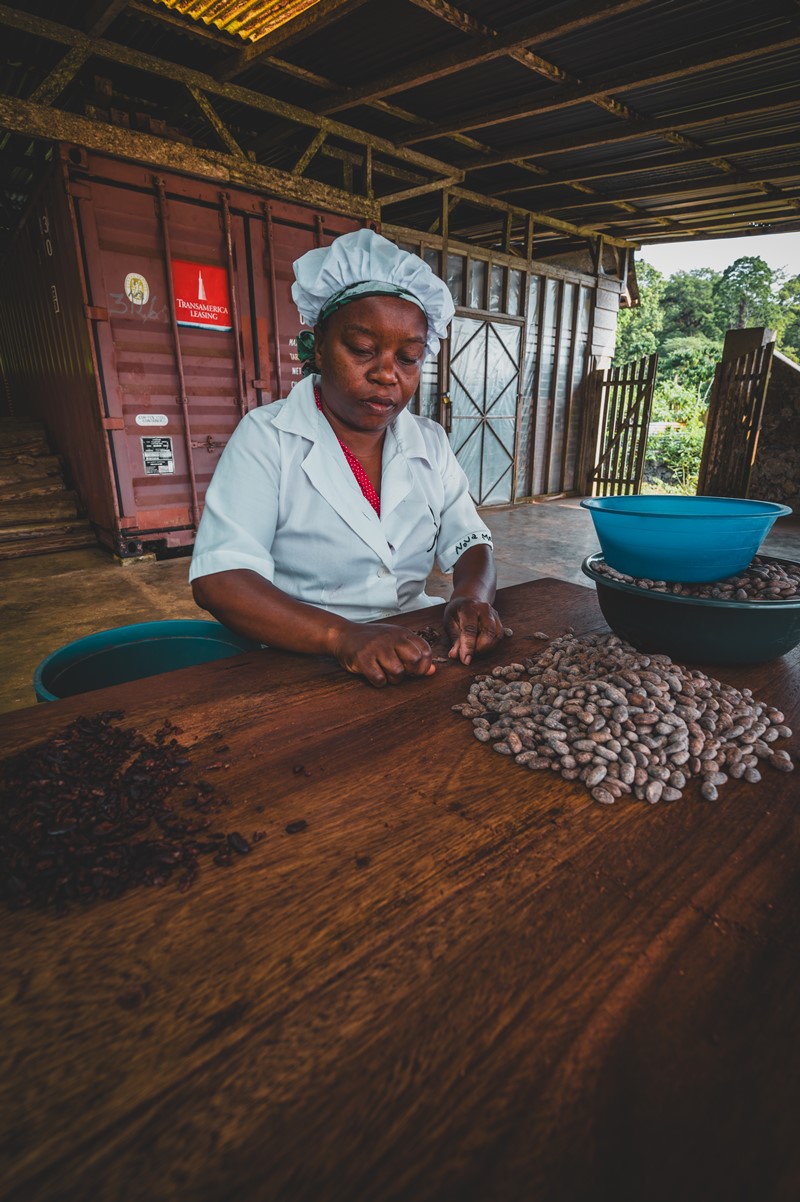
Is this manual work the secret of Corallo's cocoa? Of course not, he says, the real secret is how quickly the product is processed once it's picked from the plant. Every single step is important. Grinding for example.
"If cocoa beans are ground down to 40 microns you'll get more fragrances but less shine and plasticity; if you go below 40 microns you will have a more workable paste and more shine, but you'll lose a lot of fragrance. I never go below 40 microns."
In his Saõ Tomé workshop Corallo holds tastings almost every day for the many tourists who certainly come to the island for the beautiful beaches, fascinating equatorial jungle and excellent cuisine, but never pass up a visit to the cocoa guru. We also take part in one of these sessions, getting lost in a sensory journey that ultimately turns inside out everything we thought we knew about cocoa and chocolate. As Corallo talks with that unmistakable Tuscan accent that has stuck to him despite the decades spent in Africa, you try everything he puts in front of you. From raw cocoa nibs we move on to roasted cocoa beans, then climb higher to reach 100% cocoa. As we open our eyes wide in amazement at its intense but not bitter taste, we meet Corallo's gaze.
“Bitterness in chocolate is a flaw,” he says knowingly. "It's caused by carelessness during cocoa processing from harvest to storage."
Then we climb down and sink out teeth into an 80% bar with sugars crystals, an addictive 75% - you'd keep eating it until there's no more left - and finally a number of variations including ginger, pepper and Fleur de Sel chocolate. Between bites and ecstasies, Corallo lets us know that chocolate also needs a specific serving temperature if you want to fully enjoy its aromas, texture and flavor. His Ubric 1 is a combination of 70% chocolate and raisins steeped in his cocoa pulp spirit for two months. That's right - Claudio Corallo distills cocoa pulp with a still he keeps at his estate in Principe. He doesn't even sell it, which may at first sound crazy until you realize how all-encompassing his passion is for a tree he fell in love with for the sound of the wind through its leaves.
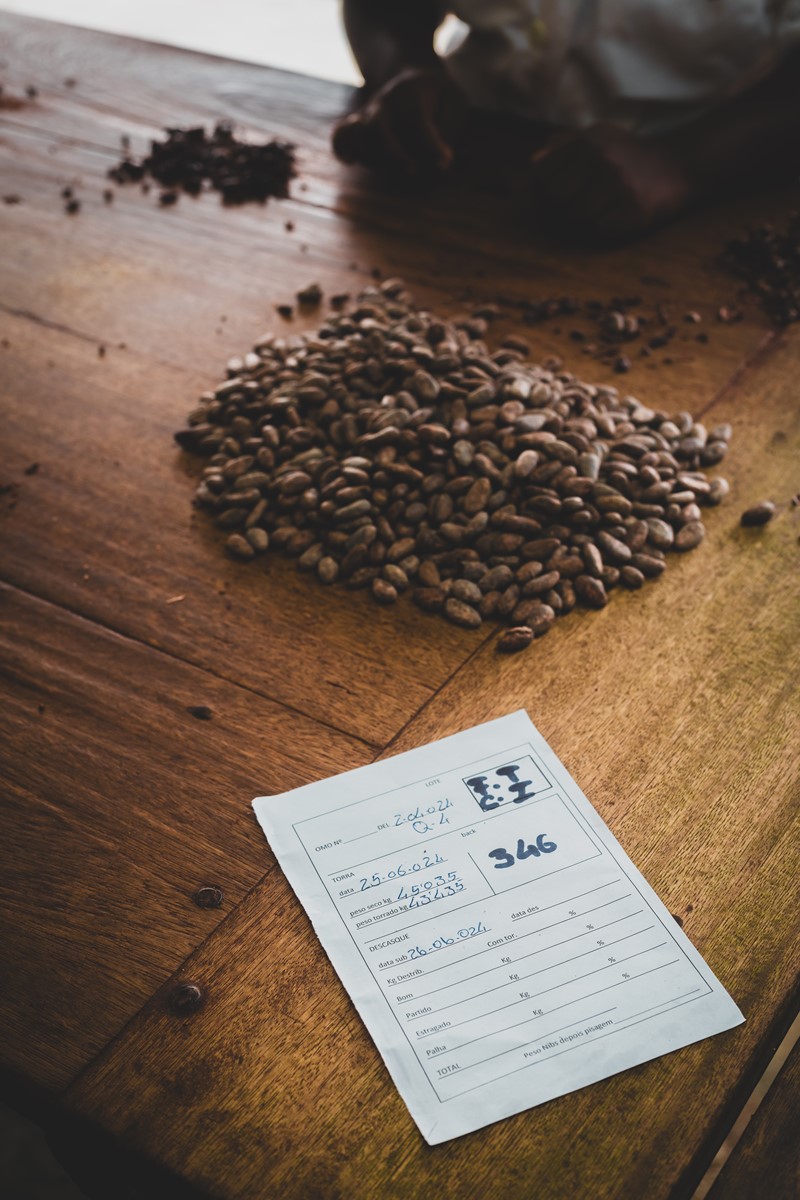
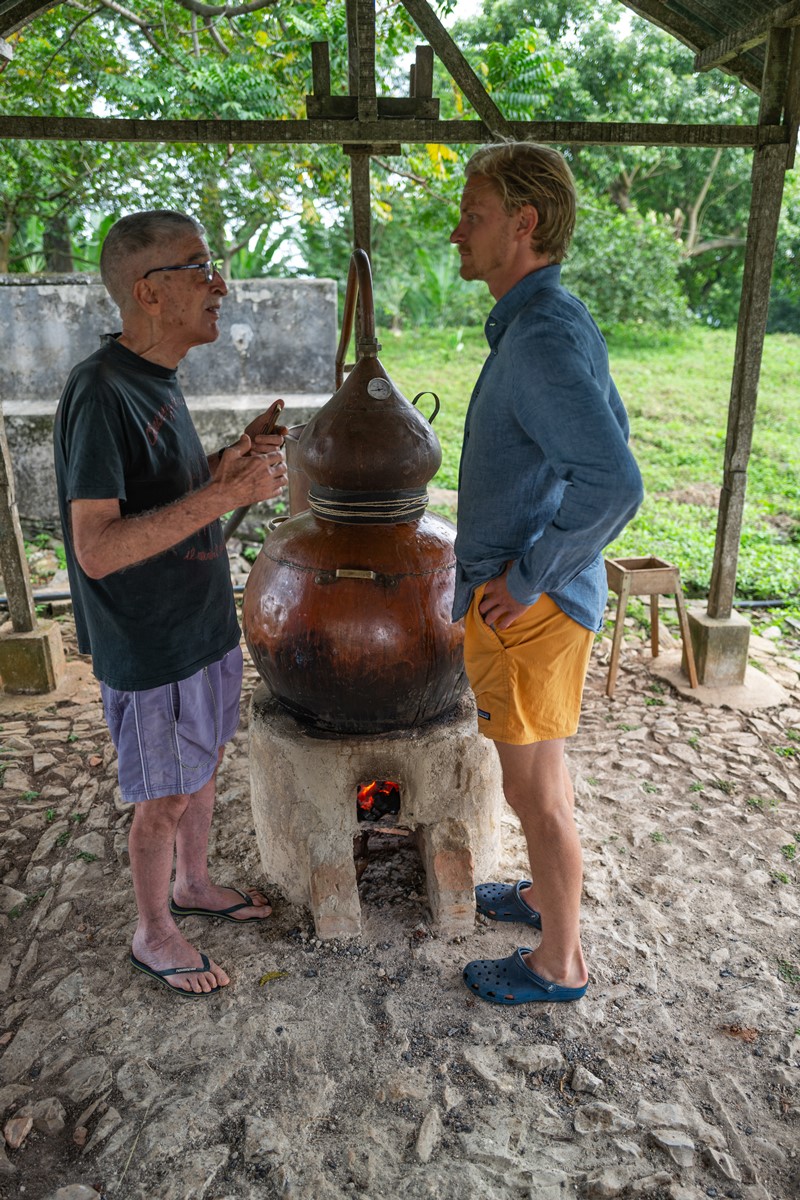
Now all we need to do is get on a plane and fly to the island of Principe, where Corallo's cocoa begins its journey. The plantation is called Terreiro Velho. It sits on top of a hill from which we enjoy one of the most beautiful views we've ever seen - below us, the forest rolls down steeply towards the ocean as large cobalt-blue kingfishers watch us from the tree branches and on the lawn surrounding the house small white herons stroll about as peacefully as chickens. When Corallo first arrived here in what was once already a cocoa plantation, he found the jungle had reclaimed every inch of the area. It took time and effort to clear the land and give the cocoa trees some breathing room. Even now, calling Corallo's estate a plantation wouldn't be correct - at least not in the way Europeans think of plantations. Cocoa trees aren't the only trees growing around Corallo's residence - there are coffee, breadfruit and papaya trees, as well as some colorful flamboyant trees. It's still a very wild place and the people working there look more like gatherers than farmers. It's actually not wild at all since the cocoa trees have been selected by Corallo and are descended from those brought here from Brazil in the early nineteenth century. "I actually chose the trees I noticed were the monkeys' favorites," he confesses, because the island is home to a small monkey species imported here for hunting.
"They also help the plantation grow because they suck out the cocoa beans and spit them on the ground. That's one of the ways new trees are born - another is when a basal shoot develops from the roots of an adult tree and then separates from it. As a result, the older tree withers but the younger one grows just a few steps away."
In short, the plantation moves like the moving forest prophesied by the witches in Shakespeare's Macbeth. "There are different cocoa varieties," Corallo explains, bringing us back to reality.
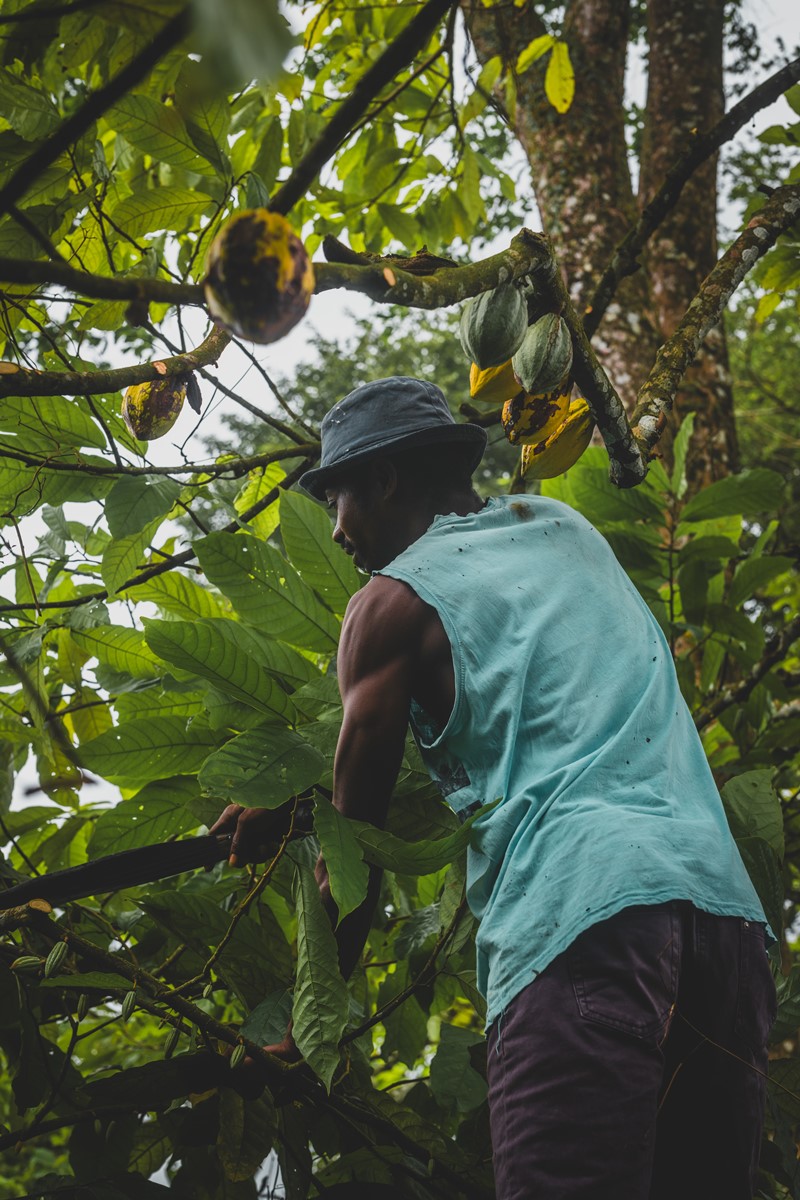
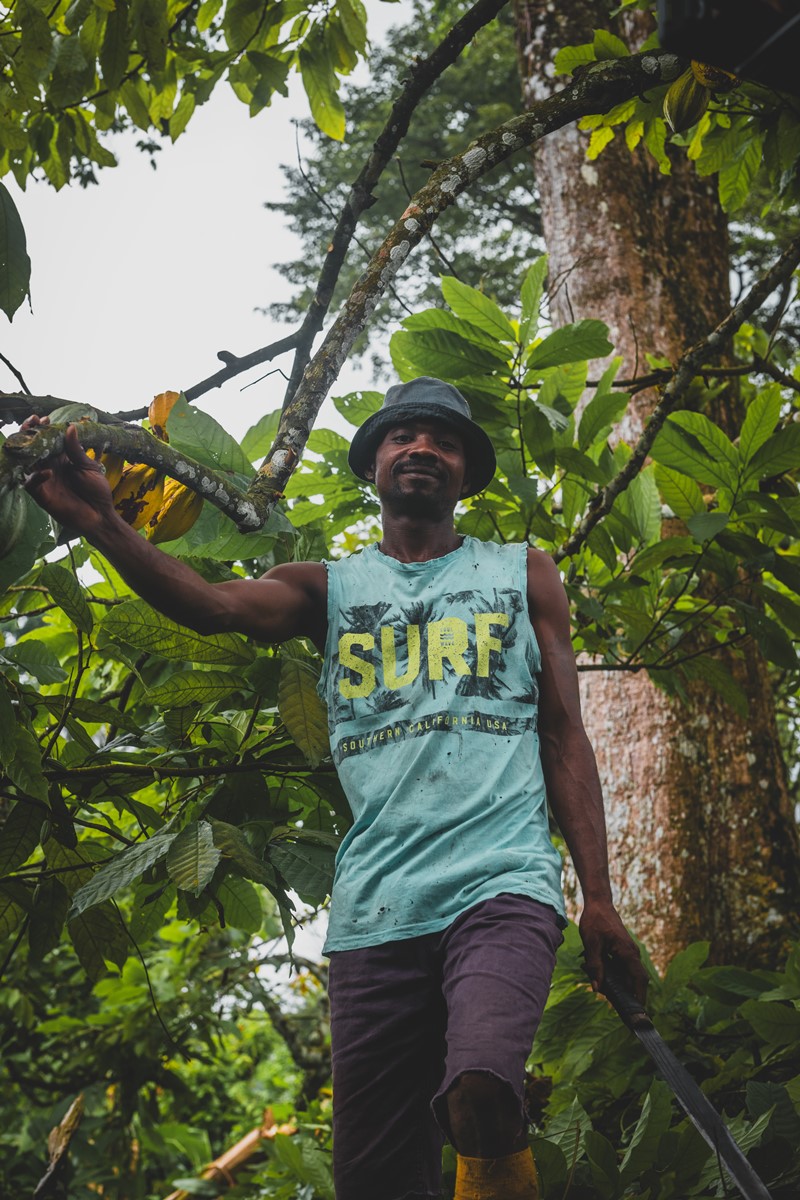
"We mainly use Forastero Amelonado as we believe it's the best, it's ripe when the fruit turns orange. Then there are lower-quality purple hybrids and yellow hybrids. We harvest it between May and December. Once the fresh beans are collected, we ferment them still wrapped in their outer film. It's a very important step because we first have alcoholic fermentation and then acetic fermentation, which breaks down the cell walls inside the endosperm. The next step is the dryer, a large vat with low wooden edges and a slate bottom. We let the beans rest there for a week, moving them around with rakes every twenty to forty minutes. Fermentation time varies depending on the ambient temperature."
From one hundred kilos of fresh cacao, after drying, you go down to about 35 kilos of raw cacao. With roasting, the weight drops further. 'But it is we who must obey the cocoa, not the other way around. And we must also obey it quickly', Corallo comments lapidarily. 'Then, once dried, the beans are closed in thirty-kilo sacks, they are stored and, once a week, on Fridays, they leave by sea for Saõ Tomé. The journey takes one night'.
As we dine in the evening in Terreiro Velho's large house, which to call Spartan is an understatement, we try to understand more about the man Claudio Corallo, because his chocolate is an extension of his personality.
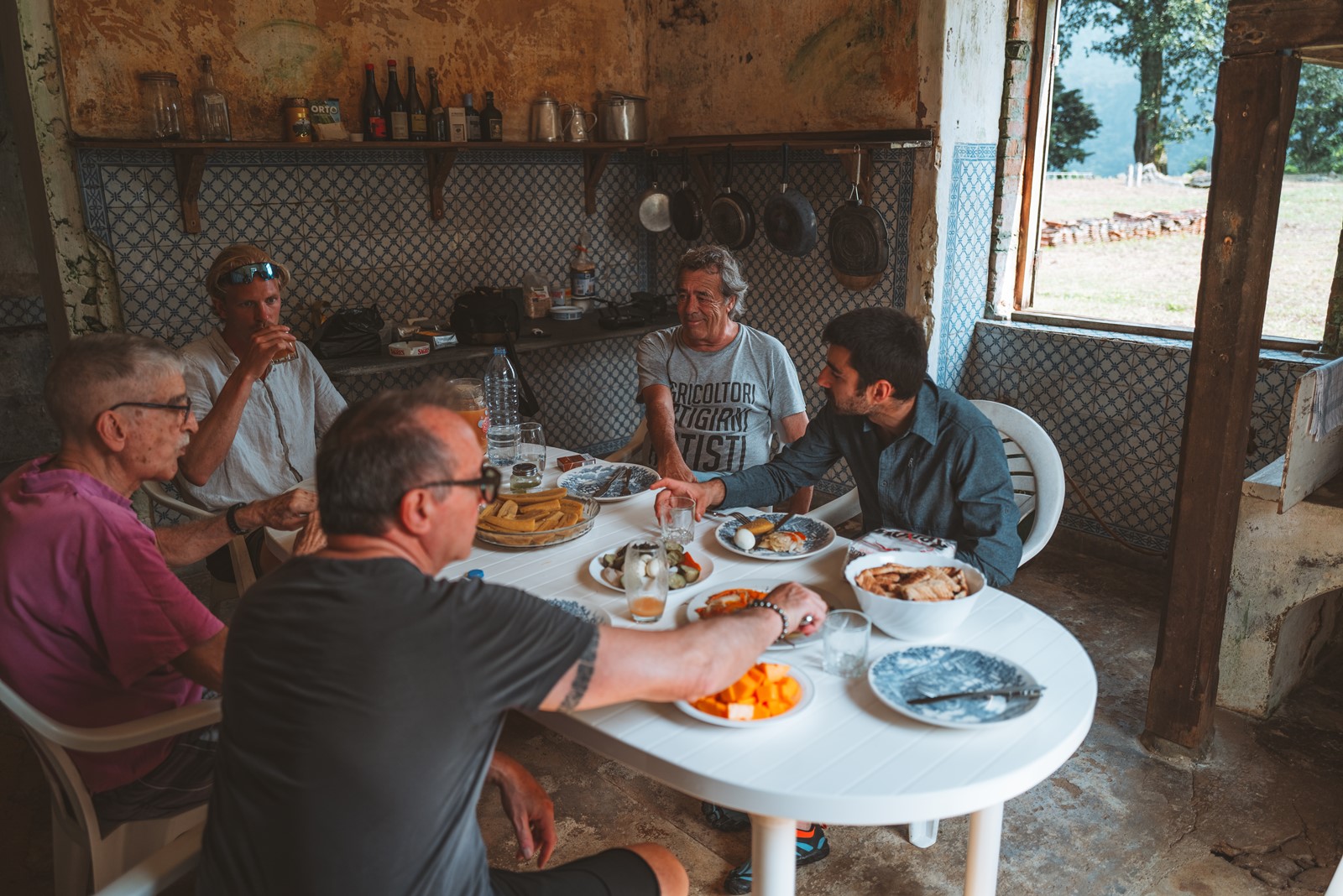
"Every time you say ‘I'm happy with that’ it's over," he explains as large, disturbing but harmless bats sweep into the kitchen, as devoid of electricity as the rest of the house. "I'd rather die than settle for good enough." As we dine by candlelight on fish and coriander-flavored rice washed down with spring water while we wait to bite into yet another chocolate bar, we try hard to understand how this Italian man deliberately exiled himself and now lives in an ancient mansion where there is no glass in the windows, the cracks in the wooden floors upstairs afford glimpses of the rooms below, both the bathroom and the shower - a simple rubber hose - are outdoors, and you may happen to see a couple of tarantulas large enough to make you fall asleep with a thousand thoughts on your mind - none of them pleasant. We don't ask him outright as we wouldn't want him to misunderstand but, between sips of his cocoa bean spirit, in what sounds like a confession he says, “As a child, my dream was to be able to sleep on the floor. The less you need, the freer you are.”
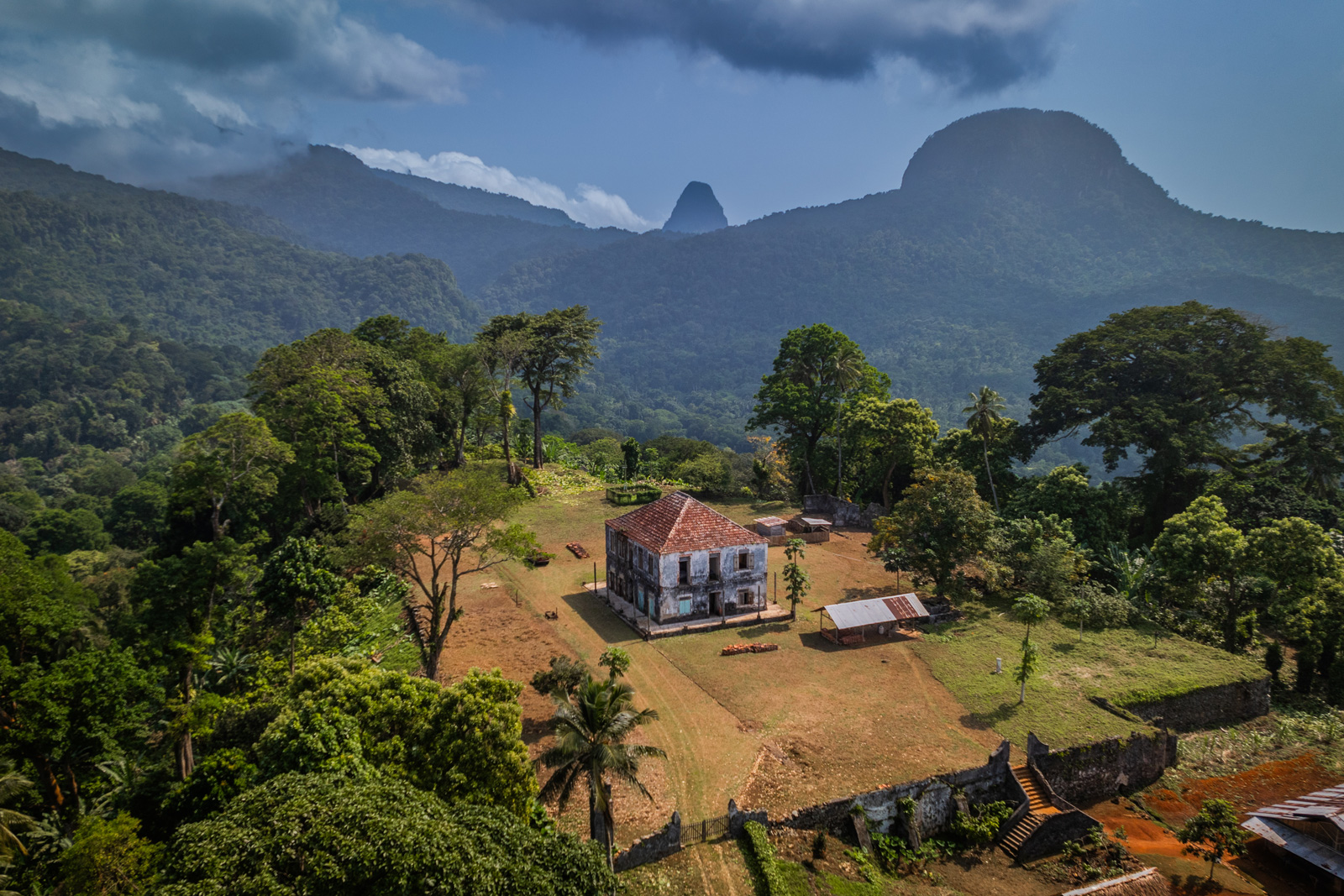
Claudio Corallo is a complex man, one of those people who are capable of sacrificing anything in order to pursue their dream, their passion. His dedication is total, his integrity absolute, what a regular person considers basic comforts are just meaningless frills to him. He lived at Terreiro Velho for months - just him, his workers, his dryer and his handmade pot still. In the evening, when lights that have never actually been on go out, he listens to classical music. We ask him what his dream is now.
“Teleportation. The only problem with my cocoa is logistics,"
he answers. Cocoa doesn't just fill Corallo's thoughts every day, it fills his dreams as well.