


Where is rum headed?
In recent decades, rum has evolved from an “exotic niche” spirit into a global phenomenon capable of challenging tradition, production identity and industrial futures on a par with whisky and cognac. This article brings together authoritative voices from contemporary rum to capture a snapshot of its current state: from production and sustainability to shared challenges and future markets.
Producers and distillery leaders from geographically and culturally diverse regions share their perspectives:
- Herbert Linge (Distillerie de Port-au-Prince, Haiti)
- Aurélie Kalifà (Saint James, Martinique)
- Joris Galli (Papa Rouyo, Guadeloupe)
- Marc Schultz (Rainforest Distilleries, Philippines)
- Peppie Grant, Outram, and Andrew Hussey (Hampden, Jamaica)
- Grégory Vernant (Neisson, Martinique)
Rum production in the third millennium: what to innovate, what to preserve
We begin with how historical practices and modern approaches are balanced. Rum is an ancient spirit where age-old techniques still survive, though not always in ways that improve quality. Scientific and technological progress in recent decades has transformed global distillation techniques, bringing advancements but also risks of standardization and flattening of quality.
Herbert Linge, of Distillerie de Port-au-Prince in Haiti, explains how the practice of double distillation had been lost over time and is now being revived:
“With Distillerie de Port-au-Prince we wanted to bring it back to life,” he says, adding that the same goes for spontaneous fermentation, a practice disappearing in many countries but one they consider essential to ensure the authenticity of the product.
“On the innovation front, I believe the main challenge is related to the use of raw materials. For example, cane syrup offers many possibilities for experimentation and we are working on new ways to use syrup, testing three different sugarcane varieties. We observe the transition from juice to syrup and analyze the differences each variety brings in terms of aromas during aging.”
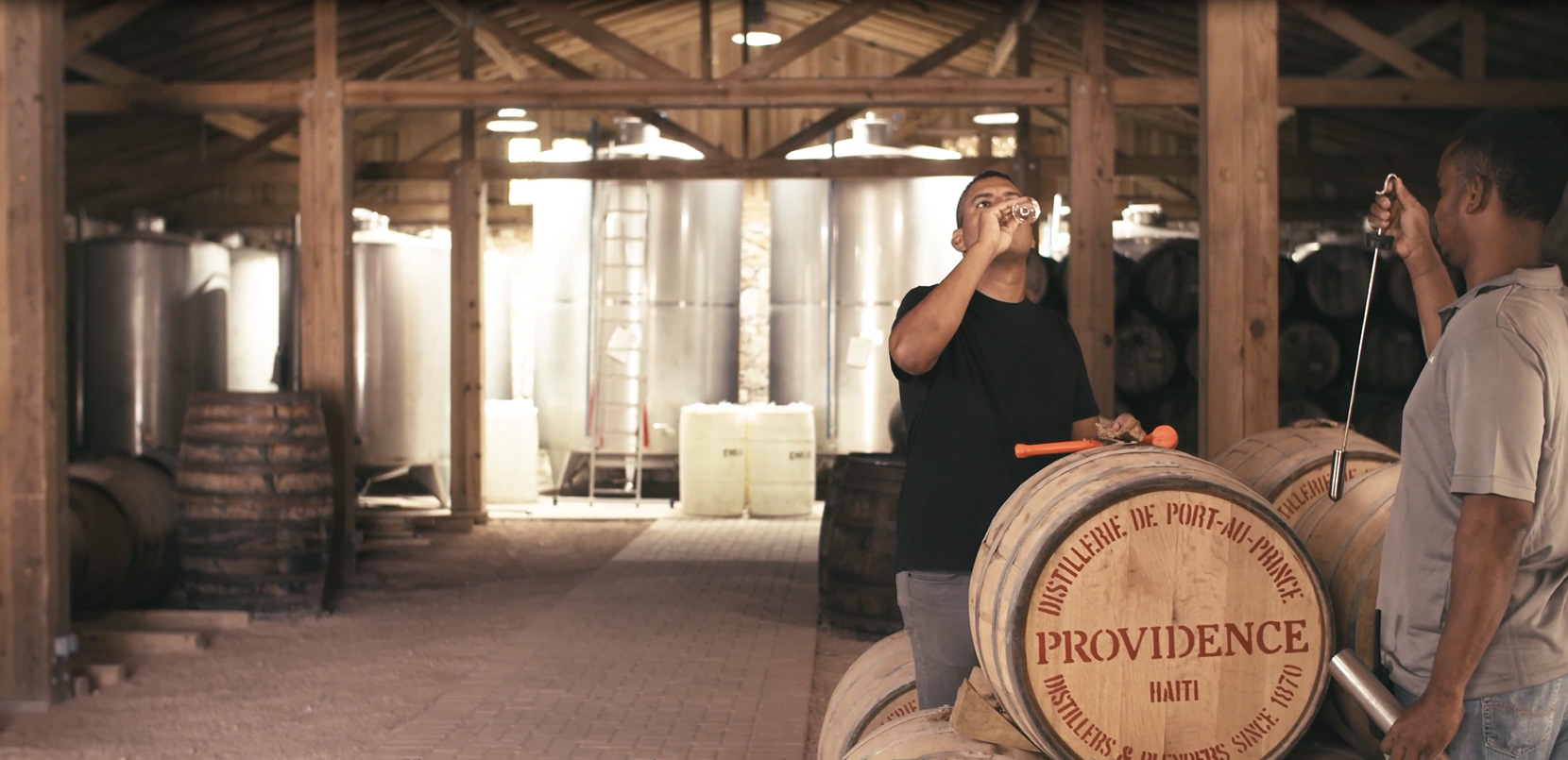
Innovation also has to do with distillation. Normally, sugarcane is brought to the distillery:
“Our idea, instead, is to turn the concept on its head and bring the distillery closer to the raw material. The main distillery is in Port-au-Prince, but we also have a facility that carries out the first distillation of the juice in Saint-Michel-de-l’Attalaye.”
Looking ahead, the idea is to create other units in different areas: the vision remains that of installing distilleries directly in the growing regions, with the possibility of producing unique, diversified rum profiles, favoring a creative approach over a purely quantitative one.
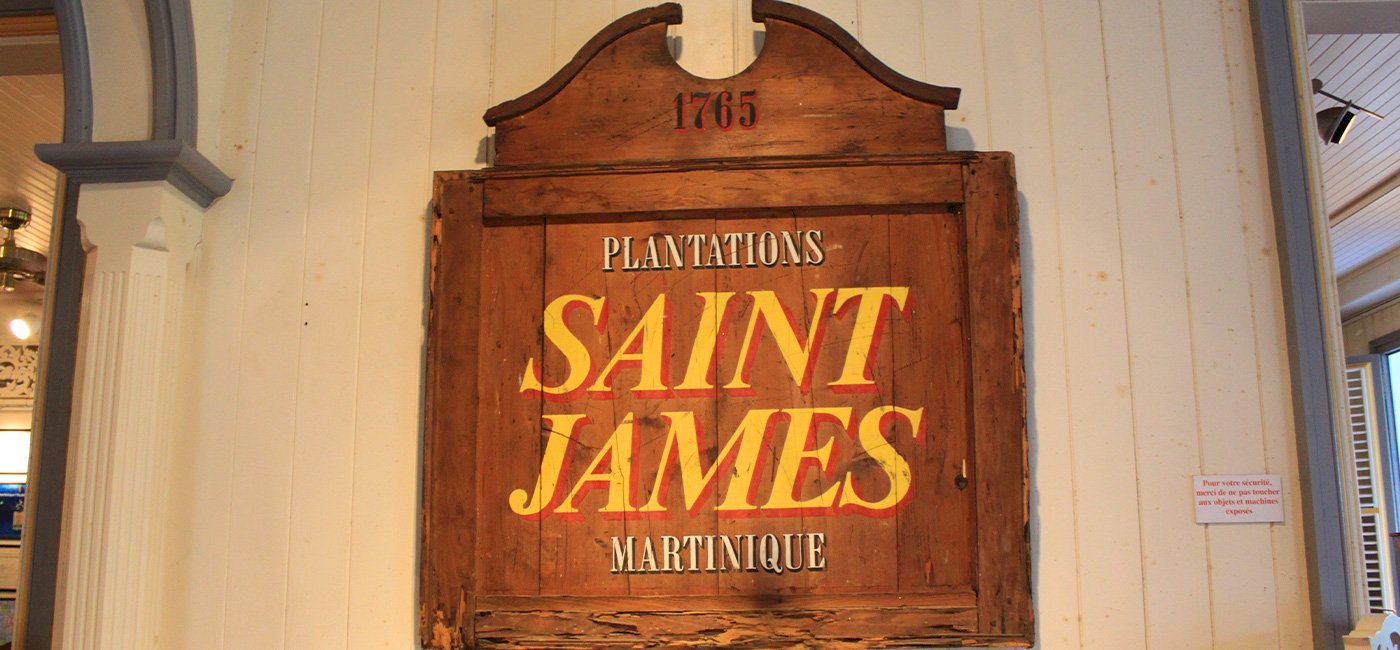
Aurélie Kalifà of Saint James in Martinique says that although pure cane juice rum is currently produced in small Creole columns, that wasn’t always the case:
“By definition, traditions evolve,” she says. Indeed, the column still arrived relatively recently for economic reasons, but “the agricole style is now part of the culture of Martinique and Guadeloupe, and returning to molasses rum would be absurd!”
As for the risk of standardisation, arising from the rules imposed by the AOC (Appellation d’Origine Contrôlée), Aurélie Kalifà points out that no one would ever say to producers in Vosne-Romanée or Barolo that all the wines within the same appellation are identical, even though they are made under the same set of specifications.
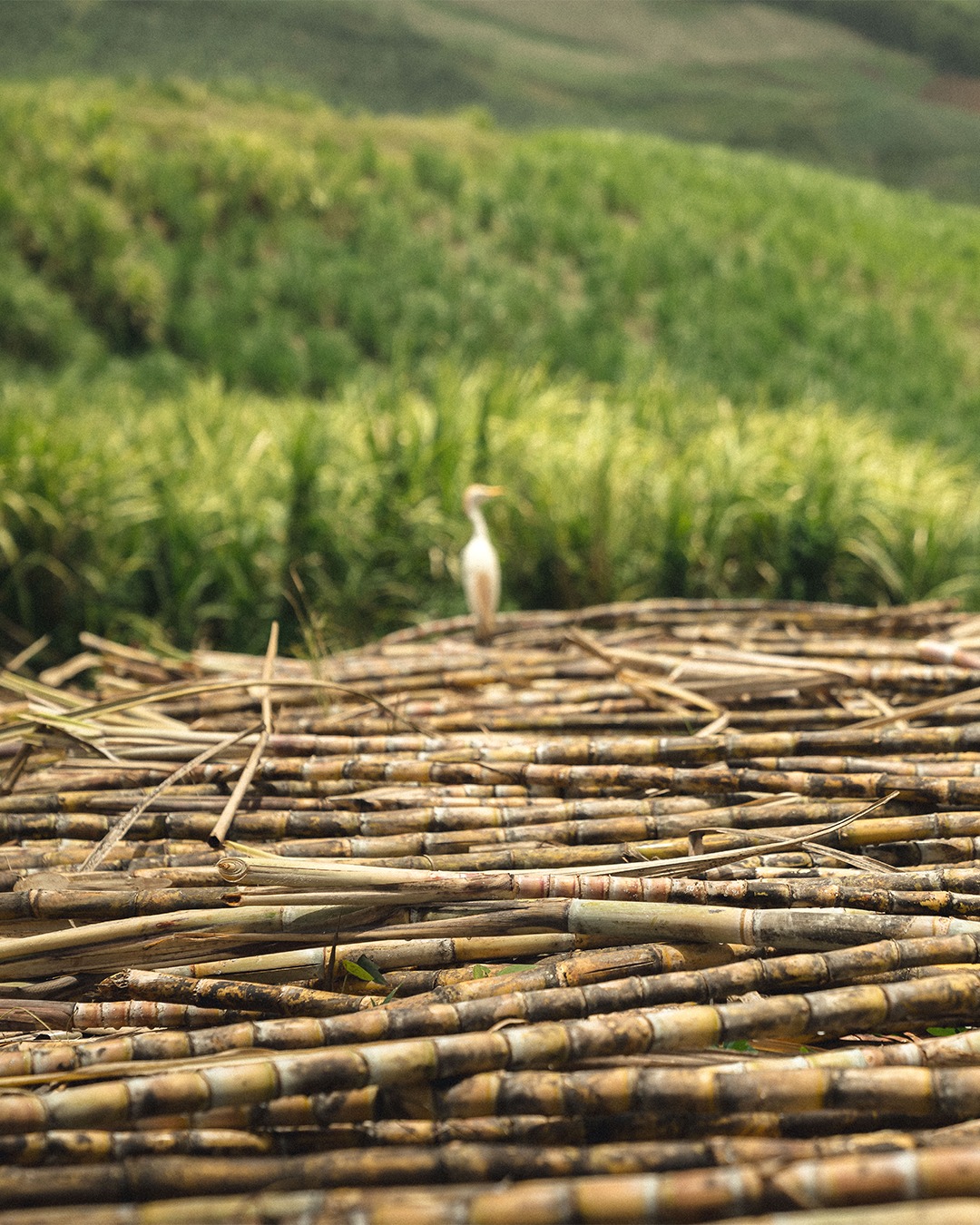
Joris Galli of Papa Rouyo highlights preserving tradition through manual harvesting of sugarcane to protect juice quality:
“The process is deliberately very fast: from cutting to pressing to the start of fermentation, very little time passes, so that the aromas and freshness of the cane juice remain intact.”
On the innovation front, Papa Rouyo focuses primarily on distillation.
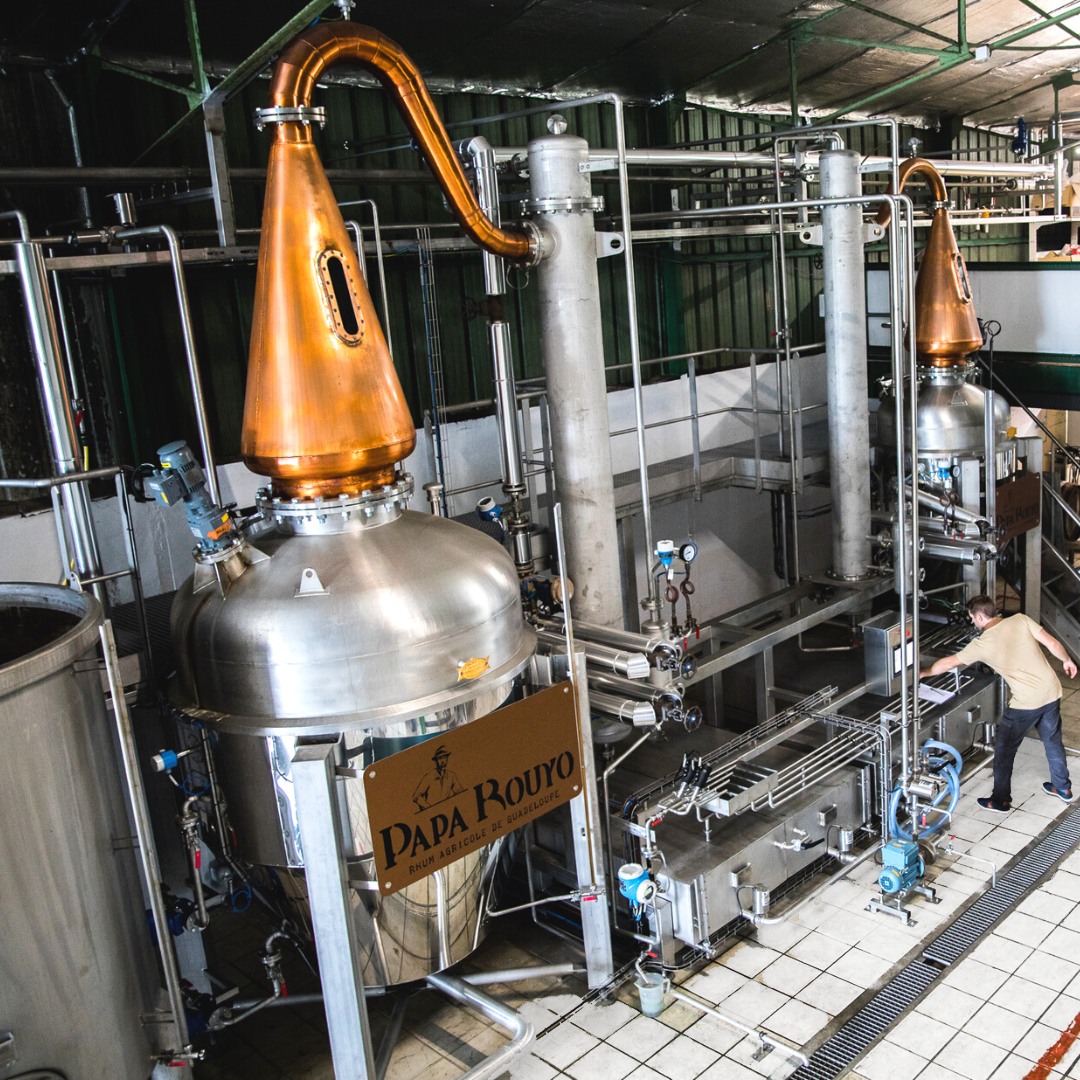
“In a sense, this is an innovation that looks back to tradition, because in producing agricole rum we have chosen to move away from the Creole column and return to batch distillation.”
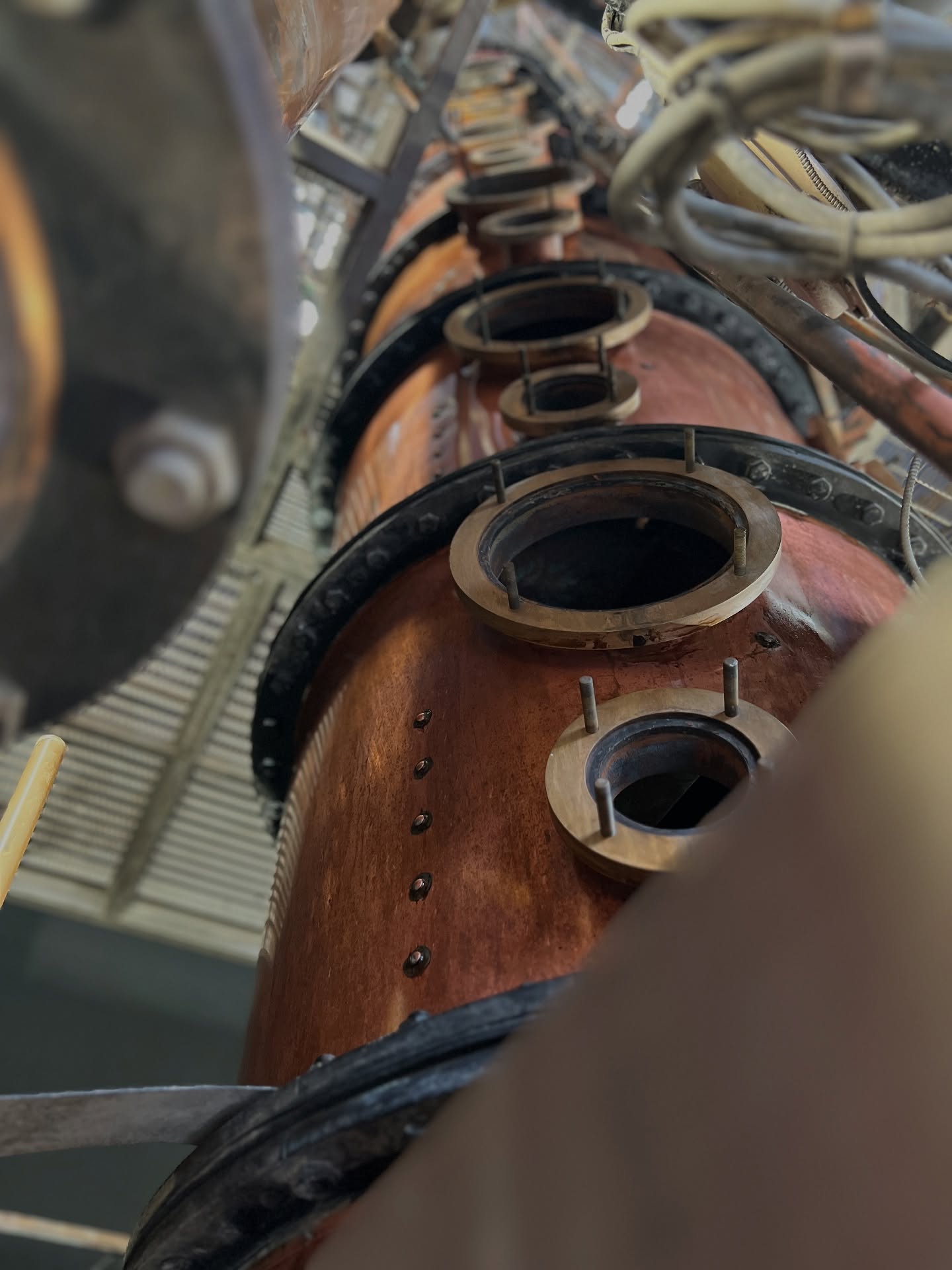
Papa Rouyo therefore produces agricole rum in pot stills, using double distillation and two separate stills: a wash still followed by a spirit still for the second distillation.
“This is an unprecedented approach for agricole rum, and this is why it represents a genuine innovation.”
In the Filipino context, Marc Schultz explains that Rainforest Distilleries cannot rely on a long-established historical tradition in rum production, and it is precisely for this reason that the distillery has chosen to focus on innovation. Most local rum is produced in a Spanish style and on an industrial scale, whereas Rainforest Distilleries’ approach is based on enhancing terroir and native sugarcane varieties.
“The production style is agricole, while remaining open to the use of dunder and muck as well: elements normally associated with other production contexts.”
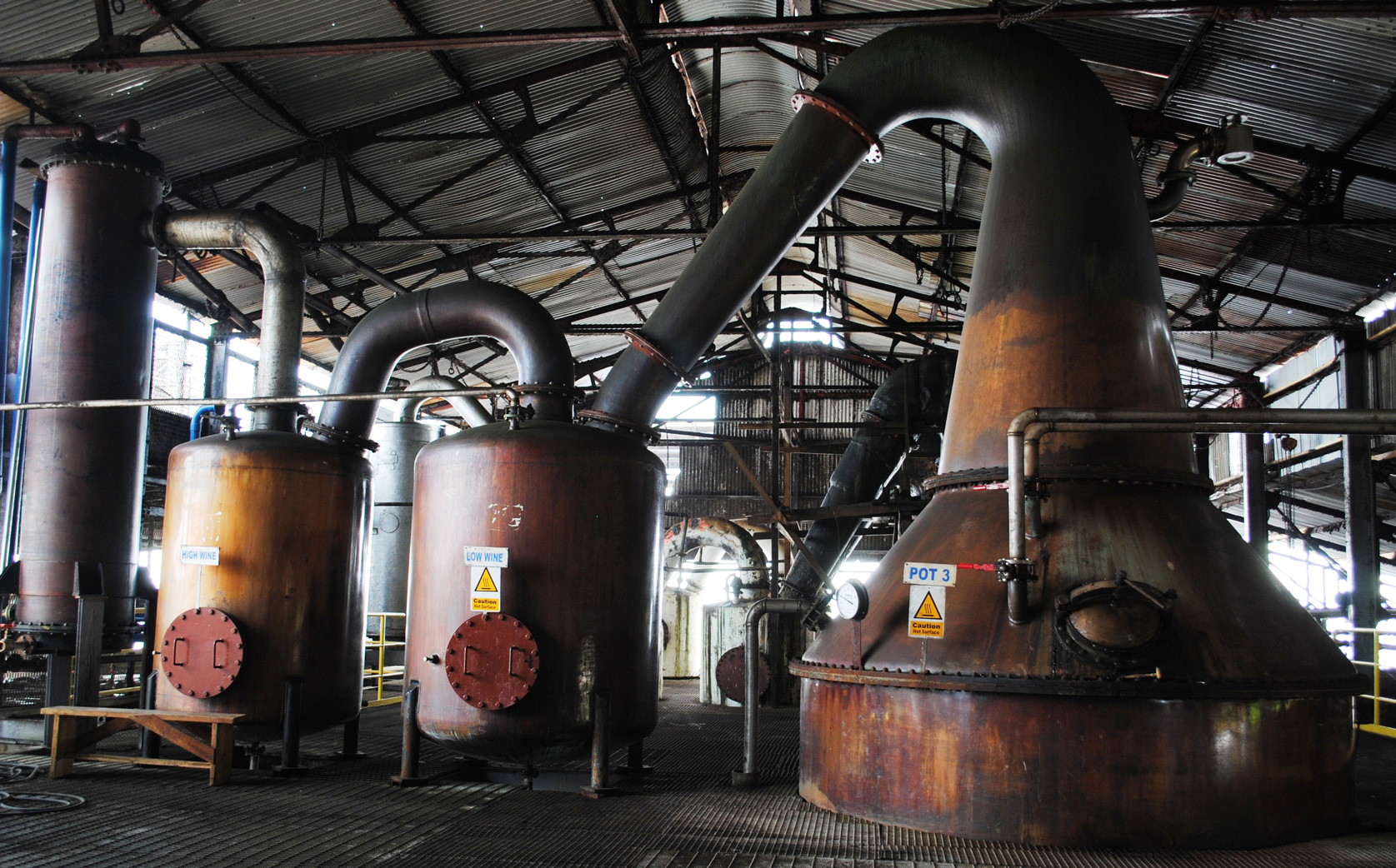
For Hampden, Outram Hussey explains, remaining faithful to tradition represents a daily commitment. The only truly significant recent innovation has been the introduction of a gas chromatography (GC) system, which makes it possible to analyse the aromatic composition of the distillates with great precision and to obtain a detailed printout of ester levels.
The only major structural change has been the introduction of larger stills, adopted solely to increase production capacity, always in full respect of the distillery’s artisanal method. On this point, Peppie Grant adds that innovation does not necessarily have to translate into the forced pursuit of something new:
“It’s not about changing what we do, but about understanding more deeply why we achieve a certain result.”
The goal is not to alter the quality of the rum, but to understand it scientifically. From this perspective:
“Innovation does not consist in saying ‘we obtain X, but we want to obtain Y’, but rather in saying: ‘we can always obtain X, but in a more precise, more controlled and slightly more efficient way’.”
For Grégory Vernant of Neisson,“tradition implies the continuity of a savoir-faire, which can be supported and enhanced by innovation.”
According to Vernant, standardisation does not arise so much from new equipment as from upstream choices: raw materials, seed selection, the use of yeasts. It is the result of globalisation and the control exercised by large agri-food groups, which favour uniformity of taste. A responsibility that, according to Vernant, also lies with politics:
“It would be enough to reintroduce food education programmes in schools to develop greater awareness.”
Is rum sustainable?
When we talk about sustainability in the world of spirits, we are not referring solely to environmental sustainability, but also to the social and economic impact of activities in this sector. How sensitive are rum producers to the issue of sustainability?
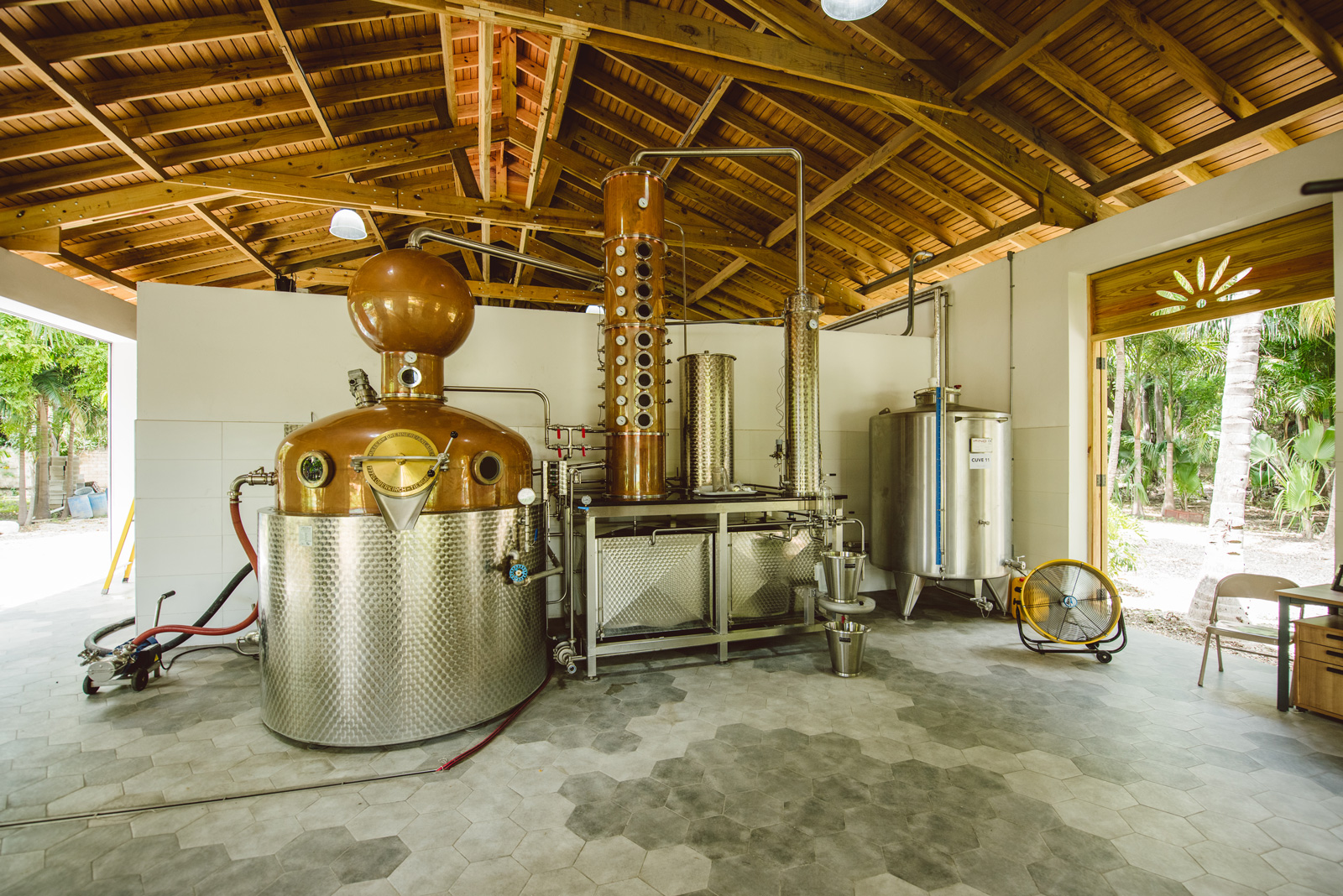
“Here in Haiti,” replies Herbert Linge, “rum is not only sustainable, it represents a social necessity. Every new distillery that opens creates, in the agricultural sector alone, between 20 and 30 job opportunities. The idea of spreading these production units across different areas of the country therefore has a direct impact on local development, both in employment and economic terms.”
From an environmental perspective, new distilleries are designed to be sustainable: solar energy is used to power the engines and no traditional fuels are used for the stills, adopting a “zero fire” approach. The water used in the distillation process is recycled, and the only stage with high energy consumption is the milling of the sugarcane; otherwise, the system is designed to minimise environmental impact.
For Aurélie Kalifà, sustainability is a crucial issue, especially in island contexts, where resources are by definition limited. The work of Saint James begins in the 800 hectares of sugarcane fields in Martinique, where the use of chemical products is kept to a minimum: no herbicides, fungicides or nematicides.
“Protecting the soil is an absolute priority, and some plots are cultivated using organic methods, despite the difficulties and high costs imposed by the tropical climate.”
Bagasse, the fibrous residue of sugarcane, is used to fuel boilers and distillation columns, reducing the use of fossil fuels. The vinasse produced during distillation is treated through methanisation, and all labels are made from paper sourced from FSC-certified forests.
“A set of practices that helps reduce the carbon footprint and preserve ecosystems and local communities.”
For Papa Rouyo, the social sustainability of the agricultural side is fundamental, also for personal reasons, explains Joris Galli:
“Papa Rouyo was my great-grandfather, but also a sugarcane grower, so we want to enhance the work of the people who tend the fields and harvest the cane.”
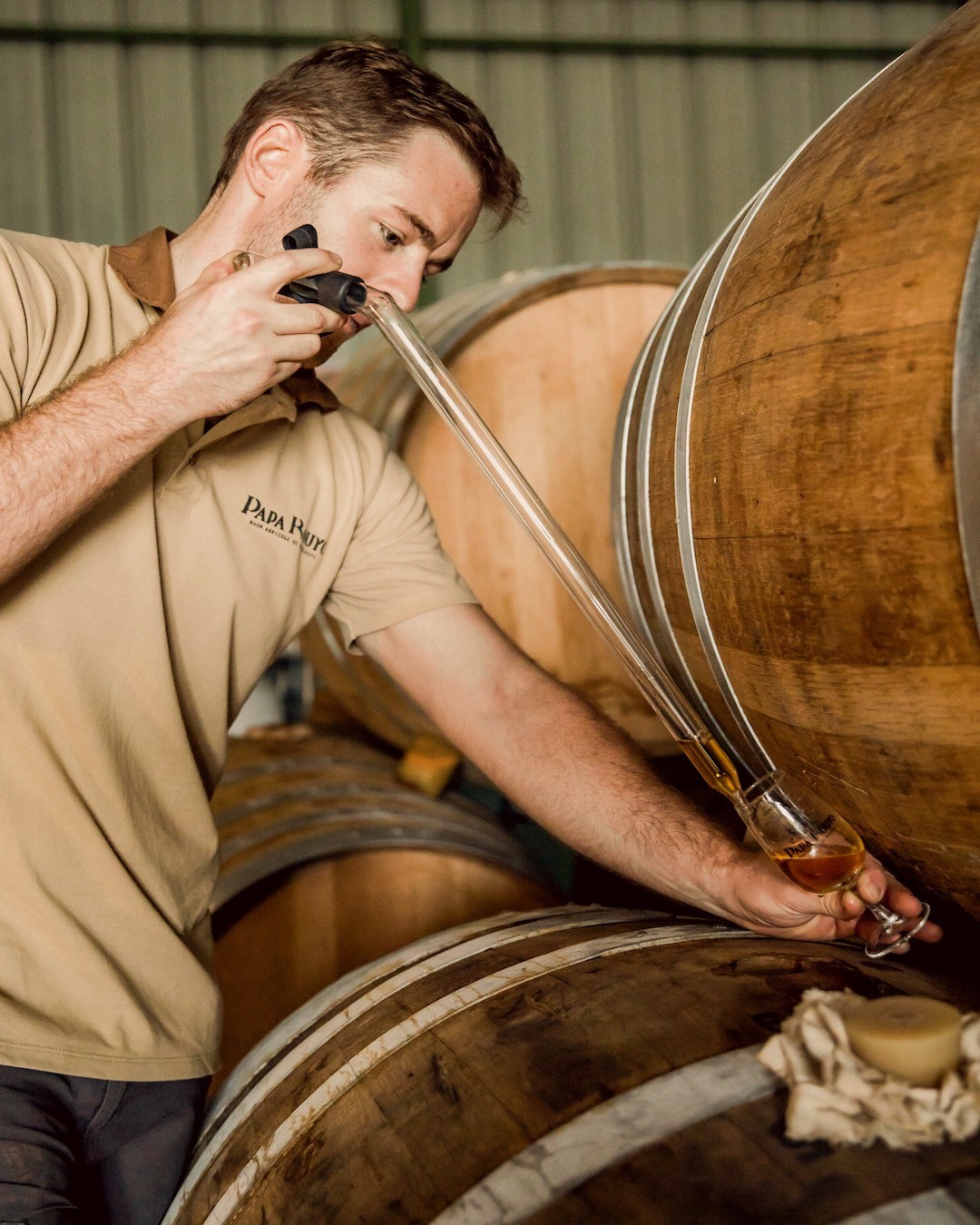
For example, this year Papa Rouyo launched its second range, dedicated to Jean-Marie Gobardon, featuring a rum made from a single variety of sugarcane – Canne Matos, grown in Le Moule.
“For us, it represents the pure expression of his plot of land and his agricultural know-how.”
“Our sister company is a foundation dedicated to reforestation, so we are very sensitive to this issue. We also have a social project focused on sugarcane harvesters: we have only just begun, but we truly want to carry it forward.”
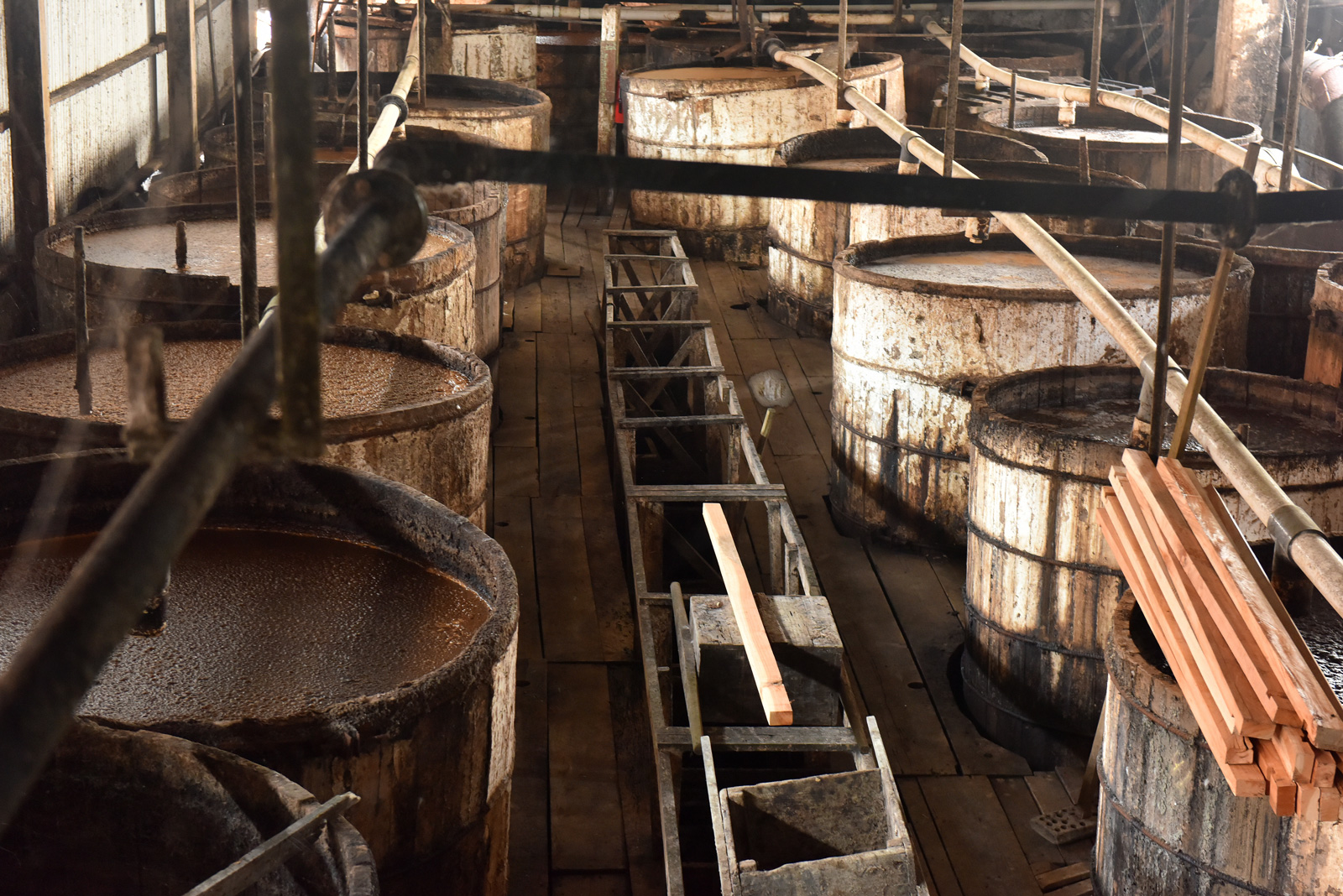
As for Hampden, on a social level one of the most significant initiatives concerns the fermentation vats, made from locally sourced cedar wood, while most of the cedar used for these purposes is imported from Brazil. This makes it possible to maintain a deep connection with local carpenters, who are directly involved in purchasing and working the wood used to build them.
“For us, Hampden is the environment in which it exists, and our production philosophy stems precisely from this awareness.”
Grégory Vernant – Neisson then points out how there is sometimes a great deal of hypocrisy surrounding the theme of sustainability:
“When I see oil companies talking about sustainability or environmental protection, it makes me laugh. There is pressure to reduce the carbon footprint of distilleries, but no action is taken against the industrial sectors of Asian giants that emit over 50% of greenhouse gases!”
Can a global rum movement emerge?
The world of rum is vast and diverse: there are many communities, many countries, different rum styles and different production philosophies. But are there points of connection or shared challenges that could unite all producers, beyond the simple name “rum”, in the future?
For Herbert Linge, one of the main challenges is creating clear distinctions:
“If we manage to distinguish between different types of rum, this ultimately strengthens the entire category.”
The more consumers are aware of the various styles and options available to them, the more value the world of rum as a whole acquires:
“There is no single path: excellent rums can be made from juice, syrup or molasses. Each brings with it a unique aspect and leaves a distinctive imprint on the final product.”
Another important aspect highlighted by Linge is transparency on the issue of added sugar.
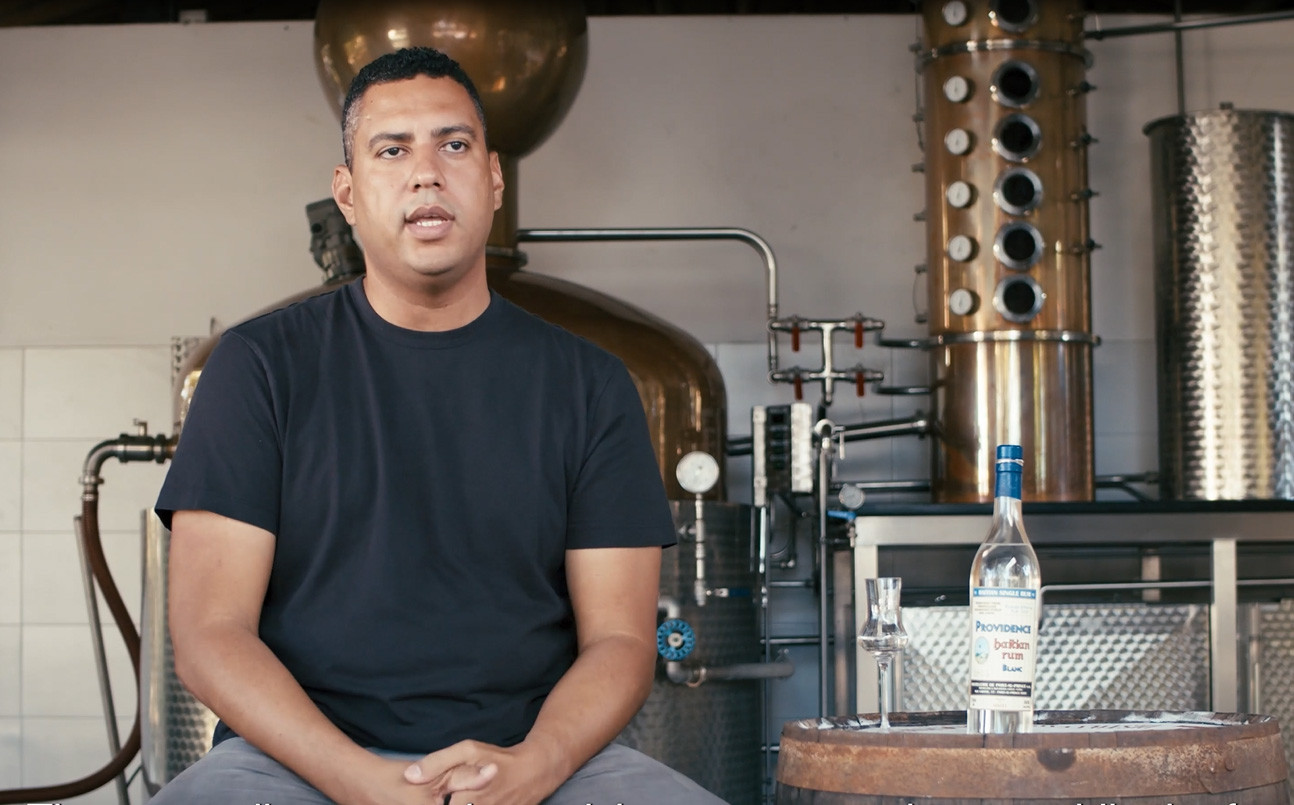
“This is not about judgement: if someone prefers a sweeter rum and chooses to produce it that way, it is a legitimate choice. What really matters is that the consumer is informed. Transparency builds trust, and trust strengthens the entire world of rum.”
For her part, Aurélie Kalifà emphasises that, in her view, rum producers enjoy working together and sharing cultures and expertise:
“This often happens in a festive atmosphere typical of rum-producing regions, especially in the Caribbean. Behind the word rum there is, above all, a spirit of sharing and openness to the world and, as is often said, we should always remember that ‘rum is about fun’. It is a rather unique sector.”
“What unites everyone,” adds Joris Galli, “is first and foremost a love for great spirits and for their complexity.”
Today there are many different techniques for producing rum, and for Galli it is precisely this diversity that makes it so fascinating.
“In our case, we also try to educate consumers to recognise these differences and to choose consciously. It is not about deciding what is ‘better’ or ‘worse’, but about offering tools to understand and appreciate the diversity that defines the world of rum. There are extraordinary molasses rums and equally outstanding rhum agricoles, and the real challenge is to convey that behind all of this lies the same idea of a great spirit. To make people perceive that rum also belongs to that noble category of spirits – like whisky or cognac – and is not just a cocktail ingredient, but a spirit meant for tasting.”
“The term ‘rum’ is not enough,” confirms Andrew Hussey of Hampden.
“Every rum style is different. It’s a bit like wine: great wines come from very specific regions, with long traditions and unique characteristics. The same applies to rum.”
For this reason, Hampden’s goal is to capture the very essence of place – the yeasts, bacteria, water, microclimate, everything that belongs to Trelawny.
“We do not see ourselves in competition with others: we do not want to be ‘better than others’, but simply ‘better than ourselves’, by continuing to improve.”
Grégory Vernant also reiterates that, before talking about common ground, it is important to talk about diversity:
“The only common point, for me, is the use of the same raw material: sugarcane.”
Who will drink the rum of the future?
To ensure the long-term prosperity and quality of rum, it is also essential to consider the commercial side, namely the consumer. Which emerging markets will be the most promising over the next five to ten years?
For Herbert Linge, among the most important markets today there is undoubtedly the United States, which is now beginning to develop a genuine interest in high-quality, artisanal rums. Another interesting market pointed out by Linge, although more fragmented, is Asia.
Alongside the United States, for Aurélie Kalifà there is also Germany:
“Two markets with strong potential. Asia is also growing. Not to forget Italy, where Velier’s long-standing commitment to promoting French rum producers (long before it became fashionable!) has made a significant contribution to their image as natural, authentic rums closely linked to their terroir.”
Joris Galli highlights in particular the strong and growing interest in Asia:
“We are already distributed in Japan, where the first steps are being taken in the production of pure sugarcane juice rum, and I believe this is a very positive sign.”
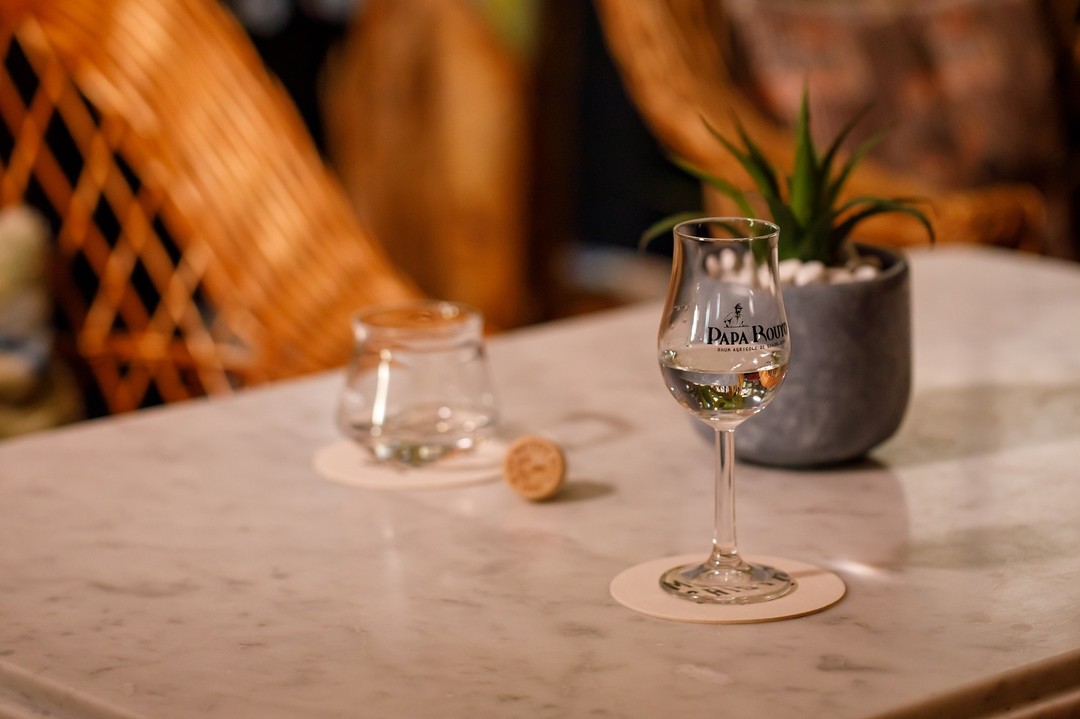
Galli also continues to believe in the United States market:
“Despite difficulties related to tariffs and trade issues, there is growing attention in the US towards white spirits such as tequila and mezcal, and since at Papa Rouyo we place great emphasis on the quality of our white sipping rums, I believe that this audience, passionate about pure and authentic spirits, could be particularly receptive to our rhum agricole.”
For Grégory Vernant, the markets of the future are exclusively Africa and India.
At Hampden, attention is also focused on Asia, particularly on Singapore and the surrounding regions. Andrew Hussey highlights the potential of the Indian market, as well as that of South America.
Outram Hussey nonetheless stresses the need to win over new generations:
“Being bombarded by a level of stimuli that previous generations never experienced, it is more difficult for them to develop a passion for rum as it once happened. This is why we asked ourselves which ‘complementary’ rum products could serve as a bridge, a first point of contact, to bring them closer without creating too abrupt a break. The idea is to build a transitional pathway, a way to gradually introduce them to the world of authentic rum.”
Building on this awareness, Hampden places a strong emphasis on education:
“Take, for example, the North American market: many consumers there have not yet had the opportunity to understand what a ‘real rum’ actually is. Only by explaining and showcasing the difference between a commercial rum and an authentic one can we build a solid future for this category.”