


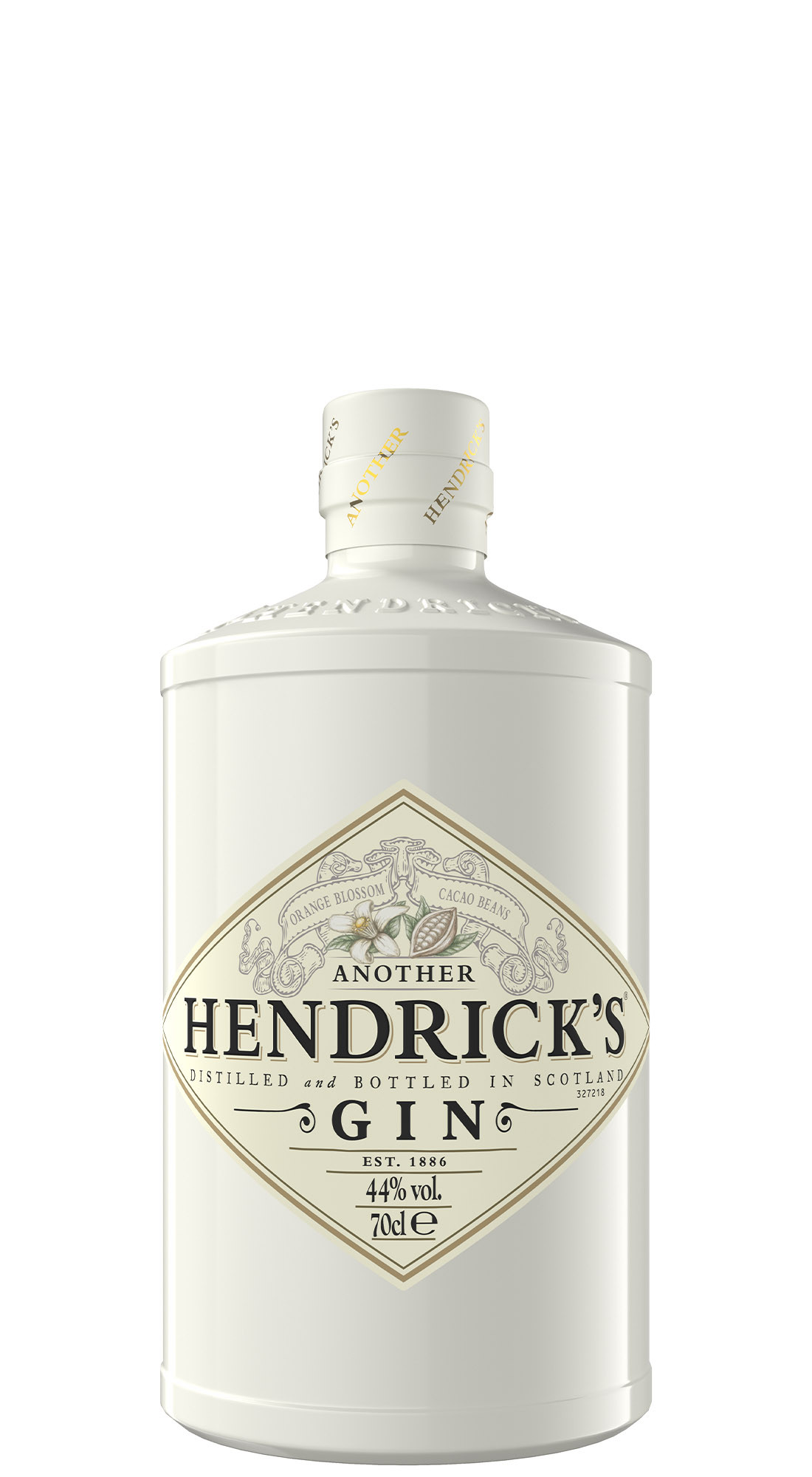
Another Hendrick's Gin
70 cl / 44°

SPIRITS
Rum
Whisk(e)y
Gin
Agave
Calvados
Armagnac
Others
VELIER LIFE
Extraperimetral
VNP
Aguilas Camp
TRAVEL
São Tomé e Principe
Mexico
Distillery Tour
Food Guide
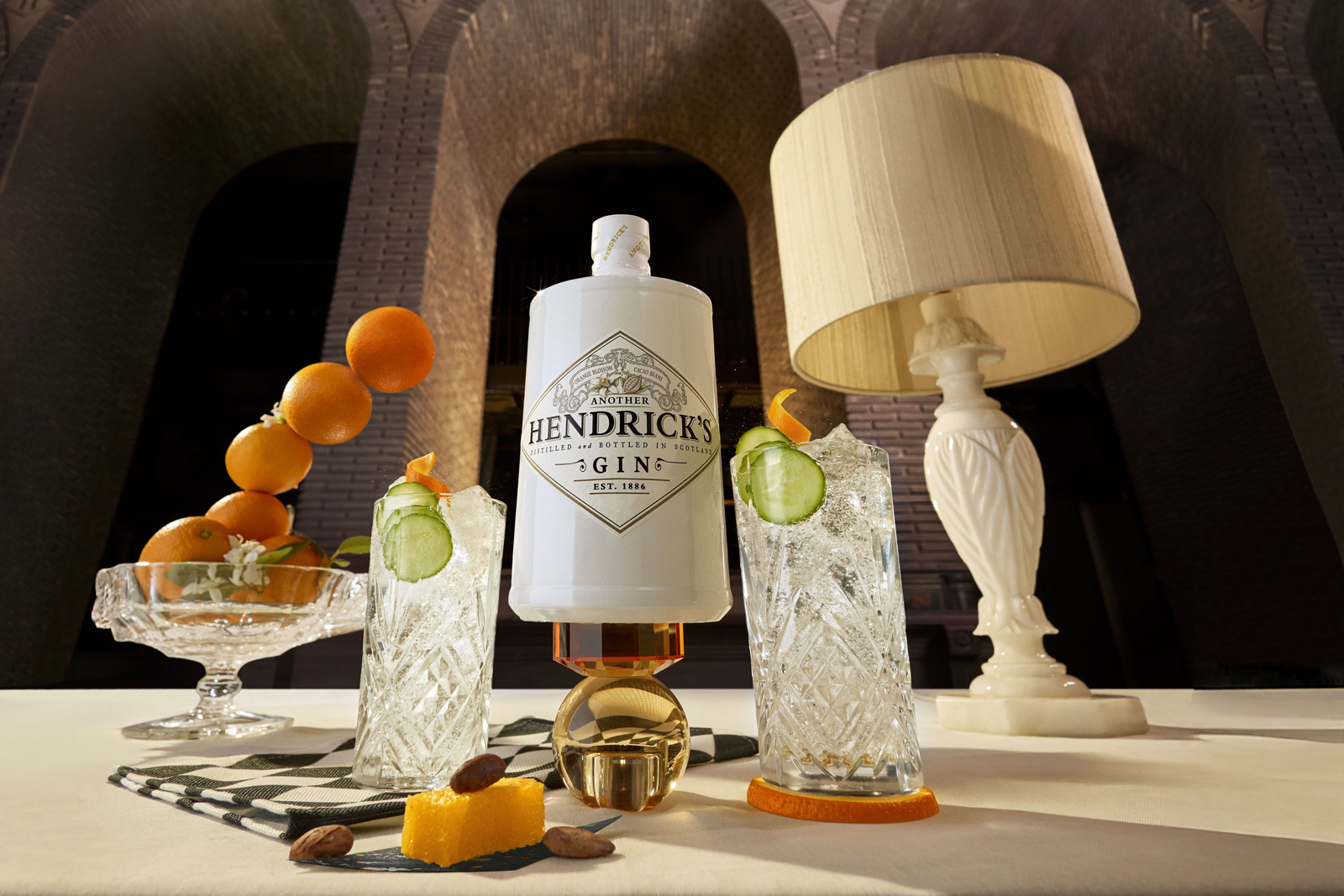
When a new label arrives on the gin scene, it is usually a variation on a theme: more citrus, more spices, perhaps a local botanical to showcase.
When a new Hendrick's is born, however, it's a different story. Because Hendrick's is one of the very few gins that, in its quarter-century history, has truly changed the way this spirit is conceived.
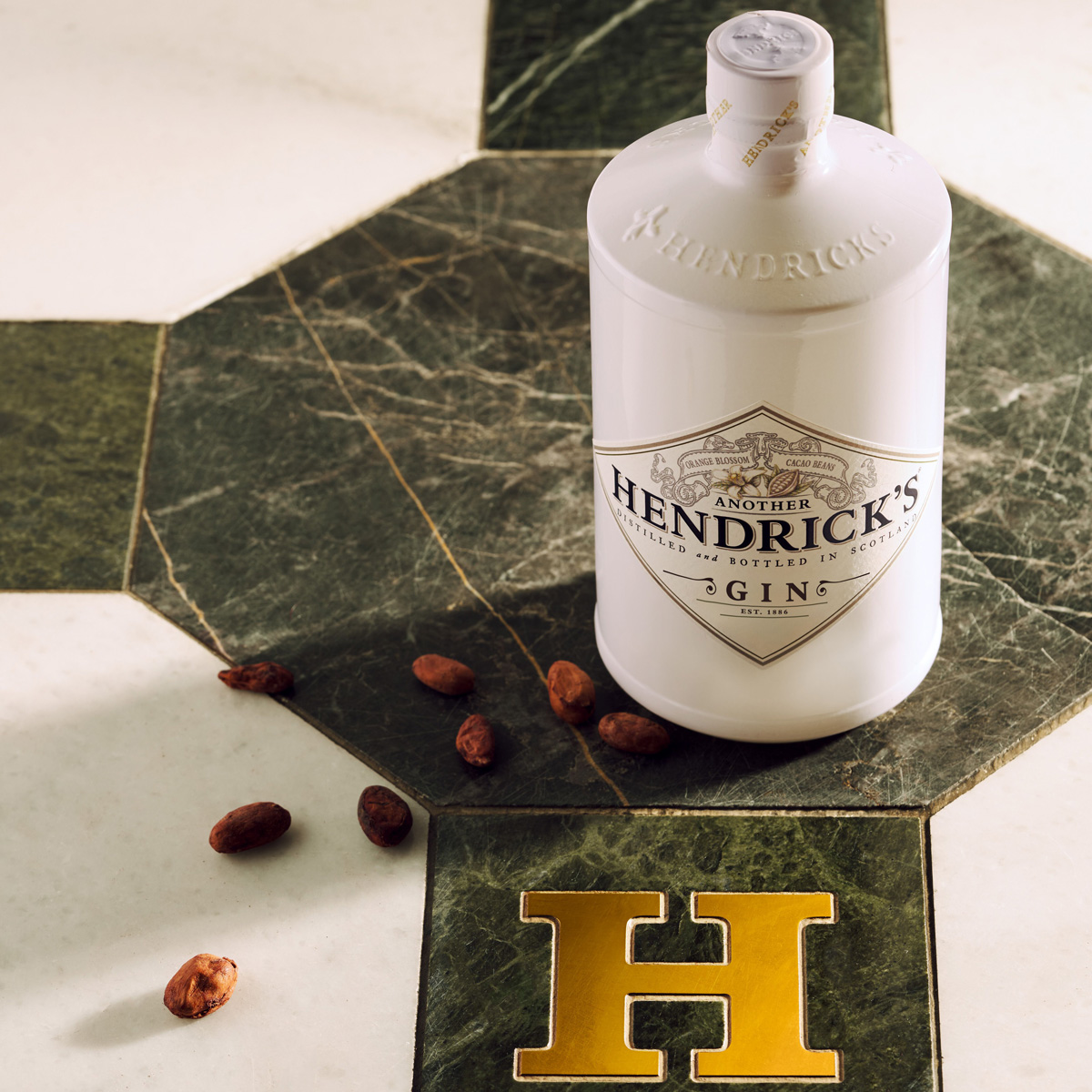
Today, the Scottish distillery presents Another Hendrick's, a new expression destined to become a permanent part of the range: it is the first permanent addition to the line-up in almost a decade, since Orbium was created in 2017. The name tells us that this is not just ‘another Hendrick's gin’, but literally another way of being Hendrick's. To put it correctly: one brand, two sensory dimensions.
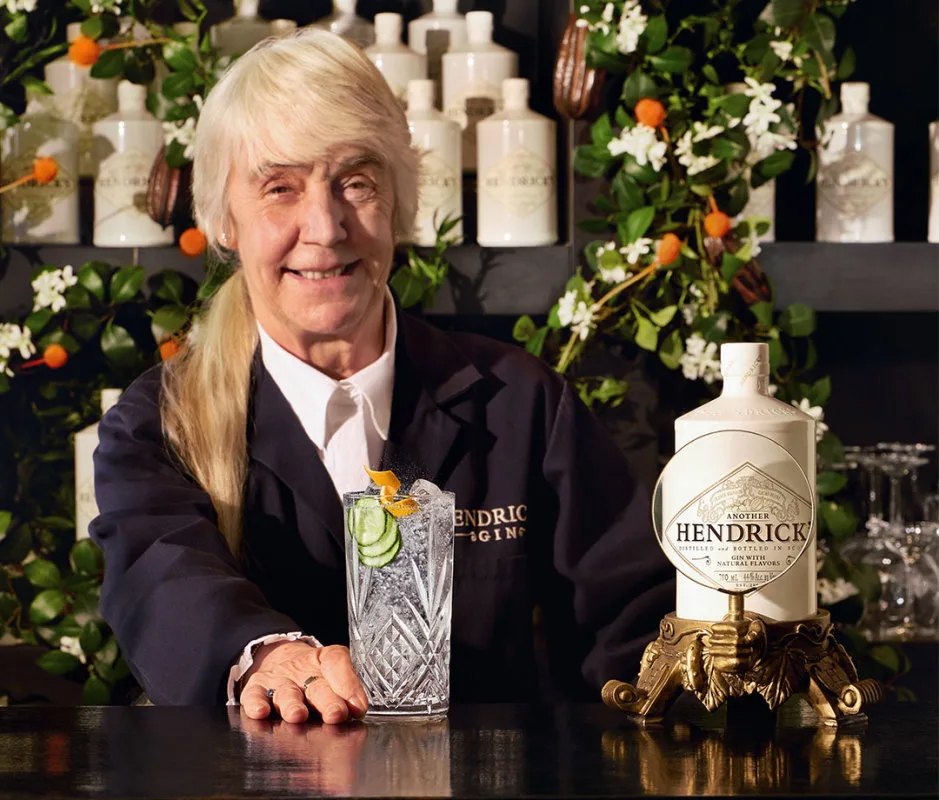
To understand Another Hendrick's, we must start with the question that legendary Master Distiller Leslie Gracie asked herself after almost twenty-five years of working on the brand: “If I were to create Hendrick's today, what would I do?”
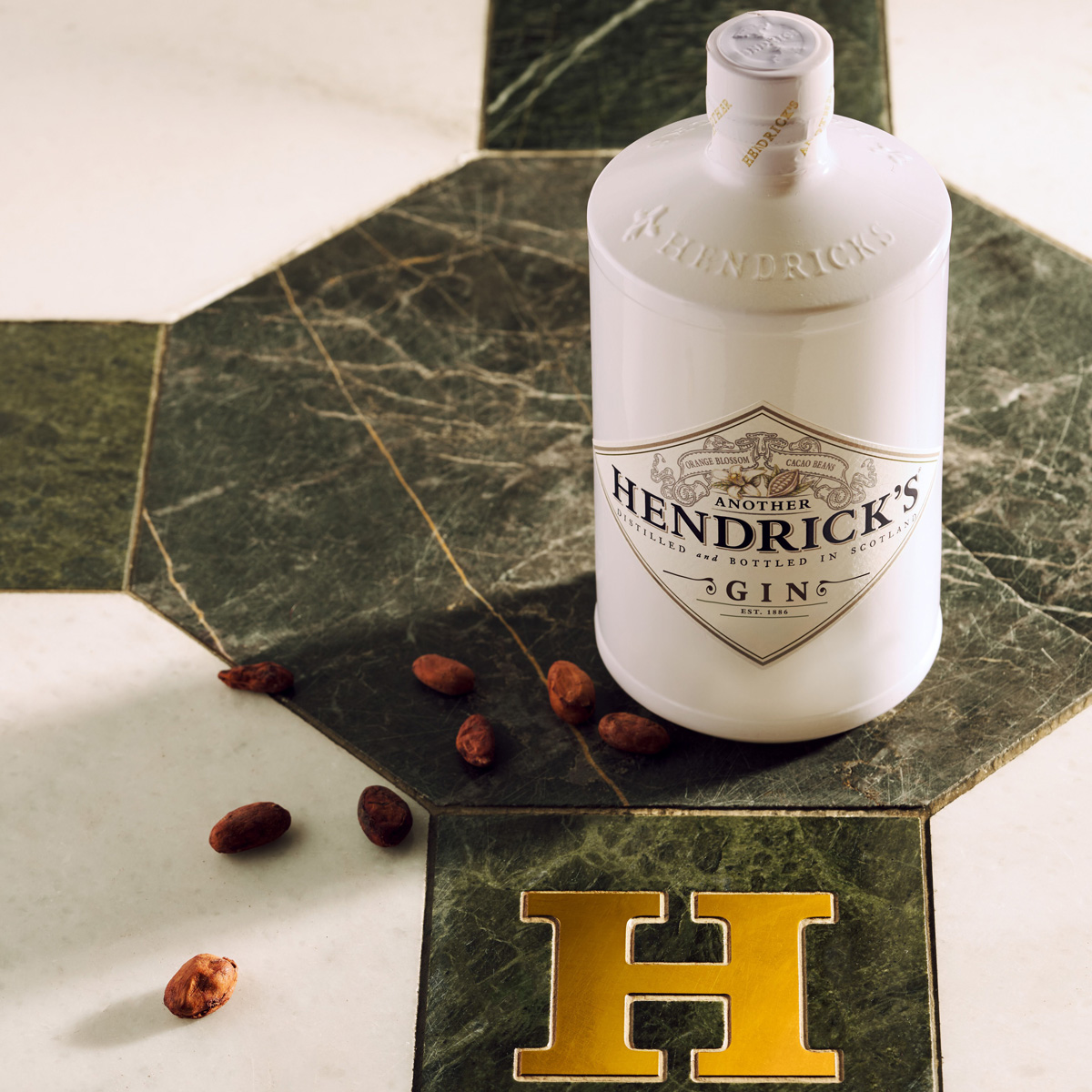
The inspiration came from far away from Scotland, in a cocktail bar in Mexico City. Not from a spirit, but from a garnish: a cacao flower. Not the cacao used in chocolate, but cacao as an aromatic plant. In fact, cacao does not naturally have a “chocolate” taste. Before roasting, it has a surprising profile: floral, slightly fruity, almost wine-like.
This gave rise to a creative - and technical - puzzle: adding cacao to gin is a difficult task, because it is a complex botanical to balance without weighing down or distorting the profile.
Gracie began studying it, starting with the Theobroma bicolor (Latua) variety from Guatemala, then searching for a complementary ingredient that would not overpower it but would complement it. The answer came in the form of orange blossom.
The result is a gin that retains the Hendrick's identity but shifts it to a different register: less vegetal and direct; more rounded, deep, and velvety.
Bright citrus and floral notes emerge on the nose, while the palate is almost creamy—not sweet—which is characteristic of cocoa. As Leslie Gracie explained: “Cocoa doesn't taste like chocolate. It brings depth and a velvety texture.”
The bottle also signals this change of perspective: from the traditional dark Victorian pharmacy glass to a bright white design, creating an immediate side-by-side contrast. It is not a simple restyling, but the visual story of the same identity in two sensory dimensions.
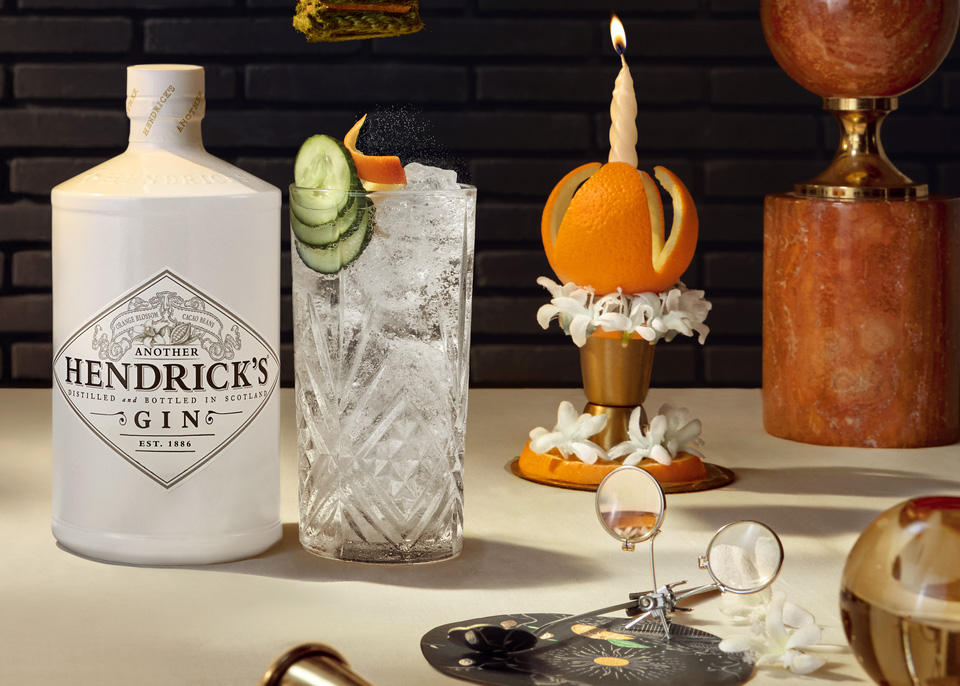
Today, it seems perfectly normal to find gin flavored with rose, cucumber, or other unusual botanicals. In 1999, this was not the case at all.
In the late 1990s, Charles Gordon, of the Grant family, asked Leslie Gracie to create a gin that was “totally different from what was on the back bars.” At the time, premium gins were entering the market, but they had a relatively classic profile.
The solution was not just a new recipe: it was a new distillation method.
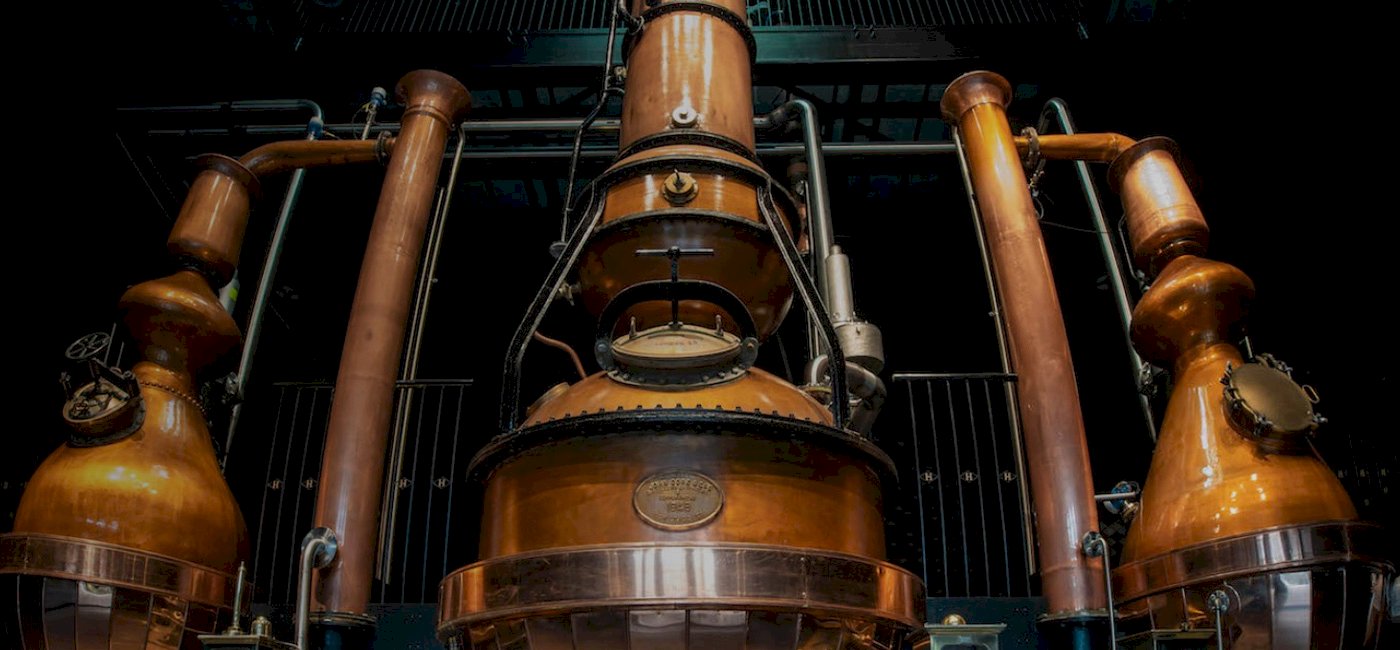
In 1966, in London, Charles Gordon bought two stills at auction and took them with him to the Girvan distillery, which had just opened at the time: a Bennett still from 1860 and a Carter-Head still, which would be decisive in the history of Hendrick's.
The idea took shape: to use two stills that worked in completely different ways and produced completely different components.
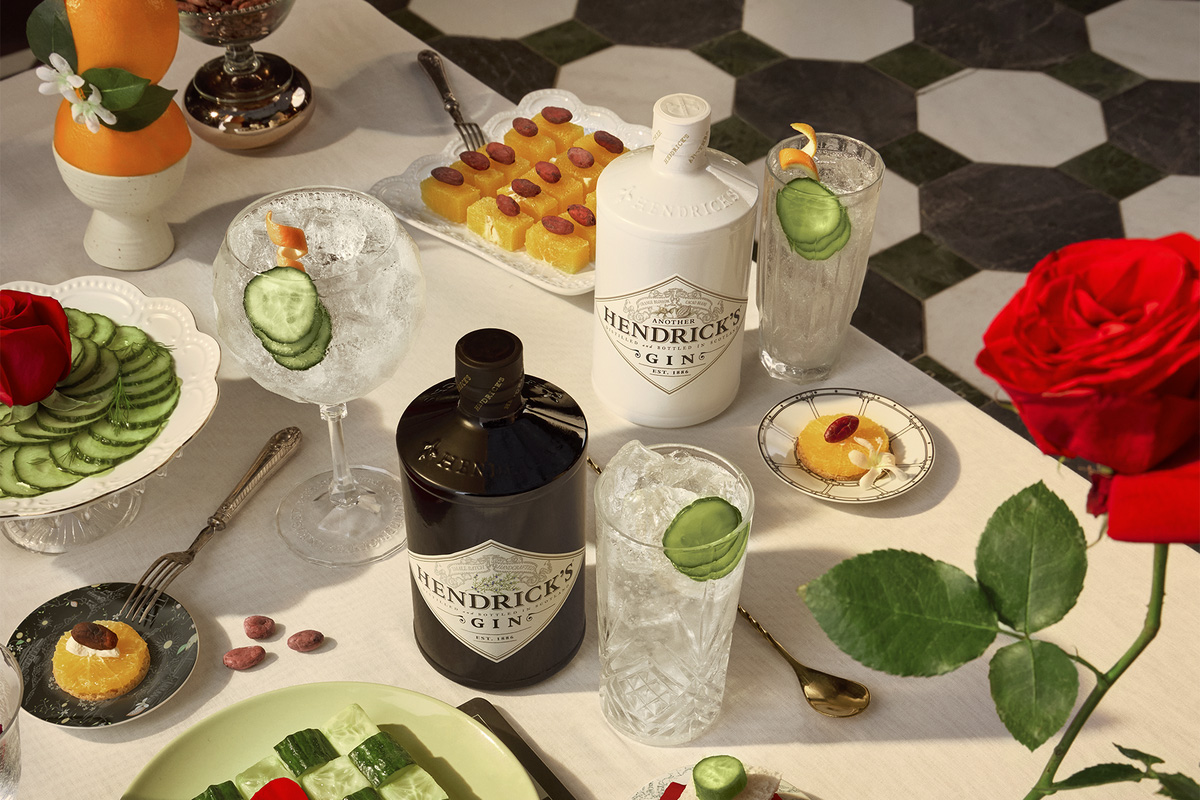
Taken separately, the two distillates are very distinct, and neither of them immediately brings Hendrick's to mind: it is only their combination that creates the basis of the profile.
These two stills are essential for Hendrick's: at some point, faced with a demand for greater production capacity, someone suggested adding larger stills, but Leslie Gracie's response was always the same: this gin is made this way, in small batches, and that is how it will always be made, regardless of its variations.
Another aspect is unique in the world of gin: Damask rose and cucumber are not distilled, but added as separate distillates after production.
The reason is technical: cucumber degrades when heated, developing sulfurous notes. Adding it after distillation maintains its aromatic integrity.
This is the real secret of Hendrick's: not a particular botanical, but a layered aromatic construction.
When Charles Gordon asked Leslie Gracie to come up with a new gin, he had something deeper and more complex in mind than the products on the market at the time. It was a complex process involving extensive research and experimentation.
The basic recipe includes eleven classic dried botanicals, the most important of which is obviously juniper berries, followed by angelica root with its deep herbaceous character. Next come coriander seeds and lemon and orange peel. At the time, many gins stopped at four or five botanicals like these, without this necessarily implying poor quality on their part: great results can be achieved by working with just a few ingredients. Charles Gordon, however, wanted something deeper and more complex.
So, after much experimentation, Leslie Gracie added cubeb berries and cumin seeds, followed by floral components: elderflower and chamomile. The green component is yarrow, and then there is the ingredient that Gracie calls magical: iris root. This is a fundamental element because it binds the aromas and stabilizes the profile over time, just as in perfumery: the rhizomes are used after years of drying and grinding.
Another Hendrick's takes this architecture and adds cocoa beans and orange blossom, without replacing the original DNA: it is the center of gravity that changes.
Throughout its history, Hendrick's has had the great merit of shifting the focus from botanicals alone to the sensory profile, thus creating the Super Premium Gin category and paving the way for the modern Gin Renaissance. Thanks to Hendrick's, gin has also become a spirit for tasting, not just for mixing, and this small revolution has shown that yes, gin could be as creative as whiskey or rum.
This brings us back to the original question: what happens when you stop copying gin and start inventing it again?
And, as is often the case with Hendrick's, the answer is... something we hadn't tasted before.
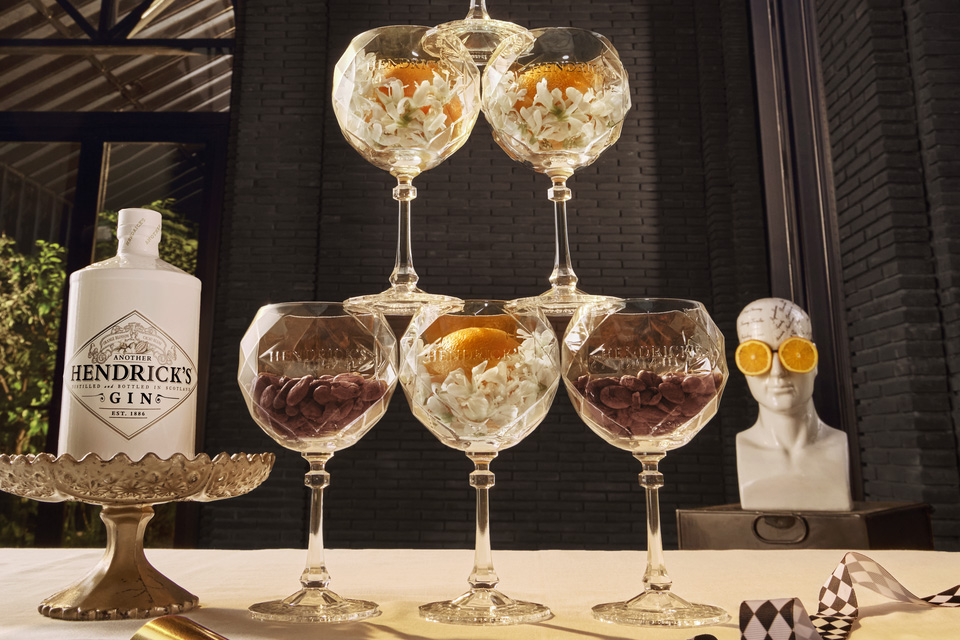
In the glass, Another Hendrick’s reveals a rounded and velvety character—a winning choice in classic structured cocktails such as Martinis and Negronis, where the texture of cocoa amplifies the sensation of body without added sugar.
One of the signature drinks proposed to enhance the aromas of Another Hendrick's is the Fizz: gin, elderflower liqueur, and soda, garnished with orange zest and a slice of cucumber.
To celebrate the launch of Another Hendrick's, a selection of bartenders was involved in creating an exclusive recipe designed to enhance the distinctive character of the spirit. The result is Another Hendrick's Fresh 75: an elegant and aromatic cocktail that plays on the balance between vegetal freshness, refined acidity, and a delicate spicy note. To prepare it, shake and strain:
Top up with 30 ml of Spumante Rosé Pas Dosé and garnish with 3 bay leaves and cucumber peel.
SPIRITS
Rum
Whisk(e)y
Gin
Agave
Calvados
Armagnac
Others
VELIER LIFE
Extraperimetral
VNP
Aguilas Camp
TRAVEL
São Tomé e Principe
Mexico
Distillery Tour
Food Guide