


Rules, history and imagination: the many faces of Martinique rhum
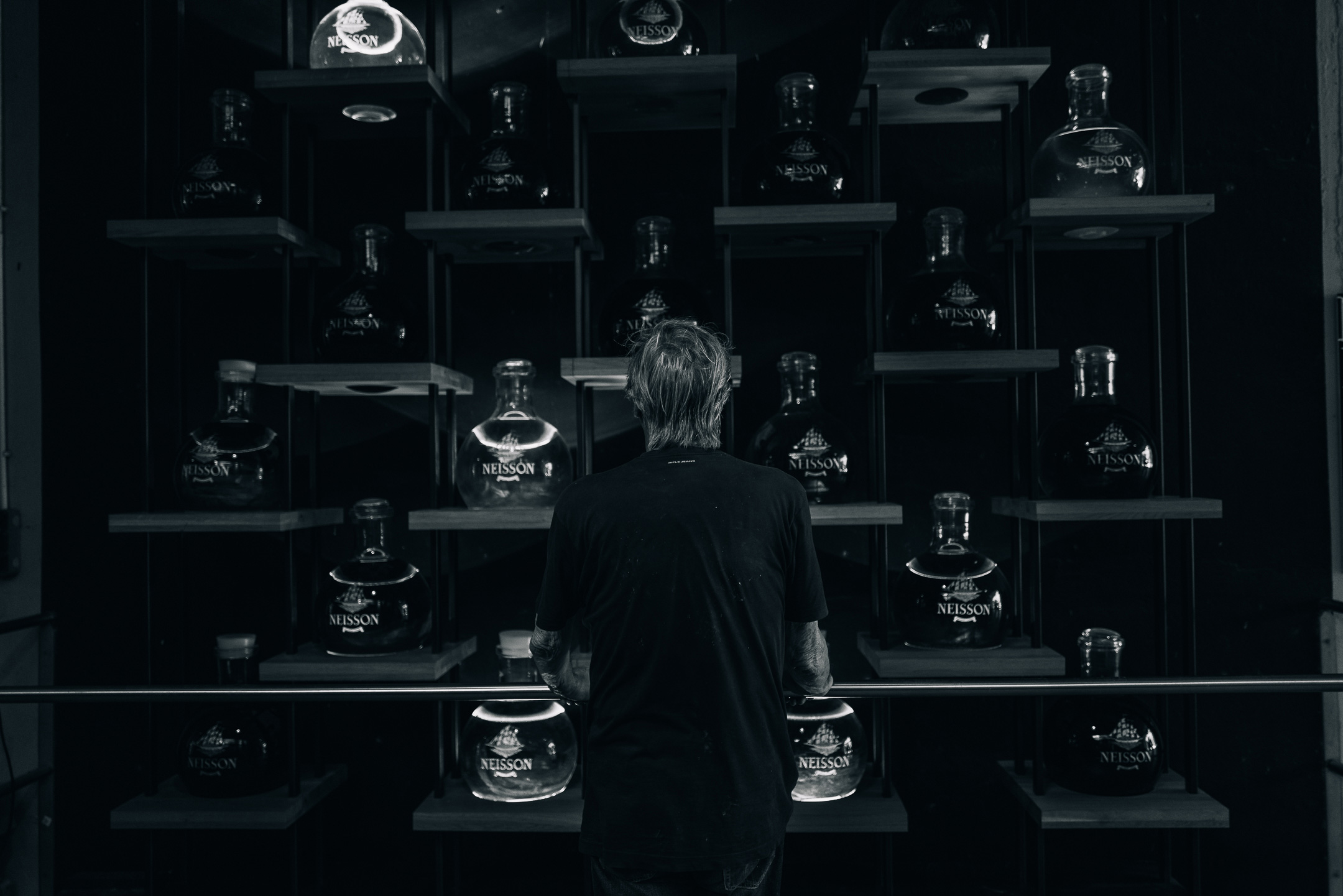
The AOC regulations that elevated ‘agricole’ rum to a spirit of excellence are celebrating their 30th anniversary. From Saint James to Neisson, a journey to discover two contrasting philosophies of distilling sugarcane juice
Sometimes the gods – whatever name or form we choose to give them – no longer know how to explain certain things to us. Much like the parents of a teenager, they move from good-natured warnings to threats, and finally to the harshest punishments. The problem is that this escalation is often pointless: their creatures simply shrug their shoulders and continue undeterred to ignore the advice, doing as they please until the gods, exhausted, give in to their stubbornness.
There you have it: today’s Martinique – a refined Caribbean island halfway between the cursed and ferocious authenticity of Haiti and the decontextualised luxury of the Bahamas – is the beautiful, mature daughter of centuries of stubborn resistance to the disasters inflicted by climate and fate.
For from the island of Madinina (as Columbus named it), the Creole descendants of the Arawak, the conquistadors, the French colonisers, the English privateers and the African slaves have never left, despite the four thousand deaths caused by the 1839 earthquake and the twenty-nine thousand deaths caused by the 1902 eruption of Mount Pelée; not to mention the cyclones and hurricanes, the seaweed invasion, the landslides and the floods...
So the result of this relentless string of disasters, from which only locusts are missing, has not been the abandonment of this corner of the Lesser Antilles, but the creation of a sort of contradictory tropical Switzerland, albeit without cheese full of holes: a place where deadly cockfights coexist with speed cameras hidden by mango trees, the Creole dialect embraces the language of Proust, opossums stroll along perfectly tarmac-covered roads, and mixed-race fishermen dive to gather conch, but according to a strict eco-sustainable fishing calendar. Sunsets, fireflies and signs thanking the European Parliament for its generous funding.
It is precisely in this hybrid of Euro-bureaucracy and primeval nature that the world’s only rigorous set of regulations governing the production of rum was born – the quintessential wild spirit, as genetically resistant to rules as a pirate. Or a rebellious teenager.
the story
The origins of rhum
Rum (or rather, ‘rhum’ in the French sense) in Martinique is a serious business, in every sense of the word. Although at the baggage reclaim area of the airport in the capital, Fort-de-France, where you’re greeted by a huge inflatable bottle, you might be tempted to think it’s just a commercial carnival stunt, in reality it takes just a few hours to get a feel for the local culture and realise that no, rhum isn’t a gimmick for tourists like the worm in mezcal. On the contrary, it is history and identity, the very heart of what they call here ‘héritage’.
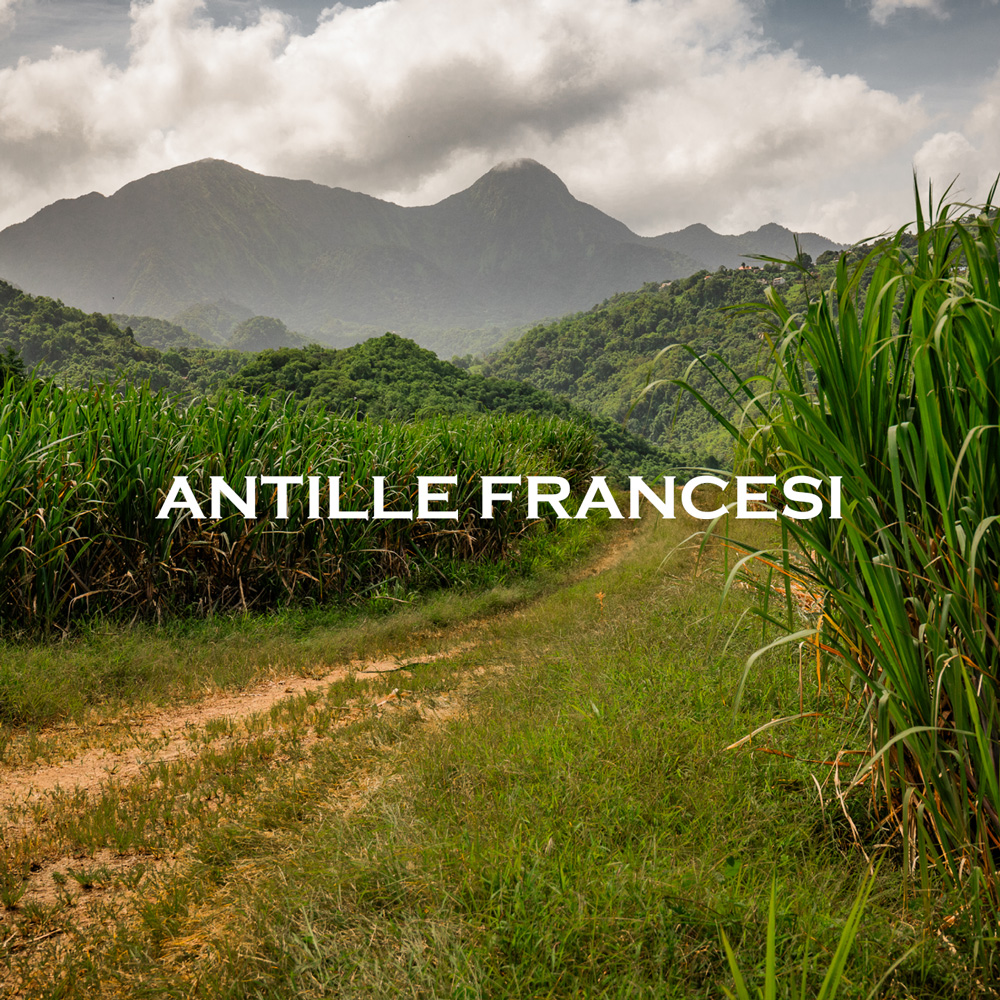
As is the case almost everywhere in the Caribbean, rum is perhaps the only positive outcome of the bloody colonial exploitation of the plantation era, so much so that it is now the second-largest source of income for this Overseas Department of the French Republic. Creole sugarcane has been grown in Martinique since the first half of the 17th century, obviously linked to sugar production, which soon became the linchpin of the local economy: the ‘island of flowers’ was transformed in every respect into an ‘île à sucre’. Here, as elsewhere, for a long time tafia (or guildive, since ‘rhum’ is a term from the late 18th century) was merely an ‘accident’, a drink for slaves, a way of exploiting, through rudimentary distillation, the by-product of that industry, namely molasses.
The export of rhum to Paris, initially banned, was gradually permitted until France opened its customs to the overseas spirit in the second half of the 19th century. The result was a resounding success: by the end of the 19th century, Martinique had overtaken Jamaica to become the world’s leading producer, with rhum supplanting cognac during the powdery mildew and phylloxera crises and conquering Europe. But as every beauty in the Caribbean has its tragic counterpart, progress arrived to upset the balance.
“Agricole”, the rhum at the opposite end of the spectrum from factory-produced varieties
The spread of steam-powered machinery and the emergence of numerous, increasingly modern and efficient sugar mills plunged the Martinique rum industry into a crisis of molasses overproduction, a situation further exacerbated by the introduction of sugar beet.
Small planteurs found it increasingly unprofitable to supply cane to the so-called usines centrales, so an alternative gradually gained ground: installing small, continuous artisanal stills (the Colonne Créole) and distilling the pure cane juice themselves.
The rhum produced in this way is known as ‘rhum z’habitant’ or ‘rhum agricole’: it is the rhum produced on the agricultural plots of the old colonial plantations, which in 1879 was distinguished, both philosophically and physically, from that distilled from molasses obtained in sugar mills. Gradually, pure juice rum began to make its mark: in the vast sea of molasses-based spirits, it started to carve out an increasingly significant role and market share, leading up to the boom of the 1970s. A century that began with the devastating eruption of 1902, which razed the delightful capital, Saint-Pierre, to the ground and swept away the distilleries, forcing them to relocate elsewhere. Then came the two World Wars, the market fluctuations common to all spirits, and finally the so-called sugar crisis.
At the mercy of a fluctuating fate, which seems to be inherent to island life, the number of active distilleries (or ‘fumant’, as they say here) has fallen from 105 to the current nine: Saint James, JM, Depaz, Neisson, La Mauny, Beausejour, Simon, La Favorite and Galion, the only one to produce both sugar and molasses rum. One thing, however, has remained unchanged: the universally recognised quality of the rhum produced on these 1,100 square kilometres of volcanic land, dotted in equal measure with hummingbirds and Carrefour supermarkets. A quality to be defended and, in some way, certified.
The regulations
Bringing order to the chaos: the AOC Rhum Martinique
The issue of regulations, in all those parts of the world that are not part of the ‘First World’, is as thorny as a pineapple. Decolonisation brought with it freedom and self-determination, but also a certain inevitable degree of chaos. In countries grappling with civil wars, the long-term legacy of intensive exploitation and the creation of new national identities, scrutinising fish traceability or hygiene standards was not exactly at the top of the agenda.
However, given that the market is global and rhum is a key item in the budgets of many countries, the need to promote quality and win over consumers abroad has also emerged in these contexts. From Jamaica to Barbados, there is a growing chorus of producers calling for greater transparency. And they look to Martinique as a model to follow.
On 5 November 1996 – following an initial period during which the Label Rouge was used as a traditional geographical indication – the French government approved the AOC (Appellation d’origine contrôlée) regulations for Martinique rum: the first white spirit to have such regulations, and the first cane spirit in the world to be regulated in the same way as single malt Scotch whisky or Champagne. Without going into too much detail, a number of non-negotiable points were established, following years of discussion and empirical evaluation of production practices.
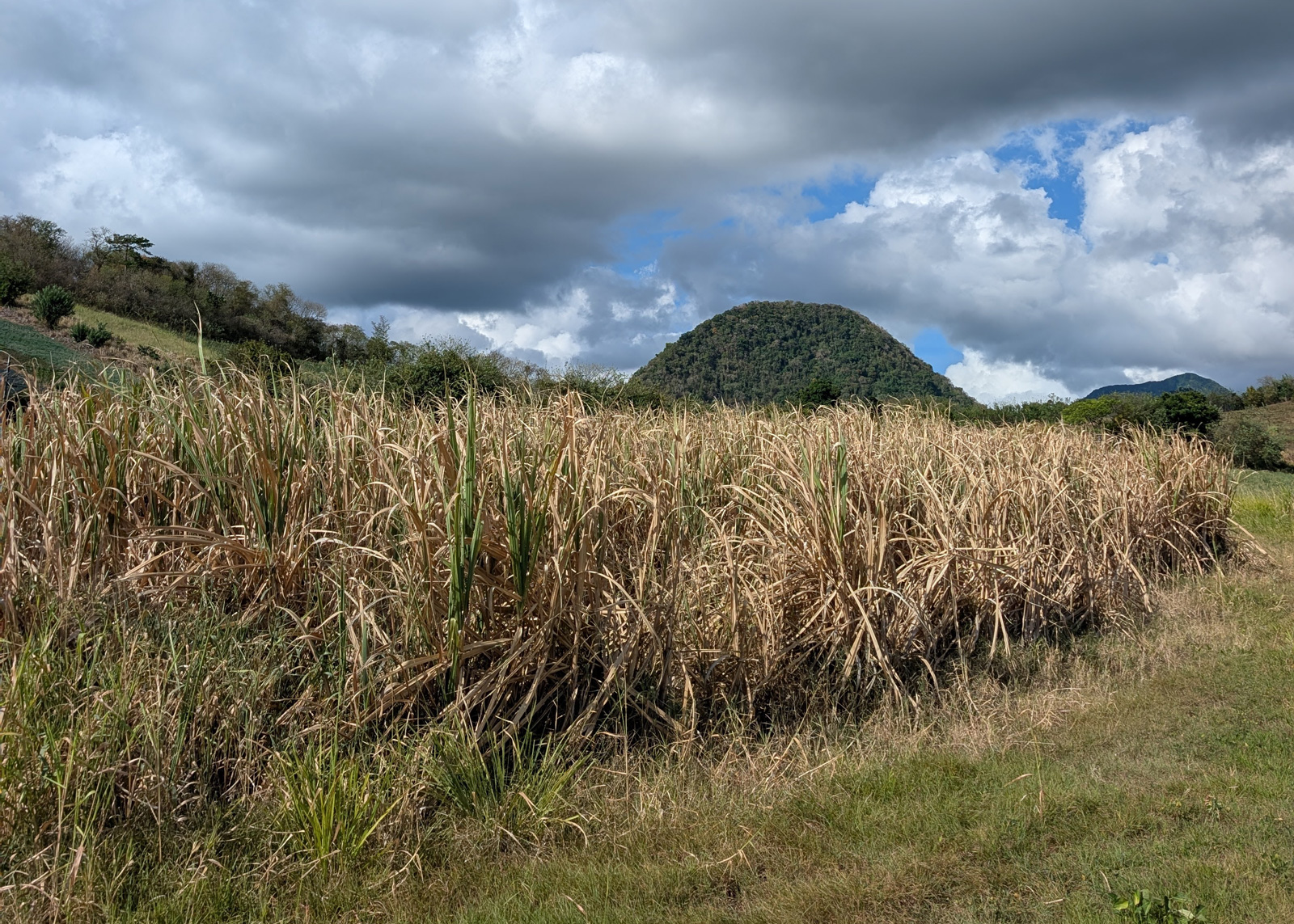
The raw material: only vesou (juice) from 12 ancient varieties of sugarcane and their hybrids; GMOs and the use of syrup or molasses are prohibited. The minimum sugar content in Brix degrees must be 14° and the pH must be above 4.7; the terroir: production is permitted only in 23 municipalities, whose plantations – with a quota-controlled average yield – may be irrigated for only 6 months a year; the harvest: strictly between 1 January and 31 August; production: cold pressing, fermentation for a maximum of 120 hours, fermented to a maximum alcohol content of 7.5%; distillation: carried out between 2 January and 5 September in continuous stills of the Colonne Créole type (diameter between 0.7 and 2 metres, a minimum of 15 enrichment plates and between 5 and 9 rectification plates), to obtain a spirit with an alcohol content of between 65% and 75% and a minimum of 225 grams per hectolitre of congeners; ageing and bottling: maturation must take place in Martinique and, depending on the classification, has specific timeframes ranging from a minimum of 3 months’ ageing for the white rum to 10 years for the Hors d’Age; the minimum bottling strength is 40%. These laws, paragraphs and figures, however, have a huge impact on perception.
Creating value and transparency: the challenges facing the AOC
Whilst the production regulations set out the ‘commandments’ of Martinique’s agricultural rhum, Marc Sassier, production manager at the Saint James distillery and, since 2017, president of the AOC Rhum Martinique, is its champion: “The mission,” he explains, “is to educate and create value to offset the higher production costs: here, European safety and labour laws and standards apply, so sugarcane costs almost €150 per tonne, whereas in China or India it’s around €18.” It is commercially difficult to survive without focusing on excellence.
That is why the AOC has positioned Martinique rhum in an elite niche, placing it in a premium market segment and granting it a status that few other cane spirits can boast.
Whilst the strategy has been successful, it has also drawn the envy and criticism of their Antillean ‘cousins’ – namely the producers of Guadeloupe and Marie Galante – who accuse Martinican rhum of being too standardised and monotonous: a single type of still, a single type of raw material and strict limits can stifle the distillers’ creativity.
We flew all the way here to experience for ourselves, with our noses and palates, whether the accusation is true and whether Martinique rum really is the death knell of creativity. And no, we don’t think so at all. Starting with two of the island’s most representative distilleries, each embodying a different philosophy.
the distilleries
Saint James, the guardians of tradition
The Ti’punch, the drink that best embodies the Creole spirit of the French Antilles, has three ingredients: white rhum, sugar or syrup, and citron vert. Each is essential to the balance of the concoction that marks the hours of the day (among plantation workers, the first drink of the morning was called décollage, the take-off, an intoxicating concept and somewhat at odds with the ‘responsible drinking’ so much in vogue today) and which opens every single meal in these parts, from luxury restaurants to beachside shacks. In the same way, there are three components that make Saint James the most representative of Martinique’s distilleries: history, industry and tourism.
You realise this from the moment you step into the courtyard of what – with a history stretching back over 250 years – is considered the island’s most traditional establishment. Your gaze is drawn, amongst the immense warehouses, to the colossal overhead crane used to move the cane, which is very much reminiscent of the heavy steel industry in the Ruhr. Your other eye is captivated by the elegance of the colonial house and the period-style bar, a genuine step back in time. And your third eye – yes, we’re not limiting ourselves to just two – appreciates the welcome, the information panels, what we’d call hospitality today.
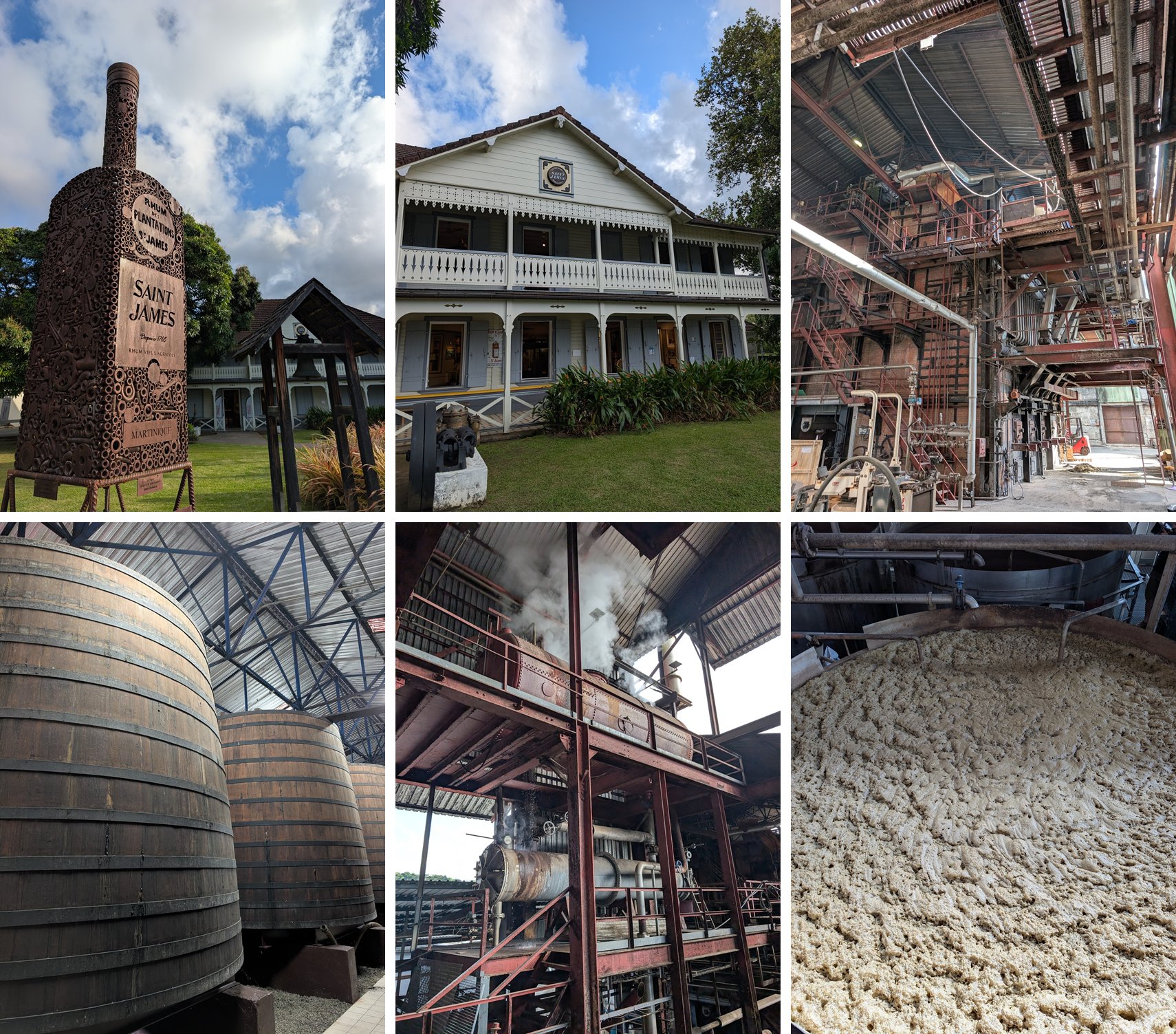
The Saint James distillery is nestled amongst the outlying streets of Sainte-Marie, not far from the sea on the island’s north-eastern coast, just past a supermarket and just before a section of the over 360 hectares of company-owned land planted with sugarcane. It is not in a paradise-like setting like Depaz, so refined it resembles a golf club, nor is it hidden in the jungle like JM, but it is in a strategic location. Which is already a first clue: we are dealing with a genuine rhum, the sort produced in large quantities and sold in equal measure. It is often said that small is beautiful: here there are volumes, there is scale, yet the beauty is undeniable, as is the tradition.
The old La Salle sucrerie, one of the four habitations brought together in 1973 under the Saint-James brand, can be visited just a few hundred metres from the distillery. You can also get there by a little train included in the tour. Here, simply crossing a bridge designed by Eiffel takes you back in time to retrace the history of the brand, which has been part of the La Martiniquaise group since 2003.
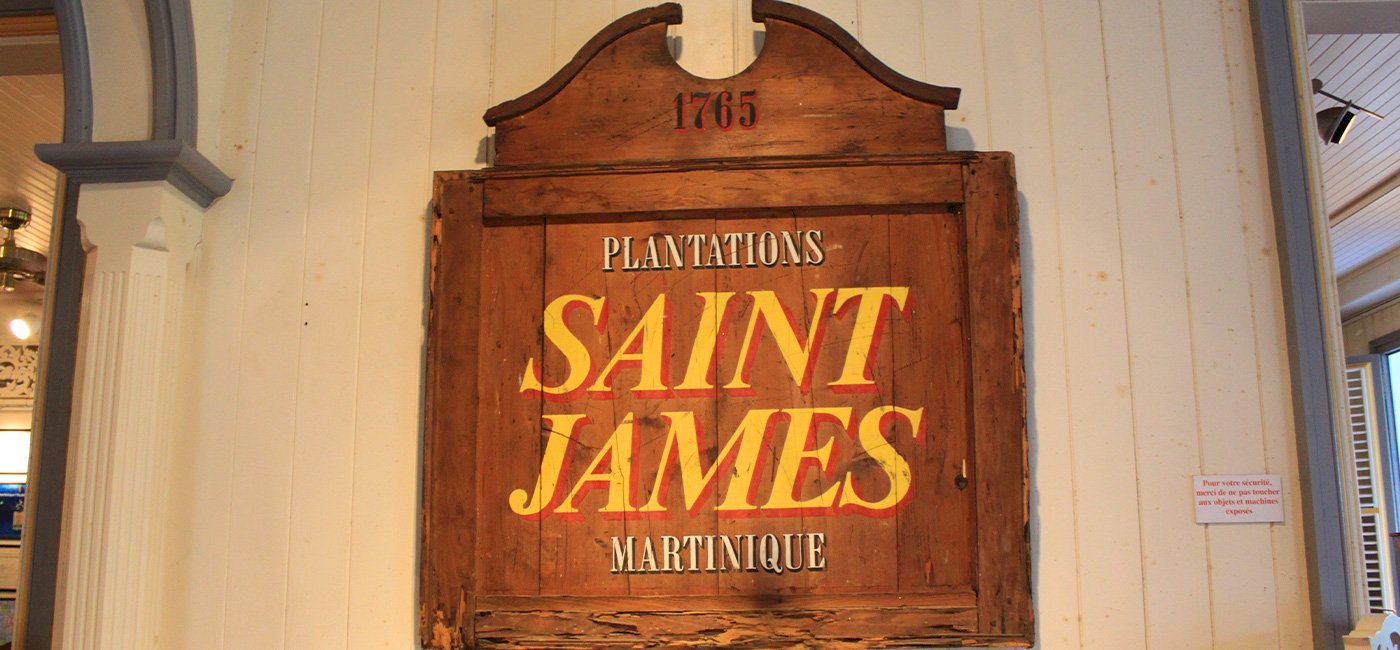
It was 1765 when the Fathers of Charity, led by Father Edmond Lefébure, purchased the Trou-Vaillant plantation, where they set up the first sugar mill and began producing rum, thanks in part to the innovations introduced by Sephardic Jews expelled from Brazil who arrived here in time to teach the basics of sucre terré, semi-refined sugar. But it was not until 1882 that the Marseille merchant Paulin Lambert registered the Saint-James brand for that spirit, a vaguely Anglophile name and coat of arms (a crocodile beneath a palm tree) ‘borrowed’ from the city of Nîmes.
In the batterie room, where the cane was ground and cooked in large vats, black-and-white photographs depict the weathered faces of those who once worked here. They help us understand the true meaning of what Marc Sassier, who has been at Saint-James for 23 years, says: “We are the guardians of tradition, a bastion of the rules: we are the best-known rhum agricole outside France, and our mission is to protect the category.” A crusade of some substance, which demands a history behind it. And having been founded before the heads of the revolutionaries rolled into the executioner’s basket in Paris undoubtedly gives Saint-James the authority to fight it.
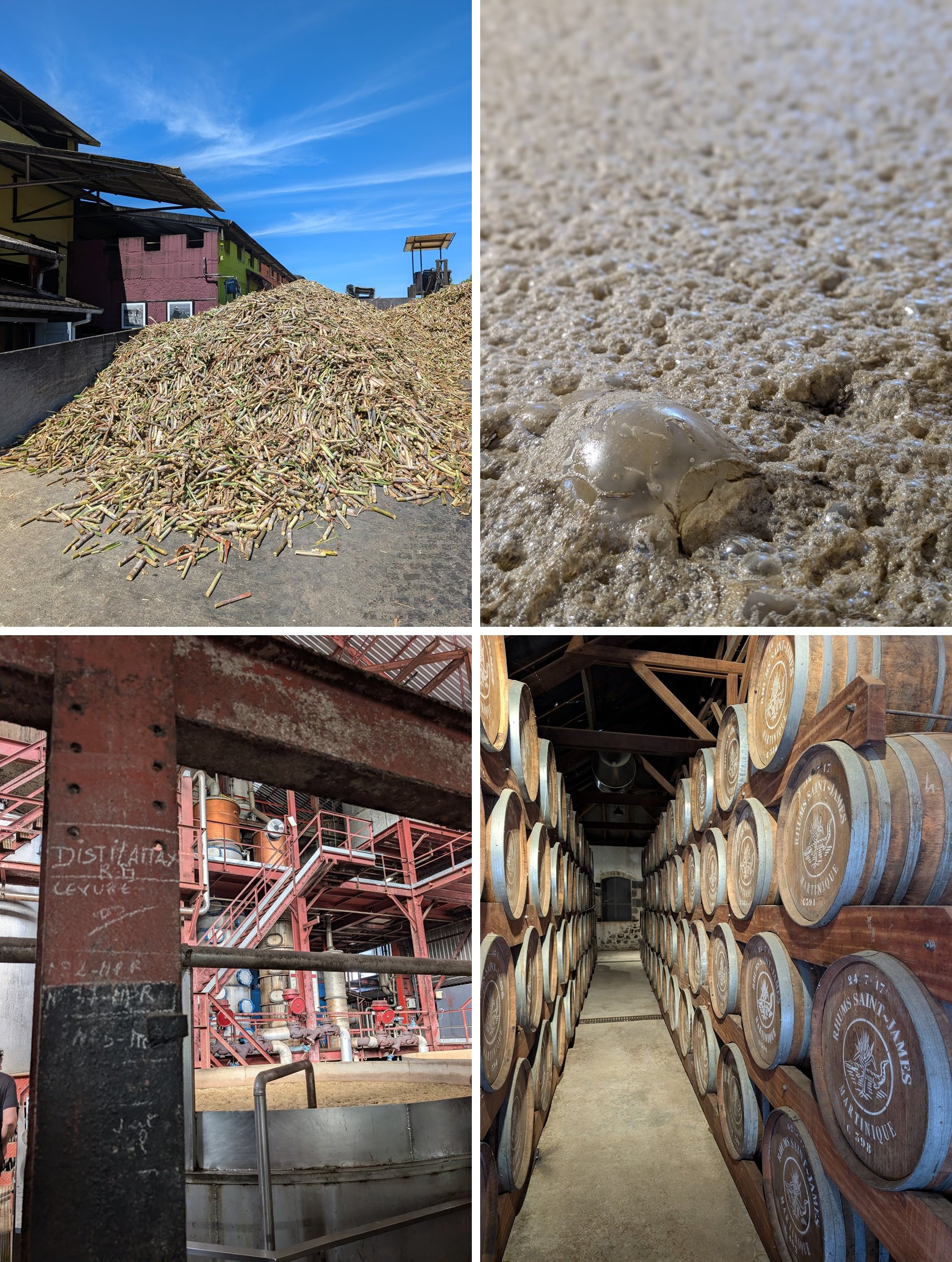
History is like Don Abbondio’s courage: if you don’t have it, you can’t just make it up. But it must also be celebrated, shared and honoured. Here, everything speaks of héritage: the 19th-century plantation house is home to the Rhum Museum, featuring documents, advertising posters and, of course, stills. There is a surprising collection of them, and they are everywhere, especially in the Maison de la Distillation, where a colossal pot still known as the Éléphant stands out at the entrance: restored, with gleaming copper, they resemble chimeras halfway between works of art and alchemical instruments. But it is in the Cave à Millésimes that one truly feels the sacredness of time: here, under lock and key, are kept the bottles of the oldest vintages, dating back to 1885. These are priceless bottles, which we had previously only seen in Luca Gargano’s collection – a man who, fifty years ago in Martinique, began his journey into rum that led him, with Velier, to become the world’s leading expert. Dust, cobwebs, soft light, humidity: here in the cellar, ‘our finest archive’ as Marc proudly claims, history flows quietly and slowly, whilst outside the Caribbean sun shines down on the colourful flowers.
But whilst that history carries weight, so too does the production. At Saint James, we’re not dealing with small-scale craftsmanship: we’re talking about an annual production of 4 million litres of 55% rhum and over 16,300 barrels in stock – the deepest and most extensive rum stock in the West Indies. The oldest – explains Marc – was distilled in 1999 and, if you pause for a moment to reflect on the figures, you get an idea of what 27 years of ageing in the Tropics means. In one wing of the distillery, 63 vats of 30,000 litres stand in a row like soldiers, in which the rhums sold with the label ‘Élévé sous bois’ rest for 12–18 months: “You see, every year we lose the equivalent of all 63 full vats through evaporation”. With the ‘part des anges’ at 8%, that’s almost two million litres of product that vanish every year…
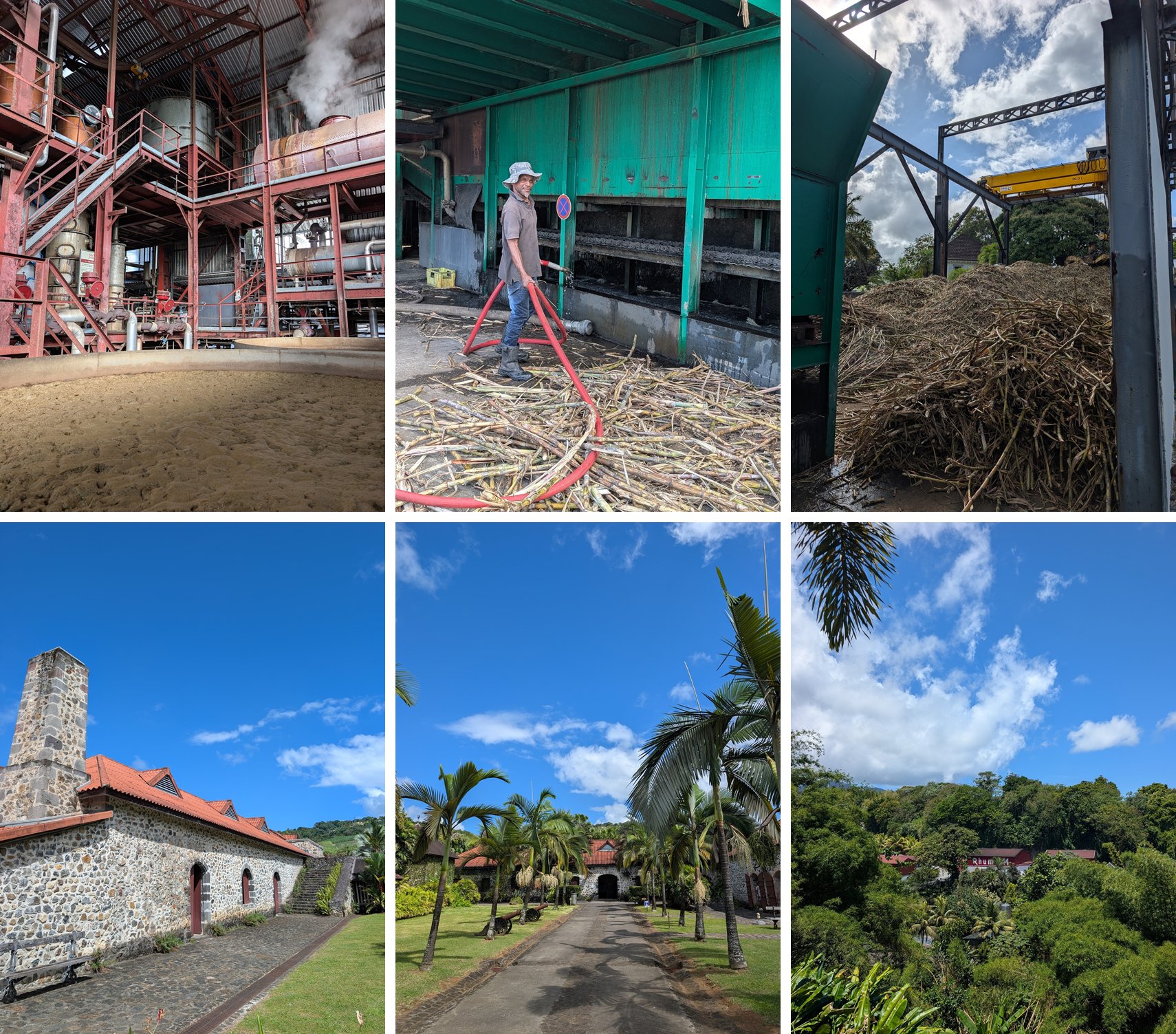
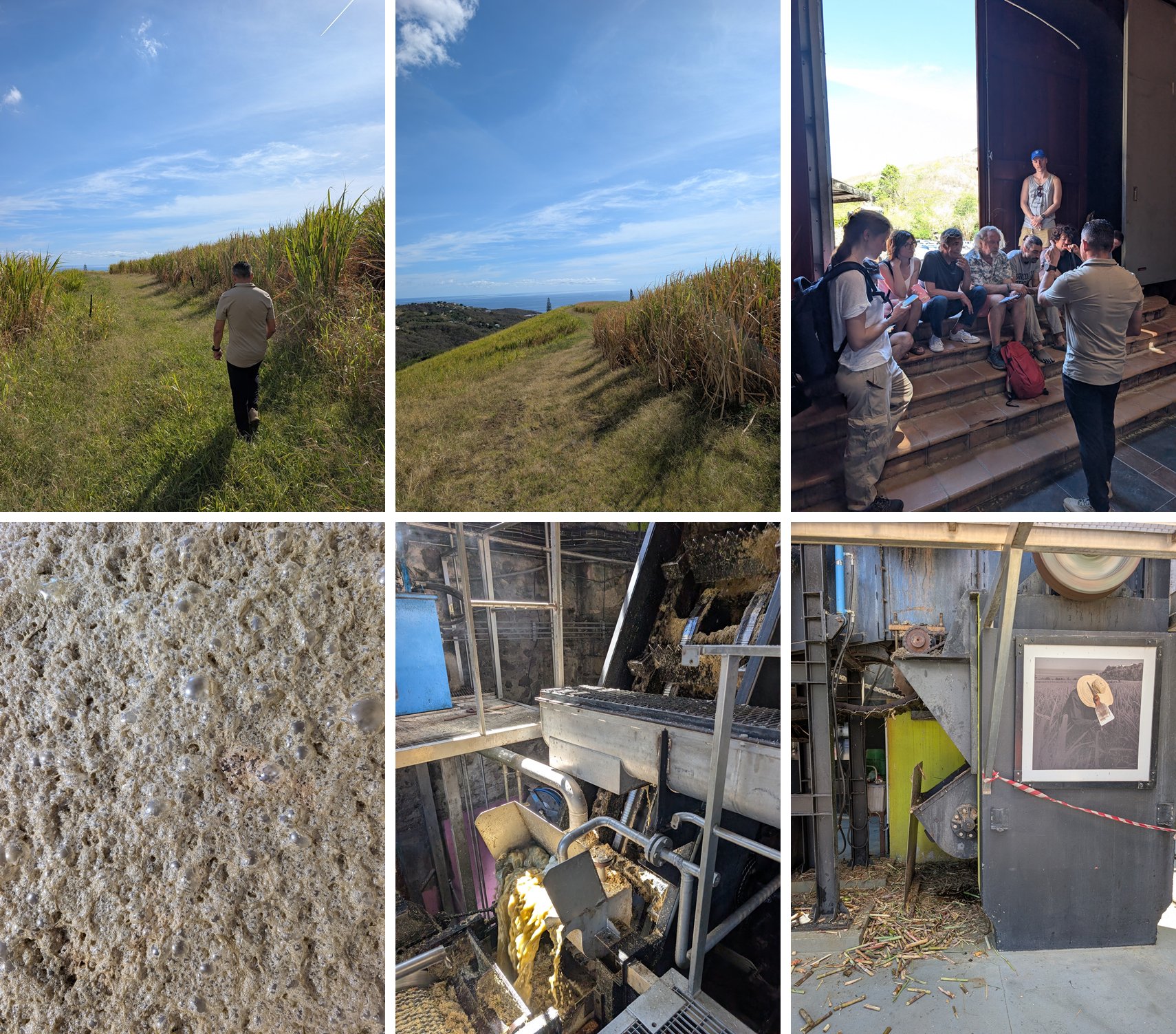
Fortunately, the facility is vast and its capacity rivals the angels’ age-old thirst, so much so that the historic Bally brand and the La Salle releases – available only at the distillery – are also produced here. The sugar cane (80% of which comes from the estate’s own land) passes through the weighing machine, now almost obsolete, where it is also analysed for pH and Brix. It then ends up at the five mills equipped with shredders (a sort of hammer) for crushing: on one side the hand-harvested sugarcane, on the other the mechanically harvested. The next stage is maceration, which allows up to 87% of the juice to be extracted and sent to the fermenters. It remains in the tanks for a short time, between 24 and 48 hours, before moving on to the six distillation columns, installed in the 1980s.
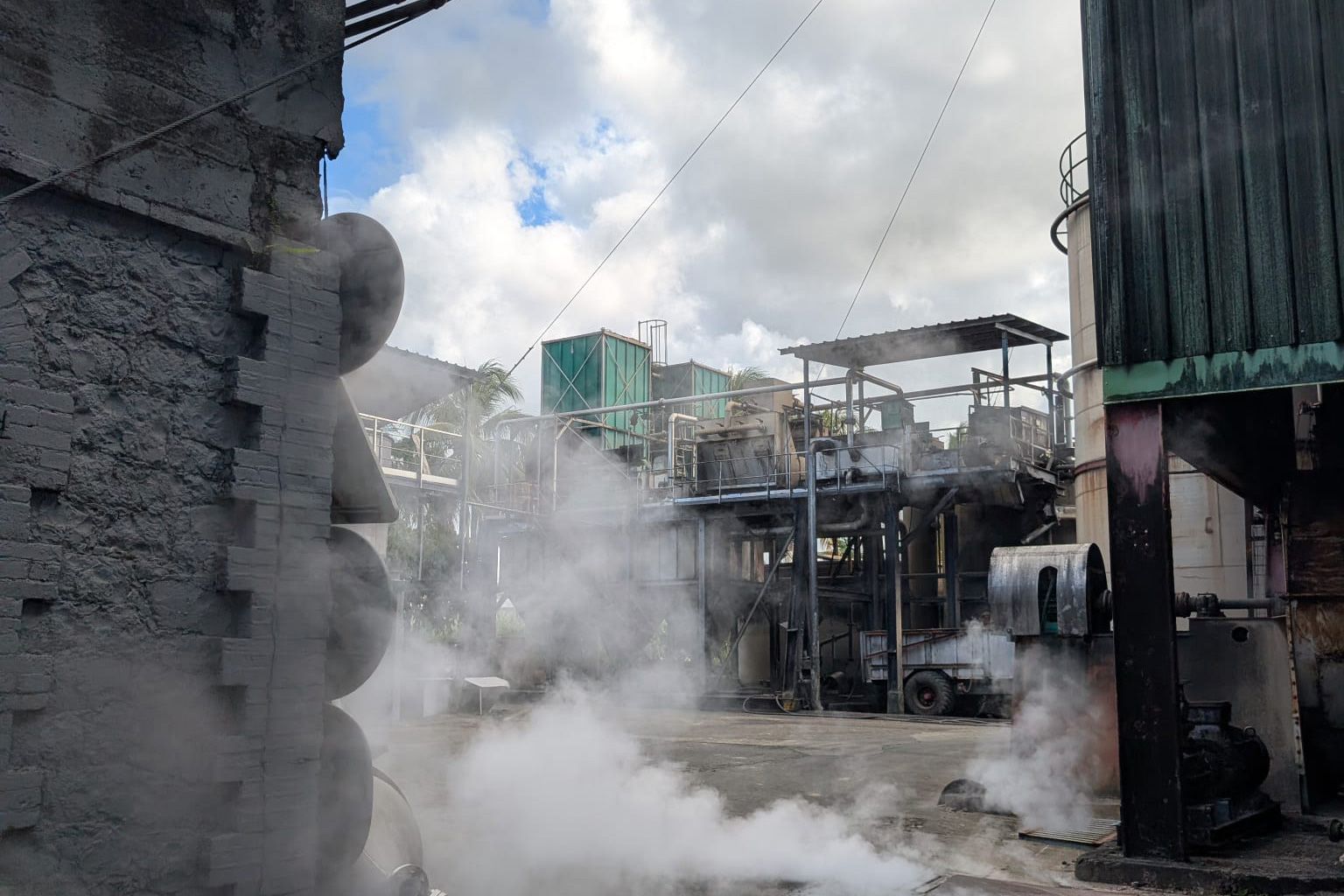
The distillery is a factory in every sense of the word: the noise, the steam, the smell of metal and the workshop, the heat and the fumes. Authenticity isn’t necessarily synonymous with frills and trendy workshops: here they make rhum in bulk, but with care and practicality. The result? “In the general crisis,” sighs Marc Sassier in his Jura accent, “rhum agricole loses out a bit, but Saint James holds its own. The reason is simple: it’s fairly priced.”
The tour is over, and the tourists are queuing up to buy bottles. There’s time for a final chat with Marc: “Over all these years, my predecessor Jean Claude Benoit and I have worked to preserve the soul, character and traditional qualities of Saint James and of all agricultural rum. We created a category, helped to raise its profile, and have become a benchmark.”
The future looks almost as solid as the past.
Excellence as a science: the artistry of Neisson
Set against a field, a statue of a plantation worker made from scrap metal gazes towards the morne – the hills – on the horizon. Beneath it, the word ‘Cannes’ is inscribed; at first glance, this does not refer to the town on the Côte d’Azur famous for its film festival, but to the raw material without which we would not be here.
“Here”, in this case, is Le Carbet, on the north-western coast of Martinique. In an area sheltered by small hills with a rather warm microclimate, set in a sort of natural amphitheatre, lies the Neisson distillery. A name that in recent years has transcended local boundaries to become the rhum agricole most loved by rum geeks and bartenders. The reason for the hype is waiting to be discovered.
It is certainly not that sculpture, nor the dozens of other works of art (including a bottle of rum on an Eiffel Tower-style pedestal) lining the path leading to the distillery. Yet this creativity that permeates the air is certainly a sign that – if it weren’t already clear – Martinique rhum can be whimsical and original. Especially when it is produced by a patron and a man of many talents and inventiveness such as Grégory Vernant Neisson, the last heir of Jean, the first Black owner of a distillery in Martinique. A fact that naturally still fills the family with pride today, and not just in an entrepreneurial sense.
The land on which the distillery now stands, the Domaine La Thieubert, has been at the heart of Neisson since 1932. Whilst distillation was initially carried out by his brother Adrien, Jean became involved in production from the 1950s onwards, designing a still himself that is now shrouded in a mythological aura throughout the Caribbean. The ‘Neisson column’, in fact, is mentioned in all technical texts, and descriptions of it are passed down by visitors: perhaps only the wooden still at Versailles in Guyana is equally iconic. Before seeing it, however, it is worth recounting the second part of the family’s story, namely Grégory’s arrival at the helm.
When the brothers passed away, the distillery passed first to their sister Gabrielle and then – in fulfilment of a promise made to their father Jean – to his daughter Claudine, a feminist activist and doctor with twenty years’ experience. In 1995, she took her son Grégory under her wing; he had inherited his passion from his grandfather, but that was not all. Faced with over thirty different rums on sale in the shop, he himself smiles at his endless range of expressions: “I got everything from my mother and my grandmother, who was Russian. I am a child of diversity and that’s why I love experimenting, always finding new nuances.” Which means playing with barrels and yeasts, packaging and agriculture, to bottle a universe of possibilities.
The tour of the colourful distillery – which also features an aquarium commissioned from an American firm, where tropical fish splash about amongst the barrels – is quite an experience. It’s no surprise that 34,000 tourists visit Neisson every year: mainly passengers from luxury yachts, but also curious visitors keen to learn about the brand or simply enjoy a Planteur Punch or a Ti’Punch at the bar. For those who don’t just want to get tipsy on the (delicious) house rhum blanc but aim to learn something, the information panels are incredibly precise and comprehensive. So, to understand how the distillery works, there’s no need to disturb Grégory from his little black armchair, which he occupies like a worker’s throne every single day he comes to oversee production.
You see, production takes centre stage at Neisson. This is no small matter; many distilleries focus their marketing on other aspects, whereas here everything revolves around the process, which culminates in the aforementioned Savalle column and begins with a pile of cut sugarcane, moved by a bulldozer, over which a pure-white cattle egret strides proudly and unconcerned. It acts as a sentinel, and it too is attuned to the characteristics of the Neisson method.
Sugar cane, for example, reigns supreme. And not just because it makes up 100% of the raw material – no added syrup or molasses. Unlike at Saint James, where organic production is a very peripheral project, here everyone is also convinced that sustainable agriculture, the revival of the most authentic cane varieties (Zizak, Rouge, Cannelle and even the non-hybridised Haitian Cristalline) and the promotion of the terroir are fundamental to obtaining a spirit that enhances the aromatic characteristics of the juice as much as possible. All these issues are addressed with a rigorously scientific approach, bordering on perfectionism.
For example, the recipe varies depending on the type of sugarcane harvested (whether by hand or by machine), the weather and the soil: everything is controlled digitally; nothing is left to chance. First surprise: from a small distillery – producing 320,000 litres a year, Neisson is the leading white rum on the local market but accounts for just 1% of production – one might expect a naive, artisanal approach. Nothing could be further from the truth; here, craftsmanship is hi-tech, scientific and rigorous: “The pinnacle of savoir-faire combined with precision and attention to detail”.
This is evident at every single stage of production. It begins with the milling process, where the soaking is not done with water as elsewhere, but with sugarcane juice, which allows for greater extraction; then comes filtration, which, according to Grégory, “is essential because it eliminates a flaw, namely the more herbaceous notes”, which are common in rhums agricoles; the same approach is then applied to fermentation, which is perhaps the key stage. The yeast, which changes daily, is based on three strains selected over the years and used alongside neutral baker’s yeast. Fermentation takes place in four vats and lasts a full 120 hours: “No one had ever done this before,” recalls Neisson, “in fact, until we requested it, the AOC stipulated a shorter maximum fermentation time; we were the ones who got the rules changed.”
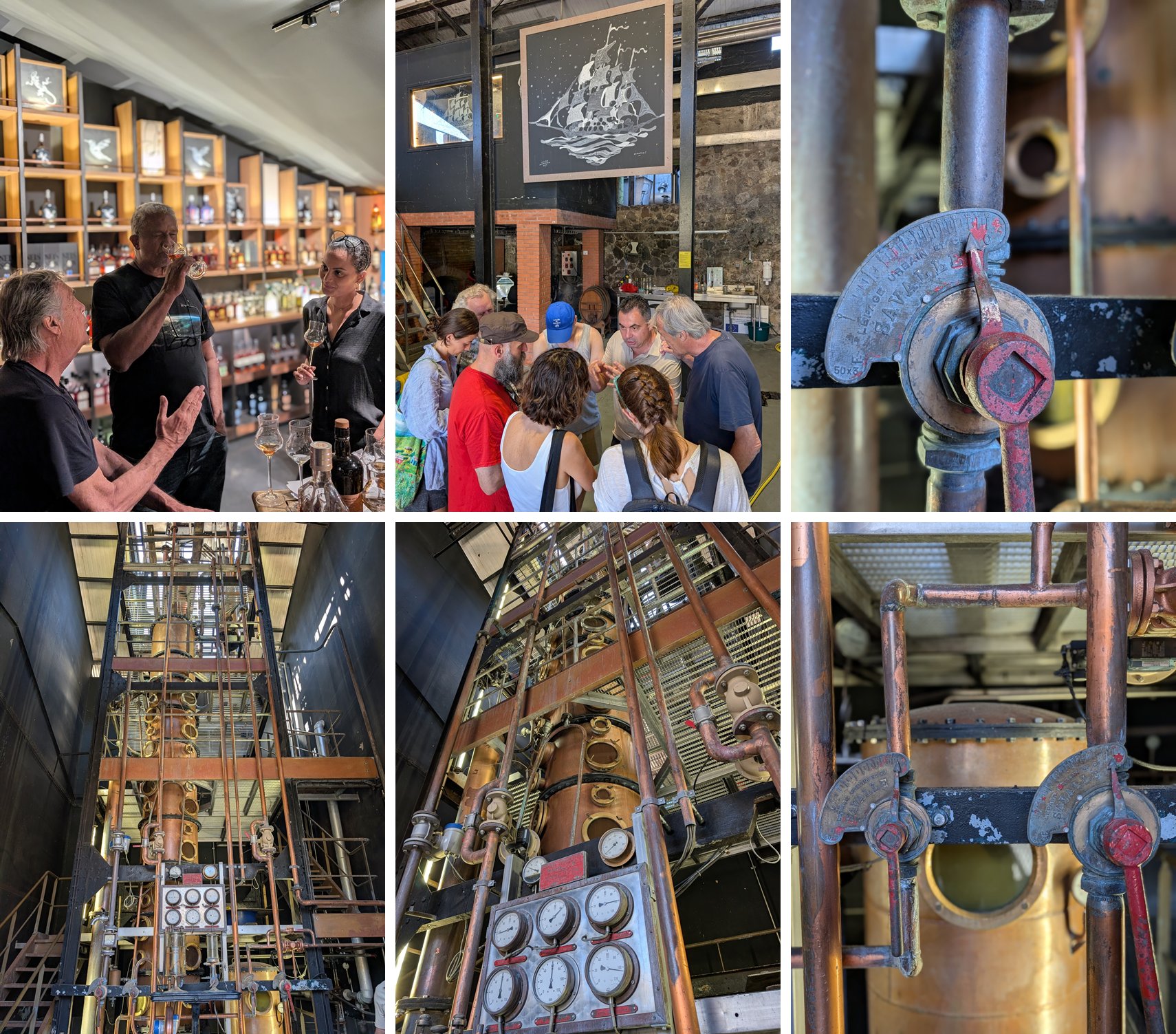
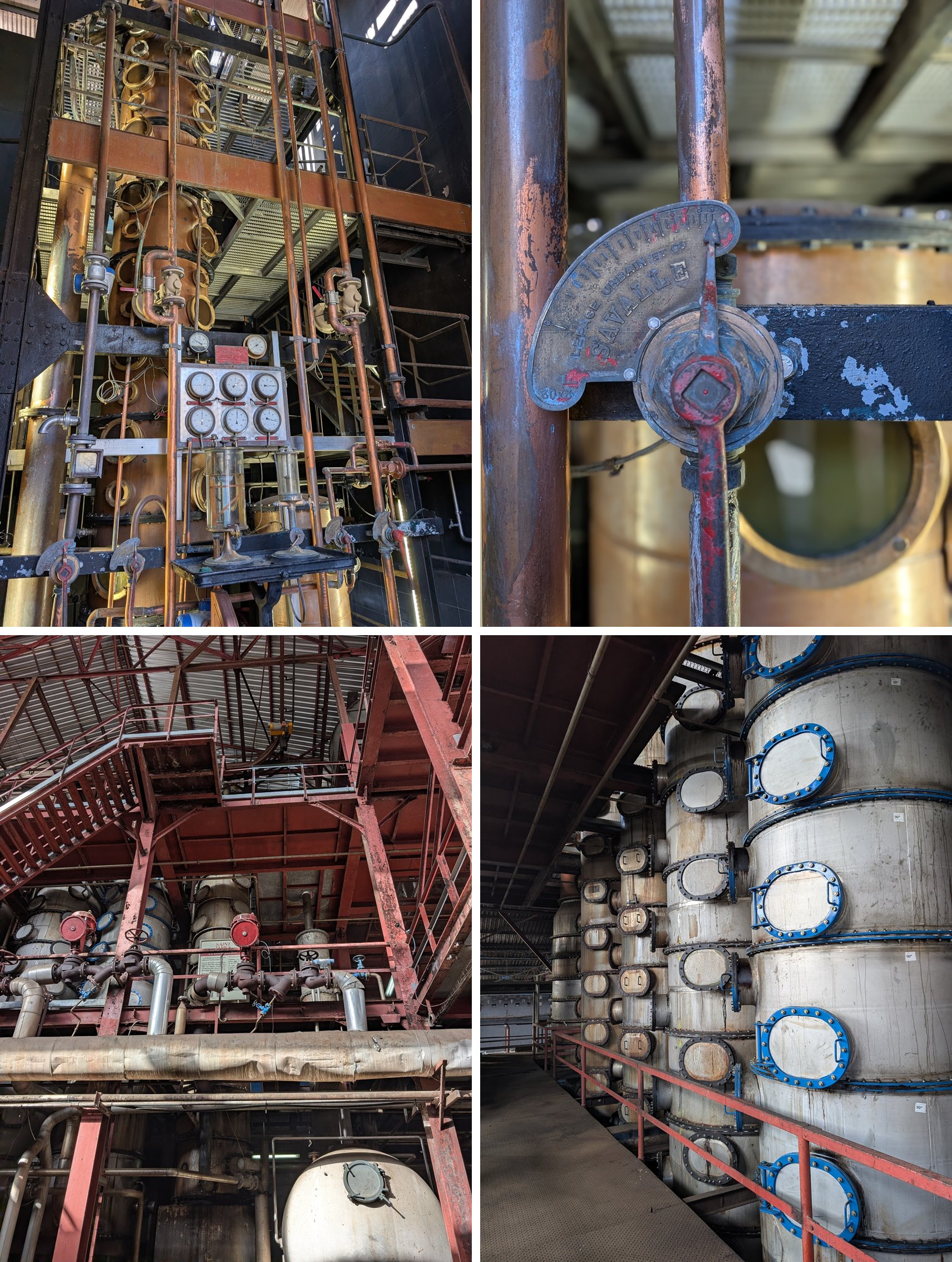
Once the fermented mixture has been prepared, it is transferred to the ‘cathedral’. There is no more fitting metaphor for the building that houses the famous Savalle Column, designed in 1952 by grandfather Jean: a marvellous, solemn, imposing copper capital; a monument to the art of distillation in which the juice flows down from above by gravity and undergoes 96 hours of very long distillation, emerging at between 72 and 74 per cent.
Here too, nothing is left to chance, as Alex Bobbi, the still master, explains: the boilleur that heats the juice is used to prevent the oils from the bagasse vapours from making the distillate less elegant, whilst the final alcohol content of the spirit is calculated meticulously so that no water needs to be added before bottling.
As well as an obsession with detail, a slow pace is also part of the Neisson method. The dilution process takes an extremely long time to prevent the aromas from being ‘burned’ by the thermal shock, not to mention the demineralisation of the water itself: “It’s simply common sense,” whispers Grégory, “just like what we do with the vats in which the rhums from the different plots age: that’s how it’s done with wine, we’ve simply copied it.”
That may be so, but the further one goes, the more it seems that the house’s style is entirely original. Not only because of the square bottle, known in Creole as zepol’ kare, but also because of the way the wood is handled: American oak, French oak and Japanese mizunara are expertly treated. Each type of cask has a different toasting profile which is catalogued, whilst new casks are ‘trained’ – naturally, very slowly – to hold the rhum.
Finally, as Grégory guides us through the heaven where the most precious releases are kept, we come to appreciate the final ingredient of the Neisson method: the artistic soul. A man of taste and a committed patron of the arts, Grégory has linked his brand to the art world through limited editions (the latest signed by Kongo) and the Tatanka series, featuring bottles hand-painted by a collective working in prisons. Not to mention a one-of-a-kind, ultra-luxury sideboard, a Louis Vuitton trunk, the screen-printed Armada editions, the lava stone stoppers…
Exclusive and precious, scientific and organic, artisanal and elite, international and family-oriented (the first release curated by Sacha, Grégory’s son, is about to be launched): perhaps we now understand why Neisson’s rhums have taken social media, markets and bartenders by storm. And, in our own small way, us too.